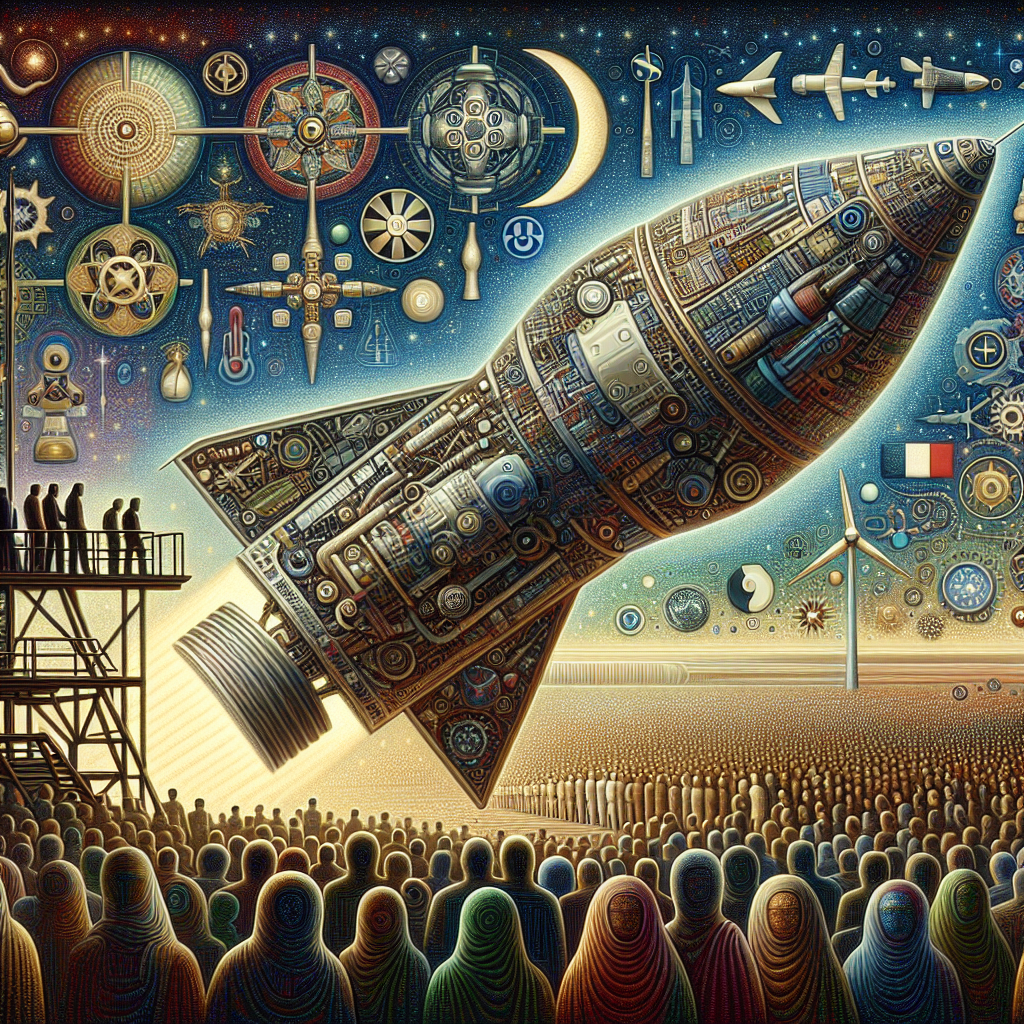
The Space Race, a period of intense competition between the USA and the USSR from 1957 to 1969, was not merely a technological contest – it bore profound cultural reverberations that still echo today. From the launch of Sputnik to the Apollo Moon landings, this era catalyzed a series of scientific advancements and altered cultural landscapes worldwide. This article delves into the technological advancements and the cultural impact of the Space Race, focusing on how these developments permeated everyday life and transformed societies across the globe.
With the launch of Sputnik by the Soviet Union in 1957, the Space Race officially commenced. This event spurred the United States into action, leading to the birth of NASA and an unprecedented focus on science and engineering. The race to space was not just about reaching the stars but also about demonstrating technological prowess and ideological superiority during the Cold War.
This period saw the advent of numerous technologies that would eventually seep into civilian industries, ranging from communications to medical innovations. Moreover, the Space Race inspired a generation of scientists and engineers, fostering educational reforms and creating a cultural milieu that cherished scientific inquiry and innovation.
However, the impact of the Space Race transcended technology. It influenced literature, art, and popular culture, shaping how people viewed the universe and their place within it. Nations around the world, regardless of their stance during the Cold War, were affected culturally, adopting and adapting space-related themes into their cultural fabric.
In this article, we’ll explore the multifaceted impacts of the Space Race, examining technological advancements, educational shifts, scientific achievements, and cultural transformations. By understanding this pivotal era, we can appreciate the profound legacy it has left on our modern world.
Technological Advancements
The technological advancements borne out of the Space Race were nothing short of revolutionary, laying the groundwork for vast sectors of today’s technological landscape. Initial efforts focused on rocketry and satellite technology but soon expanded to include a wide array of innovations.
One of the earliest and most significant advancements was the development of the integrated circuit, the foundation of modern electronics. NASA’s need for compact, reliable electronics propelled this technology forward, eventually leading to the widespread use of microchips in everything from personal computers to smartphones.
Satellite technology also saw meteoric advancements. The launch of Sputnik was followed by a series of American satellites, culminating in the development of communications satellites. These satellites revolutionized global communications, enabling real-time telecommunication across continents and paving the way for the globalized world we live in today.
Additionally, the need for advanced materials to withstand the rigors of space travel spurred the development of new composites and alloys. For instance, materials such as Teflon, initially developed for space suits, found applications in everyday life, including non-stick cookware.
Medical technology benefitted immensely from the Space Race. Techniques such as remote monitoring of astronauts’ health led to innovations in medical telemetry, providing better healthcare for patients with chronic conditions. MRI and CAT scanners, developed from space imaging technologies, are now staples in medical diagnostics.
In essence, the Space Race accelerated technological evolution, bringing dozens of innovations to civilian life, thereby reshaping industries and improving quality of life. These advancements underscore the far-reaching impact of this era, illustrating the symbiotic relationship between space exploration and technological progress.
Educational Shifts
The Space Race significantly influenced educational reforms, particularly in the United States, igniting intense focus on science, technology, engineering, and mathematics (STEM) education. The launch of Sputnik was a wake-up call, highlighting a perceived gap in scientific capabilities between the US and the USSR.
In response, the US government initiated a series of educational programs designed to close this gap. The National Defense Education Act (NDEA) of 1958 allocated substantial funding to improve American schools, particularly in the areas of science and mathematics. This act led to the enhancement of curricula, better training for teachers, and increased access to higher education through student loans and scholarships.
Furthermore, NASA itself became a beacon of educational outreach. The agency developed educational resources to inspire young minds, including educational television programs and classroom materials centered on space exploration and science. These efforts aimed to cultivate a new generation of scientists and engineers.
The cultural obsession with space also trickled down to popular culture, with science fiction literature and films gaining unprecedented popularity. Titles like “2001: A Space Odyssey” and “Star Trek” offered visions of the future that captured the public’s imagination, further fueling interest in space and science.
Internationally, other countries also emphasized STEM education, recognizing the importance of scientific prowess in the modern world. Nations invested in educational infrastructures, aiming to cultivate their own space programs and technological advancements.
Ultimately, the Space Race catalyzed a global shift towards valuing and investing in STEM education. The era’s educational reforms have had lasting effects, contributing to the scientific advancements and technological innovations that continue to shape our world today.
Scientific Achievements
The Space Race was a period marked by astonishing scientific achievements, many of which continue to influence our understanding of the universe. These accomplishments were not just about planting flags on the Moon; they represented profound leaps in scientific knowledge and human capability.
One of the most iconic achievements was the Apollo Moon landings. NASA’s Apollo program, culminating in Apollo 11’s successful Moon landing in 1969, demonstrated that humankind could achieve what was once thought impossible. The data collected during these missions has provided invaluable insights into the Moon’s composition and geological history.
Beyond the Moon, both American and Soviet missions contributed to our understanding of space phenomena. The American Mariner and Pioneer missions provided the first close-up images of Venus and Mars, while the Soviet Luna program explored and returned samples from the Moon’s surface.
Understanding Earth’s atmosphere and environment also benefitted from the Space Race. Satellites launched during this period vastly enhanced weather forecasting capabilities and provided the first comprehensive data on Earth’s sun and radiation environment.
Furthermore, the race spurred advancements in exobiology and space medicine. Scientific experiments conducted in microgravity environments aboard spacecraft and during spacewalks have deepened our understanding of human physiology and the possibilities of life beyond Earth.
These achievements ignited a scientific curiosity that continues to drive space exploration. The groundwork laid during the Space Race has led to subsequent programs like the International Space Station, Mars rovers, and plans for deep-space manned missions.
In conclusion, the scientific achievements of the Space Race were monumental and far-reaching. They expanded human knowledge, inspired countless individuals, and paved the way for ongoing and future explorations of our universe.
Cultural Transformations
The Space Race was not just a series of technological and scientific contests; it was a cultural phenomenon that left an enduring mark on societies worldwide. The period saw an outpouring of enthusiasm and a collective reimagining of humanity’s place in the cosmos.
In the United States, the figure of the astronaut became a symbol of national pride and human potential. Astronauts like John Glenn and Neil Armstrong were celebrated as heroes, embodying the courage, ingenuity, and determination that characterized the American spirit. Their stories were told and retold, inspiring generations of young people to dream big.
Popular culture, too, was deeply influenced by the Space Race. Films like “2001: A Space Odyssey” and television series such as “Star Trek” weren’t just entertainment; they were cultural touchstones that explored themes of exploration, technology, and human destiny. These works of fiction reflected the societal aspirations and anxieties of the time, offering a vision of the future shaped by the era’s technological and scientific advancements.
The Space Race also had a significant international cultural impact. Around the globe, people watched the space missions with a sense of shared human achievement, despite the underlying geopolitical tensions. The image of Earthrise, taken by the Apollo 8 mission, offered a poignant reminder of our shared home and humanity’s potential for peaceful cooperation.
Art and literature were similarly influenced. The space age ushered in new artistic expressions, with space themes permeating visual arts, music, and literature. Authors like Arthur C. Clarke and Isaac Asimov explored the implications of space travel and advanced technologies, pushing the boundaries of human thought and imagination.
Moreover, the collective experiences of the Space Race fostered a sense of global community, highlighting our common aspirations and challenges. This cultural shift contributed to the environmental movement, space advocacy, and the pursuit of peaceful uses of space.
In essence, the cultural transformations brought about by the Space Race were profound and multifaceted. They reshaped national identities, inspired artistic and intellectual pursuits, and promoted a sense of global interconnectedness that continues to resonate in the modern world.
Conclusion
The Space Race was a defining moment in modern history, characterized by unparalleled technological advancements, significant educational reforms, monumental scientific achievements, and transformative cultural impacts. It was a period when humanity dared to dream beyond the confines of Earth, driving innovation and fostering a profound sense of possibility.
The technological legacy of the Space Race is evident in the microchips, materials, and medical technologies that have become integral parts of daily life. Educational shifts towards STEM disciplines continue to produce the scientists and engineers who drive today’s technological advancements.
The scientific knowledge gained from space missions has deepened our understanding of the universe and our place within it. These achievements not only demonstrated human ingenuity but also paved the way for future explorations that continue to inspire us.
Culturally, the Space Race left an indelible mark. It infused public consciousness with a sense of wonder and possibility, influencing art, literature, and popular culture. It also fostered a sense of global connectedness, highlighting our shared aspirations and the potential for collective achievement.
As we look to the future, the lessons and legacies of the Space Race remain relevant. With renewed interest in space exploration from both government agencies and private companies, we are poised to continue this journey of discovery and innovation. The enduring spirit of the Space Race reminds us that with vision, determination, and cooperation, humanity can achieve extraordinary feats.
In reflecting on the Space Race, it is clear that its impact stretches far beyond the technological and scientific realms. It was a cultural and global phenomenon that transformed societies and continues to inspire us to reach for the stars.