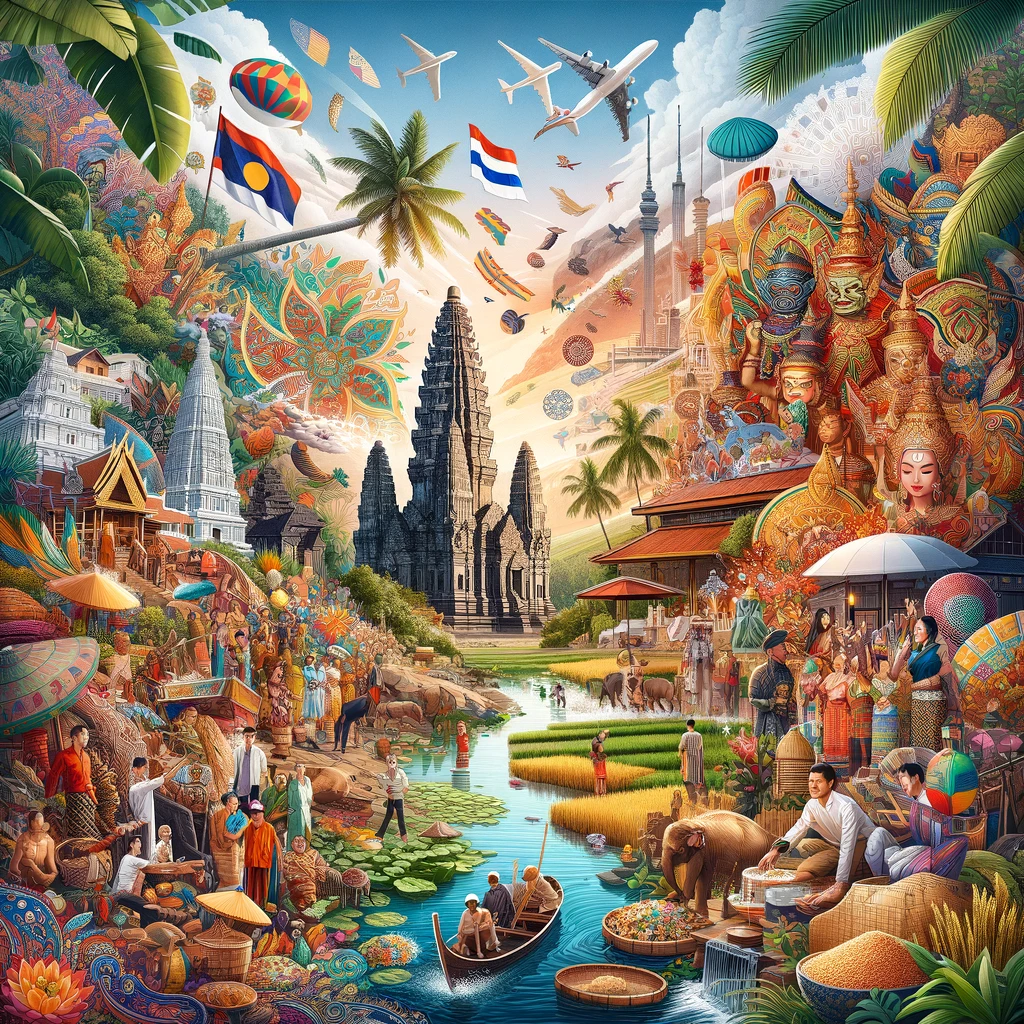
Southeast Asia, a region of immense cultural diversity and historical richness, is a fascinating tapestry woven with the threads of various traditions, languages, religions, and ethnicities. This article delves into the heart of Southeast Asia’s cultural landscape, exploring the unique aspects that make this region a mosaic of human expression.
Historical Context
The cultural landscape of Southeast Asia has been shaped by a myriad of influences over the centuries. From the ancient kingdoms of Java and Angkor to the colonial imprints of European powers, each era has left an indelible mark on the region. The diverse ethnic groups, from the Javanese and Burmese to the Filipino and Thai, have all contributed to the cultural fabric of Southeast Asia.
Ancient Civilizations and Kingdoms
Southeast Asia was home to some of the world’s most influential ancient civilizations. The Khmer Empire, known for the majestic Angkor Wat in Cambodia, and the Javanese kingdoms, famed for the Borobudur Temple in Indonesia, are prime examples. These civilizations not only built monumental architectural wonders but also developed sophisticated systems of governance and social structure.
Colonial Influence
The arrival of European colonizers, such as the Dutch, British, French, and Spanish, brought new cultural elements. Colonial architecture, language influences, and even culinary adaptations are evident in countries like Vietnam, Indonesia, Malaysia, and the Philippines. The blending of indigenous and colonial cultures created unique hybrid cultures in these regions.
Religion and Spirituality
Religion plays a pivotal role in Southeast Asian culture, with Buddhism, Islam, Hinduism, and Christianity being the major religions. Each religion has shaped the cultural practices, festivals, and daily lives of the people.
Buddhism
Buddhism, especially Theravada Buddhism, is predominant in Thailand, Myanmar, Cambodia, and Laos. The religion’s emphasis on spirituality and morality is evident in the numerous temples and monasteries dotting the landscape. Festivals like Songkran in Thailand and the Water Festival in Myanmar have deep Buddhist significance.
Islam
Indonesia and Malaysia are predominantly Muslim countries. Islamic traditions influence their social customs, art forms, and festivals. The celebration of Eid al-Fitr and the unique art of batik, often featuring Islamic geometric patterns, are testaments to this influence.
Hinduism and Christianity
Hinduism, though a minority, has a strong presence in Bali, Indonesia. The island’s culture, from its dance forms to temple ceremonies, is steeped in Hindu tradition. The Philippines, on the other hand, has a predominantly Christian population, a legacy of Spanish colonization, evident in their celebration of Christmas and Holy Week.
Language and Literature
Southeast Asia is a region of linguistic diversity. Languages like Thai, Vietnamese, Bahasa Indonesia, Filipino, and Burmese are not just communication tools but also reflect the region’s complex history and cultural identity.
Literary Traditions
Each country boasts a rich literary tradition. The Philippine epic, “Ibong Adarna,” the Indonesian “Ramayana” adaptation, and the Thai national epic, “Ramakien,” are notable examples. These literary works not only provide insights into the historical and cultural contexts of their times but also continue to influence contemporary culture.
Arts and Performances
The arts in Southeast Asia are as varied as its cultures. Traditional dance, music, and theater forms are integral to cultural expression in the region.
Dance and Music
Classical dance forms like the Thai Khon, the Balinese Legong, and the Filipino Tinikling are not just entertainment but also a means of storytelling and preserving history. Music, with instruments like the Indonesian gamelan and the Filipino kulintang, plays a vital role in ceremonies and social gatherings.
Theater and Puppetry
Traditional theater forms like the Indonesian Wayang Kulit shadow puppetry and the Vietnamese Water Puppetry are unique cultural treasures. These art forms combine mythological storytelling, music, and puppetry, offering a glimpse into the spiritual and philosophical beliefs of the people.
Culinary Diversity
Southeast Asian cuisine is a reflection of the region’s cultural diversity. The blend of indigenous ingredients with influences from Chinese, Indian, and European cooking has resulted in a rich culinary tradition.
Unique Flavors and Dishes
Thai cuisine, known for its balance of sweet, sour, salty, and spicy flavors, the aromatic Nasi Lemak of Malaysia, the flavorful Pho of Vietnam, and the spicy Adobo of the Philippines, each dish tells a story of cultural exchange and local tradition.
Street Food Culture
Street food is an integral part of Southeast Asian culture. It offers not just a taste of the local cuisine but also a window into the daily lives of the people. The bustling street food markets, like Bangkok’s Chatuchak or Singapore’s hawker centers, are cultural experiences in themselves.
The cultures of Southeast Asia are a vibrant collage of traditions, beliefs, and practices. From the grandeur of ancient temples to the simplicity of street food, every aspect of this region’s culture is a testament to the rich history and dynamic spirit of its people. As we explore these diverse cultures, we gain not just knowledge but also an appreciation for the beauty of human diversity and the interconnectedness of our world.

Festivals and Celebrations
Festivals in Southeast Asia are vibrant and colorful, reflecting the region’s rich cultural heritage. They are not just celebrations but also a means of preserving traditions and strengthening community bonds.
Key Festivals
- Thailand’s Songkran: The traditional Thai New Year, celebrated in April, is famous for its water fights, symbolizing purification and the washing away of sins and bad luck.
- Vietnam’s Tet: The Vietnamese New Year, aligning with the Lunar New Year, is a time for family reunions and honoring ancestors.
- Indonesia’s Bali Arts Festival: A month-long celebration in Bali showcasing the island’s artistic and cultural heritage, including traditional dance, music, and handicrafts.
These festivals, among others, are not just tourist attractions but vital parts of the cultural identity of each country, providing insight into the local customs and beliefs.
Traditional Attire
Traditional clothing in Southeast Asia is as diverse as its cultures, each piece telling a story of history, status, and regional identity.
Examples of Traditional Attire
- Thailand’s Chut Thai: Elegant and colorful, it’s worn on formal occasions and consists of various styles for men and women.
- The Philippines’ Barong Tagalog and Maria Clara: The Barong Tagalog is a sheer, embroidered shirt for men, while the Maria Clara is a traditional dress for women, reflecting Spanish colonial influence.
- Malaysia’s Baju Melayu and Baju Kurung: Traditional Malay attire, these outfits are a symbol of national identity and often worn during festive occasions.
These traditional attires are not just costumes but are steeped in history and symbolism, reflecting the region’s cultural diversity and respect for tradition.
Architecture and Urban Planning
The architecture of Southeast Asia is a blend of indigenous styles and foreign influences, reflecting the region’s history and cultural diversity.
Notable Architectural Styles
- Colonial Architecture: In cities like Hanoi, Penang, and Jakarta, colonial buildings stand as reminders of the European influence, often integrated with local styles.
- Religious Structures: From the Buddhist temples of Thailand and Myanmar to the Islamic mosques of Indonesia and Malaysia, these structures are not just places of worship but also cultural landmarks.
- Traditional Villages: Rural areas still boast traditional houses, like the stilt houses in the Philippines or the longhouses in Borneo, designed to suit the local climate and way of life.
This architectural diversity is a physical manifestation of the region’s rich cultural history, offering a window into the past and present of these vibrant societies.
Modern Cultural Expressions
While deeply rooted in tradition, Southeast Asia is also a region of dynamic modern cultural expressions.
Contemporary Arts and Media
- Cinema: The film industries in countries like the Philippines, Thailand, and Indonesia are thriving, producing movies that gain international recognition.
- Contemporary Art: Cities like Singapore and Bangkok are becoming hubs for contemporary art, with galleries and exhibitions showcasing local and international artists.
These modern cultural forms reflect the ongoing evolution of Southeast Asian cultures, blending traditional elements with contemporary influences.
The Future of Southeast Asian Cultures
As Southeast Asia continues to evolve, so do its cultures. While globalization poses challenges, it also brings opportunities for cultural exchange and innovation. The preservation of traditional cultures and the embrace of modern influences are not mutually exclusive; rather, they can coexist and enrich each other.
Preserving Tradition in a Modern World
Efforts to preserve traditional arts, languages, and customs are crucial in maintaining cultural identity. Educational programs, cultural festivals, and museums play a significant role in this preservation.
Embracing Modernity and Globalization
Southeast Asia is also adapting to the modern world, with its cultures reflecting the changes and challenges of the 21st century. The region’s ability to embrace change while respecting tradition is key to its cultural vitality.
Conclusion
The cultural landscape of Southeast Asia is a testament to the region’s resilience, diversity, and adaptability. From ancient temples to modern art galleries, from traditional festivals to contemporary cinema, Southeast Asia offers a rich tapestry of cultures that continue to evolve and inspire. As we explore and appreciate these cultures, we gain not only knowledge but also a deeper understanding of the beauty and complexity of our interconnected world.


