The Renaissance, one of the most significant cultural movements in European history, emerged in Italy during the late 14th century. This remarkable era, lasting until the 17th century, marked a period of profound transformation in art, science, literature, and human thought. The term “Renaissance” itself is derived from the French word “rebirth,” as it encapsulates the revival of classical learning and wisdom from ancient Greece and Rome. These roots were given new life and meaning, fostering an unparalleled surge in creativity and intellectual pursuits.
The Renaissance era gave birth to some of the world’s most renowned artists, including Leonardo da Vinci, Michelangelo, and Raphael. It also propelled scientific breakthroughs by pioneering figures like Galileo and Copernicus, fundamentally changing the way humans perceive the universe. Furthermore, it was marked by an exploration of humanism, a philosophy emphasizing the value and agency of human beings, individually and collectively.
This rich period of cultural reawakening didn’t remain confined to Italy. It spread across various European countries, influencing different aspects of society from politics to everyday life. The Renaissance’s lasting impact is evident not only in the indelible artworks and literature produced during this period but also in how it laid the groundwork for modern Western thought and culture. In this article, we will delve deeper into the roots and evolution of the Renaissance, its monumental achievements, its influence on European societies, and its enduring legacy.
The Roots and Evolution of the Renaissance
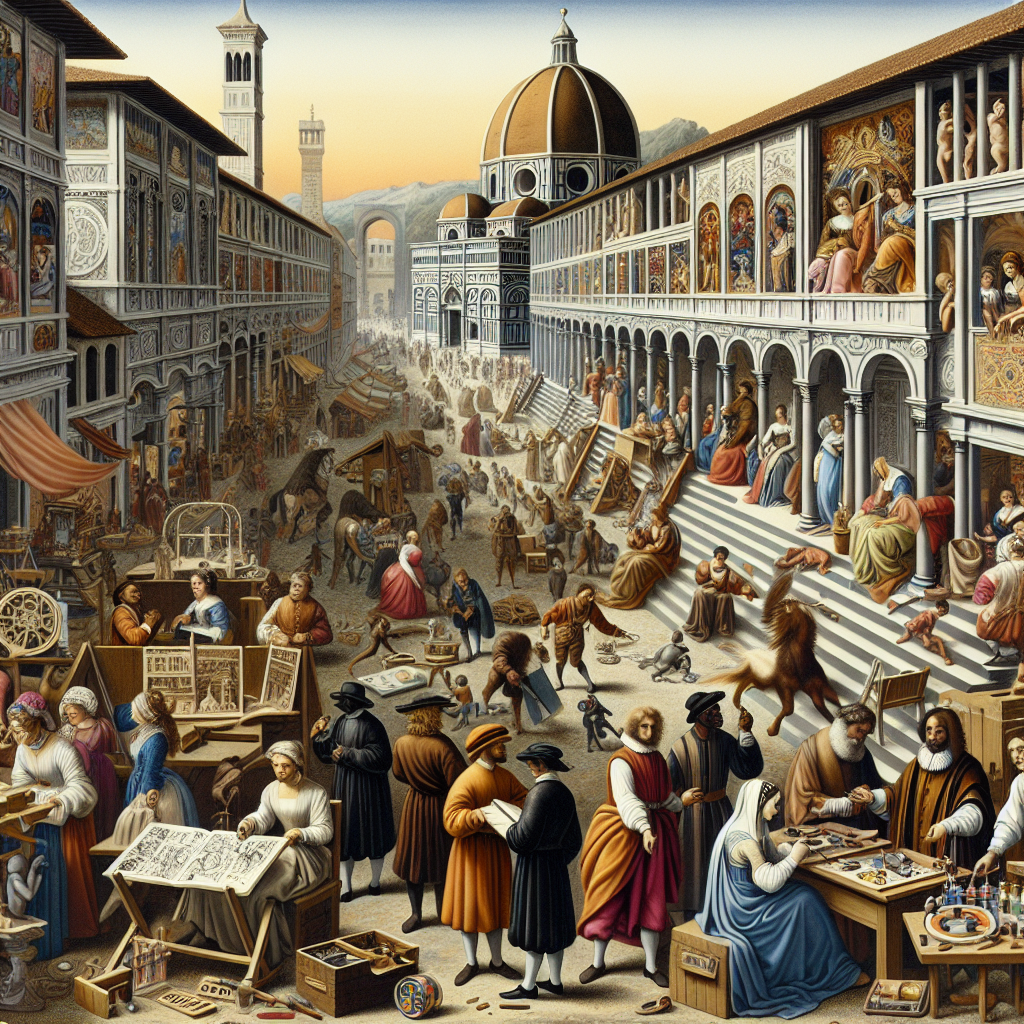
The Renaissance began in Italy, particularly in cities like Florence, Venice, and Rome, which were wealthy and culturally vibrant due to their strategic positions in trading networks. Several factors contributed to the emergence of the Renaissance, including the decline of feudalism, which altered social structures and increased urbanization. Additionally, the increased contact with the Islamic world through trade and the Crusades reintroduced classical texts and knowledge to Europe. Notably, the fall of Constantinople in 1453 led to many Greek scholars fleeing to Italy, bringing with them a treasure trove of manuscripts and a rich intellectual heritage.
Humanism played a critical role in the evolution of the Renaissance. This intellectual movement advocated the study of classical texts, emphasizing subjects such as rhetoric, grammar, poetry, history, and philosophy—collectively known as the humanities. Humanists believed in the potential of humans to achieve excellence through self-improvement and education. Figures like Petrarch and Erasmus championed these ideas, laying the ideological foundations for the Renaissance.
Art during the Renaissance reflected a renewed interest in the human form and the natural world. Artists employed techniques like perspective, chiaroscuro (the use of strong contrasts between light and dark), and anatomically accurate human figures to create more lifelike and expressive works. Religious themes remained dominant, but there also emerged a growing interest in secular subjects, manifesting in portraits, landscapes, and mythological scenes. The invention of the printing press by Johannes Gutenberg around 1440 played a pivotal role in disseminating Renaissance ideas across Europe, making literature and scholarly works more accessible.
Monumental Achievements in Art
The Renaissance era is synonymous with unparalleled artistic achievements that pushed the boundaries of creativity and technical skill. This period saw the rise of art forms and techniques that have endured through the centuries, influencing countless generations of artists.
Leonardo da Vinci, often hailed as the quintessential Renaissance man, exemplified the merger of art and science. His iconic works, such as “The Last Supper” and “Mona Lisa,” are celebrated for their intricate detail, emotional depth, and innovative use of perspective. Da Vinci’s numerous notebooks, filled with sketches and scientific observations, reveal his insatiable curiosity and his efforts to understand the natural world.
Michelangelo Buonarroti, another towering figure of the Renaissance, left an indelible mark with masterpieces like the Sistine Chapel ceiling and the statue of David. Michelangelo’s work showcased a profound understanding of human anatomy, imbuing his sculptures and paintings with a lifelike dynamism that captured human emotion and physicality in ways never before seen. His contributions extended beyond visual arts, influencing architecture with his design of the dome of St. Peter’s Basilica in Vatican City.
Raphael Sanzio also made significant contributions, particularly through his frescoes in the Vatican’s Apostolic Palace. His series of frescoes, including “The School of Athens,” embodied the philosophical spirit of the Renaissance, depicting a gathering of the great thinkers of antiquity in an idealized, harmonious setting. Raphael’s works are noted for their clarity, balanced composition, and grace, encapsulating the ideals of Renaissance aesthetics.
Scientific Breakthroughs
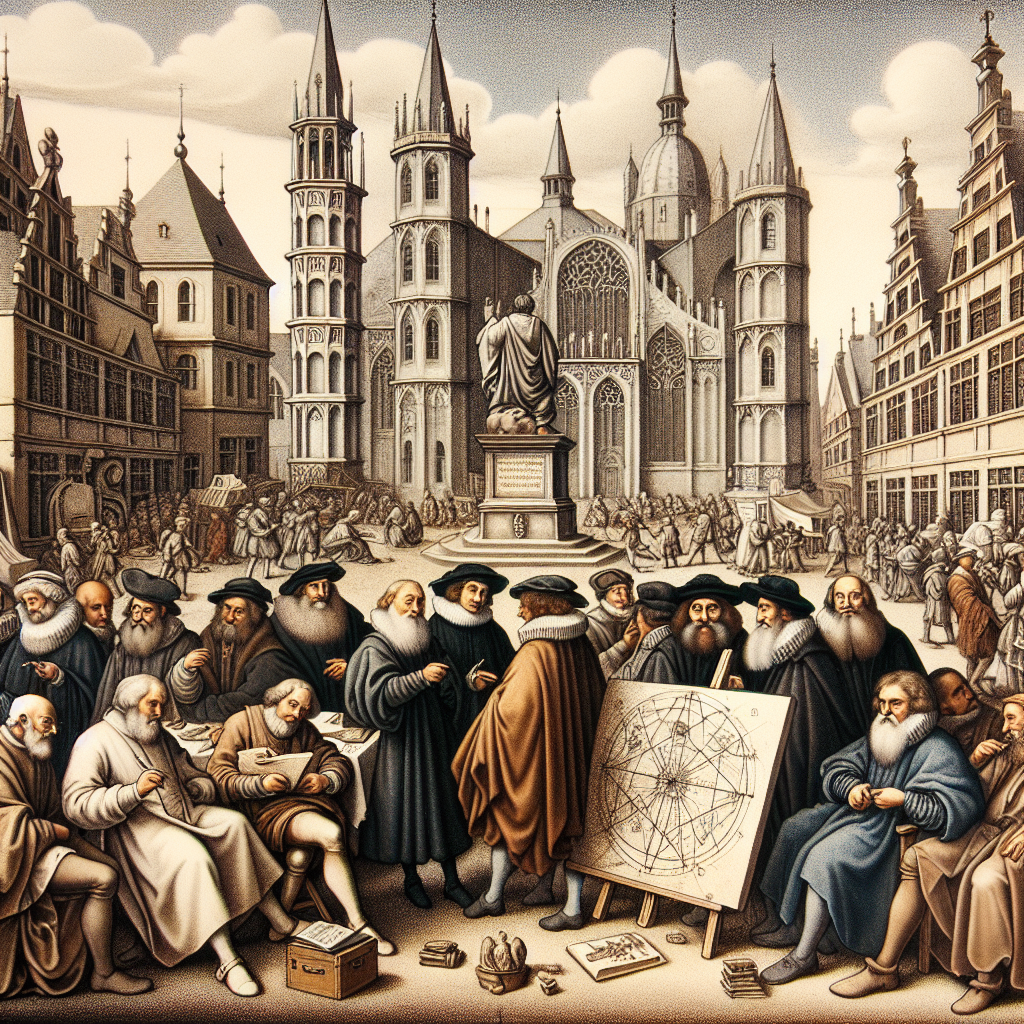
The Renaissance was not only a period of artistic brilliance but also a time of profound scientific discovery and innovation. This era witnessed the emergence of figures whose work laid the groundwork for modern science and fundamentally altered humanity’s understanding of the natural world.
Nicolaus Copernicus, a Renaissance polymath, revolutionized the field of astronomy with his heliocentric theory, which posited that the Earth and other planets revolve around the Sun. This was a radical departure from the geocentric model that had dominated Western thought for centuries. Copernicus’s ideas challenged the established views of the cosmos and paved the way for future astronomical discoveries.
Galileo Galilei further advanced the field of astronomy with his telescopic observations, providing empirical evidence that supported the Copernican theory. Galileo’s observations of celestial bodies, such as the moons of Jupiter and the phases of Venus, contradicted traditional astronomical beliefs and contributed to a paradigm shift in how the universe was understood. His work extended beyond astronomy; his experiments with motion laid the groundwork for classical mechanics.
Another notable figure, Andreas Vesalius, revolutionized the field of anatomy with his detailed studies of the human body. His seminal work, “De Humani Corporis Fabrica” (On the Fabric of the Human Body), corrected many misconceptions and provided a comprehensive understanding of human anatomy based on meticulous dissections. Vesalius’s work underscored the importance of empirical observation in scientific inquiry, a principle that would become a cornerstone of the scientific method.
Influence on European Societies
The Renaissance had a profound and lasting influence on European societies, extending beyond the realms of art and science to impact politics, education, and daily life. This cultural movement initiated a series of social transformations that reshaped Europe in myriad ways.
Politically, the Renaissance saw the rise of powerful city-states in Italy, such as Florence, Venice, and Milan, which became centers of trade, culture, and intellectual activity. These city-states were often governed by wealthy merchant families like the Medici in Florence, who became patrons of the arts and fostered an environment of creativity and innovation. The political landscape of Europe was also altered by the emergence of centralized nation-states, as monarchs in countries like France and Spain consolidated power, leading to more unified and stable political entities.
Education underwent significant changes during the Renaissance, influenced by humanist ideals that emphasized the study of classical texts and the development of well-rounded individuals. This led to the establishment of universities and schools that adopted new curricula focusing on the humanities, fostering a culture of learning and intellectual exchange. Figures like Erasmus and Thomas More promoted educational reform, advocating for a system that encouraged critical thinking and the pursuit of knowledge.
The daily lives of Europeans were also impacted by the Renaissance, as new ideas and technologies permeated society. The invention of the printing press increased literacy rates and made books more accessible, democratizing knowledge and enabling the spread of Renaissance ideals. Innovations in various fields, from architecture to engineering, improved the quality of life and contributed to a sense of progress and optimism.
Enduring Legacy of the Renaissance
The legacy of the Renaissance extends far beyond the confines of its historical period, continuing to influence contemporary thought, art, and culture. The principles and achievements of the Renaissance laid the foundation for many aspects of the modern world, shaping the development of Western civilization in profound ways.
One of the most enduring legacies of the Renaissance is its emphasis on individualism and human potential. The humanist philosophy that emerged during this time championed the idea that individuals have the capacity for greatness and that personal achievement and intellectual pursuits are worthy endeavors. This belief in the potential of the individual has had a lasting impact, shaping modern attitudes towards education, personal development, and human rights.
The artistic innovations of the Renaissance likewise left an indelible mark on the world. Techniques developed by Renaissance artists, such as linear perspective and chiaroscuro, have influenced countless generations of artists and remain fundamental to the study of art today. The masterpieces created during this period continue to be celebrated and studied, inspiring artists and art lovers alike.
The scientific advancements of the Renaissance set the stage for the Scientific Revolution, which would further transform humanity’s understanding of the natural world. The empirical methods and principles established by Renaissance thinkers laid the groundwork for modern scientific inquiry, fostering a culture of curiosity and intellectual rigor that continues to drive scientific progress.
Conclusion
In conclusion, the Renaissance stands as a pivotal epoch in European history, a time of unprecedented artistic, scientific, and cultural flourishing. This extraordinary period of “rebirth” served as a bridge between the medieval world and the modern age, catalyzing a profound transformation in human thought and expression.
From the awe-inspiring artwork of Leonardo da Vinci, Michelangelo, and Raphael to the groundbreaking scientific discoveries of Copernicus, Galileo, and Vesalius, the Renaissance produced a wealth of achievements that have left an indelible mark on history. The movement’s emphasis on humanism and the study of classical texts fostered a renewed appreciation for individual potential and intellectual pursuit, values that continue to resonate in contemporary society.
The influence of the Renaissance extended beyond the spheres of art and science, reshaping European societies in numerous ways. It led to the rise of powerful city-states and centralized nation-states, drove educational reform, and permeated daily life through innovations and the spread of knowledge. The invention of the printing press played a crucial role in this dissemination, making information more accessible and democratizing learning.
The enduring legacy of the Renaissance is evident in the continued celebration and study of its artistic and intellectual achievements. Its emphasis on individualism, empirical observation, and the pursuit of knowledge laid the groundwork for many aspects of the modern world, from art and education to science and human rights. The Renaissance not only transformed Europe but also set the stage for future generations to explore, create, and innovate.