King Arthur and Celtic mythology are captivating, enduring tales that have been passed down through the ages, imbuing generations with their mystique and moral lessons. These legends form an integral part of the cultural fabric of the British Isles and beyond, revealing the rich tapestry of the past and the complexities of folklore that still resonate today.
Introduction
King Arthur’s legend has a lasting impact on the cultural history of numerous civilizations. His story is a composite of myth, history, and moral allegory that transcends time. Told and retold in myriad ways, the narrative of Arthur’s noble kingship, the valiant Knights of the Round Table, and the quest for the Holy Grail continues to inspire literature, film, and folklore. Celtic mythology, on the other hand, encompasses the spiritual beliefs and stories of ancient Celtic tribes, intertwining heroism, nature, and the supernatural. It laid the groundwork for Arthurian legends and predicates a universe where the real and imaginary coexist seamlessly.
The exploration of these narratives offers key insights into early British influence and storytelling traditions. This article will dive into King Arthur’s legend, comparing and contrasting elements with broader Celtic mythology, and uncovering their cultural significance. By dissecting these stories, one can better appreciate their perennial appeal and the underlying truths they communicate about human nature and societal values.
The Origins of King Arthur
The enigmatic king we often associate with Camelot and Excalibur likely has his roots in late antiquity. Scholars suggest that the figure of Arthur may be based on a compilation of multiple historical figures, possibly a Roman-affiliated military leader who defended Britain against Saxon invaders in the 5th and 6th centuries. The historical Arthur is elusive; however, his story was popularized and romanticized in medieval texts, most notably by Geoffrey of Monmouth’s “Historia Regum Britanniae” (The History of the Kings of Britain), penned in the 12th century.
This text amalgamates bits of pseudo-history with Arthurian lore, expanding on his youthful ascension to the throne, guided by the wizard Merlin, and his establishment of an idealized court at Camelot. Geoffrey’s narratives firmly cemented Arthur’s place in British lore and inspired subsequent generations of storytellers. From Sir Thomas Malory’s “Le Morte d’Arthur” to Alfred Lord Tennyson’s “Idylls of the King,” Arthurian legend has evolved, absorbing cultural elements and becoming a symbol of medieval chivalry, justice, and eternal relevance.
Celtic Mythology and its Influence
Celtic mythology stretches back to the ancient Celtic tribes of Europe, celebrated in oral traditions and later compiled by Christian monks. Historically, these tales reflect a polytheistic society, venerating gods and goddesses who controlled natural elements. Stories like that of the Tuatha Dé Danann—supernatural beings who inhabited Ireland—highlight the Celts’ intricate world of mysticism and veneration for natural landscapes.
The Celts’ reverence for heroism, magic, and collision of worlds resonates deeply within the fabric of Arthurian legend. Merlin, with his druidic attributes, can be seen as a derivation from Celtic magical practitioners. Moreover, the concept of Avalon, the mystical island where King Arthur is said to return from after his death, echoes Celtic Otherworlds, lands where heroes and deities reside post-passage from the mortal plane.
Beyond the mythos, Celtic tales functioned to convey moral lessons, societal norms, and the importance of nature. Their influence seeped into medieval storytelling, enriching Arthurian legends with layers of mythological wisdom. The merging of Christian allegory with pagan myth essentially birthed the rich complexities we associate with Arthurian literature today.
The Knights of the Round Table
The concept of the Round Table is defining for Arthurian legend, symbolizing equality, fraternity, and noble deeds. Each Knight of the Round Table is emblematic of chivalric virtues and individual heroism, be it Lancelot’s unparalleled prowess or Gawain’s unwavering honor.
The tales of these knights often served as moral allegories, mirroring societal ideals and personal virtues. The episodic quests and trials faced by Arthur’s knights drew heavily from mythological narratives and medieval romance. Many of these adventures reflect the structure of Celtic heroic tales, such as those involving Cú Chulainn in the Ulster Cycle, where the hero embarks on various quests that test his mettle and virtues.
Similarly, the knights’ synchronous journeys for the Holy Grail manifest themes of spiritual fulfillment and the quest for divine grace. This universal theme finds echoes in numerous world mythologies where the hero’s journey symbolizes personal growth and enlightenment, thus imparting timeless lessons through engaging storytelling.
Mythological Creatures and Magic
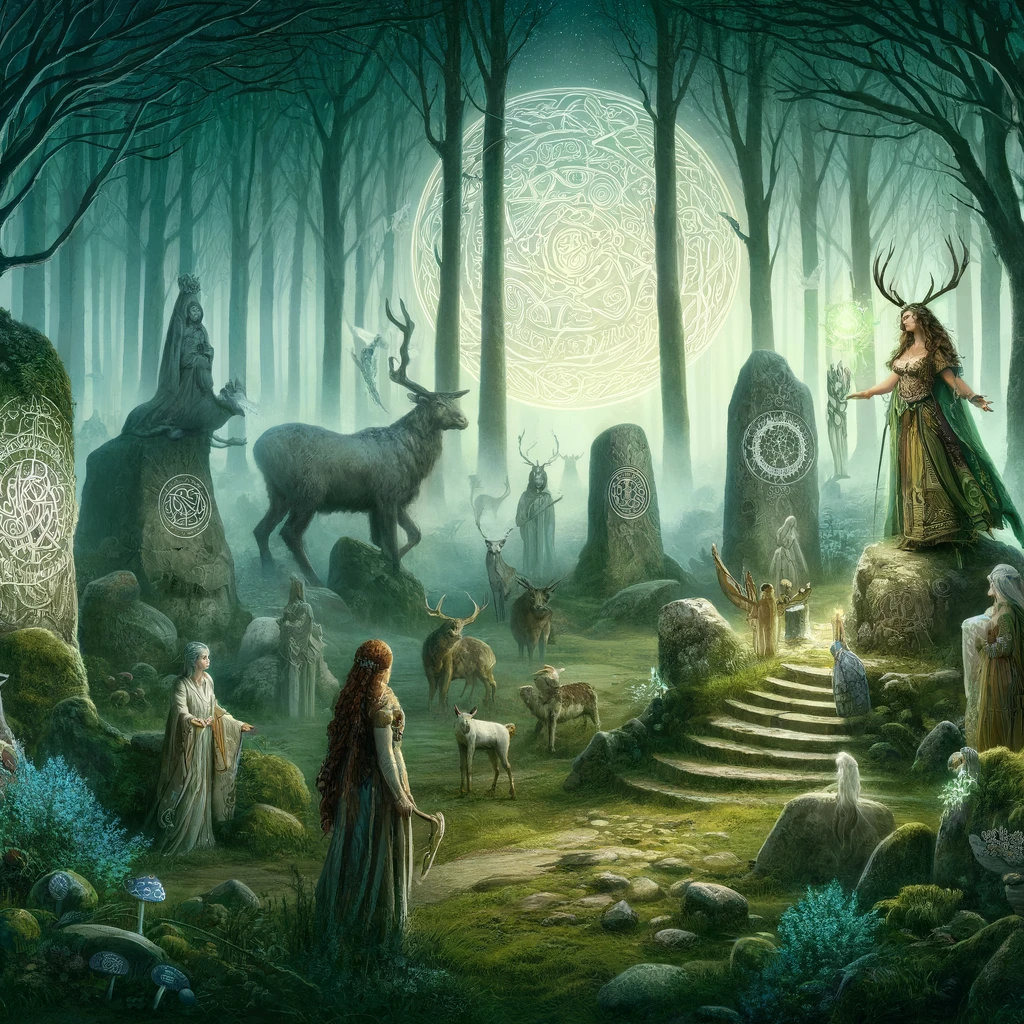
Arthurian legends abound with mythological creatures and magical elements that add depth and intrigue to its narrative. From the lady of the lake, who bestows Excalibur upon Arthur, to the dragons and shape-shifters that frequently emerge in the storylines, these fantastical facets represent more than mere entertainment.
In broader Celtic mythology, such magical beings and motifs are a common thread. The mythos brims with druidic magic, the Fae, and transformative spells that shape tales and heroes. The integration of these elements in Arthurian legend not only caters to the medieval audience’s fascination but also illustrates the bridging of pagan mythological elements with evolving religious ideologies of medieval Europe.
Moreover, magic and mythical creatures often symbolize internal and external battles, representing the human struggle with morality, power, and the unknown. Arthur’s reliable Excalibur, for instance, is more than a weapon—it symbolizes rightful sovereignty and moral righteousness.
Women in Arthurian Legends
Women in Arthurian legends occupy niches of power, mystique, and influence. Characters like Guinevere, Morgan le Fay, and the aforementioned Lady of the Lake illustrate complex and often ambivalent roles within the tales. Guinevere is central to many narratives, her beauty and marital loyalty both a boon and bane to Arthur’s kingdom.
Morgan le Fay, as both a healing figure and a schemer, embodies the duality seen in many mythological female personas. Her association with magic relates directly to the Celtic goddesses, who were often venerated and feared for their supernatural capabilities. Through Guinevere’s and Morgan’s complex narrative arcs, we see reflections of societal views on womanhood, power, and morality.
This portrayal is consistent within Celtic lore, where goddesses such as Brigid and Morrigan wielded both benevolent and formidable powers. The narrative space given to women in Arthurian legends, though occasionally subject to male-centric interpretations, still underscores the multifaceted societal roles attributed to women in ancient and medieval times.
Conclusion
The legends of King Arthur embody much more than tales of chivalry and romance; they are a rich amalgamation of historical events, cultural values, and mythological components from Celtic traditions. Through Arthur’s gallant deeds, the virtuous and flawed knights, and the symbiotic relationship with natural and mystical realms, the stories create a vivid tapestry of medieval storytelling.
Celtic mythology’s profound influence on Arthurian legend offers a glimpse into the society’s reciprocal relationship with nature, the supernatural, and moral virtues. This compendium of myths and legends reveals the timeless nature of folklore in understanding human experiences, societal norms, and the perennial drive for heroism and understanding of the mystical world.
In sum, exploring these interconnected tales not only enriches our literary and cultural comprehension but also preserves and reveres the ancient legacies embedded within our global heritage. The legends of King Arthur and the intertwined Celtic mythology continue to captivate and inspire, proving their undying significance across generations.