Skip to content

SOCIALSTUDIESHELP.COM

Learn Social Studies and American History

  • American History Lessons
  • American History Topics
  • AP Government and Politics
  • Economics
  • Resources
    • Blog
    • Practice Exams
    • AP Psychology: Understanding the Science of the Mind and Behavior
    • World History
    • Geography and Human Geography
    • Comparative Government & International Relations
    • Most Popular Searches
  • Toggle search form

The Fall of the Berlin Wall and European Unity

Posted on By admin

The fall of the Berlin Wall on November 9, 1989, is often hailed as a pivotal moment in modern history. It symbolizes not only the end of the Cold War and the division of Europe but also the resurgence of hope, freedom, and unity. This event dramatically reshaped the global political landscape and had profound implications for European unity. Though the Berlin Wall was primarily a German affair, its impact reverberated across the entire continent, fostering a spirit of reconciliation and cooperation that laid the groundwork for a more integrated Europe. The fall of the Berlin Wall is a testament to human resilience and the relentless quest for freedom, and its legacy continues to shape Europe today.

The Historical Context

To fully understand the significance of the Berlin Wall’s fall, one must first appreciate the historical context that led to its construction. Post-World War II, Germany was divided into East and West, with the Eastern part falling under Soviet influence and the Western part aligning with the United States and other Western democracies. Berlin, although located entirely within East Germany, was also divided, becoming a palpable symbol of the ideological conflict between East and West. The Berlin Wall was erected in 1961 by the German Democratic Republic (GDR) to prevent East Germans from fleeing to the West. It wasn’t just a physical barrier but also a potent symbol of the “Iron Curtain” that separated the communist and capitalist worlds. For almost three decades, the Wall stood as a reminder of the global ideological divide, a topic of contention that held the world on edge during the Cold War.

The Momentous Fall

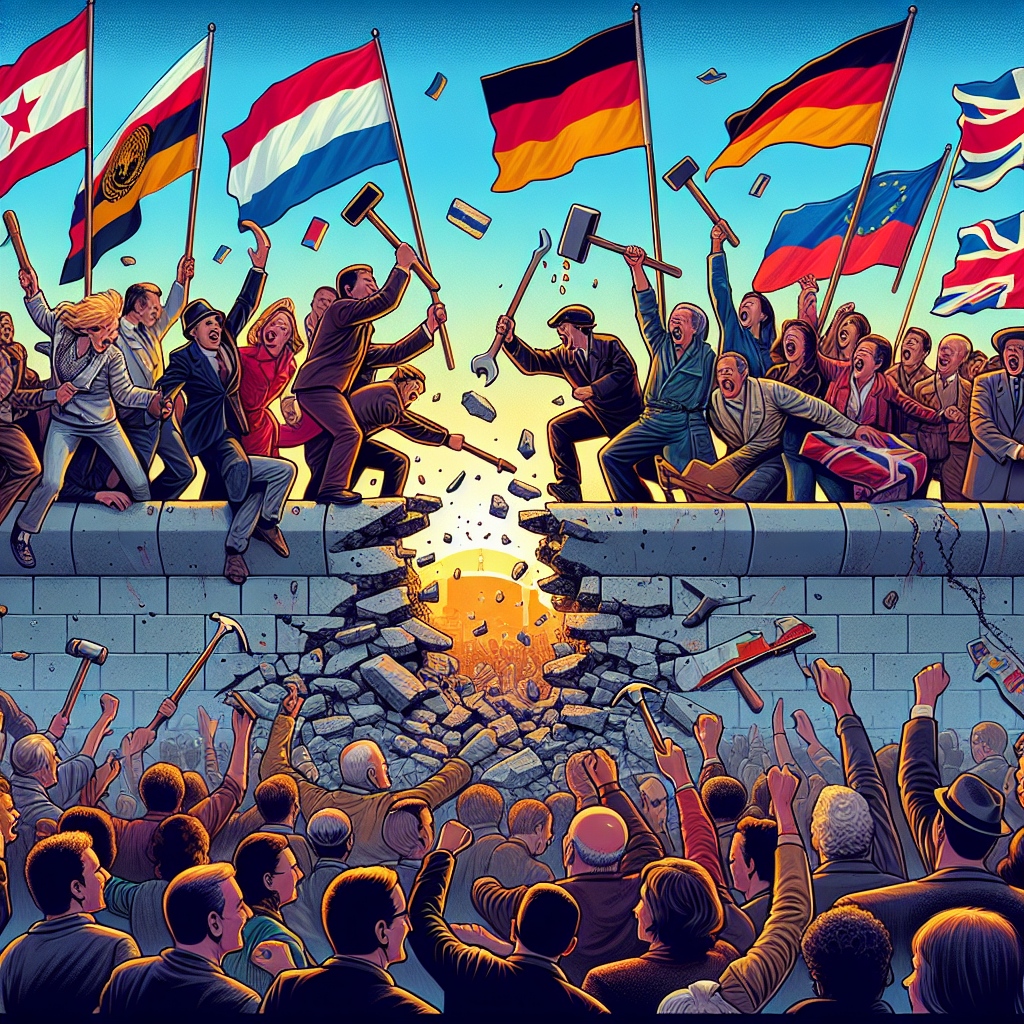
The fall of the Berlin Wall was precipitated by a series of events that weakened communist control in Eastern Europe. By the late 1980s, the Soviet Union under Mikhail Gorbachev had adopted policies of Glasnost (openness) and Perestroika (restructuring), leading to a more liberal political environment. This shift, combined with growing public unrest and demands for greater freedoms, put immense pressure on the East German government. On November 9, 1989, an East German government official announced, almost by accident, that East Germans would be allowed to cross into the West. This announcement was met with immediate and overwhelming public response. Thousands of East Berliners surged toward the Wall, overwhelming the border guards who eventually opened the gates, leading to joyous scenes of reunification on both sides. The world watched in awe as the Wall, this oppressive symbol, was triumphantly torn down by the people it had imprisoned.
Impact on German Reunification

The fall of the Berlin Wall paved the way for the reunification of Germany, an event that marked a turning point in European history. The collapse of the Wall initiated a series of political negotiations and economic reforms that culminated in the official reunification of East and West Germany on October 3, 1990. This process wasn’t just about merging two states but also involved harmonizing vastly different political, economic, and social systems. Reunification brought immense challenges, including economic disparities and social integration issues. However, it also brought enormous opportunities, spearheading a transformative period for Germany. This newfound unity fostered a stronger sense of national identity and positioned Germany as a leading power in the new European order. The reunification of Germany also set a precedent and served as a model for other Eastern Bloc countries transitioning from communist rule to democratic governance.

Influence on European Unity

The fall of the Berlin Wall had a profound impact on the broader European continent, accelerating the process of European integration. The event symbolized the possibility of overcoming divisions and building a united Europe based on shared values of democracy, human rights, and market economy. It also underscored the importance of regional cooperation and the benefits of a unified approach to political and economic challenges. In the years following the fall of the Wall, the European Community evolved into the European Union (EU), with its institutional framework designed to foster greater political and economic integration among member states. The Maastricht Treaty, signed in 1992, laid the groundwork for the creation of the EU and introduced common policies on foreign affairs, security, and justice. This treaty was a testament to the vision of a unified Europe that could act cohesively on the global stage.

Symbol of Freedom and Human Rights

Beyond its immediate political and economic repercussions, the fall of the Berlin Wall stands as a powerful symbol of freedom and human rights. It reminds us of the triumph of the human spirit over oppression and the universal desire for liberty. The images of East and West Berliners celebrating together, breaking down the Wall with their own hands, resonate as a stark reminder of what people can achieve when they yearn for change and act collectively. This event has also inspired numerous global movements and revolutions, serving as a beacon of hope for oppressed populations worldwide. It highlights the importance of solidarity, peaceful protest, and the continual struggle for a more just and equitable world. The legacy of the Berlin Wall’s fall continues to inspire efforts toward overcoming new forms of division and inequality, whether they be political, racial, or socio-economic.

The Cultural Renaissance

The reunification of Germany and the increased European integration brought about a cultural renaissance that extended well beyond political borders. With the collapse of the Berlin Wall, there was a significant exchange of ideas, art, music, and literature across Europe. Berlin itself emerged as a cultural epicenter, attracting artists, musicians, and intellectuals from around the world. This cultural exchange fostered a greater appreciation for diversity and the blending of Eastern and Western European traditions. The removal of physical and ideological barriers allowed for a more fluid and dynamic exchange of cultural practices and innovations. Festivals, exhibitions, and collaborations became more common, enriching the cultural fabric of Europe and promoting a deeper understanding of different cultural perspectives.

Conclusion

The fall of the Berlin Wall is undeniably one of the most significant events of the 20th century. It not only marked the end of a divided Europe but also signaled the dawn of a new era characterized by unity, cooperation, and a shared commitment to democratic values. The Wall’s collapse paved the way for German reunification, influenced the trajectory of the European Union, and stood as a symbol of the universal aspiration for freedom and human rights. Furthermore, it sparked a cultural renaissance that continues to shape European identity and global cultural exchanges. As we reflect on the fall of the Berlin Wall, we are reminded of the enduring power of human will, the importance of overcoming divisions, and the potential for a united future grounded in solidarity and mutual respect. The legacy of November 9, 1989, is not just a historical milestone, but a continuing inspiration for building a more inclusive and cohesive world.

European Cultures, Major World Events, World Cultures

Post navigation

Previous Post: How World Wars Shaped National Boundaries and Cultures
Next Post: Decolonization’s Impact on African Nations

Related Posts

North America’s Mosaic: A Diverse Cultural Landscape North American Cultures
The Role of the Internet in Cultural Exchange World Cultures
Exploring Hollywood’s Global Cultural Impact Cultural Celebrations
Wildlife Conservation in Africa & Asia African Cultures
Norse Mythology: From Yggdrasil to Ragnarok Mythology and Legends
Cultural Exploration of Oceania: Australia, New Zealand, and More Oceania and Pacific Cultures
  • World History
  • Timeline of US History: Major Events from 1492 to Present
  • Glossary of Government Terms: 50 AP Gov Concepts Explained in Plain English
  • Top 10 Most Common Social Studies Exam Terms (and What They Mean)
  • Research Paper Outline Example (Template for High School & AP Research)

Navigation

  • Economics
    • Agricultural Price Supports
    • Agriculture in the United States
    • Bank Deregulation and the S&L Crisis
    • Banking and the Federal Reserve System
    • Basic Economic Concepts
    • Budgeting
    • Business Cycle
    • Business Organizations
    • Perspectives on Business Structures
    • Circular Flow Model
    • Collective Bargaining
    • Comparative Economic Systems
    • Different Types of Banks
    • Economic Growth
    • Economic Indicators
    • Economics Final Exam Review
    • Economics Links
    • Elasticity
    • Federal and State Budgeting
    • Federal Spending and National Debt
    • Free Enterprise
    • Governments Role in the Economy
    • History of Labor Unions
    • Government Protection of the Consumer
    • Income Inequality
    • Inflation
  • History Topics
    • “Robber Barons” or “Captains of Industry”
    • The 18th & 19th Amendments: Prohibition & Women’s Suffrage Explored
    • 19th Amendment – Womens Suffrrage
    • African American Reformers
    • African American Reform in the Progressive Era
    • America – Divided at Birth
    • America’s Role in WWII: Decisive Influence in War’s Outcome
    • Spanish American War: How it Forged America’s Global Dominance
    • Andrew Carnegie – Gospel of Wealth
    • Effectiveness of U.S. Antitrust Laws in Protecting Competition
    • Articles of Confederation
    • Justifications & Impacts: Policies Toward Native Americans
    • Understanding the Bill of Rights’ Protections
    • US Campaigns and Elections: Democracy’s Backbone
    • Causes of the Great Depression
    • Opposition & Responses to the New Deal: Roosevelt’s Strategy
    • Checks and Balances
    • Effectiveness of the Civil Rights Movement in U.S. Social Change
    • What Caused the Beginning of the Civil War?
    • Colonization and Mercantilism
    • Constitutional Convention
    • Constitutional Flexibility
    • Containment Policy: America’s Tactics Against Communism
    • Cooling the Cold War: From Peaceful Coexistence to Detente
    • Cooling Off: Peaceful Coexistence to Detente
    • Declaration of Independence
    • Democracy in the colonies
    • Dropping of the Atomic Bomb
    • Early Domestic Policies
    • Washington & Jefferson’s Impactful Foreign Policies
    • Reconstruction’s Impact on Freedmen’s Lives
    • Effect of Lincoln’ Death on Reconstruction
    • Effects of the Great Depression
    • Electoral College
    • Enlightenment Thinkers
    • Events Leading Up To The Revolution
    • French and Indian War
    • Government Relationship with Unions
    • How a bill becomes a law.
    • Immigration – Why they came
    • Improvement in the cities – Progressive Era
    • American Influence in Asia during the 1800s
    • John Quincy Adams and Andrew Jackson
  • History Lessons
    • Cold War Genesis: A Detailed Analysis
    • The End of the Cold War
    • FDR’s New Deal
    • Foundation of Democracy
    • The Presidency of Andrew Jackson
    • JFK versus LBJ
    • The Presidency of John Adams
    • Judicial Branch
    • Immigration in the U.S
    • Legislative Branch
    • Madison – War of 1812
    • Monopolies & Trusts: Exploring American Businesses’ Quest to Curb Competition
    • The Presidency of James Monroe
    • Judicial Review and Supreme Court Cases
    • Justification for Imperialism
    • Korematsu V. United States
    • Origins of Legalized Segregation in the South
    • Management vs Unions: Responses to Unionization in the Industrial Revolution
    • Westward Expansion: Manifest Destiny’s Impact
    • McCarthyism Explained: Politics, Fear, and Cold War Context
    • The New Deal’s Impact on Minorities in 1930s America
    • Monopolies
    • Monroe Presidency
    • New Technologies – Industrialization
    • WWI and Civil Liberties: Striking the Balance in Wartime
  • Gov & Politics
    • Elections and Campaigns – Week 9 Notes
    • Interest Groups in American Politics: A Historical Review
    • Interest Groups – Text Notes – Week Seven
    • Lecture Notes – American Political System
    • Lecture Notes – Congress – Week 11
    • Lecture Notes – Economic Policy
    • Lecture Notes – Federalism
    • Lecture Notes – The Judiciary – Week 13
    • Notes – The Bureaucracy
    • Lecture Notes – Political Culture in America
    • Political Participation
    • Political Participation – Text Notes – Week Six
    • Political Parties – Week 8 – Text Notes
  • World Cultures
    • Asian Cultures
    • African Cultures
    • European Cultures
    • Middle Eastern Cultures
    • North American Cultures
    • Oceania and Pacific Cultures
    • South American Cultures
  • Global Trends
  • Important Events
  • Social Studies Weekly
  • Cultural Celebrations
    • Ancient Civilizations
    • Architectural Wonders
    • Celebrating Hispanic Heritage
    • Celebrating Women
    • Celebrating World Heritage Sites
    • Clothing and Fashion
    • Culinary Traditions
    • Cultural Impact of Language
    • Environmental Practices
    • Festivals
    • Global Art and Artists
    • Global Music and Dance
  • Economics
    • Behavioral Economics
    • Development Economics
    • Econometrics and Quantitative Methods
    • Economic Development
    • Economic Geography
    • Economic History
    • Economic Policy
    • Economic Sociology
    • Economics of Education
    • Environmental Economics
    • Financial Economics
    • Health Economics
    • History of Economic Thought
    • International Economics
    • Labor Economics
    • Macroeconomics
    • Microeconomics
  • Important Figures in History
    • Artists and Writers
    • Cultural Icons
    • Groundbreaking Scientists
    • Human Rights Champions
    • Intellectual Giants
    • Leaders in Social Change
    • Mythology and Legends
    • Political and Military Strategists
    • Political Pioneers
    • Revolutionary Leaders
    • Scientific Trailblazers
    • Explorers and Innovators
  • Global Events and Trends
  • Regional and National Events
  • World Cultures
    • Asian Cultures
    • African Cultures
    • European Cultures
    • Middle Eastern Cultures
    • North American Cultures
    • Oceania and Pacific Cultures
    • South American Cultures
  • Privacy Policy

Copyright © 2025 SOCIALSTUDIESHELP.COM. Powered by AI Writer DIYSEO.AI. Download on WordPress.

Powered by PressBook Grid Blogs theme