Nestled in the northern regions of Japan, primarily in Hokkaido, lives a group of indigenous people known for their rich cultural heritage and tumultuous history – the Ainu. This article delves into the heart of Ainu culture, their historical challenges, and the ongoing struggle for recognition in contemporary Japanese society.
Historical Background
The Ainu people’s presence in Japan dates back to at least the 13th century, possibly earlier. Initially living in areas that are now part of Russia, they later settled in Hokkaido, the northernmost island of Japan. The Ainu culture is distinct from the mainstream Japanese culture in various aspects, including language, religion, and social practices.
Cultural Identity
Ainu culture is rich and multifaceted. Their traditional religion is animistic, believing in spirits known as ‘kamuy’ in everything, from animals to inanimate objects. This belief system is deeply intertwined with nature and is reflected in their customs, art, and music.
The Ainu language, distinct from Japanese, is critically endangered. Efforts are ongoing to preserve and revive it, recognizing its crucial role in maintaining cultural identity.
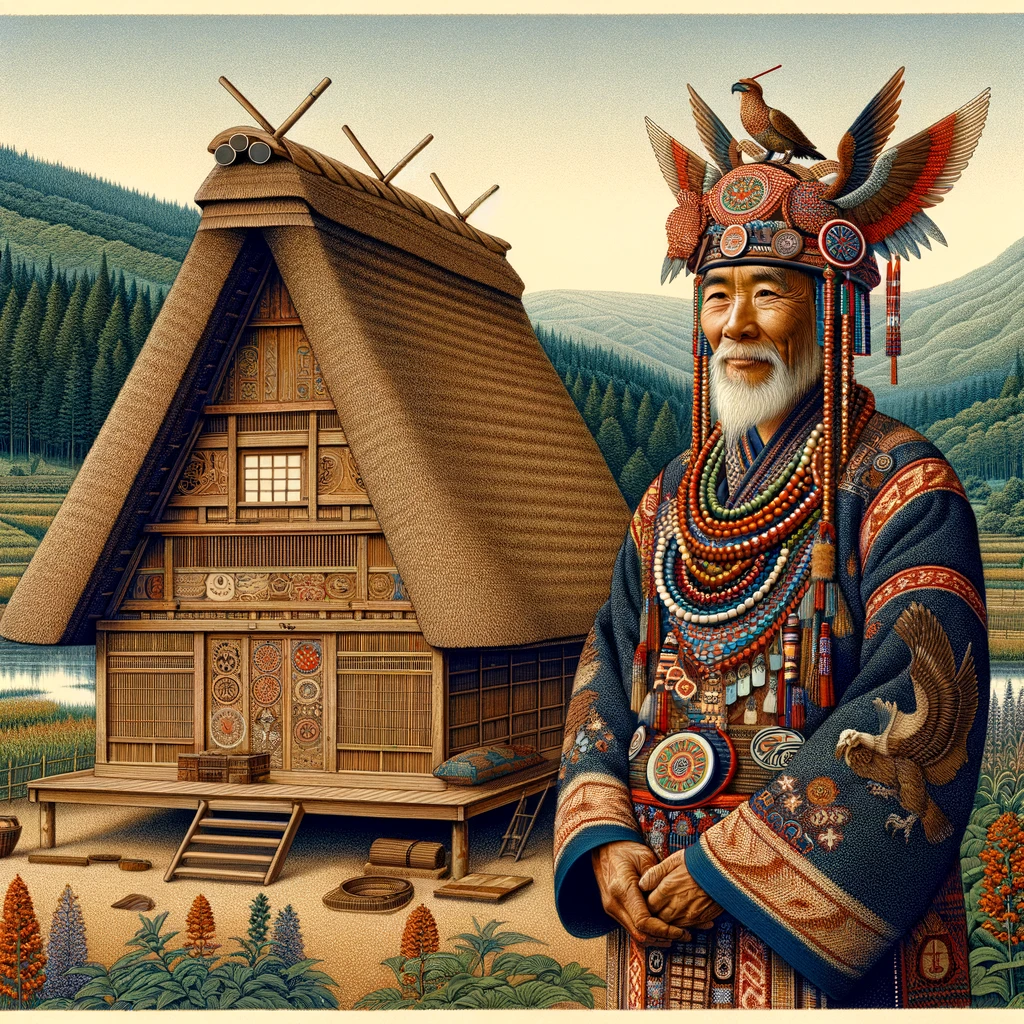
Traditional Ainu clothing is made from natural materials like elm bark and adorned with intricate patterns. These patterns are not merely decorative; they carry significant cultural and spiritual meanings.
Economic Lifestyle
Historically, the Ainu were hunter-gatherers, living in harmony with their harsh environment. They hunted animals such as bears and deer and fished in the rich waters surrounding Hokkaido. The modernization of Japan has drastically changed their traditional lifestyle, with many Ainu now partaking in various sectors of the contemporary economy.
Struggle Against Assimilation
The Ainu’s struggle began with the Meiji Restoration in the late 19th century. The Japanese government’s policy of assimilation forced the Ainu to adopt Japanese customs and language, severely impacting their cultural identity. This period also saw the exploitation of their lands, further marginalizing them economically and socially.
Legal Recognition and Rights
It wasn’t until 1997 that the Ainu were officially recognized as an indigenous group in Japan, with the Ainu Culture Law. However, this law was criticized for its lack of depth in addressing the real issues faced by the Ainu community. More recently, in 2019, a new law was enacted to protect and promote Ainu culture, and to facilitate better educational and economic opportunities. This marked a significant step towards acknowledging the injustices faced by the Ainu and rectifying past wrongs.
Current Challenges
Despite these legal advancements, the Ainu continue to face challenges. Discrimination and lack of awareness about their culture persist in mainstream Japanese society. Economic disparities also remain a significant issue, with many Ainu living in poverty.
The struggle for land rights continues to be a contentious issue. Traditional Ainu lands, which are crucial to their cultural and spiritual practices, are often under government control or private ownership, limiting their access and use.
Efforts in Cultural Revival
In recent years, there has been a resurgence in interest in Ainu culture, both within the Ainu community and among the wider Japanese population. This includes the revival of traditional crafts, music, and dance. Educational programs and cultural exchanges are also being implemented to increase awareness and understanding of Ainu heritage.
Museums and cultural centers, such as the Ainu Museum in Shiraoi, Hokkaido, play a pivotal role in preserving and sharing Ainu history and culture. These institutions not only serve as a resource for Ainu people to reconnect with their heritage but also educate the public, promoting a greater appreciation and respect for their culture.
International Recognition
The Ainu’s struggle for recognition is not just a national issue but has also gained international attention. The United Nations Declaration on the Rights of Indigenous Peoples, which Japan endorsed, provides a framework for the rights of indigenous groups, including the Ainu. This international recognition and support play a crucial role in their ongoing struggle for rights and recognition.
Traditional Practices and Modernization
The Ainu’s traditional practices are a window into their unique worldview and connection with nature. For example, their bear worship, known as ‘Iomante,’ involves raising and then ceremonially sending off a bear spirit to the gods, symbolizing respect for the animal. Such rituals are not mere folklore but integral to Ainu identity and their relationship with the natural world.
Modernization, however, has posed significant challenges to these practices. Urbanization and environmental changes have impacted the habitats crucial for traditional Ainu livelihoods. The younger generation, often moving to cities for education and work, find themselves distanced from these traditional practices, posing a threat to their continuity.
Language Revival Efforts
The Ainu language is a critical element of their cultural identity. Once prohibited and stigmatized, efforts are now underway to revive it. Language classes, both within the Ainu community and for the general public, are becoming more common. These efforts are not just about preserving words but about keeping a crucial aspect of Ainu culture alive and relevant in the 21st century.
Economic Disparities and Development
Economic challenges are a stark reality for many Ainu. The loss of their traditional lands and the shift to a modern economy have left many Ainu in a precarious economic position. The Japanese government’s recent initiatives aim to improve these conditions by promoting Ainu businesses and tourism, which not only provide economic opportunities but also serve as platforms for cultural exchange and understanding.
Education and Awareness
Education is a powerful tool in the Ainu’s struggle for recognition. Incorporating Ainu history and culture into the Japanese educational curriculum is vital for building understanding and respect among the wider population. This includes not only the history of their struggles but also the celebration of their cultural contributions.
Efforts are also being made to educate the Ainu youth about their heritage, ensuring that the next generation carries forward their traditions and history. These educational initiatives are crucial for building a society that recognizes and values the diversity of its people.
The Role of the Arts in Ainu Culture
The Ainu have a rich artistic tradition, including wood carving, textile weaving, and music. Traditional Ainu music, with its unique instruments like the mukkuri (a mouth harp) and the tonkori (a stringed instrument), has gained international attention. These art forms are not only expressions of cultural identity but also serve as tools for educating others about Ainu culture.
Future Prospects and Continuing Struggles
The Ainu’s struggle for recognition and rights is an ongoing process. While legal and societal changes have been made, much remains to be done. The Ainu seek not just the preservation of their culture but its flourishing within modern Japanese society. They aspire for a future where their identity is not merely an artifact of the past but a living, evolving part of Japan’s cultural mosaic.
The road ahead involves continued advocacy for rights, education, and cultural revival. It’s a path that requires the support and understanding of the broader Japanese population and the global community. As awareness grows and attitudes shift, there is hope for a more inclusive and respectful society where the Ainu can thrive as an integral part of Japan’s cultural heritage.
The Ainu of Japan exemplify the resilience and richness of indigenous cultures. Their ongoing struggle for recognition, rights, and preservation of their unique heritage is a testament to the enduring spirit of a people who have faced centuries of challenges. As Japan continues to evolve, it is imperative that the rights and culture of the Ainu are not only recognized but integrated into the broader tapestry of Japanese society, enriching it with their unique perspective and history.
The story of the Ainu is not just a tale of struggle but also of hope, resilience, and the unyielding pursuit of identity and recognition. It serves as a poignant reminder of the importance of preserving cultural diversity in our increasingly globalized world.