The 2030 Agenda for Sustainable Development, adopted by all United Nations Member States in 2015, introduces a shared blueprint for peace and prosperity for people and the planet, now and into the future. At its core are the 17 Sustainable Development Goals (SDGs), which are an urgent call for action by all countries – developed and developing – in a global partnership. The SDGs recognize that ending poverty and other deprivations must go hand-in-hand with strategies that improve health and education, reduce inequality, and spur economic growth – all while tackling climate change and working to preserve our oceans and forests.
Economic development under the SDGs framework implies a large-scale effort towards inclusive, equitable, and sustainable growth. This effort must not only focus on economic metrics like GDP growth but also emphasize environmental sustainability, social inclusion, and equity. Each goal has specific targets to be achieved, necessitating measures tailored to a wide array of economic and sociopolitical contexts. This article explores the economic perspectives and challenges associated with realizing these goals.
Economic Growth and SDGs
Understanding the relationship between economic growth and the SDGs requires a thorough analysis of Goal 8: Decent Work and Economic Growth. This goal promotes sustained, inclusive, and sustainable economic growth, full and productive employment, and decent work for all by 2030. Economic growth is essential for the creation of jobs and wealth, which in turn can lift people out of poverty and improve living standards.
However, economic growth must be approached cautiously. The traditional metrics of economic performance, like GDP, often fail to account for environmental degradation, resource depletion, and social disparities. Sustainable economic growth must go beyond mere profit generation to incorporate green jobs, equitable income distribution, and resilient infrastructures. In practical terms, this translates into fostering industries that are environmentally friendly, ensuring fair work conditions, and promoting gender and income equality.
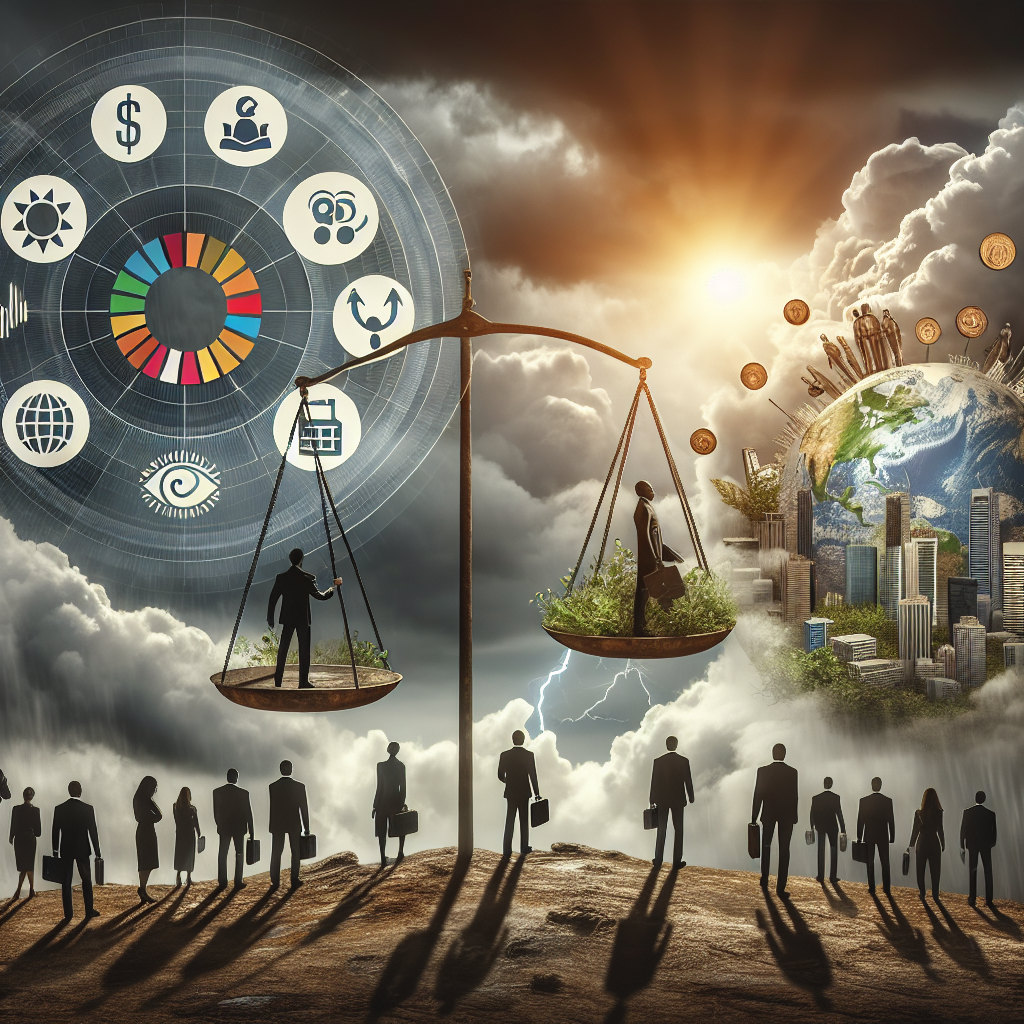
The challenge lies in balancing economic growth with the need to reduce carbon footprints, conserve biodiversity, and promote renewable energy. This balance is tricky, given the diversity of countries’ stages of development and their respective economic challenges. For developing nations, the trade-off between industrial growth and environmental sustainability is particularly pronounced.
Investment and Innovation
Investing in new technologies and innovative solutions is crucial for achieving the economic aspects of the SDGs. Innovation, aligned with Goal 9: Industry, Innovation, and Infrastructure, seeks to build resilient infrastructure, promote sustainable industrialization and foster innovation. Investment in technological advancements can drive efficiency and productivity across various sectors, including energy, agriculture, manufacturing, and services.
Traditionally, investments are directed towards sectors with high returns. However, sustainable development posits a need to redirect a significant share of investments into green technologies, renewable energies, and sustainable practices. Governments and international bodies play a pivotal role in incentivizing such investments through subsidies, tax incentives, and favorable policies.
Moreover, technological innovation can provide solutions to some of the most pressing challenges. For example, advancements in clean energy technology reduce dependency on fossil fuels, help combat climate change, and create new job opportunities. Innovations in agriculture can enhance food security while minimizing environmental impact, aligning with Goal 2: Zero Hunger. Sustainable practices in industries not only mitigate risks associated with climate change but also open avenues for new business models and economic opportunities.
Equity and Inclusion
Economic growth must be inclusive, meaning that benefits should be broadly shared and the gaps between rich and poor reduced. Goals related to poverty (Goal 1: No Poverty) and inequality (Goal 10: Reduced Inequalities) emphasize that economic gains should lead to lifting everyone out of poverty and ensuring fair opportunities and treatments across populations.
The greatest challenge in achieving inclusive growth is addressing structural inequalities entrenched in societies. These include disparities based on gender, ethnicity, socioeconomic status, disability, and geographic location. Policies must aim to dismantle these barriers by promoting fair wages, social protection systems, and equal opportunities in education and employment.
In practical terms, targeted policies can include initiatives like providing microfinance to underserved communities, implementing social safety nets, legislating against discriminatory practices, and ensuring that marginalized groups have access to education and healthcare. Further, inclusive growth policies should also focus on regional development, creating economic opportunities even in rural and underserved urban areas.
Environmental Sustainability
Economic activities traditionally have been significant contributors to environmental degradation. The SDGs, particularly Goal 13: Climate Action, Goal 14: Life Below Water, and Goal 15: Life on Land, draw attention to the need for environmentally sustainable practices. Integrating economic and environmental goals is crucial, requiring a shift towards sustainable resource management, pollution control, and adopting green technologies.
Economic policies now need to incorporate the cost of environmental impact and invest in minimizing carbon footprints. Sustainable agriculture, responsible industrial practices, and green construction are examples where environmentally conscious approaches are being implemented. Moreover, the circular economy concept, which emphasizes resource efficiency and minimizing waste, has gained traction as a sustainable economic model.
One significant challenge in promoting environmental sustainability alongside economic growth is the internalization of environment-related costs into economic systems. Many businesses and governments struggle with the upfront investment needed for sustainability initiatives, though these can provide long-term savings and benefits. Additionally, international cooperation and cohesive policies are required to address transboundary environmental issues, such as ocean pollution and climate change.
Global Partnerships and Funding
The successful implementation of the SDGs also depends heavily on Global Partnerships (Goal 17). In a globalized world, economic activities in one country often have far-reaching impacts, necessitating international cooperation and coordination. Mobilization of financial resources, technology transfer, capacity building, and fair trade practices are essential for fostering sustainable economic development on a global scale.
Funding the SDGs requires an enormous investment from both public and private sectors. Official Development Assistance (ODA) from developed to developing countries plays a crucial role, but it is complemented by investments from private enterprises and non-governmental organizations. Further, innovative financial instruments, such as green bonds and impact investing, can provide new pathways for sustainable development funding.
Policymakers must encourage collaboration between governments, international organizations, private sector, and civil society. This ensures not only the mobilization of funds but also the efficient and targeted use of these resources. International agreements and frameworks, such as trade agreements and climate accords, also need to reflect and support the SDG commitments.
Monitoring and Accountability
For the SDGs to be realized, monitoring progress and accountability are key. Reliable, timely, and accessible data are essential for tracking progress and making informed decisions. Goal 17 includes targets related to enhancing the capacity for data collection and analysis, which is crucial for understanding the economic impacts and measuring success accurately.
Governmental and non-governmental agencies, along with international organizations, must work together to build robust frameworks for monitoring and evaluation. These frameworks should encompass a wide range of economic, social, and environmental indicators. For instance, the use of GDP growth as a sole economic indicator must be supplemented with measures of income distribution, environmental health, and social well-being.
Ensuring accountability involves setting clear targets and timelines, publishing regular progress reports, and maintaining transparency in the implementation processes. Stakeholders, including citizens and civil society organizations, must have the means to hold governments and businesses accountable to their SDG commitments. This also encourages continuous improvement and adapts strategies based on what is working and what is not.
Conclusion
The Sustainable Development Goals present an unparalleled blueprint for addressing global challenges through economic, social, and environmental lenses. However, achieving these goals involves nuanced approaches and unprecedented cooperation. The economic growth frameworks necessitate rethinking traditional models and incorporating sustainability, inclusivity, and resilience at their core.
Investing in innovation and green technologies, fostering equitable economic policies, promoting environmental sustainability, and enhancing global partnerships are critical in bridging the gaps. The challenges are significant, from balancing economic growth with environmental conservation to ensuring equity and inclusion in a diverse world. Yet, the opportunities presented by the SDGs can drive profound transformation towards a more sustainable, just, and prosperous world for all.
Ultimately, the journey towards realizing the SDGs is complex but essential. Governments, businesses, civil society, and individuals must act collaboratively and decisively to create a future that stands the test of time, ensuring that no one is left behind. The economic perspectives on SDGs emphasize that sustainable development is not only a moral imperative but a practical pathway to enduring wealth and well-being.