
Welcome to the fascinating field of Development Economics, a discipline that seeks to understand how countries can foster economic growth, social inclusion, and environmental sustainability. In this article, we will delve into the concept of sustainable development and explore the economic, social, and environmental dimensions that underpin it. By examining these interconnected arenas, we can better understand how to formulate policies and actions that not only support economic growth but also ensure that such growth is inclusive and environmentally sustainable.
Introduction: Understanding Sustainable Development
Sustainable development is a multi-faceted concept that has gained significant traction since the late 20th century. Essentially, it is a comprehensive approach to development that seeks to balance the economic, social, and environmental needs of society. At its core, sustainable development aims to meet the needs of the present without compromising the ability of future generations to meet their own needs.
What is Development Economics?
Development Economics is a branch of economics that focuses on improving the economic conditions of countries, particularly those that are considered low-income or developing. This field examines various factors such as poverty, income inequality, and economic policies to understand how growth can be achieved and sustained in the long run. Development economists use a combination of theoretical and empirical approaches to address issues such as healthcare, education, infrastructure, and institutional reforms.
The Need for Sustainable Development
The traditional model of economic development primarily focuses on GDP growth and industrialization. However, this approach often overlooks crucial factors such as social equity and environmental preservation. For example, rapid industrialization may boost economic growth but can lead to environmental degradation and social displacement. This is where sustainable development comes into play. It provides a more holistic framework by integrating economic, social, and environmental considerations. By adopting sustainable development practices, countries can aim for a balanced growth trajectory that not only enhances economic prosperity but also promotes social inclusion and environmental stewardship. These principles are particularly relevant today, given the escalating challenges such as climate change, biodiversity loss, and social inequalities.
Economic Dimensions of Sustainable Development
Economic growth is undoubtedly a critical component of sustainable development. However, for growth to be truly sustainable, it must be inclusive and equitable.
Inclusive Growth
Inclusive growth refers to an economic growth paradigm that ensures every segment of society benefits from economic advancements. This includes marginalized groups such as women, children, and ethnic minorities. Policies aimed at inclusive growth often focus on job creation, access to quality education, and social safety nets. For example, microfinance institutions offer financial services to low-income individuals who are otherwise excluded from the traditional banking system. This not only fosters economic independence but also supports overall community development.
Innovation and Technology
Innovation and technology are essential drivers of economic growth and sustainable development. Technological advancements can lead to improved efficiency, reduced costs, and the generation of new markets. For instance, renewable energy technologies such as solar and wind power not only contribute to economic growth but also help in mitigating environmental issues like climate change. Moreover, digital technology can improve access to education and healthcare, thereby contributing to social well-being.
Economic Policies and Governance
Effective governance is crucial for sustainable economic development. Policymakers must devise and implement economic policies that promote equitable growth, environmental sustainability, and social well-being. This includes regulatory frameworks, tax policies, and public expenditure strategies that encourage sustainable practices. Transparent and accountable governance structures can also foster investor confidence, thereby stimulating investment and economic growth.
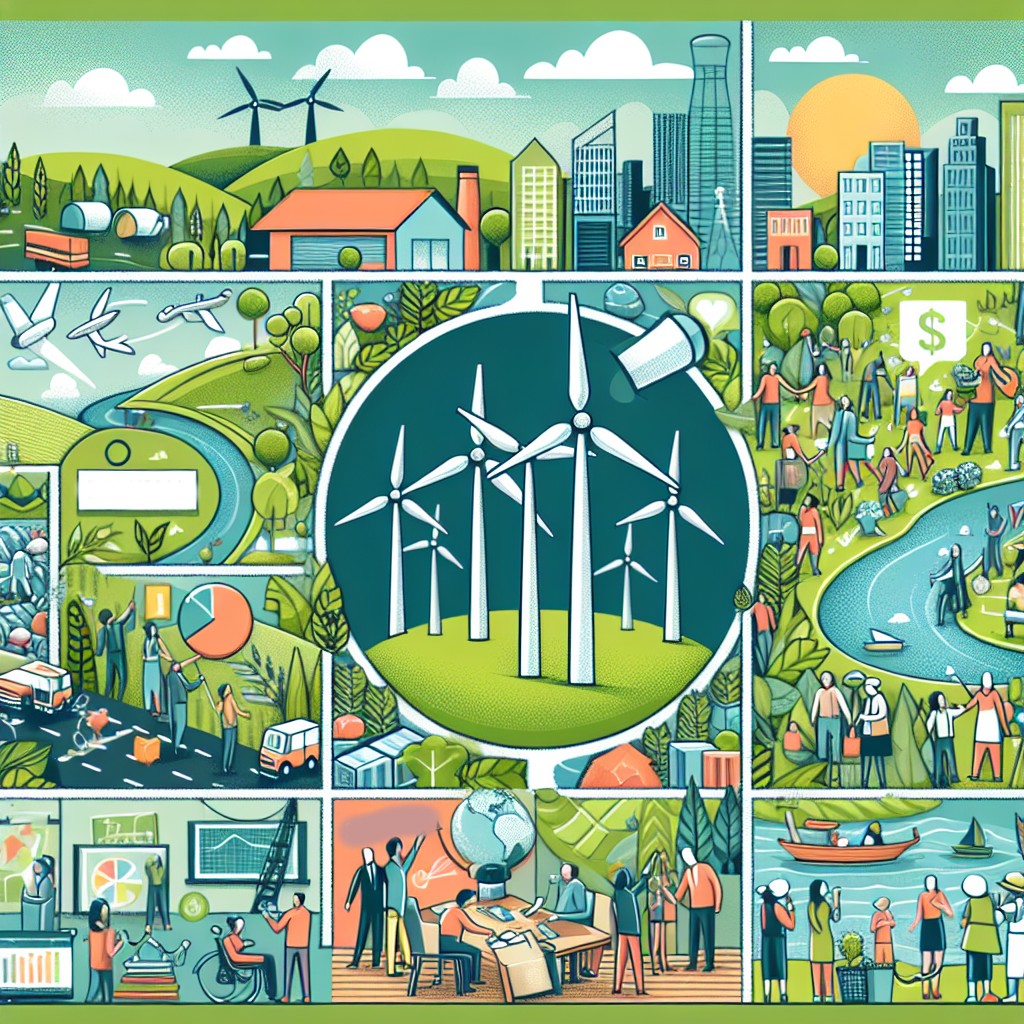
Social Dimensions of Sustainable Development
Social dimensions are an integral part of sustainable development. Achieving social sustainability requires addressing issues such as poverty, education, healthcare, and social equity.
Poverty Alleviation
One of the primary goals of sustainable development is the eradication of poverty. Poverty is not just an economic issue; it is a social challenge that affects people’s quality of life, access to opportunities, and overall well-being. Various strategies can be employed to combat poverty, including social welfare programs, job training initiatives, and access to affordable healthcare and education. Community-based programs can also play a crucial role in fostering social cohesion and collective action against poverty.
Education and Empowerment
Education is a powerful tool for social change and sustainable development. It provides individuals with the skills and knowledge needed to improve their livelihoods and contribute to society. Investments in education, particularly for girls and women, can have a transformative impact on communities. Educated individuals are more likely to make informed decisions, participate in the labor market, and contribute to social and economic development.
Health and Well-being
Health is another critical aspect of social sustainability. A healthy population is a productive population. Access to quality healthcare services, nutrition, and clean water and sanitation are essential for improving public health. Policies that promote preventive healthcare, maternal and child health, and mental well-being are vital for sustainable development. Additionally, addressing health disparities and ensuring that vulnerable populations have access to healthcare services is crucial for achieving social equity.
Environmental Dimensions of Sustainable Development
The environmental dimension of sustainable development focuses on preserving natural resources and ecosystems while promoting economic and social well-being.
Natural Resource Management
Sustainable management of natural resources is essential for long-term economic and social development. This involves the responsible use of resources such as water, land, and minerals to ensure their availability for future generations. Implementing practices such as sustainable agriculture, forestry, and fisheries can help maintain the ecological balance and support livelihoods dependent on these resources. Governments and organizations can play a significant role by promoting conservation efforts and creating policies that encourage sustainable resource use.
Climate Change Mitigation and Adaptation
Climate change is one of the most pressing environmental challenges of our time. Mitigating its impact requires a concerted effort to reduce greenhouse gas emissions and implement sustainable practices. This includes transitioning to renewable energy sources, improving energy efficiency, and adopting low-carbon technologies. Additionally, climate adaptation strategies, such as building resilient infrastructure and protecting vulnerable communities, are essential for coping with the adverse effects of climate change.
Biodiversity Conservation
Biodiversity is crucial for the health and stability of ecosystems. Conservation efforts aim to protect and restore natural habitats, endangered species, and ecosystems. Biodiversity provides essential services such as pollination, water purification, and soil fertility, which are vital for human well-being and economic activities. Promoting biodiversity conservation through policies, protected areas, and community involvement is integral to sustainable development.
Integrated Approaches to Sustainable Development
Achieving sustainable development requires an integrated approach that considers the interconnections between economic, social, and environmental dimensions.
Interdisciplinary Collaboration
Sustainable development challenges are complex and multifaceted, requiring collaboration across various disciplines and sectors. Researchers, policymakers, businesses, and civil society organizations must work together to develop and implement solutions. Interdisciplinary collaboration can lead to innovative approaches that address multiple dimensions of sustainable development simultaneously.
Policy Integration
Integrating sustainability into policy frameworks is essential for achieving long-term development goals. Governments should incorporate sustainable development principles into national and local policies, plans, and budgets. This includes setting targets, monitoring progress, and ensuring accountability. Policies that promote sustainable development should be coherent and aligned with international commitments, such as the United Nations Sustainable Development Goals (SDGs).
Community Engagement
Community involvement is critical for the success of sustainable development initiatives. Engaging communities in the planning and implementation of projects ensures that their needs and perspectives are considered. Participatory approaches can empower communities, build local capacity, and foster a sense of ownership and responsibility. By involving communities, development efforts can be more effective, inclusive, and sustainable.
Conclusion: The Path Forward
Sustainable development is a dynamic and evolving concept that requires ongoing commitment and collaboration. It is not a one-size-fits-all solution but rather a flexible framework that can be adapted to different contexts and challenges. By embracing the economic, social, and environmental dimensions of sustainable development, we can work towards a future that is prosperous, equitable, and sustainable for all.
The Role of Individuals and Institutions
Everyone has a role to play in promoting sustainable development. Governments, businesses, non-governmental organizations, and individuals all have a part to contribute. Governments can create enabling environments through policies and regulations, while businesses can adopt sustainable practices and innovate solutions. Non-governmental organizations can advocate for change and provide support to vulnerable communities. Individuals can make conscious choices that reduce their environmental footprint and support social equity.
The Importance of Education and Awareness
Education and awareness are crucial for fostering a culture of sustainability. By educating people about the importance of sustainable development and the actions they can take, we can build a more informed and engaged society. Schools, universities, and media outlets have a significant role in raising awareness and providing education on sustainable development topics.
Moving Towards Sustainable Futures
The journey towards sustainable development is ongoing and requires continuous effort and adaptation. As new challenges and opportunities arise, we must remain flexible and resilient. By working together and staying committed to the principles of sustainable development, we can create a better future for ourselves and future generations.


