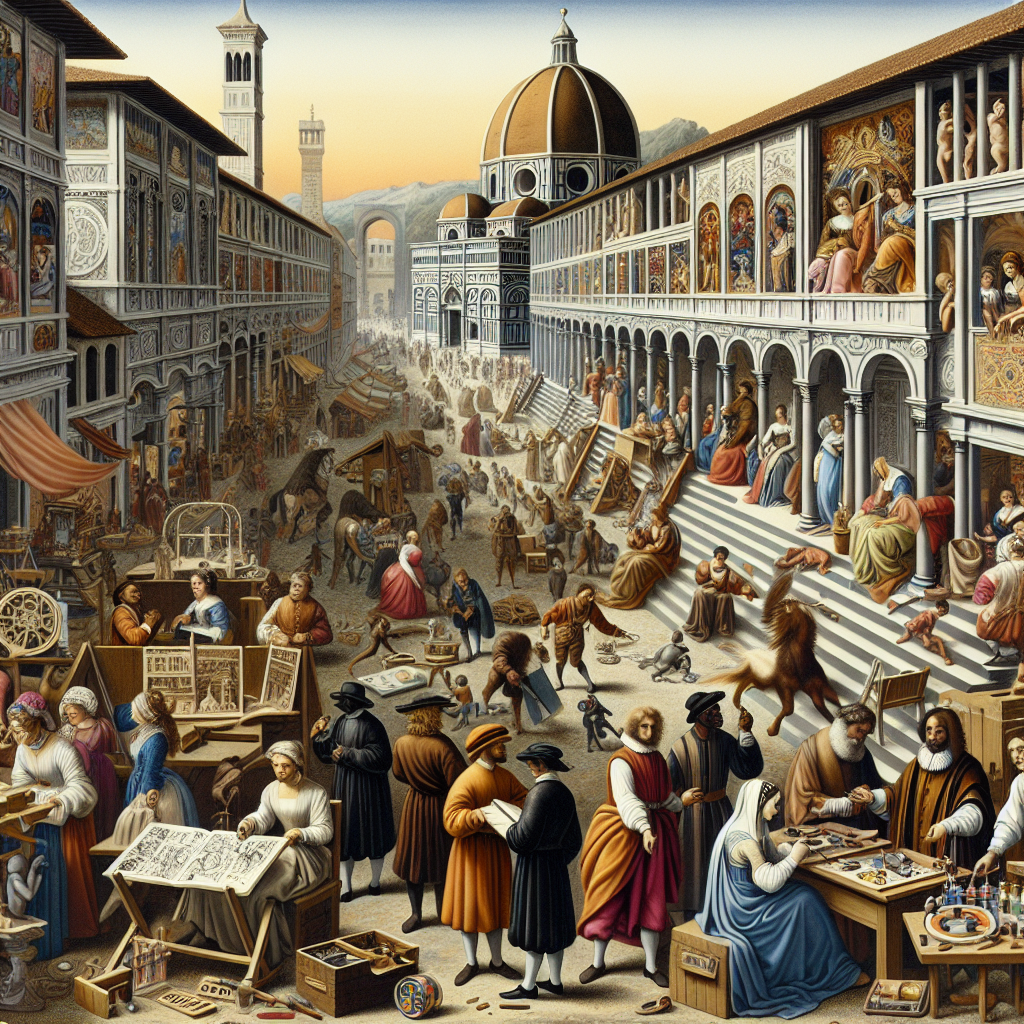
The Renaissance, a vibrant period of European cultural, artistic, political, and economic “rebirth” following the Middle Ages, significantly influenced modern culture. This era, spanning from the 14th to the 17th century, marked a profound shift in artistic expression and thought, which resonates to this day in various facets of modern life. This article explores the legacy of Renaissance art and its enduring impact on contemporary culture.
The Dawn of the Renaissance
The Renaissance began in Italy in the late 14th century and gradually spread across Europe. It was a time of renewed interest in the classical art and learning of Ancient Greece and Rome. This period witnessed the revival of classical philosophy, literature, and art.
Key Figures and Innovations
Pioneering artists like Leonardo da Vinci, Michelangelo, Raphael, and Botticelli brought forth a new era of creativity. Their innovative use of perspective, composition, and human anatomy set the standards for fine arts. Leonardo’s “Mona Lisa” and Michelangelo’s Sistine Chapel frescoes remain epitomes of Renaissance art.
Technological Advances
The invention of the printing press by Johannes Gutenberg in the mid-15th century was a pivotal technological advancement. It allowed for the widespread dissemination of knowledge and ideas, contributing significantly to the cultural revolution of the time.
Renaissance Art’s Aesthetic Principles
Renaissance art was characterized by realism, attention to detail, and a focus on humanism – the value and agency of human beings, individually and collectively.
Realism and Humanism
Artists sought to create more realistic and human-focused representations. This was evident in their portrayal of the human body, landscapes, and the use of light and shadow, known as chiaroscuro.
Influence of Classical Antiquity
Renaissance artists drew inspiration from classical antiquity, adopting themes and stylistic elements from ancient Greek and Roman art. This led to a balanced, harmonious, and orderly aesthetic in Renaissance art.
Impact on Modern Visual Arts
The Renaissance’s influence on modern visual arts is undeniable. The era’s principles, techniques, and themes have been foundational in the development of various art movements.
Continuation in Baroque and Neoclassicism
Subsequent art movements, such as Baroque and Neoclassicism, directly drew upon Renaissance ideals. The Baroque style, for instance, evolved from the Renaissance’s realistic approach but added dramatic intensity and emotion.
Influence on Modern Art Forms
Modern art forms, including photography, film, and graphic design, owe much to the Renaissance’s exploration of perspective, composition, and human emotion. The era’s emphasis on realism and humanism can be seen in the works of many contemporary artists and filmmakers.
Renaissance Ideas in Contemporary Culture
The Renaissance’s impact extends beyond visual arts, influencing various aspects of modern culture.
Literature and Philosophy
The era’s humanist principles resonated in the works of modern writers and philosophers, encouraging a focus on human experience and rationalism.
Architecture and Design
Contemporary architecture and design also reflect Renaissance influences. The era’s emphasis on symmetry, proportion, and harmony has been integral in shaping modern architectural styles.
Education and Renaissance Art
The study of Renaissance art plays a crucial role in modern education, particularly in the fields of art history and cultural studies.
Art Education
Renaissance art is a fundamental part of art curricula worldwide, helping students understand the evolution of artistic techniques and cultural contexts.
Broader Educational Impact
The Renaissance’s emphasis on learning and inquiry laid the groundwork for modern educational ideals. It championed the value of knowledge and critical thinking, which are cornerstones of contemporary education systems.
The Digital Age and Renaissance Art
The digital age has brought Renaissance art closer to a global audience. Digitization projects and online platforms have made these artworks more accessible, allowing for a deeper appreciation and understanding.
Virtual Exhibitions and Tours
Many museums offer virtual tours and exhibitions of Renaissance art, providing an immersive experience to audiences worldwide.
Digital Restoration and Preservation
Advanced technologies are used to restore and preserve Renaissance artworks, ensuring their survival for future generations.

Renaissance Art’s Influence on Contemporary Cinema
The impact of Renaissance art on contemporary cinema is significant. The era’s advancements in perspective, anatomy, and human emotion have deeply influenced the way movies are made and perceived.
Visual Storytelling
Renaissance artists were masters of storytelling through visuals, a skill that modern filmmakers emulate. The use of light and shadow, perspective, and composition in Renaissance paintings can be seen mirrored in the cinematography of many films.
Character Development
The focus on humanism and individualism during the Renaissance paved the way for more nuanced and complex character development in modern cinema. Filmmakers draw from this tradition to create relatable, multi-dimensional characters.
Renaissance Influence on Fashion and Design
The opulence and elegance of the Renaissance period have also left a mark on contemporary fashion and design.
Fashion Aesthetics
Designers often draw inspiration from the rich fabrics, intricate patterns, and silhouettes of Renaissance attire. This is evident in the use of luxurious materials, elaborate embroidery, and structured forms in high fashion.
Modern Interior Design
Renaissance influence extends to interior design as well, with an emphasis on symmetry, proportion, and a harmonious blend of color and form. Modern interiors often incorporate these principles, creating spaces that reflect Renaissance ideals of beauty and balance.
The Legacy in Performing Arts
Renaissance art has also greatly influenced the performing arts, including theatre, dance, and music.
Theatre and Stage Design
The era’s innovative use of perspective and scenery in paintings has informed modern stage design. Theatrical productions often use these elements to create immersive and visually compelling environments.
Dance and Choreography
The portrayal of the human form and movement in Renaissance art has inspired contemporary dance and choreography. The emphasis on expression and emotion in the art of this period is reflected in the fluidity and expressiveness of modern dance.
Preservation and Reinterpretation of Renaissance Art
The ongoing preservation and reinterpretation of Renaissance art ensure its continued relevance in modern culture.
Art Conservation Efforts
Conservationists and historians work tirelessly to preserve Renaissance artworks for future generations. This involves not only physical restoration but also academic research to deepen our understanding of these works.
Contemporary Reinterpretations
Modern artists and creators often reinterpret Renaissance themes and styles, bringing a fresh perspective to traditional motifs. This keeps the era’s art vibrant and relevant in contemporary artistic discourse.
The Global Impact of Renaissance Art
The Renaissance was a European phenomenon, but its impact is global. It has influenced artistic and cultural practices worldwide, transcending geographical and cultural boundaries.
Cross-Cultural Influences
Renaissance art has interacted with various cultures, influencing and being influenced by them. This exchange has enriched both the Renaissance tradition and the cultures it has touched.
Universal Themes
The themes explored in Renaissance art, such as humanism, individuality, and the pursuit of knowledge, are universal. They resonate with audiences across different cultures and times, making Renaissance art globally relevant.
Conclusion
The Renaissance was more than a historical period; it was a revolution in thought and artistic expression that continues to influence modern culture in multifaceted ways. From cinema and fashion to education and digital media, the legacy of Renaissance art is a testament to the enduring power of creativity and human expression. As we delve deeper into this remarkable era, we uncover new insights and inspirations, reaffirming the timeless relevance of Renaissance art in our contemporary world.