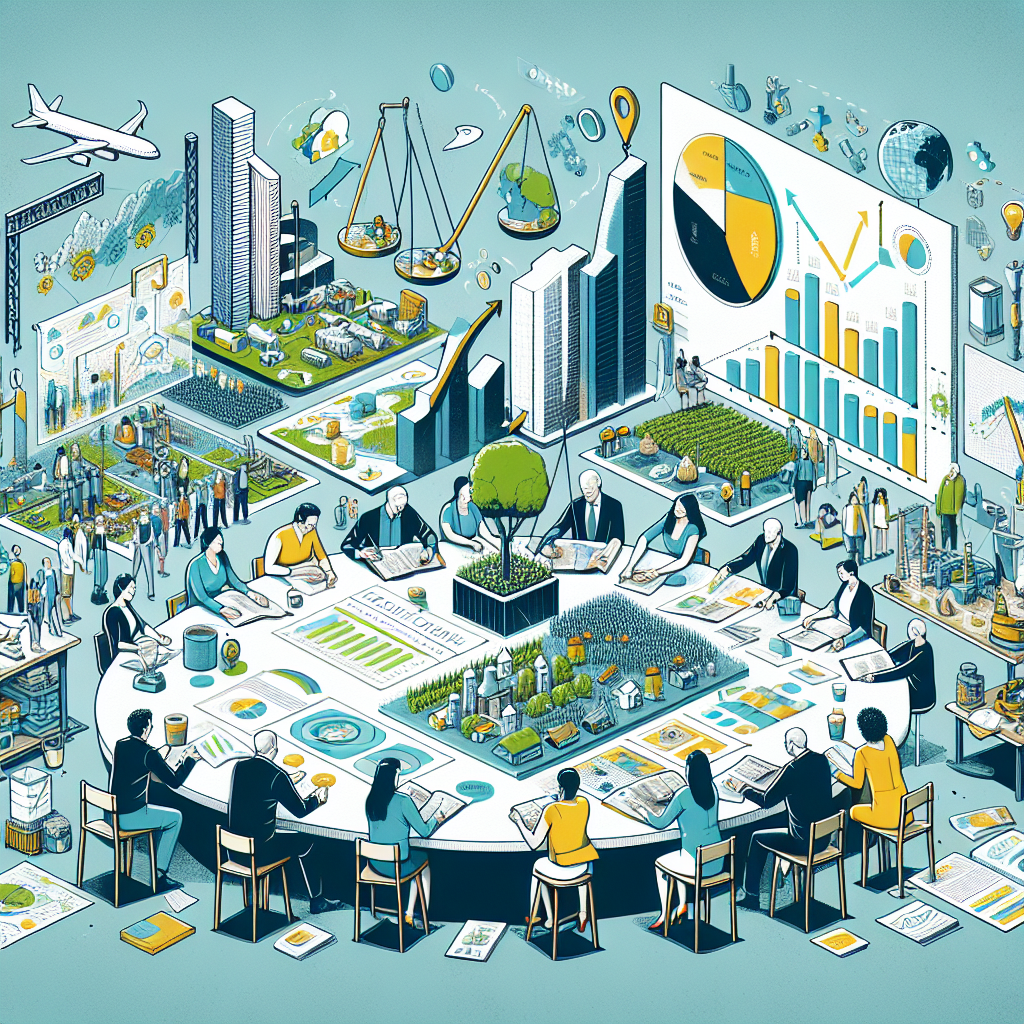
Regional development policies play an essential role in shaping the economic landscape of a country. Their primary objective is to achieve balanced growth, ensuring that all regions, particularly underdeveloped or peripheral areas, gain equitable economic opportunities. These policies are designed to address the disparities in development levels between different regions, thereby fostering nationwide economic cohesion and inclusivity. This broad but crucial goal involves various strategies, ranging from infrastructure development to incentivizing investment in less developed areas, ensuring that every region has a platform to contribute to and benefit from the national economy.
Understanding and implementing effective regional development policies is crucial for policymakers and stakeholders. It allows them to pinpoint specific needs and potentials of different areas, fostering growth that aligns with the unique characteristics of each region. This article delves into the core strategies of regional development policies and their significant impact on achieving balanced growth. We will explore the concept of economic geography and how it influences regional development, the various theories and models that underpin these policies, and case studies showcasing successful implementation. By understanding these elements, stakeholders can better advocate for and implement strategies that support sustained economic growth and equitable prosperity for all regions.
The Role of Economic Geography
Economic geography is the study of how economic activities are distributed across geographical spaces. It plays a fundamental role in shaping regional development policies by providing insights into the spatial distribution of resources, industries, and populations. Understanding these spatial dynamics is crucial for formulating policies that can effectively address regional disparities.
For example, regions endowed with abundant natural resources may require policies focused on sustainable resource management and infrastructure development to support resource-based industries. Meanwhile, urban regions with dense populations and a concentration of industries might benefit from policies aimed at enhancing transportation networks, housing, and public services to support their growth. Economic geography also helps identify areas with growth potential, guiding investment and development efforts towards regions that can contribute significantly to the national economy.
Theories and Models of Regional Development
Various theories and models have been developed to understand and guide regional development. One prominent theory is the core-periphery model, which explains how economic development tends to concentrate in ‘core’ areas while ‘peripheral’ areas lag. This model emphasizes the importance of developing policies that can stimulate economic activity and integrate peripheral areas into the broader economic framework.
Another significant model is the growth pole theory, which posits that economic development is often driven by certain dynamic industries or regions that act as ‘poles’ of growth. Policies based on this theory focus on identifying and nurturing these growth poles to stimulate regional development. Additionally, the New Economic Geography (NEG) perspective highlights the role of market forces and agglomeration economies in shaping regional development. NEG suggests that policies fostering innovation, entrepreneurship, and connectivity can help regions harness these market dynamics for sustainable growth.

Infrastructure Development
Infrastructure development is a cornerstone of regional development policies. Quality infrastructure, including transportation networks, energy systems, and communication facilities, is essential for supporting economic activities and enhancing connectivity between regions. By investing in infrastructure, governments can reduce logistical costs, improve access to markets, and create an environment conducive to business growth and investment.
For instance, constructing highways and railways can significantly reduce travel times and transportation costs, making it easier for industries to operate and expand. Furthermore, investments in digital infrastructure, such as high-speed internet and telecommunications, are increasingly crucial in today’s digital economy. By providing regions with the infrastructure needed to compete in a modern economy, policymakers can facilitate balanced growth and bridge the development gap between urban and rural areas.
Investment Incentives and Economic Zones
Providing incentives to attract investment in less developed regions is another vital strategy for fostering balanced regional growth. Governments can offer various incentives, such as tax breaks, grants, and subsidies, to encourage businesses to set up operations in these areas. Additionally, the establishment of special economic zones (SEZs) can create favorable conditions for industrial and economic activities by providing streamlined regulatory frameworks, improved infrastructure, and access to essential services.
These incentives and economic zones can attract both domestic and foreign investment, create jobs, and stimulate local economies. For example, China’s success in using SEZs to transform previously underdeveloped regions into thriving economic hubs demonstrates the potential of this strategy. By implementing similar approaches, other countries can leverage investment incentives and economic zones to promote regional development and achieve balanced growth.
Education and Workforce Development
A well-educated and skilled workforce is essential for regional development. Policies focused on education and workforce development can empower regions to harness their human capital and drive economic growth. Investing in education at all levels, from primary to tertiary, is critical for ensuring that individuals have the skills needed to participate in and contribute to the economy.
Furthermore, vocational training and skills development programs can align workforce capabilities with the needs of local industries, enhancing employability and productivity. By promoting lifelong learning and continuous skill development, governments can ensure that the workforce remains adaptable to changing economic conditions. Additionally, policies that encourage collaboration between educational institutions, businesses, and government agencies can strengthen the link between education and the labor market, fostering a dynamic and competitive regional economy.
Case Studies: Successful Regional Development Policies
Examining case studies of successful regional development policies can provide valuable insights and lessons for policymakers. For instance, the European Union’s Cohesion Policy has been instrumental in reducing regional disparities across member states. By directing funds towards underdeveloped regions, improving infrastructure, and fostering innovation, the EU has helped stimulate economic growth and promote regional cohesion.
Another notable example is South Korea’s balanced regional development strategy, which involves decentralizing economic activities and promoting regional innovation hubs. By investing in regional infrastructure, education, and technology, South Korea has successfully reduced the development gap between urban and rural areas, fostering a more balanced and inclusive economy. These case studies highlight the importance of targeted policies, strategic investments, and collaboration between stakeholders in achieving balanced regional development.
Conclusion
Regional development policies are critical for fostering balanced economic growth and reducing regional disparities. By understanding the role of economic geography and leveraging theories and models of regional development, policymakers can design effective strategies tailored to the unique needs and potentials of different regions. Key strategies, such as infrastructure development, investment incentives, and workforce development, play a significant role in creating an enabling environment for economic growth.
Successful case studies demonstrate that targeted policies, strategic investments, and collaboration between government, businesses, and educational institutions can lead to significant improvements in regional development. Ultimately, the goal is to create a cohesive and inclusive national economy where all regions have the opportunity to thrive and contribute to overall prosperity. By continuing to innovate and adapt regional development policies, governments can ensure sustained and equitable growth for future generations.