North Africa, a region of vibrant diversity and rich history, is home to some of the most unique and fascinating cultures in the world. Among these, the countries of Morocco, Algeria, and Tunisia stand out for their distinctive traditions, arts, and historical narratives. This article explores the diverse cultural landscapes of these three countries, offering a glimpse into their multifaceted identities.
Morocco: A Blend of Berber, Arab, and European Influences
Morocco, located in the northwest corner of Africa, is a country where the past and present coexist harmoniously. Its culture is a blend of Berber, Arab, and European influences, resulting in a unique and colorful tapestry.
History and Language
The history of Morocco is marked by the influence of various civilizations, including the Berbers, Romans, Arabs, and French. This rich history is reflected in the country’s two official languages: Arabic and Amazigh (Berber). French is also widely spoken, a legacy of the French colonial period.
Cuisine
Moroccan cuisine is renowned for its diversity and flavor, characterized by a blend of spices like cumin, coriander, saffron, and cinnamon. Iconic dishes include couscous, tagine, and pastilla, each offering a unique taste experience.
Music and Dance
Music and dance are integral parts of Moroccan culture. Traditional music genres include Andalusian classical music and Gnawa, a spiritual music that traces its roots to West African slaves. The country’s dance forms are equally diverse, ranging from the classical Andalusian dances to the energetic movements of the Berber dances.
Crafts and Architecture
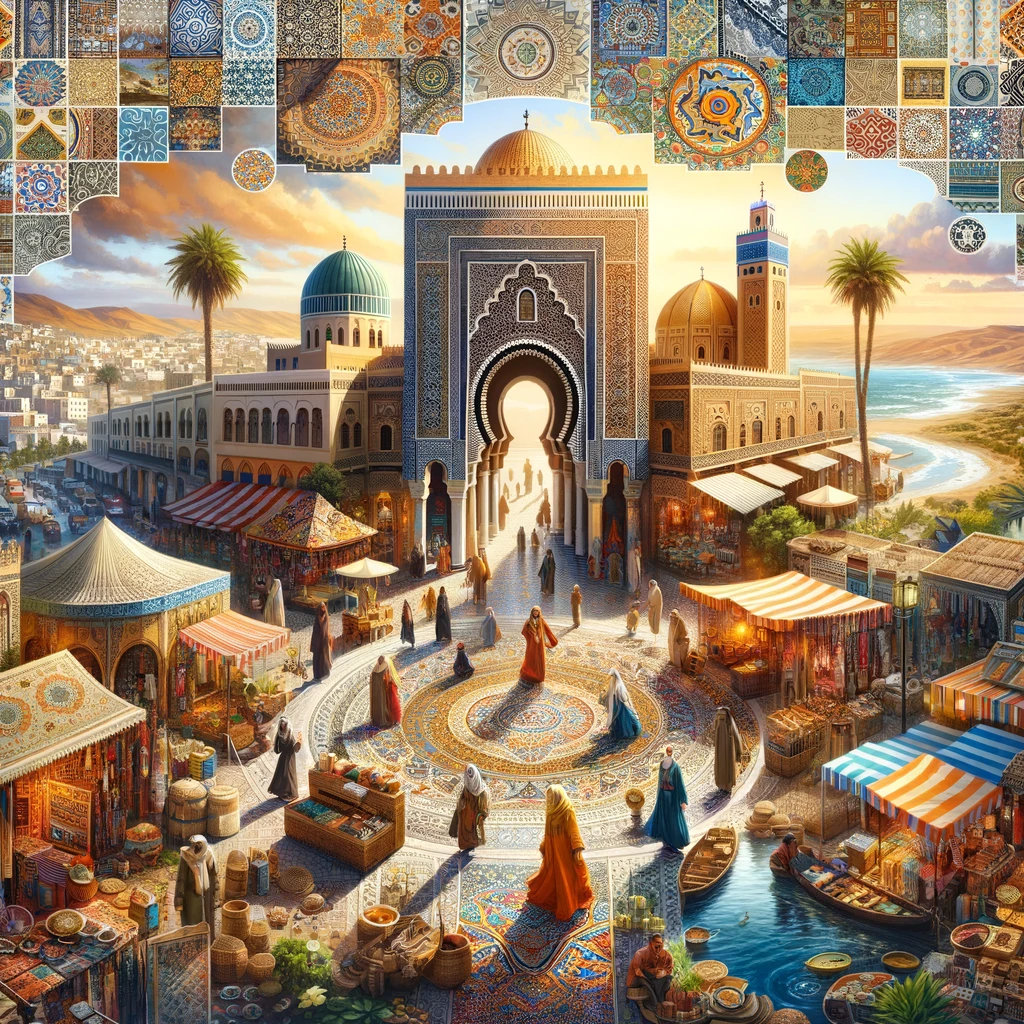
Moroccan crafts are world-famous, particularly its pottery, leather goods, and textiles. The country’s architecture, characterized by intricate tile work, carved wood, and ornate plaster, is best exemplified in its mosques and palaces. The medinas (old towns) of cities like Marrakech and Fes are UNESCO World Heritage Sites, celebrated for their historic architecture.
Algeria: A Fusion of Arab, Berber, and French Elements
Algeria, the largest country in Africa, is a land of stark contrasts and diverse cultures. Its culture is a fusion of Arab, Berber, and French elements, shaped by its long history and varied geography.
History and Language
Algeria’s history is a tapestry of Berber kingdoms, Roman rule, Arab conquests, Ottoman influence, and French colonization. This history is reflected in the country’s two official languages, Arabic and Berber. French also remains widely used in media and education.
Cuisine
Algerian cuisine is a rich blend of flavors, influenced by Berber, Arabic, Turkish, and French culinary traditions. Dishes like couscous, shakshuka, and harira are staples, often accompanied by mint tea, the national drink.
Music and Dance
Algerian music is diverse, with genres ranging from traditional Raï to Andalusian classical music. Raï, a popular form of music, originated in Oran and is known for its candid lyrics and modern beats. Traditional dances vary from region to region, each with its own unique style and rhythm.
Crafts and Art
Algeria is known for its handicrafts, including pottery, metalwork, and carpet weaving. The country’s art scene is vibrant, with a history that spans from prehistoric cave paintings to contemporary art influenced by French and Arab styles.
Literature
Algerian literature, both in Arabic and French, has gained international acclaim. Authors like Albert Camus and Assia Djebar have contributed significantly to world literature, exploring themes of identity, colonialism, and cultural conflict.
Tunisia: A Crossroads of Mediterranean Cultures
Tunisia, the smallest nation in North Africa, is a melting pot of cultures, influenced by its Berber, Arab, European, and Jewish heritage.
History and Language
Tunisia’s history is marked by the influence of Phoenician, Roman, Arab, Turkish, and French civilizations. Arabic is the official language, with French also widely used. The Berber language is spoken in certain regions.
Cuisine
Tunisian cuisine is known for its bold flavors and spices, with dishes like couscous, brik (a type of pastry), and lablabi (chickpea soup). Harissa, a spicy chili paste, is a staple in Tunisian cooking.
Music and Dance
Tunisian music blends Arabic, Berber, and Mediterranean influences. Malouf, a traditional music genre, has Andalusian and Ottoman roots. The darbouka, a type of drum, is central to Tunisian music. Dance forms vary, with each region having its unique style.
Crafts and Textiles
Tunisia is famous for its handicrafts, particularly ceramics, metalwork, and textiles. The country’s textile industry is renowned, with traditional garments like the jebba and fouta reflecting its rich cultural heritage.
Cinema and Literature
Tunisian cinema has gained international recognition, with films exploring social and political themes. The country’s literature, written in Arabic and French, is diverse, encompassing poetry, fiction, and essays that reflect its complex history and cultural identity.
Shared Cultural Themes
Despite their distinct cultural identities, Morocco, Algeria, and Tunisia share several common cultural themes that weave through the fabric of North African society.
Islamic Influence
Islam plays a significant role in the culture and daily life of all three countries. Mosques are central to communities, and Islamic festivals like Ramadan and Eid are celebrated with great fervor. This shared religious heritage influences art, architecture, music, and social norms across the region.
Colonial Legacy
The legacy of French colonialism is evident in the languages, architecture, and legal systems of Morocco, Algeria, and Tunisia. French influence has shaped aspects of education, cuisine, and urban planning, leaving a lasting impact on the cultural landscape.
Mediterranean Connections
The Mediterranean Sea has been a conduit for cultural exchange, shaping the identities of these North African nations. This connection has brought Roman, Phoenician, and European influences, enriching the cultural tapestry of the region.
Berber Heritage
The Berber (Amazigh) people, indigenous to North Africa, have significantly influenced the culture, language, and traditions of Morocco, Algeria, and Tunisia. Their presence is felt in the languages, music, crafts, and social structures of these societies.
Challenges and Adaptations
All three countries have faced challenges, from colonialism to modernization, and have adapted in unique ways. Their cultures are dynamic, evolving with global influences while preserving traditional values and practices.
Future Perspectives
Looking ahead, Morocco, Algeria, and Tunisia continue to navigate the complexities of preserving their rich cultural heritages while embracing modernity. These nations are increasingly participating in global dialogues, contributing their unique perspectives to international arts, literature, and politics.
Cultural Preservation
Efforts are underway in all three countries to preserve cultural heritage. This includes restoring historic sites, reviving traditional crafts, and promoting indigenous languages and art forms.
Contemporary Cultural Expressions
Contemporary artists, musicians, and writers from Morocco, Algeria, and Tunisia are gaining international recognition, bringing fresh perspectives and new interpretations to traditional cultural themes. These contemporary expressions are vital in keeping the cultural narrative relevant and vibrant.
Tourism and Cultural Exchange
Tourism plays a significant role in the economies of these countries and serves as a bridge for cultural exchange. Visitors are drawn to the region’s rich history, diverse landscapes, and warm hospitality, fostering a greater understanding of North African cultures.
Conclusion
The cultural landscapes of Morocco, Algeria, and Tunisia are as diverse as they are interconnected. These countries, each with its unique charm and traditions, form a vibrant mosaic that reflects the complexity and richness of North African culture. As they continue to evolve, they offer a window into a world where tradition and modernity coexist, where history is alive, and where every alleyway, melody, and story tells of a past deeply interwoven with the present.
This exploration of Moroccan, Algerian, and Tunisian cultures reveals not just the distinct characteristics of each country but also the shared heritage that binds the North African region. It’s a testament to the resilience, adaptability, and enduring spirit of its people, who continue to shape a dynamic and captivating cultural landscape.