Norse mythology, rich in lore and mysticism, hails from the ancient Norsemen, who thrived in what we now know as Scandinavia. This intricate tapestry of gods, giants, and supernatural beings offers some of the most mesmerizing stories that have shaped the folklore of Nordic cultures. From the giant cosmic tree Yggdrasil to the apocalyptic end known as Ragnarok, Norse tales encompass a vast array of mythical elements, from heroism and adventure to betrayal and cataclysmic destruction.
The mythology encapsulated not only the religious views of the Norse people but also their understanding of the cosmos, their moral values, and their social structures. It’s evocative imagery has transcended centuries, influencing modern literature, movies, and popular culture. The gods like Odin, Thor, and Loki have become household names, comparable to the Greek pantheon in their widespread recognition.
As we delve deeper into the world of Norse mythology, we uncover a universe where every entity, from the smallest creature to the mightiest god, plays a pivotal role in the cosmic cycle. Whether it’s the tales told by Viking men around the hearth or the sagas inscribed on ancient runestones, each story serves as a bridge to understanding the Norse worldview.
Yggdrasil: The World Tree
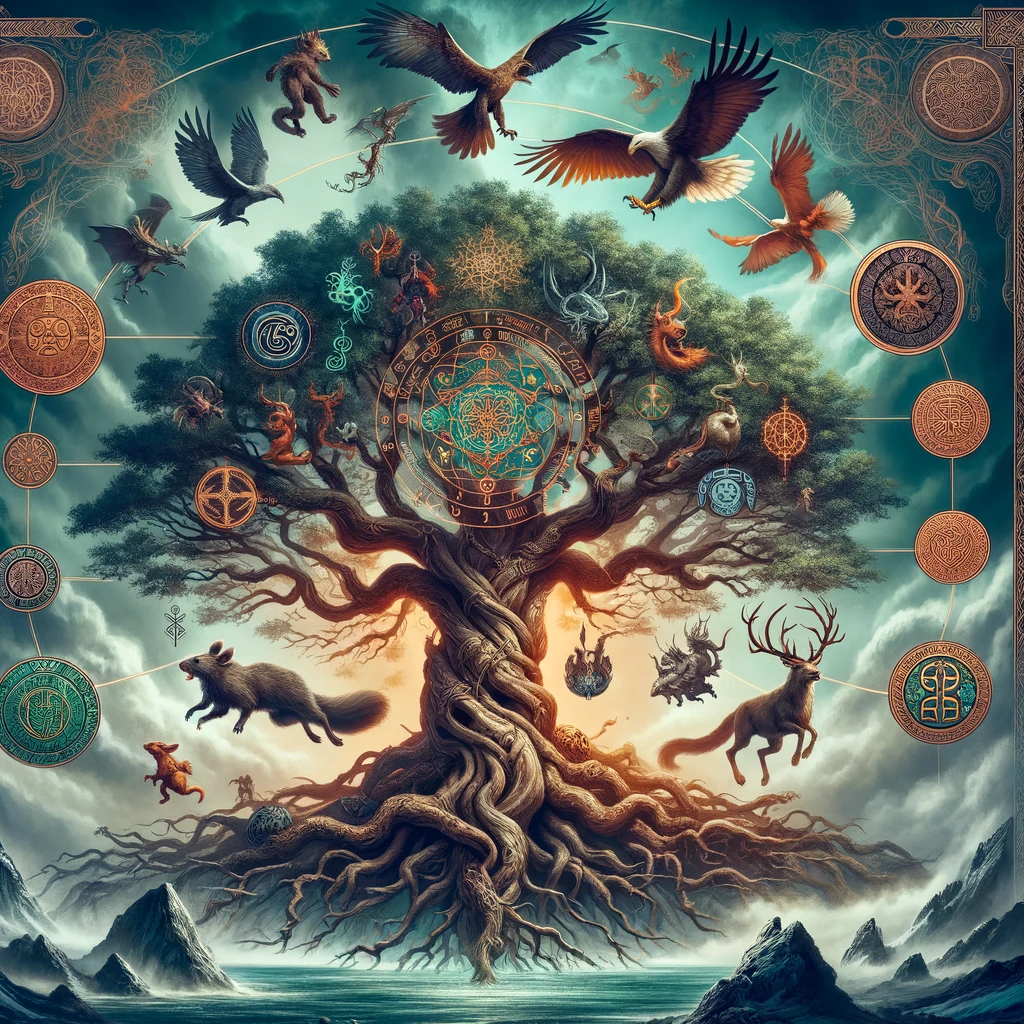
Central to Norse cosmology is Yggdrasil, often referred to as the World Tree. This immense ash tree connects all nine worlds of Norse myth. The majestic Yggdrasil stands at the center of the universe, its branches and roots stretching into various realms, including Asgard (the abode of gods), Midgard (the world of men), and Hel (the underworld).
The tree is not merely a cosmic structure but a vital symbol of interconnectivity and balance within Norse belief. Each of its three main roots resides in a different realm. One root lies in Asgard, another in Jotunheim (the land of giants), and the third in Niflheim. Creatures such as the dragon Nidhogg gnaw at its roots, and an eagle sits atop its branches, embodying the ongoing cosmic struggle between opposing forces.
Yggdrasil also serves as a stage for many mythological events and prophecies. Odin, seeking wisdom, hung himself from Yggdrasil for nine nights, during which he discovered the runes, unlocking divine knowledge. The tree is not just a passive symbol; it actively participates in the myths, an eternal overseer of the cosmic balance.
The imagery of Yggdrasil can be seen as a reflection of the Norse understanding of the world’s interconnectedness and cyclical nature. It underscores the belief that all realms, beings, and events are intertwined, contributing to the mythological narrative’s depth and complexity.
The Pantheon of Gods
The Norse gods, known as the Aesir and Vanir, are central figures in Norse mythology. The Aesir includes well-known deities like Odin, Thor, and Loki, while the Vanir represents a secondary group associated with fertility and prosperity, including gods like Njord and Freya. These gods embody various forces of nature, human traits, and cosmic principles.
Odin, often considered the All-Father, is the chief of the Aesir. He is a multifaceted deity associated with war, wisdom, poetry, and death. Known for his relentless quest for knowledge, Odin sacrifices much for wisdom, including one of his eyes to drink from Mimir’s well.
Thor, the thunder god, is perhaps the most beloved among the Norse gods. Wielding the mighty hammer Mjolnir, Thor is a protector of humanity and the gods. His tales of battling giants and preserving cosmic order depict him as a symbol of strength and bravery.
Loki, the trickster god, adds a layer of complexity to Norse mythology. His deceitful and cunning nature often puts him at odds with other gods, creating a dynamic of chaos and order. Loki’s actions, while often mischievous, are essential to the unfolding of many mythological narratives, including the events leading up to Ragnarok.
Heroes and Epic Sagas
Norse mythology also abounds with heroes and epic sagas that exemplify the ideals of valor, honor, and resilience. These heroes, often mortal yet touched by divinity, undertake legendary quests that etch their names into the annals of myth. Among these legendary figures, the sagas of Sigurd and Beowulf stand out prominently.
Sigurd, the dragon-slayer, is a quintessential hero whose tale is filled with adventure, romance, and tragedy. Armed with the magical sword Gram, he battles the dragon Fafnir, claiming a hoard of cursed treasure. Sigurd’s story, intertwined with themes of heroism and fate, reflects the complex interplay of destiny and personal agency.
Beowulf, while rooted in a blend of historical and mythological contexts, is another significant figure. His battles against the monstrous Grendel, Grendel’s mother, and the dragon highlight the hero’s journey archetype, aspiring to protect his people at the risk of his life.
The sagas are not merely tales of individual heroism but also chronicles of the Norse people’s collective values and experiences. Each story, with its intricate weave of supernatural elements and human emotions, serves as a mirror reflecting the ethos of the time.
Ragnarok: The End and the Beginning
Ragnarok, often referred to as the “Doom of the Gods,” signifies the end of the world in Norse mythology. This apocalyptic event is marked by cataclysmic battles, natural disasters, and the ultimate decimation of the gods and their adversaries. However, Ragnarok is not just an end but also a precursor to a new beginning.
The prophecy of Ragnarok foretells a series of omens leading up to the final battle. Loki’s chains will break, releasing him and his monstrous offspring, Jormungandr (the Midgard Serpent), and Fenrir (the giant wolf). The gods will meet their fates on the plains of Vigrid, facing inevitable death.
Odin will fall to Fenrir, Thor will perish after slaying Jormungandr, and Loki will confront Heimdall, resulting in mutual destruction. Surtr, the fire giant, will engulf the world in flames, leading to widespread destruction and the vanishing of existing order.
Yet, in true Norse fashion, Ragnarok is not an absolute end. Out of the ruins, a new world will emerge, lush and green. Some gods, like Balder, will return, and two human survivors, Lif and Lifthrasir, will repopulate the earth. This cycle of destruction and rebirth underscores the Norse belief in the eternal nature of life and the cosmos.
Legacy and Influence on Modern Culture
The echoes of Norse mythology resonate strongly in modern culture, influencing literature, art, and entertainment. The tales of gods, heroes, and cosmic battles have transcended their ancient origins, finding new life in contemporary media.
J.R.R. Tolkien’s Middle-earth, with its intricate lore and mythical beings, draws heavily from Norse mythology. Characters like Gandalf share similarities with Odin, while the concept of a world tree finds parallels in Yggdrasil. Similarly, the Marvel Universe’s interpretation of Thor and Loki has introduced Norse mythology to a global audience, albeit in a modernized and fictional context.
Norse symbols and motifs are ubiquitous, from runestones in modern jewelry to references in video games like “God of War” and “Assassin’s Creed Valhalla.” These ancient stories continue to inspire and captivate, attesting to their timeless appeal.
Academic interest in Norse mythology has also surged, with scholars delving into historical texts like the Poetic Edda and the Prose Edda to unravel the beliefs and traditions of the ancient Norse. These explorations provide deeper insights into the mythological narratives and their significance within their cultural and historical contexts.
Conclusion
Norse mythology offers a fascinating glimpse into the world through the eyes of its ancient storytellers. From the cosmic tree Yggdrasil to the cataclysmic events of Ragnarok, these myths weave a rich tapestry of heroism, divinity, and existential struggle. The interplay between gods and mortals, the cyclical nature of existence, and the embodiment of natural and moral principles make Norse mythology an enduring source of inspiration.
Exploring these myths allows us to appreciate the worldview and values of the Norse people. Their tales, brimming with profound wisdom and stark reminders of life’s ephemerality, reveal a culture that revered bravery, wisdom, and the delicate balance of the cosmos.
Whether through the lens of ancient sagas or modern reinterpretations, Norse mythology remains a compelling narrative framework. It enriches our understanding of human nature and the mysteries of the universe, encouraging us to ponder the myths that shape our perceptions and experiences.
As the timeless stories of Norse gods and heroes continue to captivate audiences worldwide, they remind us of the power of storytelling and the shared heritage of mythic traditions. The legacy of Norse mythology, with its profound and vivid imagery, will undoubtedly remain a cornerstone of world mythology for generations to come.