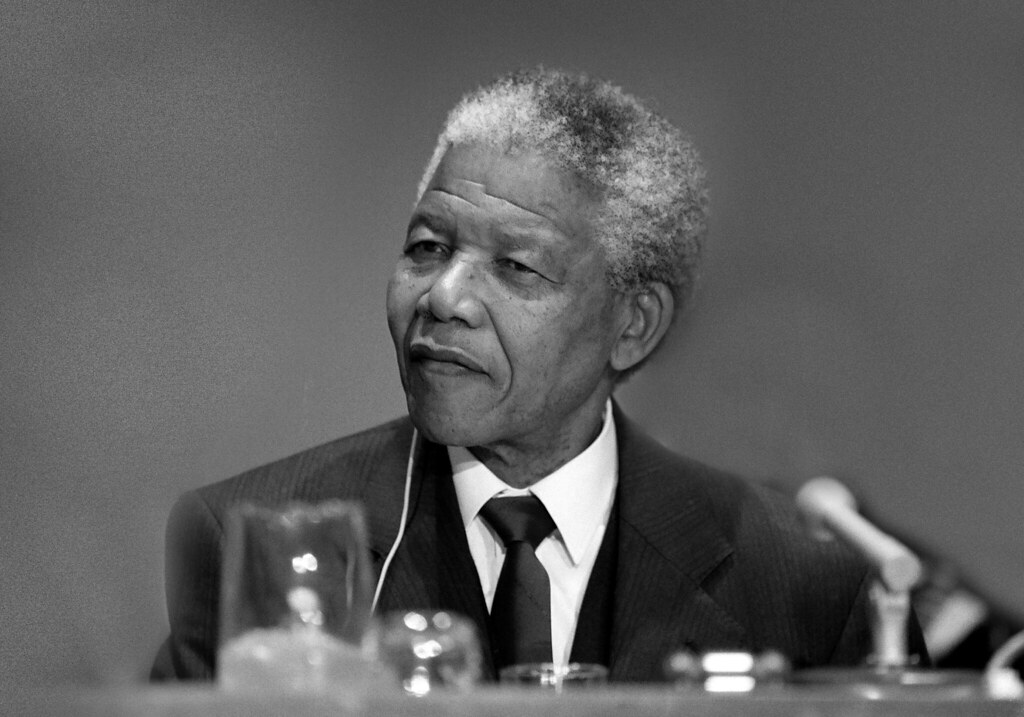
Nelson Mandela’s journey from a prisoner to president is a profound testament to the resilience and power of the human spirit in the face of adversity. His story is not just a narrative of personal triumph but also a reflection of a broader struggle against oppression and injustice.
Early Life and the Fight Against Apartheid
Born on July 18, 1918, in the small village of Mvezo, in the Eastern Cape of South Africa, Nelson Rolihlahla Mandela was destined to become a leader. His father was a chief, and from him, Mandela learned about his heritage and the politics of his land at an early age. He attended Fort Hare University, where he met like-minded individuals who would later join him in his fight against apartheid.
Apartheid was a systematic policy of racial segregation and discrimination enforced by the white minority government in South Africa. It denied non-white South Africans their basic human rights, relegating them to a life of inequality and oppression. Mandela, deeply affected by the injustices he witnessed, joined the African National Congress (ANC) in 1942, marking the beginning of his activism.
The Rivonia Trial and Imprisonment
Mandela’s commitment to ending apartheid led him to help form the ANC’s armed wing, Umkhonto we Sizwe, in 1961, after the government banned peaceful protests. His activities, however, did not go unnoticed. In 1962, Mandela was arrested and sentenced to life imprisonment for conspiring to overthrow the government.
The Rivonia Trial, as it came to be known, highlighted Mandela’s dedication to his cause. During the trial, Mandela delivered a speech that resonated around the world. He spoke about his ideals and his willingness to die for a democratic and free society in which all people live together in harmony and with equal opportunities.
Mandela spent 27 years in prison, much of it at Robben Island, under harsh conditions. Yet, his spirit remained unbroken. He continued to be a symbol of resistance against apartheid, inspiring others both within and outside of South Africa to fight for equality.
Release and the End of Apartheid
The persistent domestic and international pressure eventually led to Mandela’s release in 1990. His release marked a pivotal moment in South African history and signaled the beginning of the end for apartheid. Mandela’s walk out of the prison gates, hand in hand with his wife Winnie Mandela, was watched by millions around the world.
After his release, Mandela led the negotiations to abolish apartheid and establish multiracial elections. In 1994, he became South Africa’s first Black president, a landmark victory for the country and a significant moment in world history.
Presidency and Later Years
As president, Mandela faced the daunting task of unifying a country divided by decades of racial hostility. One of his major initiatives was the Truth and Reconciliation Commission (TRC), which was established to help heal the country and bring about a reconciliation of its people. Mandela also worked tirelessly to improve the living standards of South Africa’s black population without alienating the white minority.
Even after his presidency, Mandela remained a global advocate for peace and social justice until his death on December 5, 2013. His legacy continues to influence leaders and movements around the world.
Nelson Mandela’s life story is a vivid illustration of how one individual’s steadfast commitment to justice and equality can inspire a nation and, indeed, the entire world. His journey from a prisoner to president embodies the possibilities that arise when courage prevails over oppression. Mandela’s legacy teaches us that with perseverance and dedication, profound change is possible, making him a timeless icon of resilience and peace.
Pioneering Social and Economic Reforms
Mandela’s presidency was not only pivotal in dismantling the institutional structures of apartheid, but also in laying the foundation for the social and economic development of South Africa. He introduced policies aimed at redressing the economic imbalances created by apartheid through initiatives like the Reconstruction and Development Programme (RDP). This ambitious plan sought to provide housing, healthcare, and education, and to stimulate economic growth by fostering job creation.
Despite the challenges, such as high expectations and limited resources, Mandela’s government managed to build over a million homes, improve access to clean water and healthcare, and initiate land reform. Though not all of his policies were successful, the groundwork laid during his term was crucial for South Africa’s future development.
Promoting National Unity Through Sports
One of Mandela’s most celebrated achievements in fostering national unity came through sports. In 1995, South Africa hosted the Rugby World Cup, an event that exemplified Mandela’s use of sports as a means to bridge racial divides. Historically, rugby was seen as a predominantly white sport in South Africa, with the national team, the Springboks, serving as a symbol of apartheid.
Mandela, wearing the Springbok jersey, presented the World Cup trophy to the South African team captain after they won the tournament. This act was more than symbolic; it was a powerful message to all South Africans to unite and support each other, transcending past animosities. The event was a transformative moment for South Africa, showing the world that the nation could unite as one.
Mandela’s Diplomacy and Global Influence
Beyond his national achievements, Mandela was also a formidable force in international diplomacy. His moral authority and stature as a leader of peace and reconciliation made him a valuable mediator in various global conflicts and a voice of reason in international forums. He was deeply involved in campaigns to fight HIV/AIDS, a major crisis affecting South Africa and the continent, and to support peace efforts in other parts of Africa and the world.
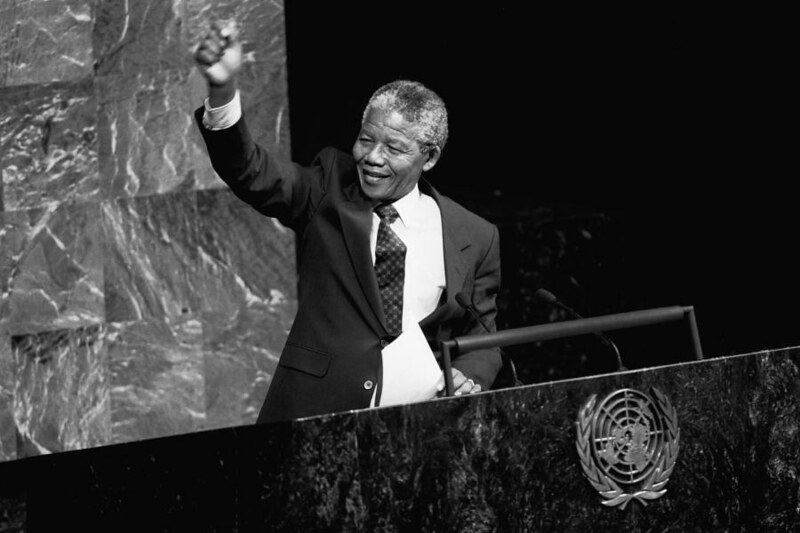
Mandela’s influence was instrumental in redefining global politics concerning human rights and democracy. His advocacy for peace, equality, and human dignity resonated worldwide, earning him international accolades, including the Nobel Peace Prize, which he was awarded in 1993 alongside F.W. de Klerk, the last apartheid-era president of South Africa.
The Legacy of Leadership and Inspiration
Mandela’s legacy is not confined to his political achievements but is also woven into the fabric of global leadership and humanitarian efforts. His life serves as an educational beacon for future generations. Institutions and initiatives like the Nelson Mandela Foundation continue to promote his values through various programs that inspire individuals and leaders worldwide to pursue justice, peace, and equality.
Mandela’s story teaches us the power of forgiveness and the importance of looking beyond one’s circumstances to focus on a greater vision. It highlights the importance of steadfast determination, humility, and the belief in a common humanity.
Conclusion
Nelson Mandela’s transformation from a prisoner to a president encapsulates his indomitable spirit and unwavering commitment to justice and equality. His journey illustrates that real change requires patience, resilience, and a profound commitment to democracy and human rights. Mandela not only changed a nation but also left an indelible mark on the world, symbolizing the triumph of hope and the human spirit over adversity and division. His life and work remain a guiding light and a source of inspiration for all who fight for justice and equality across the globe.
References:
- Mandela, Nelson. Long Walk to Freedom: The Autobiography of Nelson Mandela. Little, Brown & Company, 1994.
- Sampson, Anthony. Mandela: The Authorized Biography. HarperCollins, 1999.
- “Nelson Mandela.” NobelPrize.org. Nobel Media AB 2021. Web.
- “Nelson Mandela Foundation.” https://www.nelsonmandela.org/