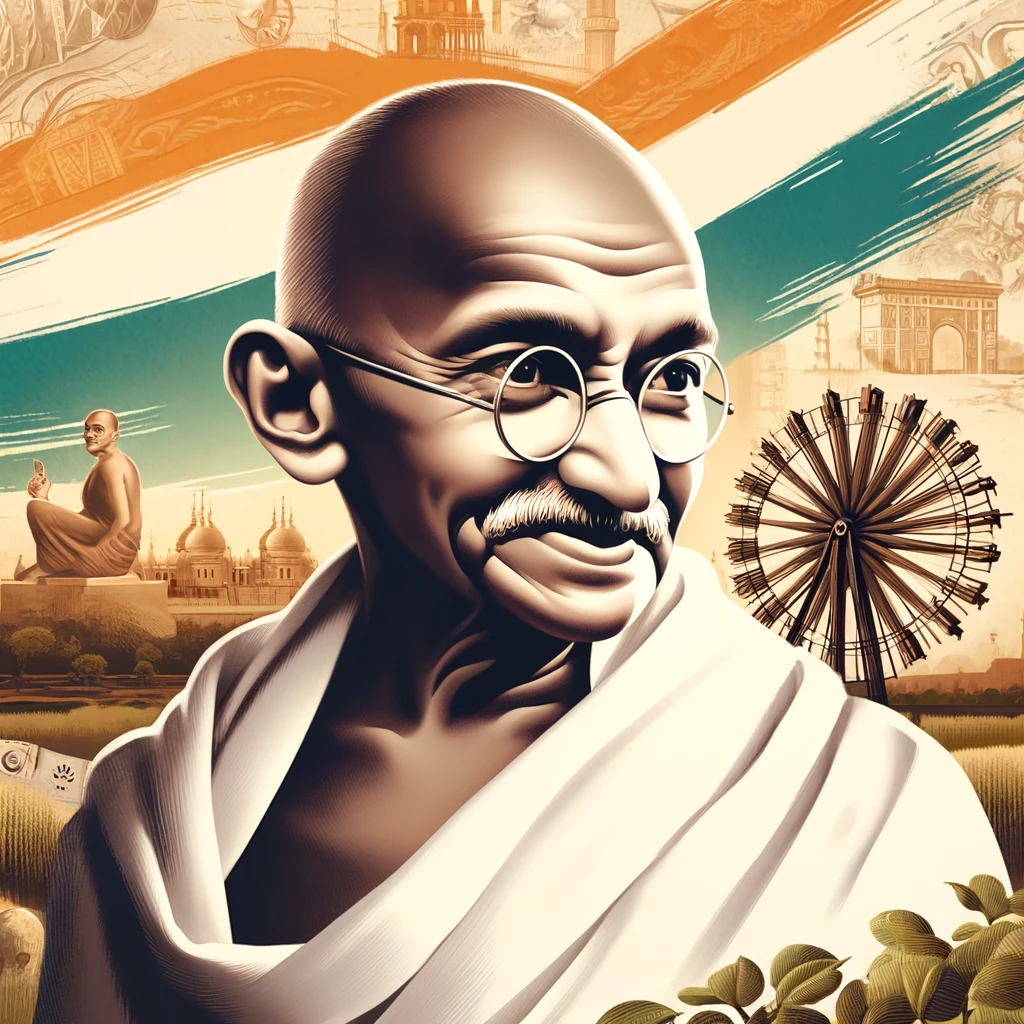
Mahatma Gandhi, a name synonymous with nonviolent resistance, significantly shaped the twentieth century by fundamentally altering the course of Indian history. His philosophy of peace and his steadfast commitment to nonviolence catalyzed India’s freedom from British rule and inspired numerous other civil rights movements around the globe. This article delves into Gandhi’s life, his approach to civil disobedience, and his lasting impact on the world.
Early Life and Education
Born on October 2, 1869, in Porbandar, India, Mohandas Karamchand Gandhi was raised in a Hindu family, with his father serving as the chief minister of the city-state. His mother was a devout woman whose religious devotion profoundly influenced Gandhi’s own spiritual development. At the age of 19, Gandhi left India to study law at the Inner Temple in London. This period was crucial in forming his principles of nonviolence, as he was exposed to various religious philosophies and the idea of civil disobedience.
South Africa: The Formative Years
Gandhi’s views on social injustice and civil rights were shaped during his 21 years in South Africa, where he initially went to work as a lawyer. Confronted with intense racism and discrimination, he experienced firsthand the harsh realities of colonial oppression. It was in South Africa that Gandhi first applied his evolving theory of nonviolent protest, organizing the Indian community against discriminatory laws. His efforts culminated in the 1913 protest against the indentured labor system, which significantly impacted the rights of Indian South Africans.
The Struggle for Indian Independence
Returning to India in 1915, Gandhi became a prominent leader in the Indian National Congress, advocating for India’s self-rule (Swaraj). His leadership style was not of a typical revolutionary armed with weapons but rather a peaceful crusader employing non-cooperation, and civil disobedience. Gandhi’s call for a non-cooperation movement in 1920 was a pivotal moment in Indian history, which saw thousands of Indians, regardless of caste or religion, unite against British rule.
The 1930 Salt March, one of Gandhi’s most renowned acts of civil disobedience, protested the British monopoly on salt production. By marching 240 miles from Ahmedabad to the coastal village of Dandi to produce salt, Gandhi demonstrated the power of collective action in defying unjust laws.
Philosophy and Methods
Gandhi’s philosophy was rooted in the ancient Indian principles of ahimsa (nonviolence) and satyagraha (truth and firmness). He believed that the means used to achieve a goal were as important as the goal itself, which led him to advocate for peaceful methods as the only acceptable means to achieve just ends. This philosophy extended beyond merely opposing British rule; it was about transforming society to reflect the ethical values of truth and nonviolence.
His strategies involved not only protests and marches but also the building of an equitable society through constructive work, such as promoting education, cleanliness, and self-reliance by encouraging the use of khadi (hand-spun cloth) to replace imported textiles.
Challenges and Criticism
Gandhi’s journey was not without its challenges and criticisms. He was often imprisoned for his activities, and his approach of nonviolence was criticized by various contemporaries, including Bhagat Singh, Subhas Chandra Bose, and later, B.R. Ambedkar, who disagreed with Gandhi’s views on caste and his methods of protest.
Despite these challenges, Gandhi’s commitment to nonviolence remained steadfast. His last major campaign, the Quit India Movement in 1942, called for the immediate British withdrawal from India. Although he was jailed again, the movement drew significant support and heightened the pressure on British authorities.
Legacy and Global Impact
Gandhi’s influence transcended national boundaries. His legacy of nonviolent resistance inspired numerous global leaders and movements, from Martin Luther King Jr. in the United States to Nelson Mandela in South Africa and many others who fought for civil rights and social change.
Gandhi’s methods have left a lasting imprint on the fabric of international human rights law and movements. His insistence on civil disobedience as a form of protest has been adopted by countless activists who seek change not through violence but through the moral power of nonviolence.
Mahatma Gandhi’s life and legacy are a testament to the profound impact one individual can have on the course of history. Through his unwavering commitment to nonviolence and his ability to mobilize people across the divides of caste and religion, Gandhi not only led India to independence but also inspired generations to fight for justice and equality through peaceful means. His philosophy continues to resonate worldwide, reminding us of the potent force of nonviolent resistance in achieving social and political change.
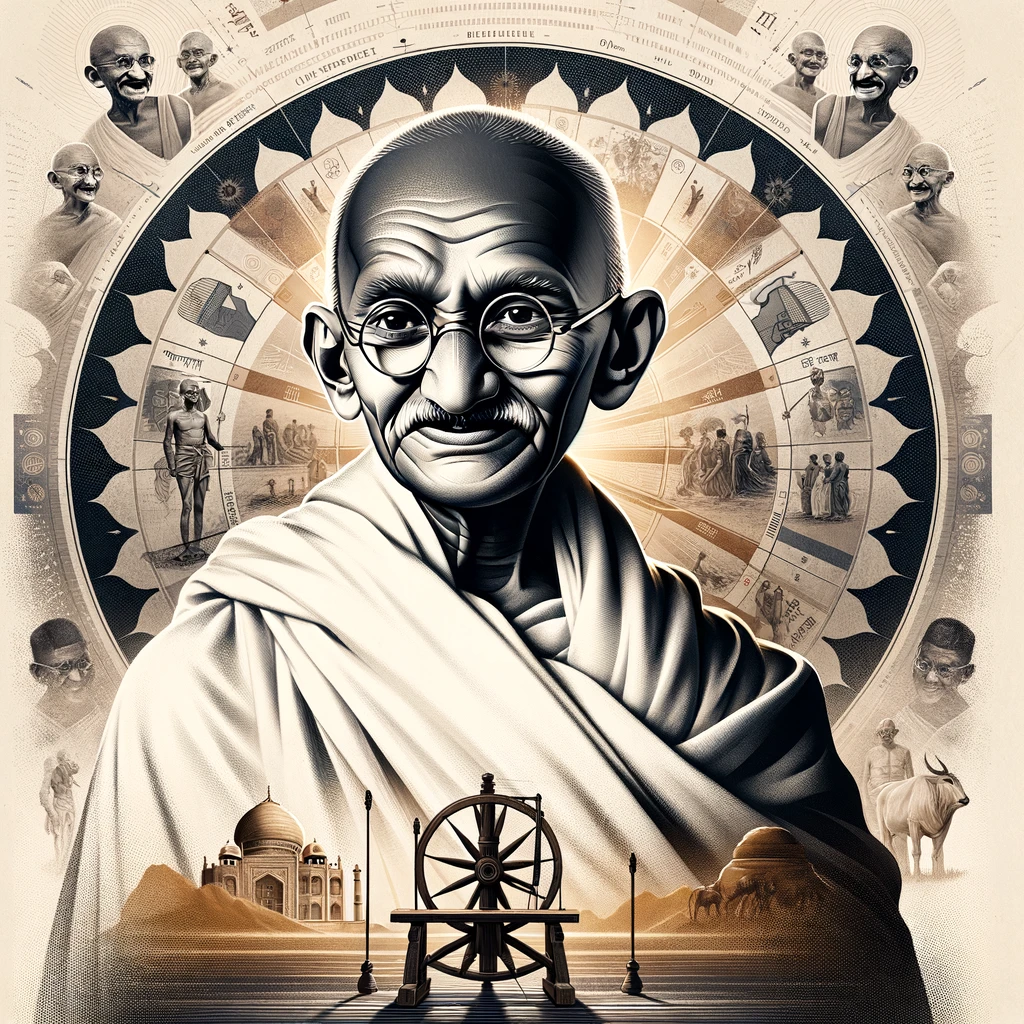
As we reflect on Gandhi’s contributions, it becomes evident that his teachings are not just historical anecdotes but living principles applicable in our contemporary struggles for justice and equality. Gandhi’s emphasis on social and economic equity, his advocacy for the rights of the marginalized, and his belief in the dignity of manual labor resonate in today’s global challenges, from economic disparities to racial injustice.
Gandhi’s Vision of a Just Society
Gandhi envisioned a society where every individual, regardless of background or status, had the opportunity to contribute to and thrive in a community grounded in respect, understanding, and harmony. His concept of Swaraj, or self-rule, was not limited to mere political independence but encompassed the total self-governance of individuals and communities. This vision extended to all aspects of life, including politics, economics, and education, encouraging a holistic approach to building a society based on ethical and moral principles.
Education and Empowerment
Education was a cornerstone of Gandhi’s vision for India. He believed that education should be holistic and accessible to all, fostering not just intellectual growth but also moral and ethical development. His advocacy for Nai Talim, a system of education that blends learning with manual work, aimed to erase the traditional divide between intellectual and laborious work and promote dignity in all forms of labor.
Economic Ideals and Self-Reliance
Gandhi’s economic ideas were revolutionary. He promoted the concept of Swadeshi, or self-sufficiency, urging Indians to produce their own goods and shun imported products, which he saw as a form of economic slavery. This not only included the famous promotion of khadi but also encouraged the development of village industries to foster economic independence at a community level.
His criticism of industrialization, which he feared would lead to the exploitation of workers and the degradation of the environment, is particularly relevant today as the world grapples with issues of sustainable development and ethical consumerism.
Challenges to Gandhi’s Approaches
While Gandhi’s methods were innovative and effective in many respects, they also faced significant opposition and skepticism, both during his life and in contemporary discussions. Critics argue that his tactics of nonviolence were too passive and reliant on the moral conscience of the oppressor, which may not be effective in all situations, especially against regimes with no interest in ethical considerations.
Moreover, Gandhi’s views on caste and his methods to address untouchability, while progressive at the time, are seen by some modern critics as insufficient. His vision of a casteless society was idealistic, but his approach often involved appealing to the morality of the upper castes rather than empowering lower-caste individuals directly.
Global Influence and Modern Relevance
Despite these criticisms, Gandhi’s influence on global civil rights movements is undeniable. His ideas of peaceful protest and civil disobedience have been adopted by numerous leaders and movements around the world, proving effective in diverse contexts. Today, as societies worldwide face increasing polarization, the revival of interest in Gandhi’s methods suggests a search for humane and peaceful ways of resolving conflicts.
Gandhi’s life reminds us that lasting change often requires patience, resilience, and a commitment to peaceful methods. As the world becomes increasingly interconnected and complex, Gandhi’s teachings on cooperation, peace, and respect for all beings offer a roadmap for navigating the challenges of modern society.
Conclusion
Mahatma Gandhi’s role as the gentle force behind Indian independence and his broader impact on world history underline the power of nonviolent resistance and moral leadership. His legacy is a beacon of hope and a call to action for all who seek to make a difference through peace and perseverance. As we face the global challenges of the 21st century, Gandhi’s philosophy offers not only inspiration but also practical guidance on fostering an equitable, sustainable, and just world. His life and work serve as a testament to the enduring power of nonviolence, proving that gentle forces can indeed move the world.