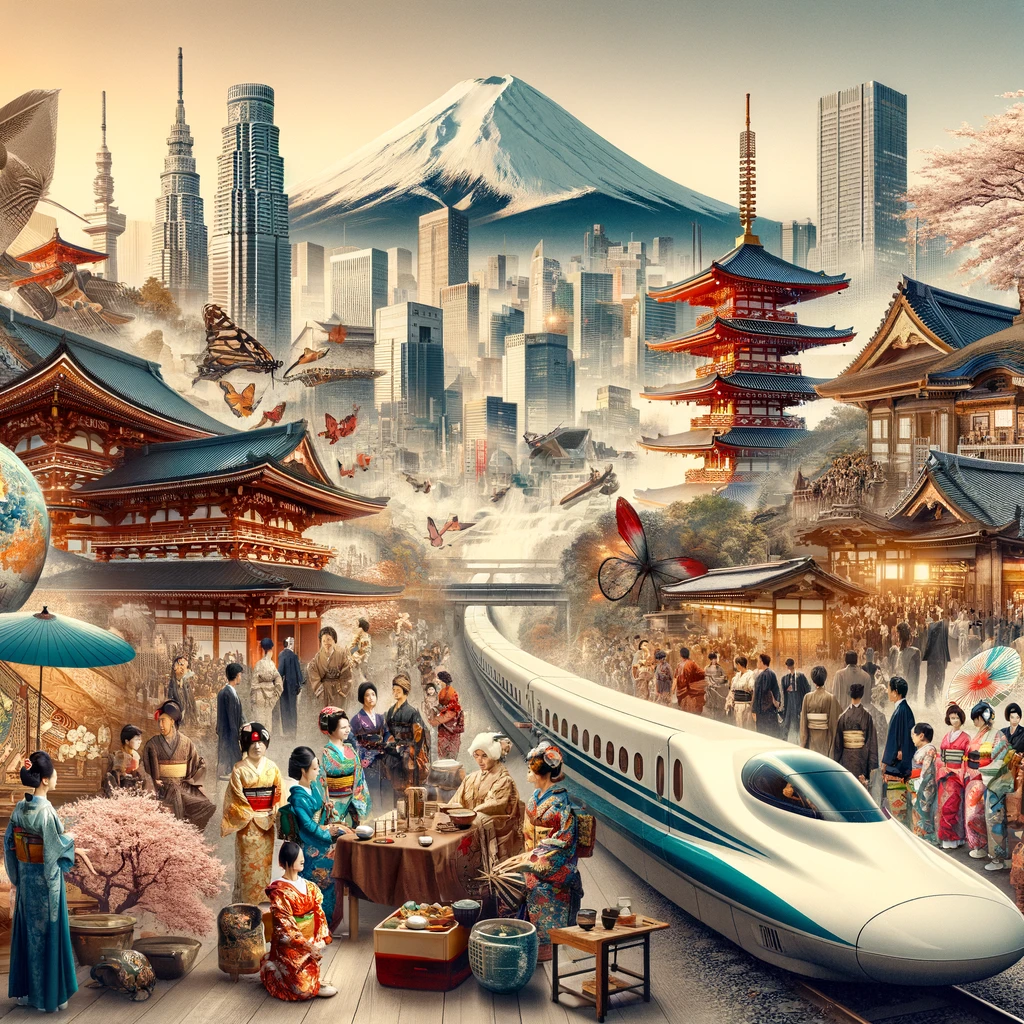
Japan, a nation steeped in history and forward-thinking innovation, presents a unique cultural landscape where ancient traditions and modern advancements coexist harmoniously. This fascinating blend shapes the Japanese way of life, making it a subject of global interest and admiration. In this article, we delve into various aspects of Japanese culture, exploring how traditional values and modern influences intertwine to form the multifaceted tapestry of contemporary Japan.
Historical Context
To understand Japan’s culture, it is essential to consider its historical context. Isolated for centuries, Japan developed a distinct culture relatively uninfluenced by external forces until the mid-19th century. This seclusion, known as Sakoku, fostered a unique societal structure, deeply rooted in Shinto and Buddhist traditions. The Meiji Restoration in 1868 marked a pivotal point, as Japan rapidly industrialized and integrated Western ideas, setting the stage for the blend of tradition and modernity seen today.
Traditional Arts and Aesthetics
Japan’s traditional arts are a testament to its rich cultural heritage. Practices such as tea ceremonies (sado), flower arranging (ikebana), and calligraphy (shodo) are not merely artistic pursuits but spiritual disciplines that emphasize mindfulness, aesthetics, and a deep connection with nature. These arts, deeply intertwined with Zen philosophy, offer a window into the Japanese soul.
The concept of “wabi-sabi,” embracing the beauty of imperfection and transience, is a cornerstone of Japanese aesthetics. This philosophy is evident in various art forms, including pottery, where imperfections are celebrated as part of an object’s unique character.
Modern Innovations
In contrast to its traditional arts, Japan is a leader in technological innovation and popular culture. Cities like Tokyo and Osaka are epitomes of modernity, with skyscrapers, neon lights, and bustling urban life. Japan’s contribution to the technology sector, particularly in robotics, automobiles, and consumer electronics, is globally recognized.
Japanese pop culture, especially anime and manga, has a massive international following. These contemporary art forms, while modern, often incorporate traditional themes and storytelling techniques, showcasing the seamless blend of old and new.
Social Structure and Etiquette
Japanese society is highly structured, with a strong emphasis on respect, harmony, and group cohesion. This is evident in their etiquette, which includes bowing as a form of greeting and the careful use of polite language (keigo). The concept of “wa,” meaning harmony, is deeply ingrained in Japanese society, influencing interpersonal interactions and the collective mindset.
The family unit is a microcosm of this societal structure, with clear roles and expectations. However, modern influences have brought changes to traditional family dynamics, with increasing gender equality and shifting roles.
Festivals and Celebrations
Festivals (matsuri) are a vibrant aspect of Japanese culture, often rooted in Shinto and Buddhist traditions. They range from local community gatherings to large-scale events like the Gion Matsuri in Kyoto. These festivals often celebrate the seasons, historical events, or deities and are marked by processions, traditional music, and dance performances.
Cherry blossom viewing (hanami) is a quintessential Japanese custom that celebrates the transient beauty of cherry blossoms. It symbolizes the ephemeral nature of life, a theme recurrent in Japanese philosophy and art.
Culinary Traditions
Japanese cuisine (washoku), recognized by UNESCO as an Intangible Cultural Heritage, is another vital aspect of its culture. It emphasizes seasonal ingredients, simplicity, and presentation. Dishes like sushi, tempura, and ramen, while popular internationally, are deeply rooted in Japanese tradition and reflect a connection to nature and the seasons.
The Japanese tea ceremony, more than just serving tea, is a ritualized form of making and consuming matcha (green tea). It embodies harmony, respect, purity, and tranquility, reflecting broader cultural values.
Religion and Spirituality
Shinto and Buddhism are the primary religions in Japan. Shinto, indigenous to Japan, is centered around kami (spirits) associated with natural elements and ancestors. Buddhism, introduced from China, brought with it new philosophies and religious practices. These religions coexist, often blending seamlessly; many Japanese practice traditions from both, reflecting the syncretic nature of Japanese spirituality.
Education and Work Ethic
Japan’s education system is one of the most rigorous in the world. It not only emphasizes academic excellence but also instills values of discipline, respect, and group harmony. The Japanese work culture is known for its strong work ethic, punctuality, and dedication. However, this has led to challenges like work-life balance, which are being addressed in contemporary society.
Challenges and the Future
Japan faces several challenges, including an aging population, declining birthrate, and the need for social reform. These issues require balancing traditional values with modern solutions, a task Japan is navigating with its characteristic blend of respect for the past and innovation for the future.
In conclusion, Japanese culture is a dynamic and intricate tapestry, woven from threads of ancient traditions and contemporary innovations. This unique blend forms the essence of Japan’s identity, making it a fascinating and enduring culture that continues to evolve and captivate the world.
Fashion and Design
Japanese fashion and design reflect the country’s cultural duality. Traditional attire like the kimono, with its elegant fabrics and symbolic patterns, is a striking representation of Japan’s rich heritage. Yet, Japan is also a global trendsetter in contemporary fashion, with districts like Harajuku in Tokyo being famous for their youth fashion and streetwear, often blending traditional motifs with modern aesthetics. This fusion of old and new is also evident in Japanese design principles, which emphasize minimalism, functionality, and a deep respect for materials, whether in architecture, interior design, or everyday objects.
Literature and Film
Japanese literature, spanning centuries from classical works like “The Tale of Genji” to contemporary novels by authors like Haruki Murakami, offers profound insights into the Japanese psyche. These works often explore themes of nature, solitude, and the complexities of human emotions, bridging the gap between ancient philosophies and modern existential dilemmas.
Similarly, Japanese cinema, renowned globally through directors like Akira Kurosawa and Hayao Miyazaki, blends storytelling traditions with modern cinematic techniques. Films often explore themes of honor, family, and the conflict between tradition and modernity, resonating with audiences worldwide.
Sports and Martial Arts
Sports play a significant role in Japanese culture, with traditional martial arts like judo, kendo, and sumo wrestling being not just sports but ways of life, embodying principles like honor, discipline, and self-improvement. At the same time, modern sports like baseball and soccer are immensely popular, showing the adaptive nature of Japanese society.
Environmental Consciousness
Japan’s culture deeply respects nature, a trait rooted in Shinto and Buddhist beliefs. This respect is evident in the country’s approach to environmental conservation and sustainable living. Practices like forest bathing (shinrin-yoku) and the celebration of natural phenomena highlight this deep connection with nature. In modern contexts, this translates to a strong emphasis on environmental technologies and policies aiming for ecological sustainability.
Global Influence and Cultural Exchange
Japan’s culture has a significant global influence, seen in the popularity of its cuisine, arts, and entertainment. The fascination with Japanese culture has led to cultural exchange programs and the spread of Japanese language and cultural studies worldwide. This global engagement not only disseminates Japanese culture but also allows it to absorb and integrate diverse global influences.
Conclusion
Japanese culture, with its remarkable blend of tradition and modernity, continues to evolve while maintaining a deep connection to its historical roots. This unique cultural landscape, characterized by respect for the past and an embrace of the future, offers a model for navigating the complexities of the modern world while preserving cultural heritage. As Japan faces the challenges of the 21st century, it stands as a testament to the strength and adaptability of its culture, promising to continue its legacy of innovation and tradition for generations to come.


