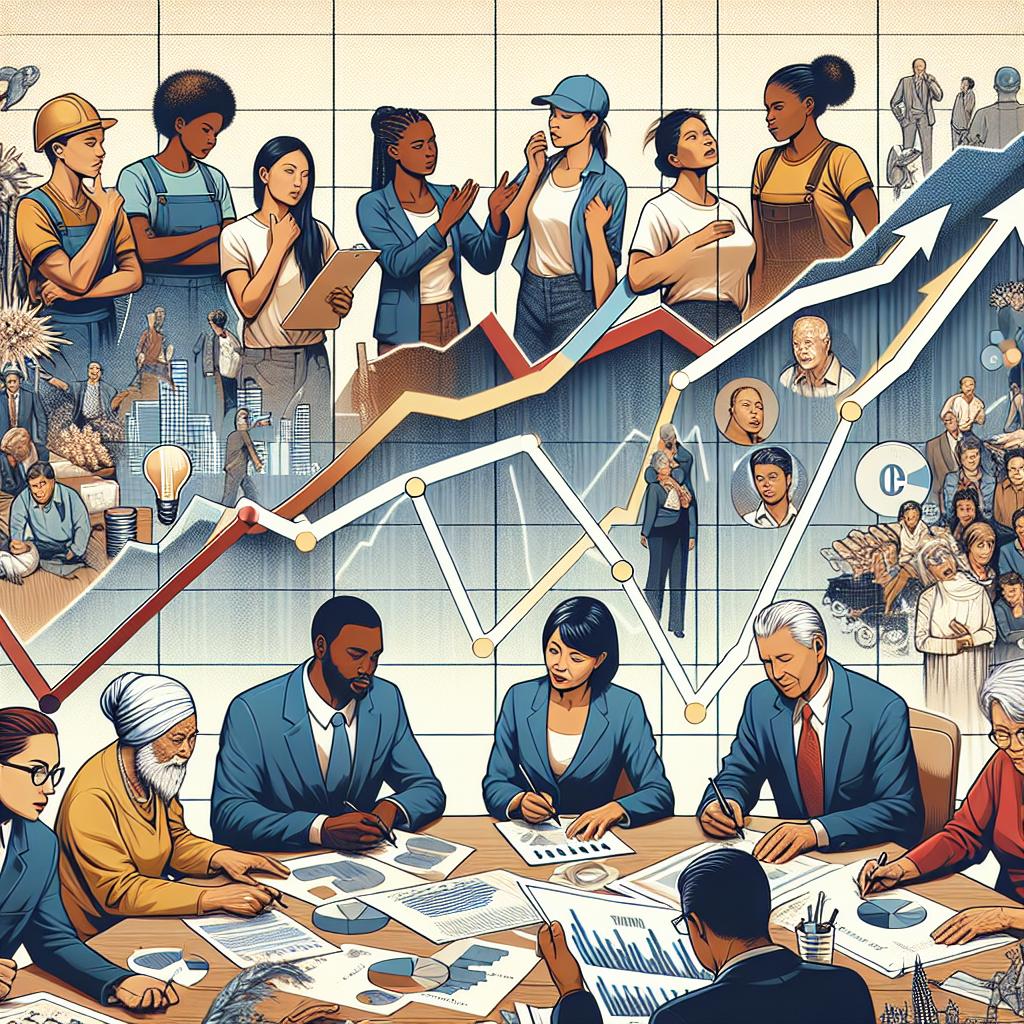
Income inequality has emerged as a critical issue in the domain of development economics. This phenomenon refers to the uneven distribution of income within a population, resulting in a gap between the rich and the poor. This gap can have significant implications for social stability, economic growth, and overall quality of life. Policymakers, economists, and social scientists continually strive to understand the underlying causes and devise effective strategies to address income inequality. This article seeks to provide a comprehensive analysis of how income inequality is measured, recent trends, and potential policy responses to mitigate its adverse effects.
The importance of income inequality cannot be understated. It influences various socio-economic dynamics such as access to education, healthcare, and employment opportunities. Rising inequality can lead to societal unrest, reduced social cohesion, and hinder sustainable development. To address these issues, it is crucial first to understand the methods used to measure income inequality and recognize the trends shaping its progression over time.
Moreover, the COVID-19 pandemic has further exacerbated existing inequalities, pushing many into poverty while the wealthier segments of society continue to accumulate wealth. This has made the discussion around income inequality even more pertinent. Hence, exploring policy responses becomes indispensable to foster a more equitable and prosperous society. In the sections that follow, we will delve into the different aspects of income inequality, providing a detailed outlook on its measurement, trends, and policy responses.
Measurement of Income Inequality
Understanding income inequality necessitates accurate measurement techniques. Several indicators and statistical tools are employed to assess the extent of income disparity within a population. The most common methods include the Gini coefficient, Lorenz Curve, and income quintiles.
The Gini coefficient is often regarded as the standard measure of income inequality. It ranges from 0 to 1, where 0 signifies perfect equality (everyone has the same income) and 1 indicates perfect inequality (one person has all the income). A higher Gini coefficient suggests greater income inequality. This coefficient is frequently used because it provides a clear, quantifiable measure of income distribution.
The Lorenz Curve is another essential tool, illustrating the distribution of income within a population. This graphical representation plots the cumulative share of income earned against the cumulative share of the population. The farther the curve is from the diagonal line of perfect equality, the greater the income inequality.
Income quintiles, which divide the population into five equal groups based on income levels, also help illustrate income distribution. By comparing the share of total income received by each quintile, researchers can identify disproportionate income distribution. For instance, if the top 20% of income earners receive more than 40% of the total income, it indicates significant inequality.
These measurement techniques are essential not just for understanding the extent of income inequality but also for crafting effective policy responses. By relying on these statistical tools, economists and policymakers can track changes in income distribution over time and assess the impact of various interventions designed to reduce inequality.
Trends in Income Inequality
The trends in income inequality over the past few decades reveal some concerning patterns. Globally, income inequality has been on the rise in many countries, although there are variations across regions and within countries.
In developed countries, the trend has been towards increasing income inequality since the 1980s. The United States, for example, has seen a substantial rise in the income share of the top 1%, largely driven by technological advancements, globalization, and policy changes that favor higher income groups. Similarly, in many European nations, there has been a gradual increase in income inequality, albeit at a slower pace compared to the United States.
In developing countries, the picture is more nuanced. While some countries have experienced rising income inequality, others have seen a reduction as a result of economic growth and effective redistributive policies. For instance, several Latin American countries, such as Brazil and Argentina, have successfully implemented social programs that have helped reduce income inequality over the past several decades.
Asia presents a mixed scenario with countries like China witnessing a significant rise in income inequality due to rapid economic growth and urbanization. In contrast, countries like Japan and South Korea have managed to maintain relatively lower levels of income inequality through strong social safety nets and equitable economic policies.
It is also essential to understand how income inequality intersects with other forms of inequality, such as wealth inequality, gender inequality, and regional disparities. These interconnections can amplify the adverse effects of income inequality and create a more challenging environment for achieving inclusive growth.
Causes of Income Inequality
Various factors contribute to income inequality, making it a complex and multifaceted issue. Understanding these causes is crucial for developing effective policy responses.
Technological change is one significant factor. Innovations, particularly in information and communication technologies, have disproportionately benefited skilled workers, widening the income gap between high-skill and low-skill labor. This phenomenon, known as skill-biased technological change, has been a primary driver of increasing income inequality in many advanced economies.
Globalization has also played a role in shaping income inequality. While it has contributed to economic growth and poverty reduction in many developing countries, it has also led to job displacement and wage stagnation for lower-skilled workers in developed nations. The outsourcing of manufacturing and services to countries with lower labor costs has resulted in a decline in middle-income jobs in many developed economies.
Policy choices and institutional frameworks significantly impact income distribution. Tax policies, social welfare programs, labor market regulations, and education systems can either mitigate or exacerbate income inequality. For instance, progressive tax systems and robust social safety nets can help redistribute income and reduce inequality. Conversely, regressive tax policies and inadequate social protection can exacerbate disparities.
Demographic factors, such as aging populations and migration trends, also influence income inequality. In many advanced economies, aging populations lead to increased dependency ratios and pressure on social security systems, potentially widening income gaps. Migration can have varied effects, depending on how well immigrants are integrated into the labor market and society.
Policy Responses to Income Inequality
Addressing income inequality requires a multifaceted approach, combining short-term measures to alleviate immediate disparities and long-term strategies to tackle the root causes. Policymakers can adopt several interventions to mitigate income inequality.
One of the most effective ways to reduce income inequality is through progressive taxation. A tax system where higher income earners pay a larger proportion of their income in taxes can help redistribute wealth and reduce disparities. Alongside progressive taxation, closing loopholes and improving tax compliance can enhance the effectiveness of tax policies.
Social welfare programs play a vital role in addressing income inequality. Providing support such as unemployment benefits, child allowances, and housing assistance can help alleviate poverty and reduce the income gap. Investment in public services, including healthcare and education, ensures that all citizens have equal access to essential services, promoting social mobility.
Labor market policies, such as minimum wage laws and stronger collective bargaining rights, can enhance income equality by ensuring fair wages and better working conditions. Raising the minimum wage helps lift low-income workers out of poverty, while robust labor unions can negotiate better wages and benefits for workers.
Education and training programs are essential for reducing income inequality in the long run. Improving the quality of primary and secondary education, expanding access to higher education, and providing lifelong learning opportunities enable individuals to acquire the skills needed for higher-paying jobs. Ensuring equal access to education for disadvantaged groups, such as low-income families and minority communities, is crucial for social mobility.
Income Inequality and Social Policies
Social policies play a crucial role in addressing income inequality by providing a safety net and promoting social inclusion. These policies encompass a wide range of areas, from healthcare and education to housing and social protection.
Universal healthcare systems ensure that all individuals have access to medical services, regardless of their income levels. This not only improves overall health outcomes but also reduces the financial burden on low-income families, contributing to greater income equality.
Affordable housing policies can help reduce income inequality by ensuring that low-income families have access to safe and decent living conditions. Housing subsidies, rent controls, and public housing programs are examples of interventions that can alleviate the housing cost burden on vulnerable populations.
Social protection programs, such as pensions, unemployment benefits, and disability allowances, provide financial support to individuals during times of economic hardship. These programs help prevent poverty and reduce income disparities by offering a safety net for those in need.
Promoting gender equality is essential for addressing income inequality. Policies that support equal pay for equal work, parental leave, and affordable childcare services can help reduce the gender income gap. Empowering women through education and employment opportunities is crucial for achieving economic equality.
Addressing regional disparities is another important aspect of reducing income inequality. Investment in infrastructure, job creation, and economic development in disadvantaged regions can help bridge the gap between urban and rural areas, promoting balanced economic growth.
Conclusion
Income inequality is a complex and pressing issue that requires a concerted effort from policymakers, economists, and society as a whole. By understanding the measurement techniques, recognizing trends, and analyzing the causes, we can develop effective policy responses to mitigate the adverse effects of income inequality.
Progressive taxation, social welfare programs, labor market regulations, and education and training initiatives are essential components of a comprehensive strategy to reduce income disparities. Additionally, social policies, such as universal healthcare, affordable housing, and social protection, play a crucial role in promoting social inclusion and ensuring equal opportunities for all.
Addressing income inequality is not just a matter of economic policy but also a moral imperative. A more equitable distribution of income can lead to greater social cohesion, improved quality of life, and sustainable economic growth. It is in the interest of all societies to pursue policies that foster equality and inclusivity.
As we move forward, it is crucial to remain vigilant and adapt our approaches to the evolving economic landscape. By prioritizing income equality and implementing effective policy measures, we can work towards a more just and prosperous society for future generations.


