Harvey Milk is a name that echoes profoundly in the tapestry of social change throughout history. Born on May 22, 1930, Milk would go on to become one of the most emblematic figures in the fight for LGBTQ rights in the United States. His courageous endeavors and untimely demise have left an indelible mark on the social and political landscapes, not just in America, but around the world.
Milk’s journey from a closeted individual living in a time of rampant discrimination against LGBTQ individuals to a fierce advocate championing for equal rights reflects the broader struggle faced by countless others. His life and work offer invaluable insights into the mechanics of social change, the importance of representation, and the power of standing up for one’s rights. This article delves into the various facets of Harvey Milk’s contributions to social change and the broader implications of his efforts on contemporary society.
The Early Years
Harvey Milk was raised in a small, middle-class Jewish family in New York. His early years did not hint at the radical political figure he would become. Milk attended New York State College for Teachers, now known as State University of New York at Albany, where he developed an interest in theater and drama, nurturing his penchant for public speaking.
It was during his time in the Navy, in the aftermath of World War II, where Milk began to privately acknowledge his sexual orientation. However, he kept his identity a secret, considering the staunchly conservative milieu of the military at that time. Milk’s post-military years saw him exploring various careers, from teaching to working on Wall Street, and later, managing a camera store in San Francisco. This eclectic background equipped him with diverse skills and perspectives that would later serve him well in his political career.
The Turning Point
Moving to San Francisco in 1972 marked a pivotal turn in Milk’s life. The city’s Castro District was burgeoning into a vibrant enclave for the LGBTQ community, which provided Milk the perfect platform to rise as a leader. He became increasingly vocal about his identity and began engaging more actively in local politics. This civic engagement was honed through grassroots activism, which ultimately culminated in his decision to run for public office.
Despite facing multiple defeats in his initial attempts at political office, Milk persevered. His campaigns were more than just political endeavors; they were also social movements. Milk’s platform was groundbreaking because it seamlessly interwove LGBTQ rights with broader civic issues, such as housing, public transportation, and civil rights. His approach not only appealed to the marginalized LGBTQ community but also resonated with a diverse voter base.
The Historic Victory
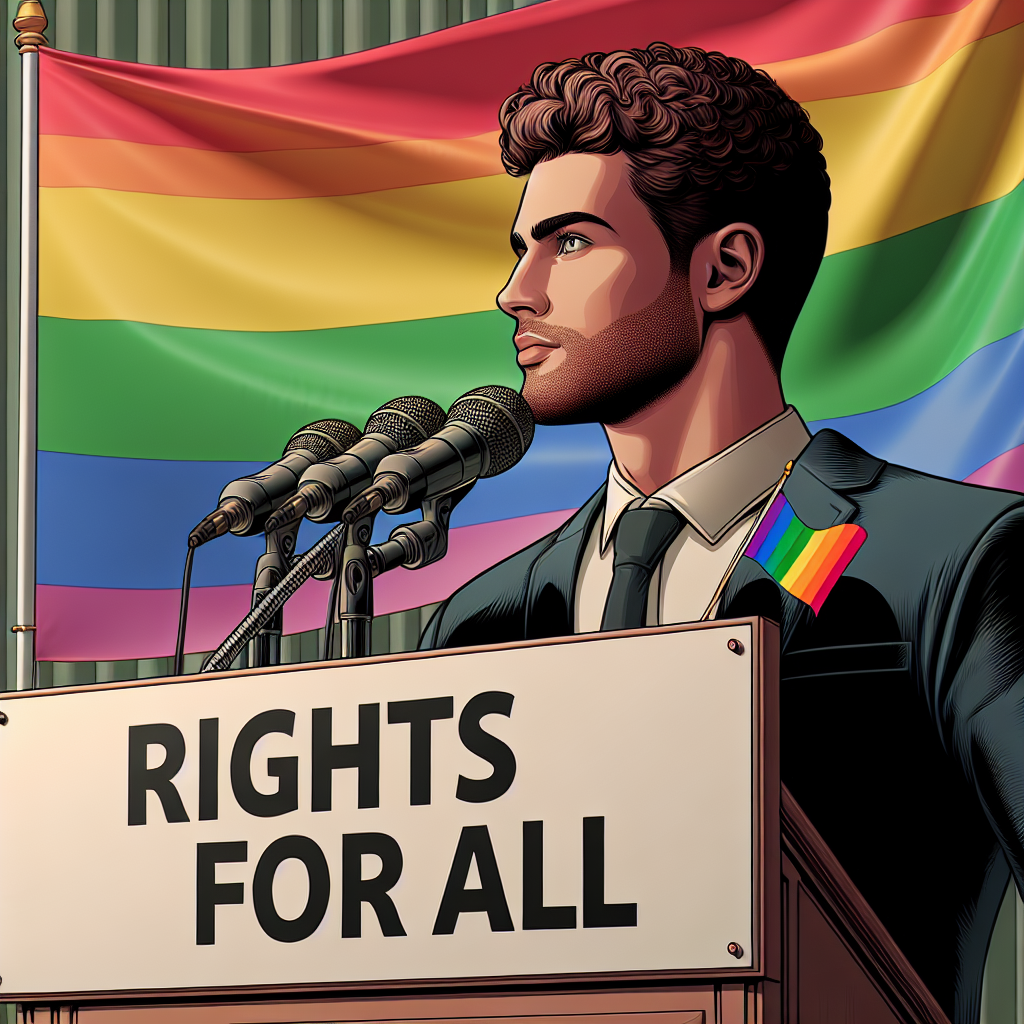
In 1977, Harvey Milk triumphed against significant odds to become one of the first openly gay elected officials in the United States, winning a seat on the San Francisco Board of Supervisors. His election was historic, both for the LGBTQ community and the larger fight against discrimination. Milk’s victory symbolized hope and provided a sense of legitimacy to countless individuals who had long felt ostracized by mainstream society.
Milk’s tenure as a supervisor was marked by his relentless advocacy for social justice. One of his most notable achievements was the introduction of a stringent anti-discrimination ordinance, aimed at protecting individuals based on sexual orientation. This ordinance not only offered legal recourse for victims of discrimination but also functioned as a moral victory in challenging prejudiced norms.
Challenges and Struggles
Harvey Milk’s rise to political prominence was not devoid of opposition. He faced virulent resistance from conservative factions, epitomized by individuals like John Briggs, who spearheaded initiatives aimed at barring LGBTQ people from working in California’s public schools. Milk passionately opposed such discriminatory measures and was a vocal critic of Proposition 6, commonly known as the Briggs Initiative.
His tireless campaigning played a critical role in defeating Proposition 6, which marked a significant victory for LGBTQ rights. However, the challenges extended beyond political campaigns. Milk also faced personal attacks and threats, underscoring the peril that comes with pushing against deeply entrenched societal prejudices. Despite these challenges, Milk remained undeterred, driven by a steadfast belief in justice and equality.
Legacy and Impact
Tragically, Harvey Milk’s life was cut short when he was assassinated on November 27, 1978, along with San Francisco Mayor George Moscone, by a disgruntled former city supervisor. While his life was prematurely ended, his legacy endures. Harvey Milk is remembered not just as a martyr for LGBTQ rights but also as a trailblazer who paved the way for future generations of activists and politicians.
Milk’s impact is evident in the numerous streets, schools, and public buildings that bear his name today. His story is taught globally as a beacon of the power of resilience and the imperative of social justice. Additionally, numerous films, documentaries, and books have been created to honor his life and work, ensuring that his contributions are never forgotten.
Modern-Day Relevance
The principles and initiatives championed by Harvey Milk retain their relevance even in contemporary society. Issues of discrimination, underrepresentation, and social justice continue to plague communities worldwide. Milk’s strategies—direct action, grassroots organizing, and intersectional advocacy—provide a template for modern social movements. His life underscores the importance of visibility and the long, often arduous journey towards equality.
Modern-day activists draw inspiration from Milk’s example, understanding that enduring change requires patience, resilience, and a relentless focus on justice. The strides made in LGBTQ rights, such as marriage equality and improved recognition in various sectors, owe much to the foundational work done by pioneers like Milk.
Conclusion
Harvey Milk’s life and legacy are testimonies to the transformative power of courage and the unyielding quest for social justice. His journey from a closeted individual to an iconic political figure portrays the transformative impact of self-acceptance and societal advocacy. Through his work, Milk irrevocably altered the landscape of LGBTQ rights, offering hope and representation to countless individuals who had long felt marginalized.
Reflecting on Milk’s contributions reveals the broader narrative of struggle, resilience, and eventual triumph inherent in the fight for equal rights. His life is a clarion call for persistent advocacy and the unyielding pursuit of justice, lessons that remain just as pertinent today as they were decades ago. As we continue to grapple with issues of discrimination and inequality, Harvey Milk’s story serves as a guiding star, reminding us that meaningful change is possible with courage, resilience, and unwavering commitment.