Skip to content

SOCIALSTUDIESHELP.COM

Learn Social Studies and American History

  • American History Lessons
  • American History Topics
  • AP Government and Politics
  • Economics
  • Resources
    • Blog
    • Practice Exams
    • AP Psychology
    • World History
    • Geography and Human Geography
    • Comparative Government & International Relations
    • Most Popular Searches
  • Toggle search form

Federal Budgeting: Historical Evolution to Modern Practices

Posted on By admin

Introduction

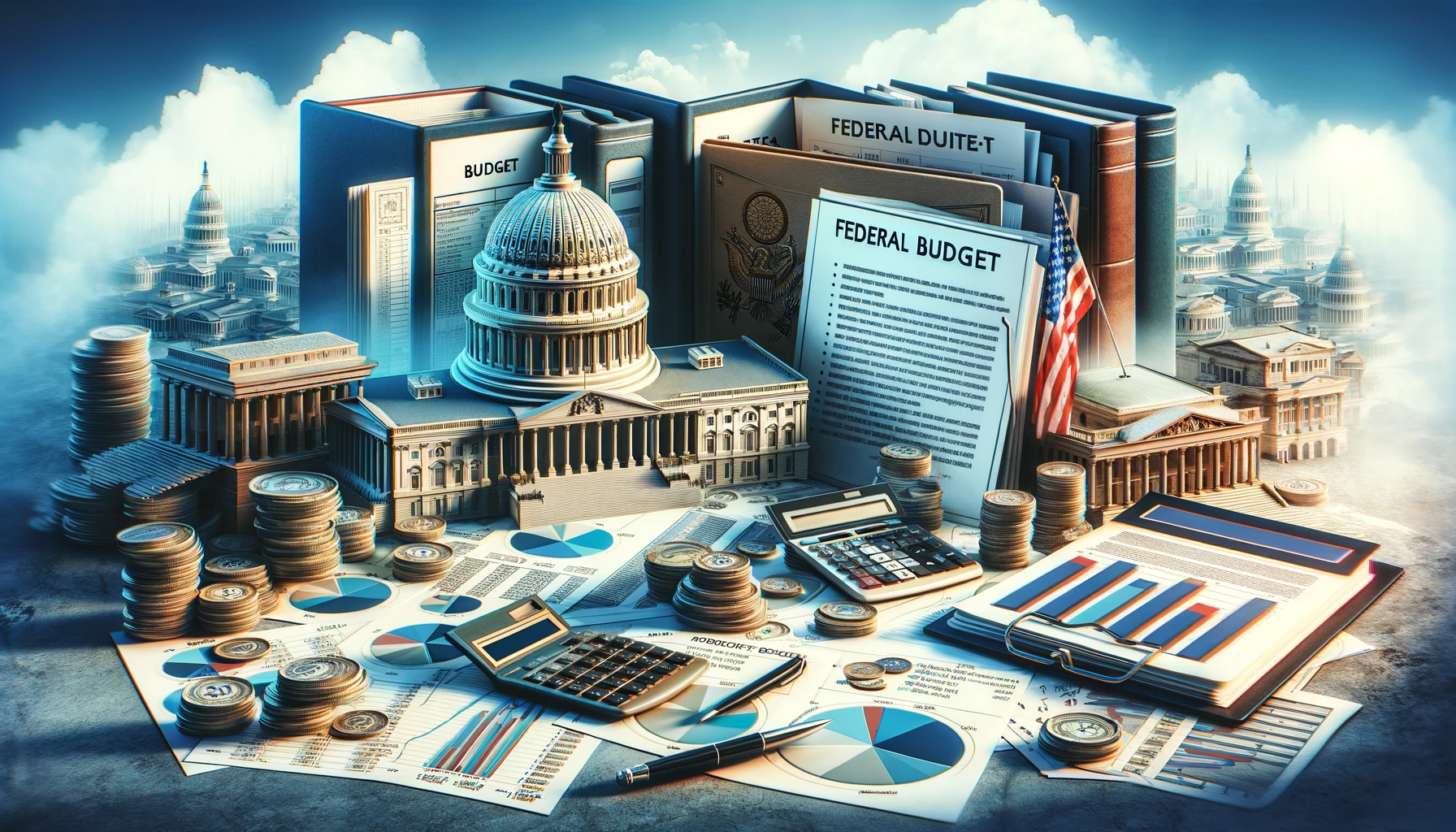
The history of federal government budgeting in the United States is a rich tapestry that reflects the evolving priorities and economic philosophies of the nation. From the early days of the republic to the complex budgetary processes of the 21st century, the federal budget has been a tool for implementing economic policy, addressing national needs, and reflecting the political and economic theories of the times. This article traces the development of these practices up to the present day, offering insights into the complexities of government spending and fiscal management.

Early Budgeting Practices (1789-1921)

The federal budgeting process in the United States began with the establishment of the Treasury Department in 1789. Initially, there was no formal budget system; instead, Congress and the President managed revenues and expenditures on an as-needed basis. The early 19th century saw a focus on paying off national debt and financing government operations mainly through tariffs and land sales.

The Civil War marked a turning point, necessitating increased government spending and the introduction of income tax. Post-war, there was a return to a focus on debt reduction, but the growing complexity of the federal government began to highlight the need for a more systematic approach to budgeting.

The Budget and Accounting Act of 1921

A significant milestone in federal budgeting was the Budget and Accounting Act of 1921. This act established the Bureau of the Budget (now the Office of Management and Budget, OMB) and required the President to submit an annual budget to Congress. For the first time, the executive branch had a formal role in the budget process, centralizing budgetary authority and creating a more organized approach to fiscal management.

The Great Depression and New Deal (1930s)

The Great Depression drastically altered the federal government’s approach to budgeting. President Franklin D. Roosevelt’s New Deal marked a shift towards Keynesian economic policies, which advocated for increased government spending to stimulate economic growth. This period saw unprecedented levels of government intervention in the economy and a significant increase in federal spending, much of it financed by deficits.

Post-World War II Era to the 1970s

The post-World War II era witnessed continued government expansion and fiscal policies aimed at promoting economic stability and growth. The 1960s introduced Lyndon B. Johnson’s Great Society programs, further expanding government spending. However, the economic turmoil of the 1970s, characterized by stagflation, challenged the prevailing Keynesian consensus and led to debates over the role of government spending and deficits.

The 1980s: Reaganomics and Deficit Concerns

The election of Ronald Reagan in 1980 marked a significant shift in federal budgeting philosophy. Reaganomics, with its emphasis on tax cuts, deregulation, and reduced government spending on domestic programs, sought to reduce the role of the federal government in the economy. Despite these goals, the 1980s saw large budget deficits, partly due to increased military spending and reduced revenues from tax cuts.

The 1990s and the Era of Surpluses

The 1990s, under the administrations of George H. W. Bush and Bill Clinton, saw a renewed focus on deficit reduction. A combination of economic growth, spending restraint, and tax increases led to budget surpluses by the end of the decade. This period is notable for the implementation of the Budget Enforcement Act of 1990, which established pay-as-you-go (PAYGO) rules and discretionary spending caps.

The 21st Century: Fiscal Challenges and Modern Budgeting

The early 21st century has presented numerous challenges to federal budgeting. The September 11 attacks, the wars in Afghanistan and Iraq, and the Great Recession of 2008 have all necessitated significant government spending. The response to the Great Recession, in particular, saw a return to Keynesian-inspired stimulus measures, including the American Recovery and Reinvestment Act of 2009.

In recent years, budgeting has been marked by political gridlock, leading to issues such as government shutdowns and debates over the debt ceiling. The growing national debt and concerns over entitlement program sustainability are central themes in contemporary budget discussions.

Contemporary Challenges and Future Directions

The current state of federal budgeting in the United States is shaped by several contemporary challenges. These include rising healthcare costs, particularly Medicare and Medicaid expenses, the sustainability of Social Security, and the implications of an aging population. Additionally, the ongoing debates over defense spending, infrastructure investment, and responses to climate change significantly impact federal budgeting priorities.

The Role of Partisan Politics

In recent years, federal budgeting has increasingly become a battleground for partisan politics. Ideological differences between and within political parties often lead to contentious budget negotiations, resulting in stop-gap measures and temporary funding solutions rather than long-term fiscal planning. This environment has raised concerns about the effectiveness of the budgeting process in addressing the nation’s real economic needs and priorities.

Technological Advances and Budgeting

Technological advances have also impacted federal budgeting. The use of sophisticated economic models, data analytics, and forecasting tools has improved the accuracy and efficiency of budget planning and analysis. However, these advances also bring challenges, such as ensuring data security and managing the complexities of cyberinfrastructure investments.

Public Engagement and Transparency

There has been a growing emphasis on enhancing public engagement and transparency in the budgeting process. Initiatives to make budget data more accessible and understandable to the public aim to increase accountability and foster informed debate about fiscal policy. This trend is likely to continue as technology enables more direct citizen involvement in government processes.

Future Directions in Federal Budgeting

Looking forward, the federal budgeting process in the United States will likely continue to evolve in response to economic, social, and technological changes. Key areas of focus may include:

  1. Addressing Long-term Fiscal Sustainability: Ensuring the long-term sustainability of federal finances, particularly in relation to entitlement programs and the national debt, will be a critical challenge.
  2. Responding to Economic and Social Changes: The budget will need to adapt to changes such as demographic shifts, technological advancements, and evolving social needs.
  3. Integrating Environmental Considerations: As environmental concerns, particularly climate change, become increasingly pressing, integrating environmental sustainability into budgeting will become more important.
  4. Enhancing Efficiency and Effectiveness: Efforts to make the budgeting process more efficient and effective, including the use of technology and improved management practices, will continue to be important.
  5. Promoting Bipartisan Collaboration: Finding ways to bridge partisan divides and promote collaboration in the budgeting process will be crucial for effective governance.

Conclusion

The journey of federal budgeting in the United States is a story of adaptation and change, reflecting the nation’s evolving economic and political landscapes. From its early days to the present, the federal budget has been a key instrument in implementing policy and responding to national challenges. As the country moves forward, the budget will undoubtedly continue to play a central role in shaping the economic and social future of the nation.

Uncategorized

Post navigation

Previous Post: Federal Fiscal Policy: Analyzing Policymaking Politics
Next Post: Exploring US Political Culture: Key Aspects & Scholarly Views

Related Posts

Global Voter Turnout Analysis: A Comparative Study Uncategorized
Exploring Higher Law and Natural Rights in Colonial America Uncategorized
Exploring Federal Bureaucrats: Recruitment, Retention, & Traits Uncategorized
Exploring Political Ideology and American Perspectives Uncategorized
Exploring Key US Agencies in Economic Policy Making Uncategorized
Aung San Suu Kyi – Myanmar’s Fight for Democracy Uncategorized
  • World History
  • Timeline of US History: Major Events from 1492 to Present
  • Glossary of Government Terms: 50 AP Gov Concepts Explained in Plain English
  • Top 10 Most Common Social Studies Exam Terms (and What They Mean)
  • Research Paper Outline Example (Template for High School & AP Research)

Navigation

  • Economics
    • Agricultural Price Supports
    • Agriculture in the United States
    • Bank Deregulation and the S&L Crisis
    • Banking and the Federal Reserve System
    • Basic Economic Concepts
    • Budgeting
    • Business Cycle
    • Business Organizations
    • Perspectives on Business Structures
    • Circular Flow Model
    • Collective Bargaining
    • Comparative Economic Systems
    • Different Types of Banks
    • Economic Growth
    • Economic Indicators
    • Economics Final Exam Review
    • Economics Links
    • Elasticity
    • Federal and State Budgeting
    • Federal Spending and National Debt
    • Free Enterprise
    • Governments Role in the Economy
    • History of Labor Unions
    • Government Protection of the Consumer
    • Income Inequality
    • Inflation
  • History Topics
    • “Robber Barons” or “Captains of Industry”
    • The 18th & 19th Amendments: Prohibition & Women’s Suffrage Explored
    • 19th Amendment – Womens Suffrrage
    • African American Reformers
    • African American Reform in the Progressive Era
    • America – Divided at Birth
    • America’s Role in WWII: Decisive Influence in War’s Outcome
    • Spanish American War: How it Forged America’s Global Dominance
    • Andrew Carnegie – Gospel of Wealth
    • Effectiveness of U.S. Antitrust Laws in Protecting Competition
    • Articles of Confederation
    • Justifications & Impacts: Policies Toward Native Americans
    • Understanding the Bill of Rights’ Protections
    • US Campaigns and Elections: Democracy’s Backbone
    • Causes of the Great Depression
    • Opposition & Responses to the New Deal: Roosevelt’s Strategy
    • Checks and Balances
    • Effectiveness of the Civil Rights Movement in U.S. Social Change
    • What Caused the Beginning of the Civil War?
    • Colonization and Mercantilism
    • Constitutional Convention
    • Constitutional Flexibility
    • Containment Policy: America’s Tactics Against Communism
    • Cooling the Cold War: From Peaceful Coexistence to Detente
    • Cooling Off: Peaceful Coexistence to Detente
    • Declaration of Independence
    • Democracy in the colonies
    • Dropping of the Atomic Bomb
    • Early Domestic Policies
    • Washington & Jefferson’s Impactful Foreign Policies
    • Reconstruction’s Impact on Freedmen’s Lives
    • Effect of Lincoln’ Death on Reconstruction
    • Effects of the Great Depression
    • Electoral College
    • Enlightenment Thinkers
    • Events Leading Up To The Revolution
    • French and Indian War
    • Government Relationship with Unions
    • How a bill becomes a law.
    • Immigration – Why they came
    • Improvement in the cities – Progressive Era
    • American Influence in Asia during the 1800s
    • John Quincy Adams and Andrew Jackson
  • History Lessons
    • Cold War Genesis: A Detailed Analysis
    • The End of the Cold War
    • FDR’s New Deal
    • Foundation of Democracy
    • The Presidency of Andrew Jackson
    • JFK versus LBJ
    • The Presidency of John Adams
    • Judicial Branch
    • Immigration in the U.S
    • Legislative Branch
    • Madison – War of 1812
    • Monopolies & Trusts: Exploring American Businesses’ Quest to Curb Competition
    • The Presidency of James Monroe
    • Judicial Review and Supreme Court Cases
    • Justification for Imperialism
    • Korematsu V. United States
    • Origins of Legalized Segregation in the South
    • Management vs Unions: Responses to Unionization in the Industrial Revolution
    • Westward Expansion: Manifest Destiny’s Impact
    • McCarthyism Explained: Politics, Fear, and Cold War Context
    • The New Deal’s Impact on Minorities in 1930s America
    • Monopolies
    • Monroe Presidency
    • New Technologies – Industrialization
    • WWI and Civil Liberties: Striking the Balance in Wartime
  • Gov & Politics
    • Elections and Campaigns – Week 9 Notes
    • Interest Groups in American Politics: A Historical Review
    • Interest Groups – Text Notes – Week Seven
    • Lecture Notes – American Political System
    • Lecture Notes – Congress – Week 11
    • Lecture Notes – Economic Policy
    • Lecture Notes – Federalism
    • Lecture Notes – The Judiciary – Week 13
    • Notes – The Bureaucracy
    • Lecture Notes – Political Culture in America
    • Political Participation
    • Political Participation – Text Notes – Week Six
    • Political Parties – Week 8 – Text Notes
  • World Cultures
    • Asian Cultures
    • African Cultures
    • European Cultures
    • Middle Eastern Cultures
    • North American Cultures
    • Oceania and Pacific Cultures
    • South American Cultures
  • Global Trends
  • Important Events
  • Social Studies Weekly
  • Cultural Celebrations
    • Ancient Civilizations
    • Architectural Wonders
    • Celebrating Hispanic Heritage
    • Celebrating Women
    • Celebrating World Heritage Sites
    • Clothing and Fashion
    • Culinary Traditions
    • Cultural Impact of Language
    • Environmental Practices
    • Festivals
    • Global Art and Artists
    • Global Music and Dance
  • Economics
    • Behavioral Economics
    • Development Economics
    • Econometrics and Quantitative Methods
    • Economic Development
    • Economic Geography
    • Economic History
    • Economic Policy
    • Economic Sociology
    • Economics of Education
    • Environmental Economics
    • Financial Economics
    • Health Economics
    • History of Economic Thought
    • International Economics
    • Labor Economics
    • Macroeconomics
    • Microeconomics
  • Important Figures in History
    • Artists and Writers
    • Cultural Icons
    • Groundbreaking Scientists
    • Human Rights Champions
    • Intellectual Giants
    • Leaders in Social Change
    • Mythology and Legends
    • Political and Military Strategists
    • Political Pioneers
    • Revolutionary Leaders
    • Scientific Trailblazers
    • Explorers and Innovators
  • Global Events and Trends
  • Regional and National Events
  • World Cultures
    • Asian Cultures
    • African Cultures
    • European Cultures
    • Middle Eastern Cultures
    • North American Cultures
    • Oceania and Pacific Cultures
    • South American Cultures
  • Privacy Policy

Copyright © 2025 SOCIALSTUDIESHELP.COM. Powered by AI Writer DIYSEO.AI. Download on WordPress.

Powered by PressBook Grid Blogs theme