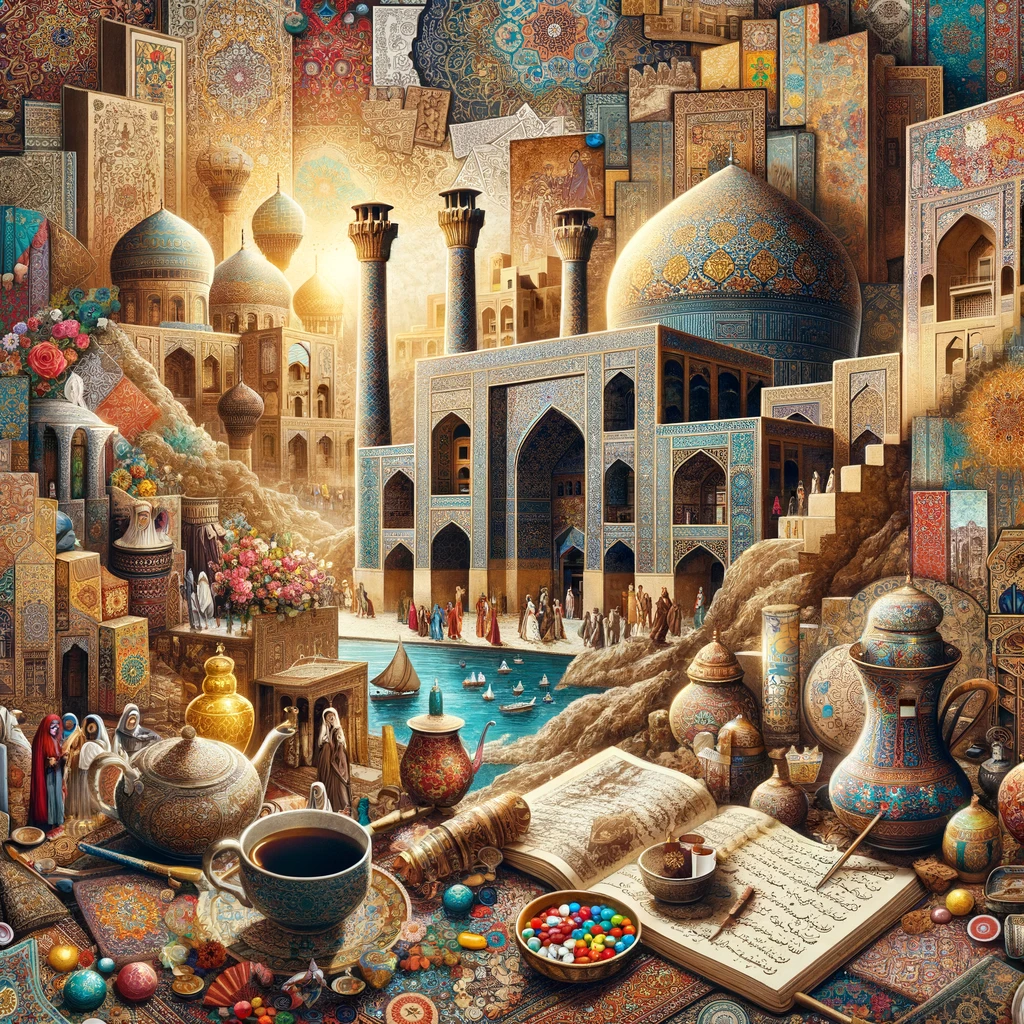
The Middle East, a region steeped in history and culture, has been a cradle for some of the most compelling and influential literary works in human history. While the famous collection ‘One Thousand and One Nights’ often captures the limelight in discussions about Middle Eastern literature, the region’s literary landscape is much richer and more diverse than this single anthology. This article delves into the vast and varied world of Middle Eastern literature, exploring its historical roots, cultural influences, and the myriad of stories and literary forms that have emerged from this region.
Historical Context
The Birthplace of Literature
The Middle East is often cited as the birthplace of literature, with the earliest forms of written storytelling emerging from ancient Mesopotamia, now modern-day Iraq. The Epic of Gilgamesh, one of the oldest known works of literature, hails from this region. Written in cuneiform on clay tablets, this epic poem narrates the adventures of Gilgamesh, the king of Uruk, and his quest for immortality. The narrative’s exploration of themes like friendship, heroism, and the human condition has resonated through millennia, influencing countless works that followed.
The Golden Age of Arabic Literature
The Islamic Golden Age, particularly from the 8th to the 14th century, marked a period of extraordinary cultural, scientific, and literary achievements in the Middle East. Baghdad, the capital of the then Islamic empire, became a melting pot of ideas and cultures. This era witnessed the compilation of ‘One Thousand and One Nights’, a collection of Middle Eastern folk tales. However, this period also produced a plethora of other literary works, ranging from poetry and philosophy to science and travel literature.
Poetry: The Heart of Middle Eastern Literature
The Significance of Poetry
Poetry holds a special place in the heart of Middle Eastern literature. It is not just a form of artistic expression but also a medium for preserving history, traditions, and cultural values. Arabic poetry, in particular, has a rich and complex history, evolving from the pre-Islamic era to the present day. The qasida, an ode-like form, was prevalent in the pre-Islamic period, often recited orally and later written down. These poems dealt with themes like honor, bravery, love, and the harshness of the desert life.
Sufi Poetry: A Mystic Journey
Sufism, the mystical dimension of Islam, significantly influenced Middle Eastern poetry. Poets like Rumi (Jalal ad-Din Muhammad Rumi) from Persia and Ibn Arabi from Al-Andalus brought a mystical and philosophical depth to poetry. Rumi’s ‘Masnavi’ is considered one of the greatest works of Sufi literature, using stories and parables to convey spiritual lessons and insights.
Prose: Expanding Horizons
Folktales and Beyond
While ‘One Thousand and One Nights’ remains the most famous collection of Middle Eastern folktales, there are many more treasures to be found in the region’s prose literature. These stories, rich in symbolism and moral lessons, reflect the social, cultural, and political realities of their times.
Modern Prose Literature
In the 20th century, Middle Eastern literature underwent significant transformations, reflecting the region’s tumultuous political changes, social upheavals, and interactions with the West. Writers like Naguib Mahfouz, the first Arabic-language writer to win the Nobel Prize in Literature, brought international attention to modern Middle Eastern literature. His Cairo Trilogy paints a vivid picture of Egyptian society from World War I to the end of World War II.
Themes and Styles in Middle Eastern Literature
Cross-Cultural Influences
Middle Eastern literature is a tapestry woven from various cultural threads. The region’s historical position as a crossroads of civilizations – from the ancient Egyptians, Greeks, and Persians to the later interactions with European cultures – has created a unique literary tradition that blends a multitude of influences.
Contemporary Issues
Modern Middle Eastern writers often grapple with themes like identity, tradition versus modernity, gender roles, and political conflicts. These works provide a window into the lives of people navigating the complexities of contemporary Middle Eastern societies.
Exploring Specific Literary Works and Notable Authors
Pioneering Authors and Their Contributions
Several authors from the Middle East have left an indelible mark on world literature. For instance, Khalil Gibran, a Lebanese-American writer, gained fame for his book ‘The Prophet’, a collection of poetic essays. His work, blending elements of Eastern and Western philosophies, resonates globally with its universal themes.
Another notable figure is the Egyptian writer Tawfiq al-Hakim, known for his plays and novels that delve into the complexities of Egyptian society. His play, ‘The Sultan’s Dilemma’, humorously critiques the judicial system, highlighting the timeless relevance of social commentary in literature.
Women in Middle Eastern Literature
Women writers have also significantly contributed to Middle Eastern literature, often challenging societal norms and shedding light on women’s experiences in their societies. For example, Egyptian novelist Nawal El Saadawi, known for her feminist works, addresses issues of gender inequality and religious orthodoxy in her novels like ‘Woman at Point Zero’.
Iranian author Shahrnush Parsipur, in her novel ‘Women Without Men’, uses magical realism to explore women’s struggles and resilience in a patriarchal society. Her work was controversial in Iran but gained international acclaim for its bold storytelling.
Impact on Global Literature
Middle Eastern literature has not only enriched its own cultural heritage but has also significantly influenced global literary traditions. The translation of Middle Eastern works into various languages has broadened their reach, allowing readers worldwide to experience the region’s rich storytelling tradition.
Literary Exchange and Influence
The influence of Middle Eastern literature is evident in the works of Western authors. For instance, the structure of ‘One Thousand and One Nights’ has inspired the narrative techniques of many European writers. The flow of influence is bidirectional, with Middle Eastern authors incorporating Western literary styles into their works, leading to a fusion of literary traditions.
Translations and Adaptations
The translation of Middle Eastern literature has played a crucial role in its global dissemination. Notably, Edward FitzGerald’s translation of ‘The Rubaiyat of Omar Khayyam’, a collection of quatrains by the Persian mathematician and poet, gained immense popularity in the West, introducing many to the depth and beauty of Persian poetry.
Contemporary Middle Eastern Literature
In recent years, contemporary Middle Eastern literature has gained international attention, with authors exploring a range of topics from historical narratives to current socio-political issues.
The Rise of New Voices
A new generation of Middle Eastern writers is emerging, offering fresh perspectives and exploring new literary forms. These authors often write in their native languages and English, reaching a broader audience. Works like ‘The Map of Salt and Stars’ by Zeyn Joukhadar and ‘Frankenstein in Baghdad’ by Ahmed Saadawi showcase the dynamic and evolving nature of contemporary Middle Eastern literature.
Literary Festivals and Awards
Literary festivals and awards play a significant role in promoting Middle Eastern literature. Events like the Emirates Airline Festival of Literature in Dubai and the International Prize for Arabic Fiction have helped elevate the profiles of Middle Eastern authors, facilitating a greater appreciation of their work globally.
Conclusion: A Legacy of Storytelling
Middle Eastern literature, transcending beyond the confines of ‘One Thousand and One Nights’, offers a vast universe of stories that reflect the human experience in all its complexity. From ancient epics to contemporary novels, this literary tradition invites readers to embark on a journey through time and culture, uncovering the rich tapestry of Middle Eastern life and thought. As we continue to explore and celebrate these works, Middle Eastern literature stands as a testament to the enduring power of storytelling and its ability to connect us across time and space.
With this detailed exploration, we have reached the end of our comprehensive overview of Middle Eastern literature. The journey through its historical roots, diverse forms, notable authors, and its impact on the global stage, reveals a literary landscape rich in depth, diversity, and cultural significance. This article has aimed to provide a deeper understanding of Middle Eastern literature and its contributions to the world of storytelling.