Introduction
In our exploration of political ideology, particularly in the context of the United States, it’s crucial to understand the core principles that shape the political landscape. Political ideology is more than just a set of beliefs; it’s a framework that guides political thought and action. This article aims to define political ideology and explain why many Americans do not adhere strictly to ideological thought. Additionally, we will summarize the liberal stance on key issues like the economy, civil rights, and political conduct.
Make sure to review our class outline on Public Opinion & Political Ideology.
Defining Political Ideology
Political ideology can be thought of as a set of ethical ideals, principles, doctrines, myths, or symbols of a social movement, institution, class, or large group that explains how society should work. It offers a particular political and cultural blueprint for a certain social order.
A critical aspect of political ideology is that it inherently involves a certain level of idealism, envisioning a world not as it is, but as it should be. This vision includes opinions on economics, social issues, civil rights, the role of government, and more.
Why Most Americans Do Not Think Ideologically
Despite the clear frameworks that ideologies provide, most Americans do not think strictly in ideological terms. Several reasons contribute to this phenomenon:
- Complexity of Issues: Political issues are often complex and multifaceted. Americans may find that their beliefs do not neatly align with a single ideological package.
- Pragmatism Over Ideology: Many Americans prioritize practical solutions over ideological purity. This pragmatism reflects a preference for policies that work in reality, regardless of whether they align perfectly with a specific ideology.
- Diverse Society: The United States’ diverse society means a wide array of viewpoints and experiences. This diversity naturally leads to a blend of beliefs that might not fit neatly into traditional ideological categories.
- Media Influence: The media landscape, with its focus on sensationalism and soundbites, often provides an oversimplified view of complex issues, leading to a piecemeal understanding rather than a cohesive ideological perspective.
- Political Disillusionment: A growing distrust in political institutions and leaders can lead to cynicism or disengagement, steering people away from adopting a clear ideological stance.
Liberal Positions on Key Issues
Turning to the liberal ideology, let’s examine their positions on the economy, civil rights, and political conduct.
- Economy: Liberals generally advocate for a mixed economy where both the private sector and government play significant roles. They support regulating businesses to protect consumers, workers, and the environment. Liberals often favor progressive taxation, believing that those with greater wealth should contribute more to society. They also support social welfare programs and believe in the government’s role in reducing economic inequality.
- Civil Rights: Liberals are typically at the forefront of advocating for civil rights. This includes support for racial and gender equality, LGBTQ rights, and the protection of minority groups’ interests. They often support policies that aim to reduce discrimination and promote equality in education, employment, and in the justice system.
- Political Conduct: In terms of political conduct, liberals generally emphasize the importance of democratic processes and institutions. They advocate for transparency in government, the protection of individual rights and freedoms, and the importance of civic engagement. Liberals also tend to support reforms that aim to reduce the influence of money in politics and ensure fair voting processes.
Understanding political ideology is key to grasping the complexities of the political landscape in the United States. While ideologies provide a framework, the reality is that many Americans’ beliefs do not align strictly along ideological lines due to various factors such as complexity of issues, societal diversity, and practicality.
The liberal ideology, with its focus on economic regulation, social welfare, civil rights, and democratic principles, offers a clear vision of a certain social order. However, it’s important to recognize that the political spectrum is broad and diverse, reflecting the varied experiences and beliefs of the American people.
Part Two: Further Exploration of American Ideological Perspectives
The Spectrum of Political Thought in America
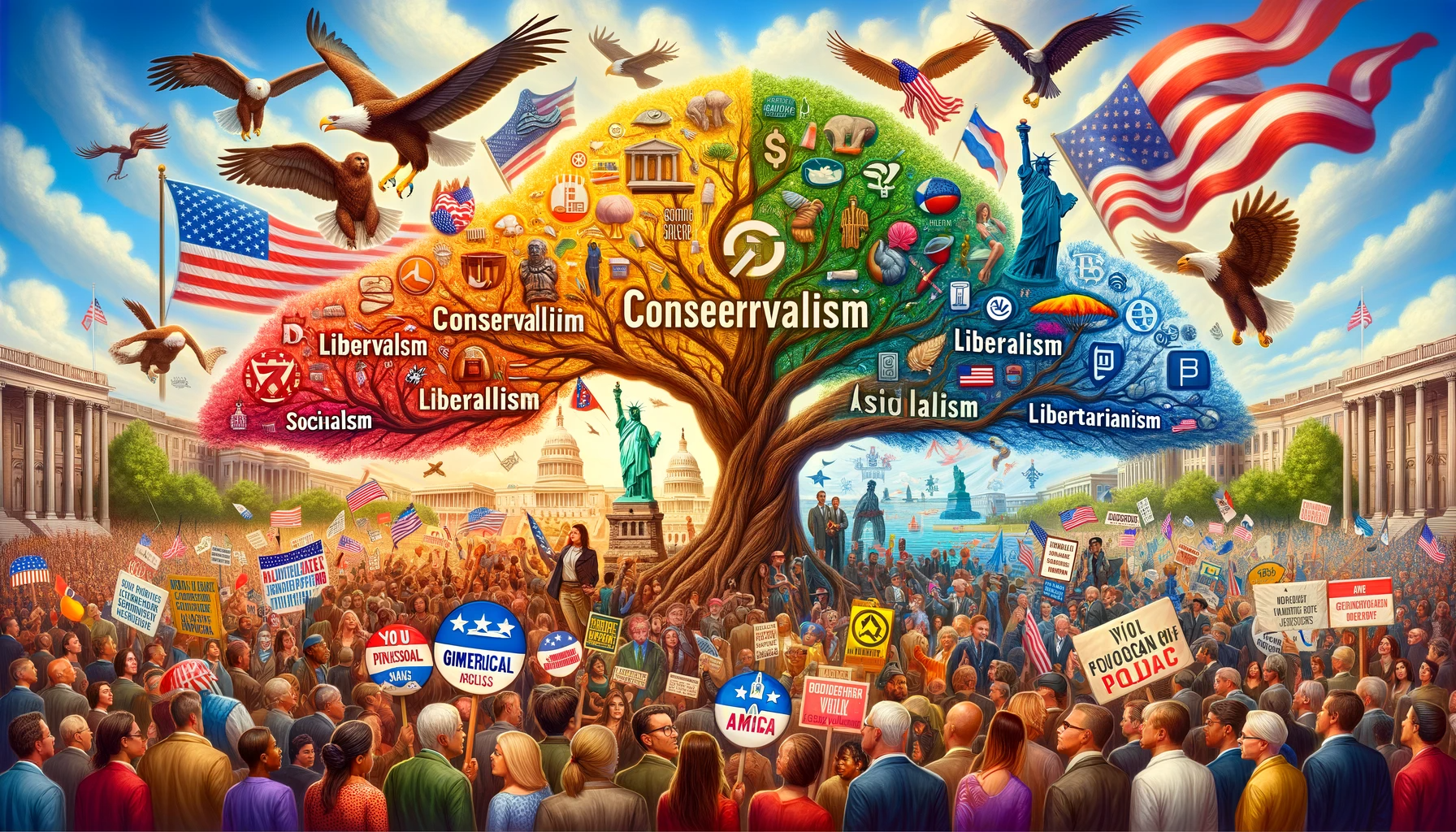
In America, the political spectrum is not a binary between liberalism and conservatism; rather, it encompasses a range of ideologies from libertarianism to socialism. This diversity reflects the nation’s complex social and economic fabric. However, the lack of strict ideological alignment among the populace is attributed to a variety of factors:
- Educational Influence: The level and nature of education can significantly shape political views. A lack of comprehensive civic education may lead to a populace less aware of the full spectrum of political ideologies.
- Cultural Factors: American culture, with its emphasis on individualism and personal freedom, often influences people to form opinions based on personal experiences rather than ideological doctrines.
- Economic Realities: Economic conditions and personal financial situations can greatly influence political beliefs, sometimes overriding ideological inclinations.
Liberal Positions – A Closer Look
To further understand the liberal ideology in America, it’s essential to delve deeper into their key positions:
- On the Economy: Liberals support government intervention in the economy to address social inequities. This includes advocating for minimum wage laws, labor rights, affordable healthcare, and education. They believe that a regulated free market is crucial for the equitable distribution of wealth and opportunities.
- On Civil Rights: Liberals champion civil liberties, advocating for equal rights regardless of race, gender, sexual orientation, or religion. They support affirmative action and other policies aimed at redressing historical injustices and achieving greater social equity.
- On Political Conduct: Liberals stress the importance of maintaining democratic norms, including the protection of free speech, press freedom, and the right to protest. They also advocate for campaign finance reform and voting rights, emphasizing the need for a more inclusive and representative political system.
Challenges in Adopting Ideological Thinking
Despite the clarity that ideological thinking might provide, there are several challenges in adopting such a perspective in America:
- Polarization: The increasing political polarization makes it difficult for individuals to align completely with a single ideology without being seen as partisan.
- Globalization: In an increasingly interconnected world, global issues often require solutions beyond traditional ideological boundaries.
- Technological Influence: The rapid spread of information (and misinformation) through social media and other digital platforms can shape or distort political views, complicating ideological alignment.
Conclusion
As we dissect the nature of political ideology and its manifestation in American society, it becomes evident that while political ideologies like liberalism offer a structured way to view the world, the reality of how Americans think politically is much more nuanced. Factors ranging from individual experiences to societal changes play a significant role in shaping these views.
Understanding these dynamics is crucial for anyone engaged in the study of government and political science. It not only helps in comprehending the current political climate but also underscores the importance of fostering a politically informed and engaged citizenry.
In conclusion, while ideologies like liberalism provide a framework for understanding political beliefs, the diverse and dynamic nature of American society means that most individuals’ political views are a complex mix, often defying strict ideological categorization.