
Exchange rates play a critical role in the world economy, impacting international trade processes significantly. For businesses and individuals engaged in cross-border transactions, understanding exchange rate mechanisms is essential. Essentially, exchange rates dictate how much one country’s currency is worth in terms of another’s. This valuation affects everything from the price of goods and services to the profitability of companies dealing in multiple currencies. Over the past few decades, changes in exchange rates have led to significant shifts in global trade patterns, influencing decisions made by policymakers, business leaders, and consumers alike.
The complexity of exchange rates arises from various factors such as inflation rates, interest rates, political stability, and economic performance among others. Each of these factors can cause fluctuations in exchange rates, thereby impacting international trade advantages or disadvantages for nations. Businesses that have a solid grasp on how exchange rates function can better navigate the challenges and opportunities in the global market, ensuring they remain competitive. Equally important is the role of government policy and central bank interventions in managing exchange rates to support their respective national economies.
Understanding how exchange rates influence international trade is crucial not just for large multinational corporations but also for small and medium enterprises (SMEs) venturing into export or import activities. Exchange rate policies and their subsequent impact on trade can either open up new markets or create substantial barriers, significantly affecting a country’s trade balance and economic health. Therefore, a comprehensive exploration of this topic is beneficial for anyone involved in global commerce, economics, or trade policy.
In this article, we will delve into the specifics of how exchange rates are determined, the ways in which they affect international trade, and the implications of both fixed and floating exchange rate systems. We will also discuss the strategic responses businesses and governments can adopt to mitigate adverse impacts and leverage advantageous changes in exchange rates.
The Determinants of Exchange Rates
Exchange rates are influenced by a myriad of economic factors. Among the most significant are inflation rates, interest rates, and economic stability. Countries with lower inflation rates tend to see an appreciation in their currency value. For instance, if the United States experiences lower inflation compared to the European Union, the U.S. dollar may strengthen against the euro. Interest rates also play a crucial role. Higher interest rates attract foreign capital due to the higher returns on investments in that country’s currency, leading to an appreciation of the currency.
Political stability and economic performance are additional critical determinants. Countries with stable political environments and robust economies are more attractive to foreign investors, seeking to park their investments in a safe environment. Therefore, political turmoil or economic instability can lead to depreciation of a country’s currency. Foreign exchange reserves and government interventions, often conducted by central banks, also influence exchange rates. Countries with significant foreign exchange reserves can inject or withdraw currencies from the market to stabilize or adjust their currency values.
Market speculation can amplify these effects. If investors believe that a currency will strengthen in the future, they might buy more of that currency now, driving up its value. Conversely, if there is speculation that a currency will weaken, it could lead to its depreciation as investors offload it. Thus, short-term and long-term expectations about a country’s economic health play a significant role in determining exchange rates.
Impact on Export and Import Prices
Exchange rate movements have direct implications on export and import prices. When a country’s currency appreciates, its exports become more expensive for foreign buyers as they need more of their currency to acquire the same amount of goods. This situation can lead to a decrease in the country’s export volumes as the higher price may reduce demand. Conversely, when the currency depreciates, exports become cheaper for foreign buyers, potentially boosting exports.
On the import side, an appreciated currency means that foreign goods become cheaper for domestic consumers. This scenario can lead to an increase in imports as consumers and businesses take advantage of lower prices on foreign goods and materials. However, a depreciated currency makes imports more expensive, which can reduce the volume of imported goods and raise the cost of production for businesses that rely on imported materials. These price changes can significantly affect a nation’s trade balance, which is the difference between the value of its exports and imports.
The terms of trade, which is the ratio of a country’s export prices to its import prices, are also influenced by exchange rates. A favorable exchange rate can improve a country’s terms of trade by increasing the value of its exports relative to its imports, while an unfavorable exchange rate can worsen it. Therefore, monitoring and managing exchange rate movements is crucial for maintaining competitive trade advantages and economic stability.
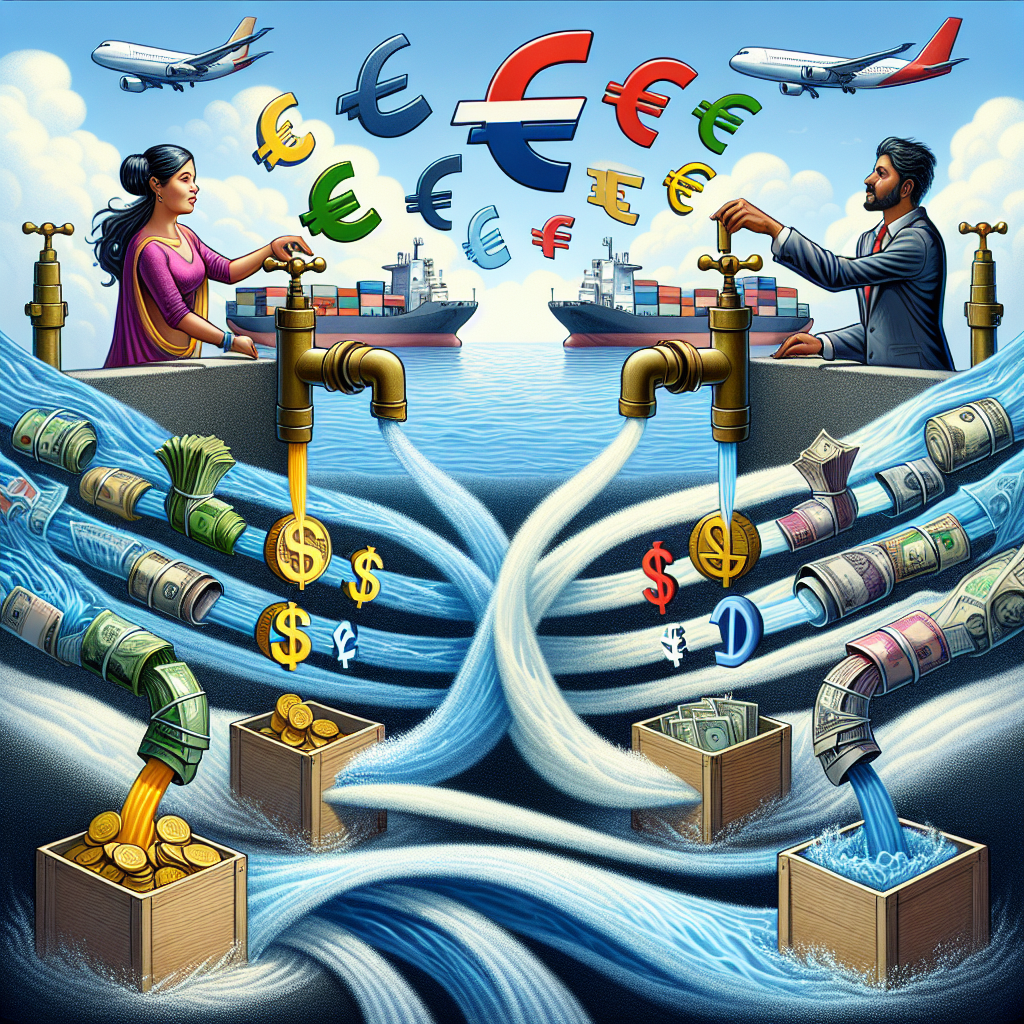
Fixed vs. Floating Exchange Rates
Countries adopt different exchange rate systems to manage their currency values. The two primary systems are fixed and floating exchange rates. A fixed exchange rate system involves pegging a country’s currency to a major currency like the U.S. dollar or a basket of currencies. This peg is maintained by the government or central bank through interventions in the foreign exchange market. Fixed exchange rates provide stability and predictability, which is beneficial for international trade and investment decisions.
However, maintaining a fixed exchange rate requires substantial foreign exchange reserves and can limit a country’s ability to conduct independent monetary policy. Countries with fixed exchange rates often have to follow the monetary policy of the country to which their currency is pegged, which might not always align with their own economic needs.
On the other hand, a floating exchange rate system allows the currency value to fluctuate according to market forces without direct government or central bank intervention. This flexibility can help countries better absorb economic shocks and adjust to changes in the global economy. However, floating exchange rates can lead to volatility, which might create uncertainty for international traders and investors, affecting their decision-making processes.
Strategic Business Responses
Businesses active in international trade must develop strategies to manage the effects of exchange rate fluctuations. One common approach is the use of hedging through financial instruments such as futures, options, and forward contracts. These instruments allow businesses to lock in exchange rates for future transactions, reducing the uncertainty and risk associated with currency movements.
Diversification of markets and sourcing can also mitigate exchange rate risks. By engaging in trade with multiple countries, businesses can spread their risk and reduce dependency on a single currency. Similarly, sourcing raw materials and components from different countries can help balance the cost effects of exchange rate fluctuations.
Another strategy is price adjustment. Businesses can adjust their pricing strategies to accommodate changes in exchange rates, either by absorbing the cost changes or passing them on to customers. This approach requires constant monitoring of exchange rate movements and a deep understanding of market demand and price elasticity.
Collaboration and long-term contracts with foreign partners can also provide stability. Establishing strong relationships with suppliers and customers can lead to more predictable and favorable terms, helping businesses navigate the uncertainties of fluctuating exchange rates more effectively.
Government and Central Bank Interventions
Governments and central banks play a crucial role in managing exchange rates and their impacts on international trade. Through monetary policy, central banks can influence interest rates, which in turn affect currency values. For example, raising interest rates can attract foreign capital, leading to currency appreciation, while lowering rates can have the opposite effect.
Interventions in the foreign exchange market are another tool. Central banks can buy or sell currencies to influence their value, either appreciating or depreciating the domestic currency to achieve economic objectives. These interventions can be coordinated with other countries to address global economic challenges and prevent excessive exchange rate volatility.
Fiscal policy also plays a role. Government spending and taxation can impact a country’s economic performance and, consequently, its currency value. Policies that promote economic growth and stability generally support a stronger currency, while those that lead to deficits and instability can weaken it.
Additionally, international agreements and cooperation among countries can help manage exchange rate impacts. Trade agreements often include provisions related to currency stability, aiming to provide a predictable environment for international trade. International organizations like the International Monetary Fund (IMF) also play a role in monitoring and advising on exchange rate policies and economic stability.
Conclusion:
Exchange rates, undeniably, have a profound impact on international trade, influencing everything from export and import prices to the strategic decisions of businesses and governments. Understanding the determinants of exchange rates and how they affect trade is crucial for anyone involved in the global economy.
The choice between fixed and floating exchange rate systems presents distinct advantages and challenges, and countries must carefully consider their unique economic conditions when making this decision. Businesses, on their part, need to adopt robust strategies to manage exchange rate risks effectively, leveraging tools like hedging, diversification, and strategic collaborations.
Governments and central banks play an instrumental role in stabilizing exchange rates and supporting economic stability through various interventions and policies. International cooperation and agreements further contribute to creating a conducive environment for global trade, addressing challenges posed by currency fluctuations.
In an increasingly interconnected world, exchange rates will continue to be a critical factor in international trade dynamics. Staying informed about exchange rate movements, understanding their implications, and adopting proactive measures can help businesses and economies thrive in the global marketplace. Embracing the complexity of exchange rates and their impact on trade is essential for navigating the challenges and seizing the opportunities in the ever-evolving landscape of international economics.


