Economic geography is a crucial field that examines the spatial aspects of economic activities. One of its most pressing problems is understanding and addressing poverty, which is not uniformly distributed across different regions. Poverty can often be concentrated in specific areas, leading to significant social and economic disadvantages. To develop effective policy responses, it is vital to understand the spatial patterns of poverty and how they relate to economic, social, and environmental factors.
Geographical differences in poverty levels are shaped by several key factors. These include access to resources, employment opportunities, education, infrastructure, and healthcare services. Urban areas typically enjoy better access to these resources compared to rural areas, often leading to lower poverty rates. However, within urban settings, disparities can be stark, with slum areas experiencing high levels of deprivation. By integrating spatial analysis with economic policies, governments and organizations can develop targeted interventions to combat poverty more effectively.
This article delves into the economic geography of poverty by examining its spatial patterns and the policy responses aimed at alleviating it. We will explore the underlying causes of geographic concentration of poverty, its implications, and the challenges faced in creating equitable development. The insights provided can guide policymakers, development organizations, and academics in addressing poverty with a nuanced and location-specific approach.
Spatial Patterns of Poverty
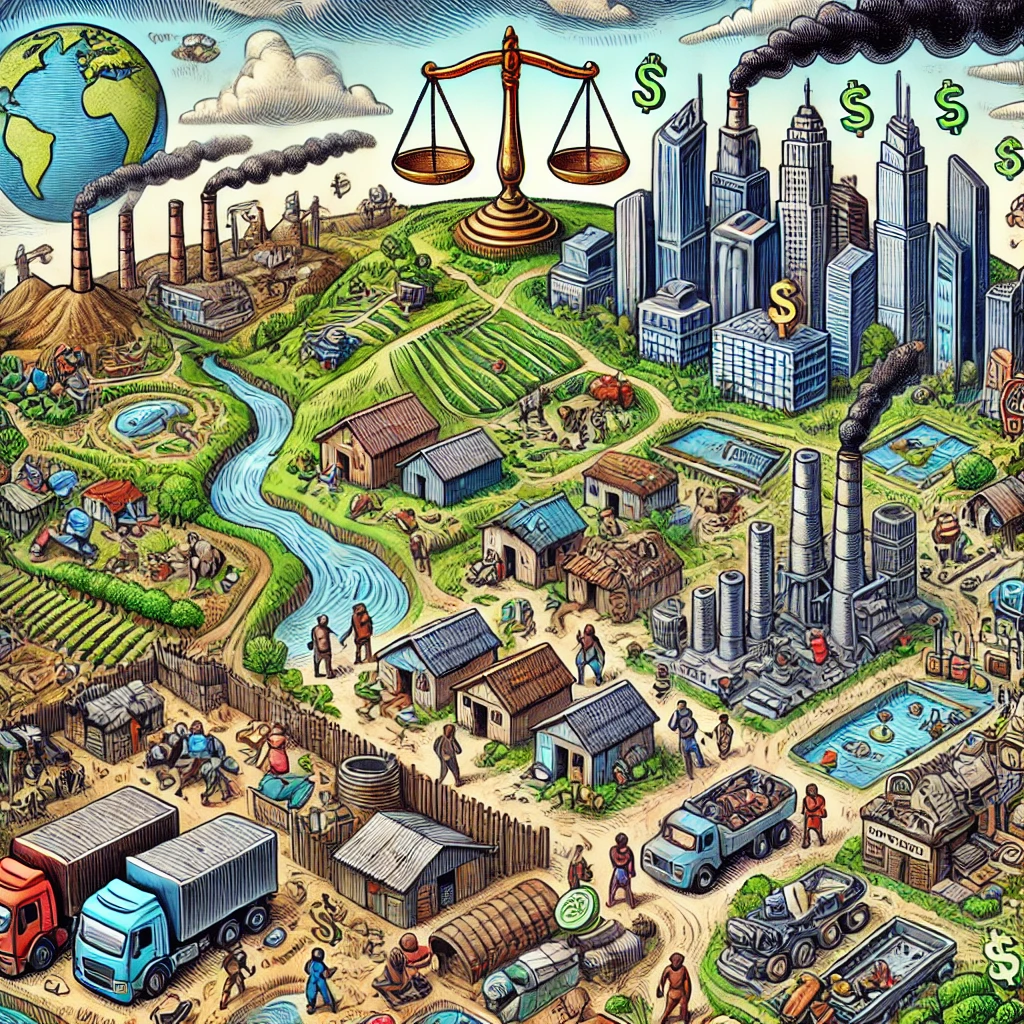
Poverty manifests differently across urban and rural landscapes. In many developing countries, rural areas are particularly afflicted due to several factors, such as limited access to markets, inadequate infrastructure, and a reliance on agriculture, which can be unpredictable and yield low incomes. For instance, Sub-Saharan Africa and South Asia exhibit high rural poverty rates, with many communities lacking basic services and opportunities for economic advancement.
In contrast, urban poverty, although less visible, is equally troubling. Rapid urbanization often leads to the formation of informal settlements or slums. These areas, characterized by overcrowding, substandard housing, and inadequate access to sanitation and healthcare, are prevalent in many large cities around the globe, from Nairobi to Mumbai. Urban poor populations often face higher living costs and job insecurity, despite being closer to economic centers.
Regional disparities also play a significant role in the geography of poverty. Coastal regions or areas with abundant natural resources tend to be more affluent compared to landlocked or resource-scarce regions. In countries like Brazil and India, there are conspicuous differences in poverty levels between the coastal cities and the interior regions. These disparities are often rooted in historical, economic, and political factors that have promoted uneven development.
Understanding these spatial patterns provides valuable insights into the dynamics of poverty. Spatial data and geographic information systems (GIS) are indispensable in identifying poverty hotspots and enabling targeted interventions. They facilitate the visualization of poverty trends, identification of infrastructural gaps, and the planning of resource allocation. This spatial approach underscores the need for place-based policies that can effectively address the unique challenges faced by different regions.
Causes of Geographical Concentration of Poverty
Several interrelated factors contribute to the geographical concentration of poverty. First, historical legacies play a critical role. Colonialism, land tenure systems, and historic economic policies have left enduring impacts on certain regions, often marginalizing them economically and socially. For example, the historical disenfranchisement of indigenous populations in countries like the United States and Australia has led to persistently high poverty rates in areas predominantly inhabited by these communities.
Second, economic structures and transition dynamics influence poverty distribution. Regions relying heavily on declining industries, such as coal mining or traditional manufacturing, face higher poverty rates due to job losses and economic stagnation. Conversely, areas that are hubs of technology and innovation tend to attract investments and skilled labor, reducing poverty levels. The rust belt in the United States exemplifies the struggles of regions impacted by industrial decline.
Third, geographical and environmental factors cannot be overlooked. Areas prone to natural disasters, such as floods, earthquakes, or droughts, often see greater poverty due to the constant disruption of economic activities and loss of livelihoods. Agricultural communities, especially in arid and semi-arid regions, are particularly vulnerable to climatic variations, which can significantly affect crop yields and food security.
Finally, social and political exclusion can lead to impoverished areas. Marginalized groups, such as ethnic minorities, indigenous peoples, and immigrants, often face systemic barriers that limit their access to education, employment, and other essential services. Policies that fail to address these issues contribute to the persistence of poverty in specific geographic areas.
Addressing the causes of geographical concentration of poverty requires a multifaceted approach. Interventions must be tailored to the unique historical, economic, environmental, and social contexts of each region. Such holistic strategies can help in creating sustainable economic opportunities and improving living conditions for impoverished communities.
Implications of Spatial Poverty
The spatial distribution of poverty has far-reaching implications for economic growth, social stability, and overall well-being. High concentrations of poverty can lead to social fragmentation and increased crime rates, as marginalized communities strive to cope with deprivation. Urban areas, in particular, may see the rise of informal economies, which, while providing some income opportunities, often lack regulation and social protections.
From an economic perspective, regional poverty can hinder national growth. When certain areas lag behind, it drags down the overall economic performance of a country. Underutilized human and natural resources in impoverished regions represent missed opportunities for economic development. Furthermore, regional disparities can lead to inefficient allocation of resources, as governments may need to invest disproportionately in social welfare and support systems in poorer areas.
Healthcare disparities are also pronounced in regions with high poverty rates. Poor communities often lack access to quality healthcare, leading to higher disease prevalence and mortality rates. This not only affects the well-being of individuals but also imposes significant economic costs due to lost productivity and increased healthcare expenditures.
Educational inequalities perpetuate the cycle of poverty, as regions with inadequate education facilities fail to equip their populations with the skills needed for economic advancement. This spatial inequality in human capital development means that certain areas continue to miss out on growth opportunities, reinforcing regional poverty patterns over generations.
Addressing these implications requires comprehensive policy frameworks that not only aim at economic growth but also prioritize social and regional equity. Investments in healthcare, education, infrastructure, and social protection systems in impoverished regions can spur more inclusive and balanced development.
Policy Responses to Spatial Poverty
Several policy responses can address the spatial patterns of poverty. These include place-based policies, which are designed to meet the specific needs of deprived areas. Place-based policies can target investments in infrastructure, healthcare, education, and social services tailored to the unique challenges of each region. For instance, the European Union’s Cohesion Policy aims to reduce disparities between regions by funding infrastructure and social projects in poorer areas.
Decentralization is another effective approach, where government responsibilities and resources are transferred to local authorities. This ensures that policies are more responsive to regional needs and that local governments have the capacity and autonomy to address poverty effectively. Countries like Brazil and India have employed decentralization with varied success, showing that local context and governance quality are critical to outcomes.
Economic diversification strategies can also help mitigate regional poverty. Encouraging the development of multiple industries reduces dependency on a single economic sector, making regions more resilient to economic downturns. Promoting small and medium-sized enterprises (SMEs) in rural and poorer regions can stimulate local economies and create employment opportunities. Examples include Thailand and South Korea, where policies have supported rural industrialization and reduced regional poverty.
Investment in human capital is crucial. Targeted education and skill development programs can empower individuals in impoverished areas to access better job opportunities. Conditional cash transfer programs, like Bolsa Família in Brazil, provide financial assistance to poor families contingent upon school attendance and healthcare visits, thereby breaking the cycle of poverty and promoting regional development.
Lastly, addressing systemic social exclusion through anti-discrimination policies and inclusive development initiatives is essential. Ensuring equal access to resources and opportunities for marginalized communities can reduce regional disparities and promote social cohesion.
Effective policy responses to spatial poverty require coordination across multiple levels of government and sectors, ensuring that interventions are coherent, inclusive, and sustainable.
Challenges in Addressing Spatial Poverty
Addressing spatial poverty is inherently challenging due to several factors. Firstly, accurate and timely data on poverty distribution is often lacking, especially in developing countries. Inadequate data hampers the ability to design and implement targeted interventions effectively. Enhancing data collection mechanisms and leveraging technologies like GIS can improve the precision and impact of poverty alleviation programs.
Secondly, political and institutional barriers can impede the implementation of place-based policies. These include bureaucratic inertia, corruption, and lack of coordination among government agencies. Building strong institutions and promoting transparency and accountability are vital to overcoming these obstacles. It involves fostering a culture of good governance and participation at all levels.
Funding constraints are a significant limitation, as addressing poverty requires substantial financial resources. Limited budgets often force governments to make tough choices between competing priorities. Innovative financing mechanisms, such as public-private partnerships, international aid, and community-based funding, can mobilize additional resources for poverty alleviation efforts.
Social and cultural factors, such as entrenched stereotypes and discrimination, can also undermine efforts to address poverty. Changing societal attitudes and promoting inclusive values are necessary to ensure that all community members are genuinely included in development processes. Public awareness campaigns and educational programs can play a pivotal role in transforming mindsets.
Finally, the complexity and interdependence of poverty-related issues require comprehensive and multi-sectoral approaches. Single-sector interventions are unlikely to yield long-lasting results without addressing the broader socio-economic context. Integrated policies that simultaneously tackle healthcare, education, infrastructure, and social protection are essential for achieving sustainable reductions in spatial poverty.
Overcoming these challenges demands a commitment to continuous learning, adaptation, and innovation. It requires stakeholders at all levels to work collaboratively, share best practices, and remain persistent in their efforts to create an equitable and prosperous society.
Conclusion
The economic geography of poverty reveals the critical importance of understanding spatial patterns and the myriad factors contributing to regional disparities. Recognizing that poverty is not uniformly distributed, but is instead concentrated in specific areas, underscores the need for targeted and context-sensitive policy responses. By addressing the unique historical, economic, social, and environmental circumstances of different regions, policymakers can develop more effective strategies to alleviate poverty.
Investments in infrastructure, healthcare, education, and economic diversification are essential components of these strategies. Place-based policies that consider the specific needs and potentials of each region, coupled with decentralization and community involvement, can ensure that interventions are both relevant and impactful. Moreover, addressing systemic social exclusion and promoting inclusive development are crucial for achieving equitable growth.
While challenges such as data limitations, institutional barriers, funding constraints, and socio-cultural factors persist, innovative and integrated approaches can overcome these hurdles. Enhancing data collection, fostering good governance, mobilizing diverse funding sources, and promoting inclusive values are all critical steps toward reducing spatial poverty.
Ultimately, addressing the economic geography of poverty requires a comprehensive and sustained effort from governments, development organizations, and communities. By working together to implement place-based and inclusive policies, we can create a more equitable world where opportunities for prosperity are accessible to all, regardless of their geographic location.