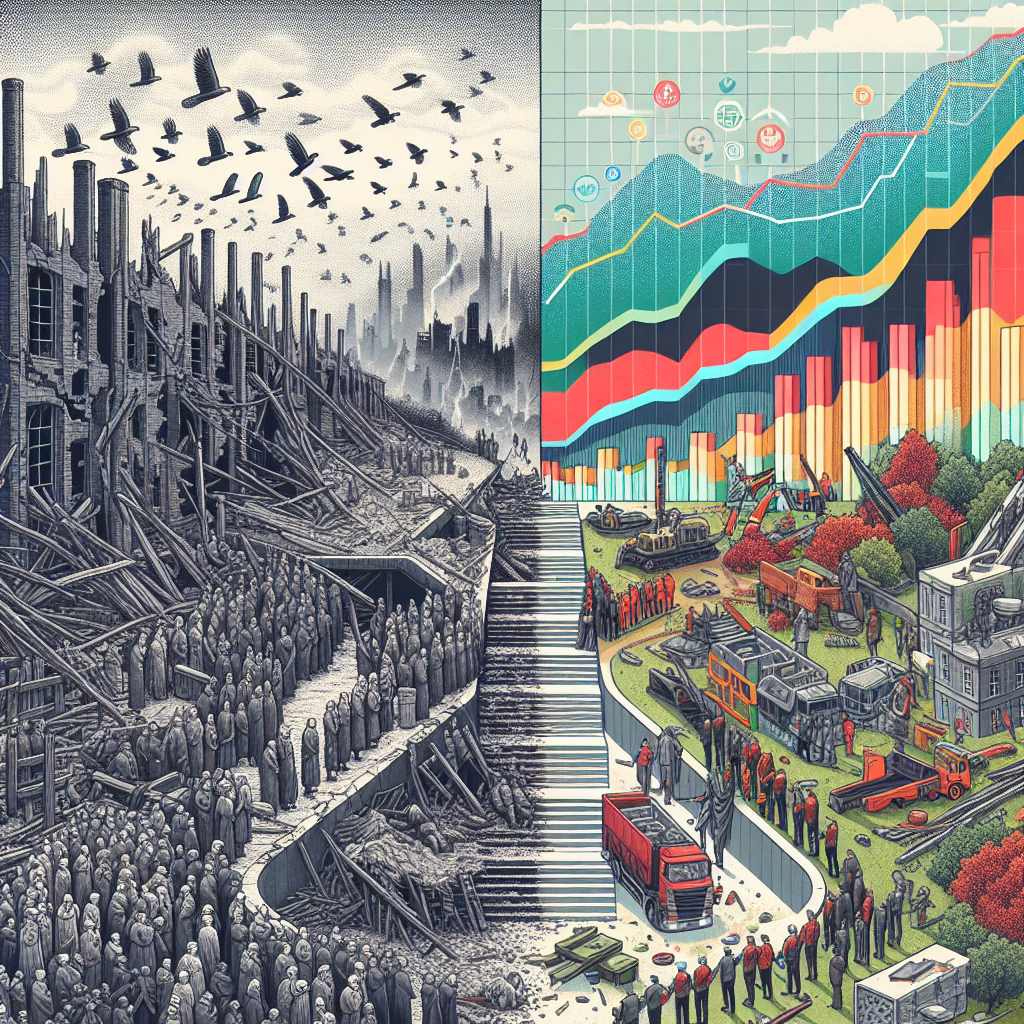
Throughout the 20th century, the world was subjected to two devastating global conflicts known as World War I and World War II. These wars brought unprecedented destruction, not just in terms of human lives lost, but also in terms of economic upheaval. The economic consequences of these wars were profound, reshaping economies, altering political landscapes, and influencing global relations for decades to come. This article seeks to explore these consequences, focusing on the reconstruction efforts in the post-war period and examining how nations rebuilt and transformed their economies. Specifically, we will delve into the economic reconstruction processes that took place after both World Wars, scrutinizing the strategies employed by different countries, the global economic systems put in place, and their long-term effects on the world economy.
The economic toll of both World Wars was catastrophic. Nations were left with destroyed infrastructure, staggering debts, and disrupted trade networks. In the immediate aftermath, economies needed urgent attention and strategic reconstruction to restore stability and growth. Governments were tasked with not only rebuilding infrastructure and industries but also addressing socio-economic issues such as unemployment and inflation. The global nature of these conflicts meant that their economic consequences were not confined to the borders where battles took place, but had far-reaching effects worldwide. As we explore these topics, we will gain insight into how resilience and strategic planning helped shape the modern economic landscape.
Economic Aftermath of World War I
World War I, also known as the Great War, lasted from 1914 to 1918 and was one of the deadliest conflicts in history. The war’s conclusion left Europe, particularly, in a state of economic disarray. The Treaty of Versailles, signed in 1919, imposed severe reparations on Germany, crippling its economy. The economic repercussions of these reparations were felt throughout Europe, creating a decade marked by economic turmoil. Hyperinflation took hold of Germany in the early 1920s, eroding the value of currency and further destabilizing the continent. The war had also led to a deeply entrenched cycle of debt and deficit that many countries found difficult to overcome. In the United Kingdom and France, economic recovery was sluggish, and the post-war recession decimated industries and employment.
The United States, however, emerged from World War I as a leading economic power, with its industries rejuvenated by the demands of wartime production. The interwar period saw significant shifts in global economic power, leading to a greater interdependence among nations. The League of Nations was formed with the intention of fostering peace and a cooperative international economic environment, yet global economic instability persisted. The onset of the Great Depression in 1929 further exacerbated the challenges of the post-war world, illustrating the vulnerability of the global economic system created in the wake of World War I.
Reconstruction Post World War II
Unlike the aftermath of World War I, World War II’s conclusion in 1945 set the stage for more systematic and cooperative economic reconstruction. The scale of destruction following World War II was immense, with cities across Europe and Asia devastated by bombings and invasions. To prevent the mistakes of the past, where punitive reparations were imposed, the Allied powers opted for a different strategy. The Marshall Plan, initiated in 1948, was a pivotal program that provided over $12 billion (equivalent to over $130 billion today) in economic assistance to help rebuild European economies. This aid was crucial in stabilizing Western Europe, fostering rapid industrial recovery, and setting the stage for long-term growth.
In contrast, the Soviet Union, which had also suffered enormous losses, chose a different path of economic reconstruction, focused on centralized planning and self-reliance. The divergence in approaches between Western and Eastern Europe not only rebuilt economies but also solidified geopolitical divisions that would characterize the Cold War era. The reconstruction era saw the establishment of key international economic institutions such as the International Monetary Fund (IMF) and the World Bank, designed to promote financial stability and development. These institutions played vital roles in fostering global economic cooperation and mitigating the risks of future economic downturns.
The Role of International Cooperation
One of the most notable outcomes of the post-World War II reconstruction effort was the dawn of international economic cooperation. Recognizing that economic stability in individual countries depended heavily on global trade and investment, various international frameworks were set up. Besides the Marshall Plan, the General Agreement on Tariffs and Trade (GATT) was signed in 1947, setting the foundation for modern trade liberalization. The objective was to reduce tariffs and other trade barriers, encouraging smoother and more predictable international trade relations.
Institutions like the United Nations and the aforementioned IMF and World Bank contributed significantly to a new world economic order. They facilitated financial support, development projects, and economic policies promoting global integration. Over the decades, these cooperative platforms not only helped nations recover from wartime devastation but also addressed socio-economic challenges, paving the way for globalization and economic interdependence among countries.
Long-term Economic Transformations
The economic consequences of the World Wars catalyzed profound societal and economic transformations that have shaped modern economies. The shift from agrarian-based economies to industrial and eventually to service-based economies was accelerated by the need for rapid reconstruction and development. Innovations and technological advancements gained momentum as nations sought efficient ways to rebuild and improve infrastructure. For instance, in the United States, the post-war period fueled one of the most robust periods of economic growth, known as the post-war economic boom or the “golden age of capitalism.”
In Europe, the reconstruction efforts laid the groundwork for what would become the European Union, an unprecedented political and economic union designed to ensure peace and prosperity in the region. This period also saw increased attention to social safety nets and welfare states, as nations realized the importance of addressing social inequities and preventing economic distress from leading to political instability. This structural transformation towards more inclusive economic models was crucial for achieving long-term stability and growth.
Lessons Learned and Future Implications
The economic repercussions of the World Wars underscore several critical lessons that continue to inform current and future economic policies. Firstly, the importance of international cooperation and shared economic objectives cannot be overstated. The successful reconstruction of war-torn nations through collective efforts illustrates the power of collaboration over isolationism. Secondly, the need for resilient economic systems that can withstand disruptions, be they from conflict or other crises like the recent global pandemic, is imperative.
As contemporary economies navigate challenges such as climate change, technological disruption, and geopolitical tensions, the reconstruction experiences post-World Wars offer valuable insights into managing transformation and fostering adaptability. Policymakers today draw from these historical events to address sustainable development, promoting peace and economic stability. The relentless quest for economic growth balanced with social equity remains a legacy that originated from the rebuilding efforts after the world was torn apart by the wars.
Conclusion
In sum, the economic consequences of World War I and World War II significantly reshaped the global economy, leading to decades of reconstruction and redefining international cooperation. While the devastation and human cost were immense, the resilience shown by nations in the face of adversity highlights the capacity for recovery and adaptation. The lessons learned from these periods of reconstruction continue to influence economic strategies and geopolitical relations, reinforcing the need for partnership and shared vision in addressing current and future economic challenges.
The transformation of economies following the World Wars paved the way for shifts towards industrialization, globalization, and eventually technological advancement that characterize today’s modern economies. As we ponder the future implications, these historical episodes remind us of the profound impact of strategic planning and international solidarity on economic resilience and growth. The story of reconstruction post-World Wars is not just one of rebuilding what was lost but also of innovation and the creation of a more interconnected and economically integrated world.
Frequently Asked Questions
1. What were the primary economic impacts of World War I on global economies?
The economic impacts of World War I were vast and touched every corner of the globe. First and foremost, many countries found themselves deep in debt due to the financing of the war effort. For the European powers involved, the war led to immense financial strain as they poured resources into sustaining military operations. This resulted in significant loans, primarily from the United States, which later positioned the US as an economic superpower. The war also severely disrupted agriculture and industry. With much of Europe being a battlefield, farmland was destroyed, leading to food shortages and inflated food prices. Industries had to pivot from peacetime production to wartime manufacturing, and when the war ended, they faced the challenge of converting back, often leading to unemployment and economic stagnation. Moreover, hyperinflation plagued countries like Germany, exacerbated by reparations set by the Treaty of Versailles — creating further economic instability and contributing to political upheaval.
2. How did World War II influence economic reconstruction in Europe?
World War II had a colossal impact on Europe’s economy, with infrastructure across the continent largely destroyed. Post-war reconstruction was essential, and it was underpinned by significant international aid and cooperation, notably the Marshall Plan initiated by the United States. This program aimed to rebuild Europe’s economies by providing financial assistance, fostering economic integration, and encouraging industrial growth — ultimately resulting in the rapid recovery known as the ‘European Economic Miracle’. The European Coal and Steel Community was a direct result of this focus on reconstruction, laying the groundwork for today’s European Union by promoting economic collaboration and reducing the likelihood of future conflicts over resources. Domestically, countries prioritized rebuilding efforts, investing in housing, infrastructure, and industries, revitalizing cities, and modernizing their economies, which led to unprecedented economic growth and stability during the latter half of the century.
3. What was the economic transition like in the United States post-World War II?
The economic transition in the United States after World War II was marked by unprecedented growth and prosperity. Known as the post-war economic boom, this period saw the US emerge as the world’s leading economic power. The transition was fueled by the pent-up consumer demand after years of wartime rationing, coupled with an explosion in industrial production geared towards peacetime goods. Upon the war’s end, returning veterans took advantage of the GI Bill, which provided education benefits and encouraged homeownership, further stimulating the economy. High rates of employment and productivity, a strong manufacturing sector, and technological innovations all contributed to an era marked by rising living standards and the growth of the middle class. As the US became a global economic leader, its policies increasingly shaped the international financial system, including the establishment of institutions like the International Monetary Fund and the World Bank, aiming to stabilize and guide the post-war global economy.
4. What were the long-term economic effects on colonized nations post-World War II?
The aftermath of World War II accelerated decolonization, radically transforming the economies of former colonies. For many colonized nations, the economic transition involved shifting from economies designed to serve imperial needs to self-sufficient and sovereign economies. The war led to a depletion of the colonial powers’ resources, weakening their grip and giving rise to independence movements. As countries gained independence, they frequently faced immense challenges: developing infrastructure, fostering industrialization, and addressing economic inequalities ingrained during colonial rule. The legacies of colonial economic policies, such as reliance on single commodities, remained hurdles requiring diversification and economic reform. However, with newfound political autonomy, many nations began to forge their own economic paths. International aid, often contingent on alignment with Cold War geopolitics, also played a critical role in shaping economic policies, highlighting the intricate global influences at play. While some nations flourished, others struggled with issues such as corruption, mismanagement, and continued economic dependence, illustrating the varied impacts of the post-colonial era on global economies.
5. How have the economic consequences of the World Wars shaped modern global trade systems?
The World Wars had a profound impact on shaping modern global trade systems, catalyzing a shift towards greater economic interdependence and collaboration. In the wake of World War II, the establishment of new international economic institutions, such as the General Agreement on Tariffs and Trade (GATT), sought to reduce trade barriers and facilitate smooth international commerce. This marked the beginning of an era characterized by trade liberalization and globalization. The subsequent formation of the World Trade Organization provided a formal structure for addressing trade disputes and further ingraining these principles. The shift also saw former adversaries, such as European nations and Japan, integrate economically with the US, leading to a global trading system robust enough to withstand geopolitical tensions. Over time, the overarching trend of increasing interdependence in trade has driven modernization and innovation, lowering costs and broadening market access globally, although it has also introduced complexities around managing trade imbalances, protectionism, and regulatory standards that continue to evolve in the context of contemporary geopolitics.