Desmond Tutu’s name is synonymous with justice, peace, and human rights. Born on October 7, 1931, in Klerksdorp, South Africa, Tutu grew up witnessing the systemic racial segregation and discrimination that plagued his country. His life’s work became a beacon of hope for millions during one of the darkest periods in South African history – apartheid. The combination of his faith-driven passion, indefatigable courage, and unyielding commitment to equality transformed him into one of the pivotal figures in the global struggle for human rights.
When apartheid was legally instated in 1948, the South African government enforced rigid racial laws that marginalized black South Africans, restricting their rights and freedoms. It was into this fraught landscape that Tutu emerged, marked by his dynamic conviction to rectify the enormous injustices faced by his community. As a formidable advocate of non-violence, Tutu leveraged his platform as an Anglican cleric to speak against the inequalities and brutality of apartheid.
Throughout his journey, Tutu’s exceptional oratory skills and profound moral clarity inspired both local and international communities to rally against apartheid’s insidious grip. His work resonated beyond religious boundaries, drawing attention to the inherent dignity and worth of every human being. Tutu’s legacy, as a symbol of moral integrity and human rights, remains firmly entrenched in the annals of history, continually inspiring new generations in the ongoing global crusade for justice and peace.
The Early Years – Shaping a Visionary:
Desmond Tutu’s formative years were marked by a mixed racial landscape – his father was a principal and his mother a domestic worker. Despite the limitations imposed upon them, his parents instilled in him the value of education. The critical turning point in Tutu’s life occurred when his family moved to Johannesburg. Here, Tutu attended the Johannesburg Bantu High School, where he was exposed to a more discriminatory environment but also found support in the teachings of his school mentors.
After initial ambitions to become a physician were thwarted by financial constraints, Tutu turned to teaching. He attended the Pretoria Bantu Normal College to train as a teacher. However, the harsh realities of the Bantu Education Act, which deliberately underfunded and marginalized black education systems, disillusioned Tutu. He abandoned his teaching career to follow into the Anglican ministry, a decision catalyzed by his contact with Father Trevor Huddleston, a fervent anti-apartheid missionary.
His transition to the clergy allowed him to pursue theology, equipping him with a potent blend of philosophical and ethical fortitude. Graduating with a degree from King’s College London, Tutu’s sojourn in England broadened his understanding of racial harmony, further intensifying his resolve to combat apartheid upon returning to South Africa. The education and experiences garnered during his formative years laid a robust foundation for Tutu’s future as a relentless advocate for equality and justice.
Rise to Prominence – The Church as a Platform for Change:
Tutu’s ecclesiastical career rapidly flourished, marking pivotal milestones that underscored his commitment to social justice. In 1975, he was appointed the first black Anglican Dean of Johannesburg, a position that amplified his voice and influence. His outspoken criticism of apartheid policies during his sermons served as rallying cries for both his congregation and the wider community.
In 1976, Tutu assumed leadership of the South African Council of Churches, a post through which he reinforced the church’s dedication to non-violent resistance. He called for economic sanctions against South Africa, arguing that tangible financial pressure would catalyze the dismantling of apartheid. His stance on economic boycotts was controversial but undeniably effective, drawing international attention to South Africa’s human rights abuses.
The consistent threat of imprisonment and assassination did not deter Tutu; rather, it emboldened his resolve. His tireless efforts to promote a non-violent end to apartheid through international collaboration culminated in his receipt of the Nobel Peace Prize in 1984. This accolade significantly elevated his profile on the world stage, legitimizing his advocacy and reinforcing the global campaign against apartheid.
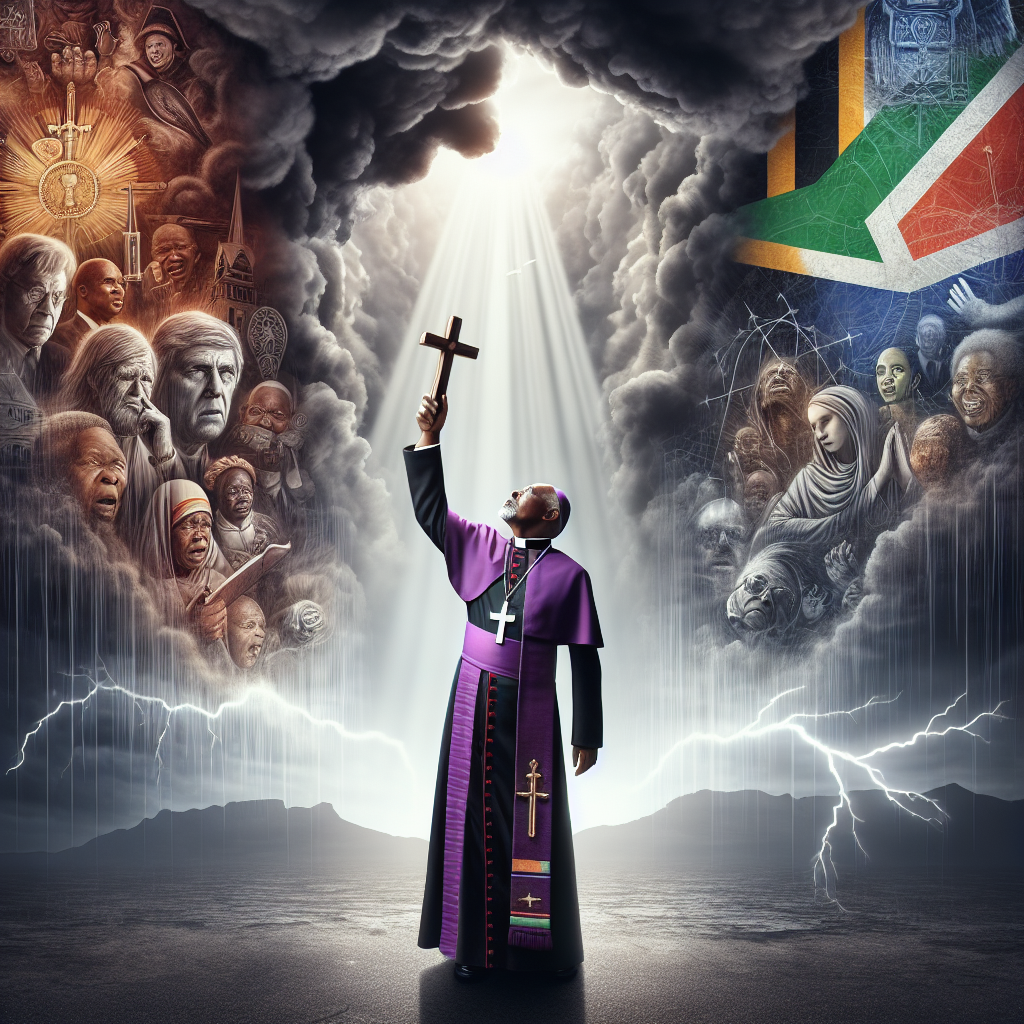
The Nobel Peace Prize – A Global Torchbearer:
The Nobel Peace Prize awarded to Desmond Tutu in 1984 was not just an accolade; it was a clarion call highlighting the cruelties of apartheid. The honor accelerated his international outreach, drawing global leaders and influential entities into the anti-apartheid movement. Tutu utilized his laurels to underscore the urgency of global intervention, urging nations to impose comprehensive sanctions against South Africa.
The prize validated Tutu’s philosophy of non-violent activism and restored a sense of hope among oppressed South Africans. It empowered his rhetoric, imbuing his fight with a renewed vigor that pierced through the fortified barriers set by apartheid. The Nobel Prize also fortified his diplomatic endeavors, enabling him to negotiate and communicate with international entities more effectively.
Tutu’s enhanced global platform facilitated intense lobbying efforts, securing economic and political embargoes against the apartheid regime. The international isolation of South Africa, spearheaded in part by Tutu’s initiatives, began exerting tangible pressure on the government, nudging them towards eventual reforms. His Nobel Prize thus acted as a catalyst in exacerbating the global movement that culminated in the disintegration of apartheid.
Post-Apartheid South Africa – The Truth and Reconciliation Commission:
With the fall of apartheid in the early 1990s, South Africa faced the monumental challenge of rebuilding a nation fractured by racial strife and systemic injustice. Nelson Mandela, ascending as the nation’s first black president, recognized the imperative of addressing past atrocities to foster national unity. Desmond Tutu was appointed to head the Truth and Reconciliation Commission (TRC), a judicative body established to uncover the truth behind human rights violations during the apartheid era.
Tutu’s leadership in the TRC exemplified his enduring commitment to restorative justice. The Commission’s mandate demanded a delicate balance – reconciling the imperative for justice with the necessity for national healing. By encouraging open testimonies and granting amnesty under certain conditions, Tutu aimed to forge an authentic and transparent historical record that acknowledged the grim legacy of apartheid while promoting forgiveness and reconciliation.
His approach was deeply rooted in his theological beliefs, emphasizing repentance and forgiveness as vital components of national healing. Tutu’s ability to navigate the complex and often emotionally charged proceedings with compassion and wisdom was instrumental in fostering a spirit of reconciliation in post-apartheid South Africa. The TRC’s work, though not without controversy, remains a crucial facet of South Africa’s path towards healing and reconstruction.
Legacy – Advocacy and Inspiration Beyond Borders:
Even after the formal end of apartheid, Desmond Tutu continued his activism, advocating for social justice on various fronts. His work extended to issues such as HIV/AIDS, poverty, and LGBTQ+ rights, embodying his perpetual commitment to defending human dignity. Tutu’s voice resonated in global forums as he spoke against oppressive regimes, environmental degradation, and social inequalities.
His enduring influence is reflected in numerous accolades and honors, including the Presidential Medal of Freedom and honorary degrees from prestigious institutions worldwide. Tutu’s work transcended racial and national boundaries, earning him a place among the most revered global human rights advocates. His life, characterized by an unwavering commitment to justice and reconciliation, continues to inspire movements and individuals dedicated to social change.
Tutu’s ability to effect change through non-violent means and his unwavering belief in the power of forgiveness and reconciliation offer profound lessons. His advocacy underscored the importance of moral integrity, resilience, and compassion in the fight against injustice. As a global symbol of peace and human rights, Desmond Tutu’s legacy remains a guiding light for those committed to building a just and equitable world.
Conclusion – A Legacy Etched in History:
Desmond Tutu’s life and work stand as a powerful testament to the impact one individual can have in altering the course of history. From his early years facing apartheid’s oppressive grip to becoming a global icon for justice and reconciliation, Tutu’s journey was marked by an unrelenting commitment to human dignity and equality. His approach to combating injustice through non-violence and his profound emphasis on forgiveness and reconciliation provide timeless lessons for contemporary struggles against oppression and inequality.
Tutu’s role in the dismantling of apartheid and his subsequent efforts in leading South Africa through a period of healing exemplify his visionary leadership. The Truth and Reconciliation Commission, under his stewardship, set a precedent for restorative justice efforts worldwide. His work continues to influence global dialogue on human rights, social justice, and conflict resolution.
As we reflect on the life of Desmond Tutu, it is imperative to draw inspiration from his unwavering courage, moral clarity, and compassionate leadership. In a world still grappling with the scourges of inequality, discrimination, and conflict, Tutu’s legacy serves as a beacon of hope and a reminder of the profound power of integrity and resilience in the face of adversity. His life’s work implores us to strive relentlessly for a just and equitable world, honoring his memory by continuing his fight against injustice.