Social studies focus on understanding human societies and the myriad of influences that have shaped our past and present. Among these influences, art and literature play significant roles. They reflect societal values, shape cultural narratives, and challenge our perceptions. One such figure who revolutionized the art world with his unique perspective and techniques is Claude Monet. In this article, we delve into the life and work of Claude Monet, exploring how he captured the essence of light and water to create masterpieces that continue to inspire and enthrall audiences worldwide.
Introduction
Claude Monet, a founder of French Impressionism, is celebrated for his extraordinary ability to capture the transient effects of light and atmosphere in his paintings. Born on November 14, 1840, in Paris, France, Monet was a trailblazer who dared to challenge the conventional techniques of his time. His fascination with light, color, and the natural world set him apart from his contemporaries and laid the groundwork for a new artistic movement.
From a young age, Monet displayed an aptitude for art, often sketching caricatures of his teachers and fellow students. This early passion led him to pursue formal training at the Le Havre Secondary School of the Arts and later at the prestigious Academie Suisse in Paris. His rebellious spirit, however, soon drove him away from academic instruction and towards the innovative and unrestrictive Impressionist style.
Unlike the Realists before him, who sought to depict everyday scenes with meticulous detail, Monet aimed to capture fleeting moments. He was particularly intrigued by the way light interacted with different surfaces and sought to immortalize these ephemeral effects on canvas. This obsession with light and color is perhaps most vividly exemplified in his series paintings, such as the “Haystacks,” “Water Lilies,” and “Rouen Cathedral.”
Impressionism, a term initially coined as a derogatory remark by critics appalled by Monet’s work “Impression, Sunrise,” quickly gained momentum. Monet’s innovative approach, characterized by loose brushwork, vibrant colors, and an emphasis on natural lighting, resonated with other artists and the public. As a result, Monet not only carved out his niche in art history but also inspired future generations of artists to explore and experiment beyond traditional boundaries.
Monet’s Early Years and Influences
Claude Monet’s journey as an artist was deeply influenced by his early experiences and the people he encountered along the way. Born into a family with limited means, Monet’s initial foray into art was driven more by passion than by financial necessity. His mother, Louise-Justine Aubrée Monet, was a singer, and her artistic inclinations perhaps played a role in nurturing Monet’s creative talents.
At the age of five, Monet moved with his family to Le Havre, a bustling port town in Normandy. This change of scenery exposed him to the picturesque landscapes that would later become prominent subjects in his paintings. It was in Le Havre that Monet first encountered Eugène Boudin, a local artist who recognized the young Monet’s potential and took him under his wing. Boudin introduced Monet to the plein air (outdoor) painting technique, which became a cornerstone of Monet’s artistic practice.
Monet’s formal education in the arts began in 1851 when he enrolled at the Le Havre Secondary School of the Arts. However, it was his time spent sketching caricatures and selling them for pocket money that truly honed his skills. These early caricatures, characterized by their wit and keen observation, hinted at Monet’s burgeoning talent and unconventional approach.
In 1859, Monet moved to Paris to further his education at the prestigious Académie Suisse. Paris, with its vibrant art scene and galleries, provided Monet with ample opportunities to study the works of old masters and contemporaries alike. During this period, he forged friendships with other aspiring artists, including Édouard Manet, Pierre-Auguste Renoir, and Alfred Sisley. These friendships would eventually form the nucleus of the Impressionist movement.
While Monet admired the works of the Barbizon School of painters, who emphasized realistic depictions of rural life, he felt constrained by their techniques. He yearned for a more spontaneous and expressive approach to painting that could capture the immediacy of a moment. This desire for innovation and his reverence for nature set the stage for the emergence of Impressionism.
Impressionism and Monet’s Revolutionary Techniques
Impressionism, as an artistic movement, sought to break away from the rigid conventions of academic painting. It emphasized capturing the transient effects of light and atmosphere, often through en plein air painting. Claude Monet was at the forefront of this movement, and his works exemplified the core principles of Impressionism in ways that were both innovative and transformative.
One of the most distinctive features of Monet’s work is his use of color and light. Unlike the Realists, who meticulously blended colors to achieve a lifelike representation, Monet often applied colors directly onto the canvas in short, broken brushstrokes. This technique, known as “broken color,” allowed him to mimic the way natural light interacts with objects, creating a shimmering, almost vibrating effect. By juxtaposing pure colors side by side, Monet invited the viewer’s eye to blend the colors optically, achieving a luminous and dynamic quality that traditional techniques could not.
Monet’s commitment to capturing the ephemeral nature of light is perhaps best illustrated in his series paintings. These series, including the “Haystacks,” “Rouen Cathedral,” and “Water Lilies,” involved painting the same subject under varying conditions of light and weather. For instance, in the “Haystacks” series, Monet captured the stacks at different times of the day and seasons, illustrating how light and atmosphere could dramatically alter their appearance. This meticulous study of light and its effects was unprecedented and showcased Monet’s dedication to his craft.
The concept of en plein air painting was not new, but Monet’s application of it was revolutionary. By setting up his easel outdoors, Monet could paint directly from nature, capturing the immediate impression of a scene rather than relying on sketches or memory. This approach allowed him to convey a sense of spontaneity and movement, making his works feel alive and vibrant. This technique was particularly challenging, requiring speed and precision to capture the fleeting effects of light before they changed.
Moreover, Monet’s techniques extended beyond just paint application. He often employed unconventional tools and methods to achieve the desired effects. For example, he would sometimes use a palette knife instead of brushes to create texture and depth. Such innovations demonstrated Monet’s willingness to experiment and push the boundaries of traditional painting.
Monet’s Masterpieces: Iconic Works
Claude Monet’s body of work is vast and varied, but several pieces stand out as quintessential representations of his genius. These masterpieces not only exemplify his pioneering techniques but also offer a window into his evolving artistic vision.
“Impression, Sunrise” (1872): This painting, which lent its name to the entire Impressionist movement, is one of Monet’s most famous works. Depicting the port of Le Havre at sunrise, the painting’s loose brushwork and vibrant, almost surreal colors captured the essence of the fleeting moment. The critics who first saw the piece at the 1874 Paris exhibition were divided, with some praising its innovation and others deriding it as unfinished. Regardless, “Impression, Sunrise” marked a turning point in art history.
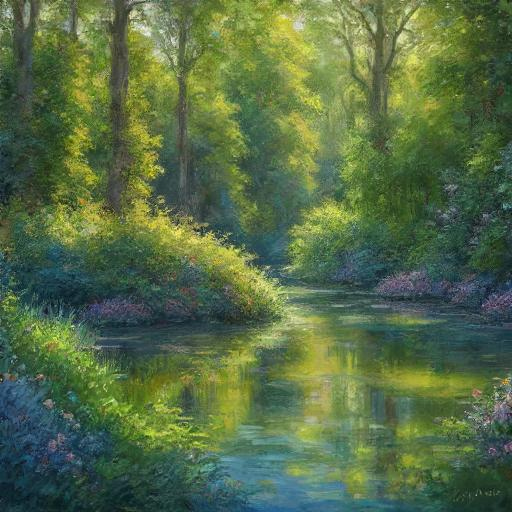
“Water Lilies” series (1897-1926): Perhaps Monet’s most iconic series, the “Water Lilies” paintings are a testament to his lifelong fascination with nature and light. Created over three decades, these paintings depict the artist’s beloved garden at Giverny. The series showcases Monet’s mastery of color and light, with each canvas capturing the tranquil beauty of water lilies floating on the pond’s surface. The reflective quality of the water, the play of light, and the lush vegetation create a dreamlike atmosphere that continues to captivate viewers.
“Woman with a Parasol – Madame Monet and Her Son” (1875): This painting features Monet’s first wife, Camille, and their son, Jean, standing in a field. The piece exemplifies Monet’s ability to capture movement and light. The billowing dress of Camille and the fluttering grass convey a sense of breeziness, while the play of light and shadow on her figure adds depth and realism. The bright, harmonious colors and the informal composition underscore the spontaneity and joy of the moment.
“Rouen Cathedral” series (1892-1894): This series comprises over 30 paintings of the Rouen Cathedral, each capturing the structure at different times of the day and under various lighting conditions. Monet’s obsession with light and its transformative power is evident in these works. The cathedral’s facade appears almost abstract, with the interplay of shadow and light creating an ethereal effect. The series highlights Monet’s innovative approach and his ability to see beyond the physical structure to capture its essence.
“The Japanese Bridge” series (1899-1924): Inspired by the Japanese art and culture he admired, Monet constructed a Japanese-style bridge over the pond in his Giverny garden. This bridge became a recurring subject in his late works. The paintings in this series are characterized by their lush, vibrant colors and the way they capture the dappled light filtering through the surrounding foliage. The serene, almost meditative quality of these works reflects Monet’s profound connection to his garden and his relentless pursuit of beauty.
Monet’s Legacy and Influence
Claude Monet’s impact on the art world extends far beyond his lifetime. His innovative techniques, pioneering spirit, and dedication to capturing the ephemeral beauty of light and nature have left an indelible mark on both art history and contemporary artistic practices.
Monet’s exploration of light and color opened new avenues for artists to experiment with their materials and techniques. His broken color technique, for instance, laid the groundwork for future movements such as Pointillism and Fauvism. Artists like Georges Seurat and Paul Signac took Monet’s ideas further by developing precise methods of applying color in small dots or strokes, which the viewer’s eye would then blend optically.
Furthermore, Monet’s emphasis on the artist’s perception rather than a strict adherence to realism paved the way for modern art movements such as Abstract Expressionism. His works encouraged artists to explore their subjective experiences and emotions through their art, leading to more expressive and abstract styles. Jackson Pollock, Mark Rothko, and other Abstract Expressionists can trace their roots back to the freedom and spontaneity that Monet championed.
Monet’s focus on series painting also left a lasting impression on the art world. By capturing the same subject under different conditions, Monet emphasized the importance of context and time in shaping one’s perception of the world. This idea has been explored by many contemporary artists, who use repetition and variation to convey different meanings and perspectives. The concept of series painting continues to be a powerful tool for artists to examine the complexities of their subjects.
Monet’s influence extends beyond the realm of painting. His dedication to capturing nature’s beauty resonates with contemporary environmental artists and advocates. Monet’s works remind us of the fragility and ever-changing nature of the world around us, urging us to appreciate and preserve it. His garden at Giverny, which he meticulously designed and maintained, serves as a testament to his deep connection with nature and his belief in its restorative power.
Monet’s legacy is also evident in the art market. His paintings continue to fetch record prices at auctions, reflecting their enduring appeal and significance. Institutions and collectors alike recognize the immense value of Monet’s work, both as cultural artifacts and as masterpieces of artistic innovation. Exhibitions of his works draw crowds from around the globe, attesting to his universal and timeless appeal.
Conclusion
Claude Monet’s contributions to the art world are immeasurable. As a founding figure of the Impressionist movement, he revolutionized the way we perceive and depict light and color. His innovative techniques, such as broken color and en plein air painting, challenged traditional conventions and inspired countless artists to explore new creative horizons.
Monet’s masterpieces, from “Impression, Sunrise” to the “Water Lilies” series, continue to captivate audiences with their vibrant colors, dynamic compositions, and evocative portrayal of nature’s ephemeral beauty. Through his works, Monet invites us to see the world through his eyes—to appreciate the fleeting moments, the play of light, and the ever-changing beauty of the natural world.
His legacy endures not only in the art world but also in our broader cultural consciousness. Monet’s influence can be seen in the works of modern and contemporary artists, who draw inspiration from his techniques and artistic philosophy. His emphasis on perception, context, and the subjective experience of the artist continues to shape how we approach and understand art today.
As we reflect on Claude Monet’s life and work, we are reminded of the power of art to transform our perceptions, to capture the ethereal, and to connect us with the beauty of the world around us. Through his tireless dedication and unwavering commitment to his vision, Monet has left an enduring legacy that will continue to inspire and enrich our lives for generations to come.