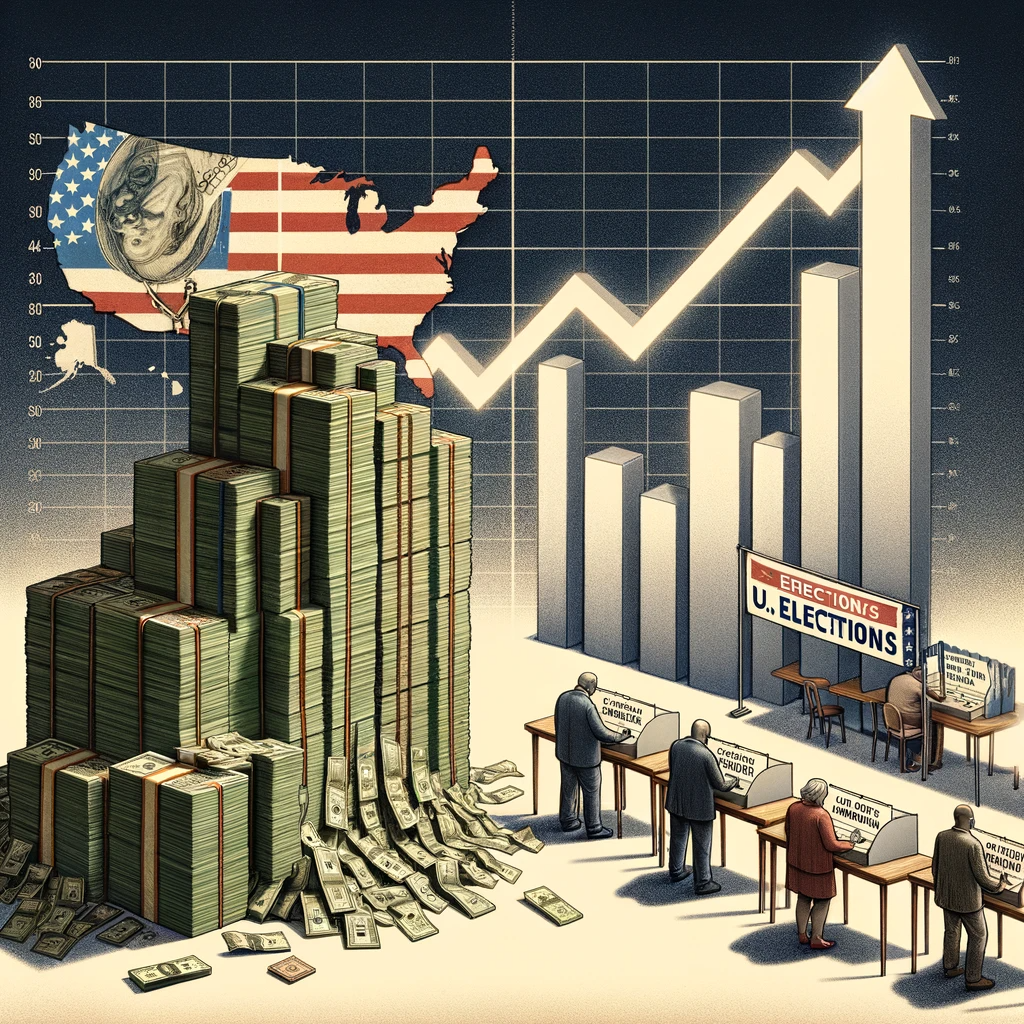
In the complex tapestry of American politics, campaign funding emerges as a crucial thread, influencing the outcomes of elections and shaping the democratic process. The intricate relationship between money and politics has long been a subject of debate, raising questions about the integrity of the electoral system and the true representation of the people. In this article, we delve into the significance of campaign funding in determining election outcomes, explore the primary sources of such funding under current law, and assess the effectiveness of reform legislation in purifying U.S. elections from improper monetary influences.
The Importance of Campaign Funding in Election Outcomes
Campaign funding is often seen as the lifeblood of political campaigns, essential for candidates to convey their messages, build support, and ultimately secure votes. It enables candidates to fund advertising, organize events, and mobilize resources essential for running an effective campaign. The role of money in elections cannot be understated; it often determines which candidates can mount viable campaigns and which issues are brought to the forefront of public discourse.
Historical data and political science research have consistently shown a strong correlation between campaign spending and electoral success, particularly in congressional races. Candidates who raise and spend more money generally have a higher chance of winning. However, it’s essential to note that while funding is a critical factor, it is not the sole determinant of election outcomes. Other elements like public opinion, the political climate, incumbency advantages, and the candidates’ personal appeal also play vital roles.
Major Sources of Campaign Funding Under Current Law
The landscape of campaign finance in the United States has evolved significantly over the years, shaped by legislation, court rulings, and changing political practices. Currently, the major sources of campaign funding include:
- Individual Contributions: Individuals are allowed to donate directly to candidates, political parties, and political action committees (PACs). These contributions are subject to limits set by the Federal Election Commission (FEC).
- Political Action Committees (PACs): PACs are organizations that collect and distribute contributions from members to support or oppose political candidates. Traditional PACs can donate directly to candidates but are subject to contribution limits.
- Super PACs: Arising from the landmark Citizens United v. FEC decision in 2010, Super PACs can raise and spend unlimited amounts of money to advocate for or against political candidates. However, they are prohibited from directly coordinating with candidates or parties.
- Party Committees: Political parties play a significant role in funding campaigns. They can contribute directly to candidates and engage in independent expenditures to support their campaigns.
- Self-Funding: Candidates can use personal funds for their campaigns, with no limits on the amount they can spend.
- Small Donors and Grassroots Funding: With the rise of digital platforms, small donations from a broad base of supporters have become increasingly significant, especially for candidates emphasizing grassroots support.
Effectiveness of Reform Legislation
The quest to purify American elections from improper monetary influences has been a continuous endeavor, marked by various legislative attempts. Key reform measures include:
- The Federal Election Campaign Act (FECA) of 1971: FECA was instrumental in setting limits on contributions and expenditures, requiring disclosure, and establishing the FEC for enforcement.
- The Bipartisan Campaign Reform Act (BCRA) of 2002, also known as McCain-Feingold: This act aimed to address the issue of “soft money” (unregulated contributions) by prohibiting national parties from raising or spending funds not subject to federal limits.
- Citizens United v. FEC (2010): While not a legislative act, this Supreme Court decision significantly impacted campaign finance by allowing corporations and unions to spend unlimited amounts on political advocacy, leading to the rise of Super PACs.
The effectiveness of these reforms has been mixed. On one hand, they have introduced a level of transparency and regulation to campaign financing, curbing direct quid pro quo
corruption. Disclosure requirements, for instance, have allowed voters to see who is funding political campaigns, providing an opportunity for public scrutiny.
However, the reforms have also been critiqued for their limitations and unintended consequences. The Citizens United ruling, in particular, has been a focal point of criticism for opening the floodgates to massive corporate and union spending in elections, potentially overshadowing the voices of ordinary citizens. This decision led to the creation of Super PACs, which can raise and spend unlimited sums, so long as they do not coordinate directly with candidates or parties. This has resulted in an explosion of spending in elections, with money flowing from a variety of opaque and untraceable sources, raising concerns about the influence of wealthy donors and special interests.
The emergence of Super PACs and the increasing reliance on large, undisclosed donations have led many to argue that the current system of campaign finance reform is inadequate in ensuring the purity of elections. Critics point out that while direct contributions to candidates are limited and regulated, the vast sums channeled through Super PACs and other entities can still exert significant influence on the political process, often without full transparency.
The Path Forward: Seeking a Balance
The debate over campaign funding in the United States is inherently tied to broader discussions about free speech, democratic representation, and the role of money in politics. Finding a balance between allowing individuals and groups to express their political preferences through donations, while ensuring that elections are not unduly influenced by wealthy interests, remains a complex challenge.
Several proposals have been put forward to address these concerns, including:
- Public Financing of Campaigns: Some advocate for public funding of elections to reduce candidates’ reliance on private donations. This could level the playing field and allow a more diverse range of candidates to compete effectively.
- Strengthening Disclosure Requirements: Enhancing transparency in campaign finance by requiring more rigorous disclosure of donors and expenditures could help mitigate the influence of dark money.
- Constitutional Amendments: Some argue that a constitutional amendment is necessary to overturn decisions like Citizens United and allow for more comprehensive regulation of campaign finance.
- Grassroots Movements and Small Donor Empowerment: Encouraging small-donor contributions and grassroots funding models can dilute the influence of large donors and foster greater democratic participation.
Conclusion
In conclusion, campaign funding plays a pivotal role in American elections, shaping not only the outcomes of individual races but also the broader democratic process. The sources of campaign funding under current law are diverse, ranging from individual contributions to Super PACs, each with its implications for the political landscape. While reform legislation has made strides in regulating campaign finance and promoting transparency, challenges remain, particularly in the era of Super PACs and dark money. The ongoing debate reflects a fundamental tension in American democracy: how to reconcile the freedom of political expression
with the need to ensure fair and equitable elections. As the political landscape continues to evolve, so too will the conversation around campaign funding, its impact on elections, and the quest for effective reform.
The future of American democracy may well hinge on how this balance is struck. Ensuring that elections are free from undue monetary influence while upholding the principles of free speech and political participation is not just a legal or political challenge, but a fundamental question about the nature of democracy itself. As such, it remains a critical area of focus for lawmakers, political scientists, and citizens alike, as they navigate the complex interplay of money and politics in the United States.
As we delve deeper into the complexities of campaign funding and its impact on U.S. elections, it’s important to examine the nuanced ways in which money influences politics and the diverse perspectives on reform efforts.
The Multifaceted Impact of Campaign Funding
Campaign funding does more than just pay for advertisements and rallies. It also plays a critical role in shaping the political narrative. Candidates with substantial funding can more effectively control their messaging, respond to opponents, and connect with voters. Additionally, funding can impact the perceived viability of a candidate, influencing media coverage and public perception.
However, the impact of funding varies across different levels of government and types of elections. For example, while funding plays a significant role in congressional and presidential races, its influence can be less pronounced in local elections, where grassroots mobilization and personal connections might carry more weight.
The Changing Landscape of Campaign Finance
The landscape of campaign finance is continually evolving, influenced not only by legislation and court rulings but also by technological advancements. The rise of social media and digital platforms has transformed how campaigns raise money and engage with voters. Crowdfunding and small-donor contributions have become increasingly significant, allowing candidates who might not have access to traditional funding sources to mount competitive campaigns. This shift towards digital fundraising has democratized the process to some extent, enabling a broader base of the electorate to participate financially in the political process.
Challenges in Campaign Finance Reform
Reforming campaign finance is fraught with legal and political challenges. Key among these is the tension between the desire to regulate the influence of money in politics and the constitutional protections of free speech, as articulated in decisions like Citizens United. Critics of these decisions argue that they equate money with speech, giving disproportionate power to wealthy individuals and entities. Proponents, however, argue that limiting spending is akin to limiting political expression.
Additionally, reform efforts often face practical challenges, such as the adaptability of political financing mechanisms. For instance, when regulations limit one avenue of funding, new methods often emerge, such as Super PACs emerging in response to limitations on direct contributions to candidates.
Looking to the Future: Innovations in Election Funding
Looking forward, there is a growing interest in innovative approaches to campaign finance. For example, some jurisdictions have experimented with public funding models, like matching funds for small contributions or providing vouchers for citizens to support candidates of their choice. These models aim to amplify the influence of small donors and reduce candidates’ dependence on large contributions.
Moreover, there is a push for enhanced transparency in campaign finance. Technological advancements could play a role here, with digital platforms enabling real-time disclosure of contributions and expenditures. Such transparency not only informs voters but also serves as a deterrent against potential corruption.
Conclusion
In summary, while campaign funding is undeniably a pivotal factor in U.S. elections, its influence is multi-dimensional and subject to an array of legal, ethical, and practical considerations. The debate over campaign finance reform is not just about regulating money in politics; it’s about safeguarding the democratic process and ensuring that elections reflect the will of the people, not just the interests of the wealthiest. As the political landscape continues to evolve, so too will the strategies for financing campaigns and the ongoing efforts to balance the need for funding with the ideals of democratic representation and equity.


