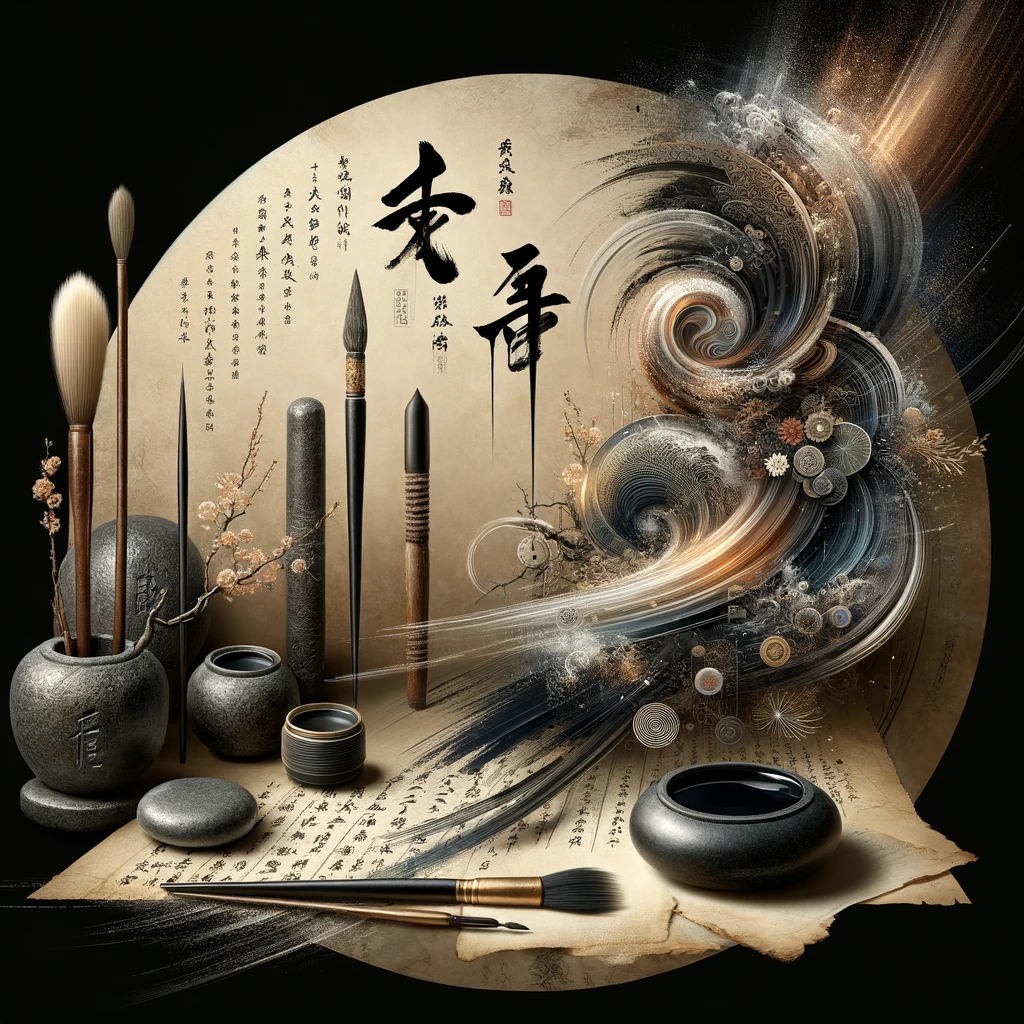
Calligraphy, the art of beautiful handwriting, has been an integral part of Asian culture for thousands of years. In countries like China, Japan, Korea, and Vietnam, it is not merely a method of writing but an esteemed art form that intertwines tradition, aesthetics, and personal expression. This article delves into the history, styles, cultural significance, and modern relevance of Asian calligraphy, offering insights into why it remains a revered practice in the digital age.
The Origins and Evolution of Asian Calligraphy
The Dawn of Calligraphy in Ancient China
The roots of Asian calligraphy can be traced back to ancient China, where it emerged as a distinct art form over 3000 years ago. The earliest Chinese characters were pictographs carved on oracle bones and bronze vessels. Over time, these characters evolved, giving rise to various script styles.
The Spread of Calligraphy Across Asia
As Chinese culture spread, calligraphy became a vital part of other Asian societies. Each culture adapted the art to its own language and aesthetic preferences, leading to distinct styles in countries like Japan, Korea, and Vietnam.
Styles and Techniques of Asian Calligraphy
Chinese Calligraphy Styles
Chinese calligraphy boasts several styles, each with unique characteristics. The most notable ones include:
- Seal Script (篆书 Zhuan Shu): An ancient script with symmetrical forms, often used for seals and logos.
- Clerical Script (隶书 Li Shu): Marked by its bold strokes and structured form, a transition from the ancient to the modern script.
- Regular Script (楷书 Kai Shu): The most common style, known for its precision and regularity, ideal for learners.
- Running Script (行书 Xing Shu): A semi-cursive style that balances speed and legibility.
- Cursive Script (草书 Cao Shu): Highly stylized and free-form, often difficult to read but admired for its artistic expression.
Japanese, Korean, and Vietnamese Adaptations
- Japanese Calligraphy (書道 Shodō): Influenced by Zen Buddhism, Japanese calligraphy emphasizes simplicity and depth of expression.
- Korean Calligraphy (서예 Seoye): Incorporates both Chinese characters (Hanja) and the native Korean alphabet (Hangul), showcasing versatility.
- Vietnamese Calligraphy (Thư Pháp): Initially used Chinese characters but later incorporated the Romanized Vietnamese script, adding a unique dimension to the art.
Cultural Significance of Calligraphy in Asia
A Symbol of Scholarly Culture
In many Asian societies, calligraphy was a benchmark of education and culture. A skilled calligrapher was often regarded as a scholar, and the ability to write beautifully was considered a reflection of one’s character and virtue.
Calligraphy in Religious and Philosophical Contexts
Calligraphy holds a significant place in religious and philosophical traditions of Asia, particularly in Confucianism, Buddhism, and Taoism. It is used in religious texts, temple inscriptions, and as a meditative practice.
Social and Ceremonial Uses
Calligraphy is also central in social and ceremonial contexts, used in everything from wedding invitations to official documents and traditional New Year’s couplets (春联 Chun Lian).
Calligraphy in Modern Times
The Digital Age and Calligraphic Art
Despite the digital revolution, calligraphy remains a popular art form. It bridges the gap between the past and the present by maintaining traditional techniques while also adapting to modern mediums like digital tablets and stylus pens.
Calligraphy as a Hobby and Educational Tool
In many Asian countries, calligraphy is taught in schools as a way to connect younger generations to their heritage. It is also a popular hobby for people of all ages, seen as a way to relax and cultivate artistic skills.
International Recognition and Contemporary Art
Asian calligraphy has gained international recognition, with exhibitions and workshops held around the world. Contemporary artists often blend calligraphic elements with modern art, creating unique cross-cultural works.
Notable Calligraphers in Asian History
Wang Xizhi: The Sage of Calligraphy
Wang Xizhi, a Chinese calligrapher from the Jin Dynasty, is often hailed as the greatest calligrapher in Chinese history. His work, particularly “The Orchid Pavilion Preface” (兰亭集序), is revered for its flowing and dynamic style. It set a standard for future generations and had a profound influence on Chinese calligraphy.
Kukai: A Bridge between China and Japan
Kukai, a Japanese monk and scholar, is renowned for introducing Chinese calligraphy and Buddhist texts to Japan. His work is a blend of Chinese techniques and Japanese aesthetics, contributing significantly to the development of Shodō (Japanese calligraphy).
Kim Jeong-hui: Innovator of Korean Calligraphy
In Korea, Kim Jeong-hui is a legendary figure known for his innovation in calligraphy. He revolutionized the field by introducing a new style, Chusache (秋史體), which combined the elegance of Chinese script with the uniqueness of Korean aesthetics.
Calligraphy in Contemporary Art
Fusion with Modern Art Forms
Contemporary artists often integrate calligraphic elements with modern art forms like abstract painting, installation art, and digital media. This fusion creates a dialogue between traditional and modern aesthetics, allowing calligraphy to resonate with a broader, more diverse audience.
Global Exhibitions and Collaborations
International art exhibitions frequently feature Asian calligraphy, showcasing its relevance and appeal beyond its cultural origins. Collaborations between Asian calligraphers and Western artists have led to exciting cross-cultural creations, blending Eastern and Western artistic philosophies.
Influence in Modern Design and Typography
Branding and Logo Design
In the realm of design, the influence of Asian calligraphy is evident in branding and logo design. The fluidity and elegance of calligraphic strokes are often employed to convey sophistication and cultural depth, making brands stand out in a global market.
Digital Typography and Fonts
The digital age has seen the development of calligraphy-inspired fonts, which are used in various digital platforms and print media. These fonts bring the aesthetic of traditional calligraphy into the digital world, making them accessible to a wider audience.
Calligraphy in Fashion
Fashion designers have also drawn inspiration from Asian calligraphy, using its elements in fabric patterns, prints, and overall design concepts. This has led to unique fashion lines that merge traditional calligraphic beauty with contemporary fashion trends.
Educational and Therapeutic Aspects of Calligraphy
Calligraphy in Schools
In many Asian countries, calligraphy is part of the school curriculum. It is not just about learning to write characters; it’s a way to imbue students with a sense of cultural identity and appreciation for their heritage. The practice of calligraphy in schools fosters patience, concentration, and a meticulous approach to tasks.
Calligraphy as a Form of Therapy
The meditative aspect of calligraphy is increasingly recognized as a form of therapy. The focus and tranquility required in calligraphy practice make it an effective tool for reducing stress and improving mental well-being. Workshops and classes are often held for people of all ages, emphasizing its therapeutic benefits.
The Future of Calligraphy
Adapting to a Changing World
As the world becomes more digital, calligraphy faces the challenge of staying relevant. However, its adaptability and enduring appeal suggest that it will continue to thrive, evolving with technological advancements and changing cultural trends.
Calligraphy as a Cultural Ambassador
Asian calligraphy acts as a cultural ambassador, bridging East and West, past and present. Through international collaborations, exhibitions, and educational programs, it plays a crucial role in cultural exchange and mutual understanding.
Conclusion
Asian calligraphy is a testament to the enduring beauty and relevance of traditional art forms in the modern world. It goes beyond mere writing to embody the philosophical, artistic, and cultural ethos of Asian civilizations. As it continues to evolve and adapt, calligraphy remains a vibrant and vital part of not only Asian culture but also the global artistic landscape, bridging centuries and connecting diverse cultures.