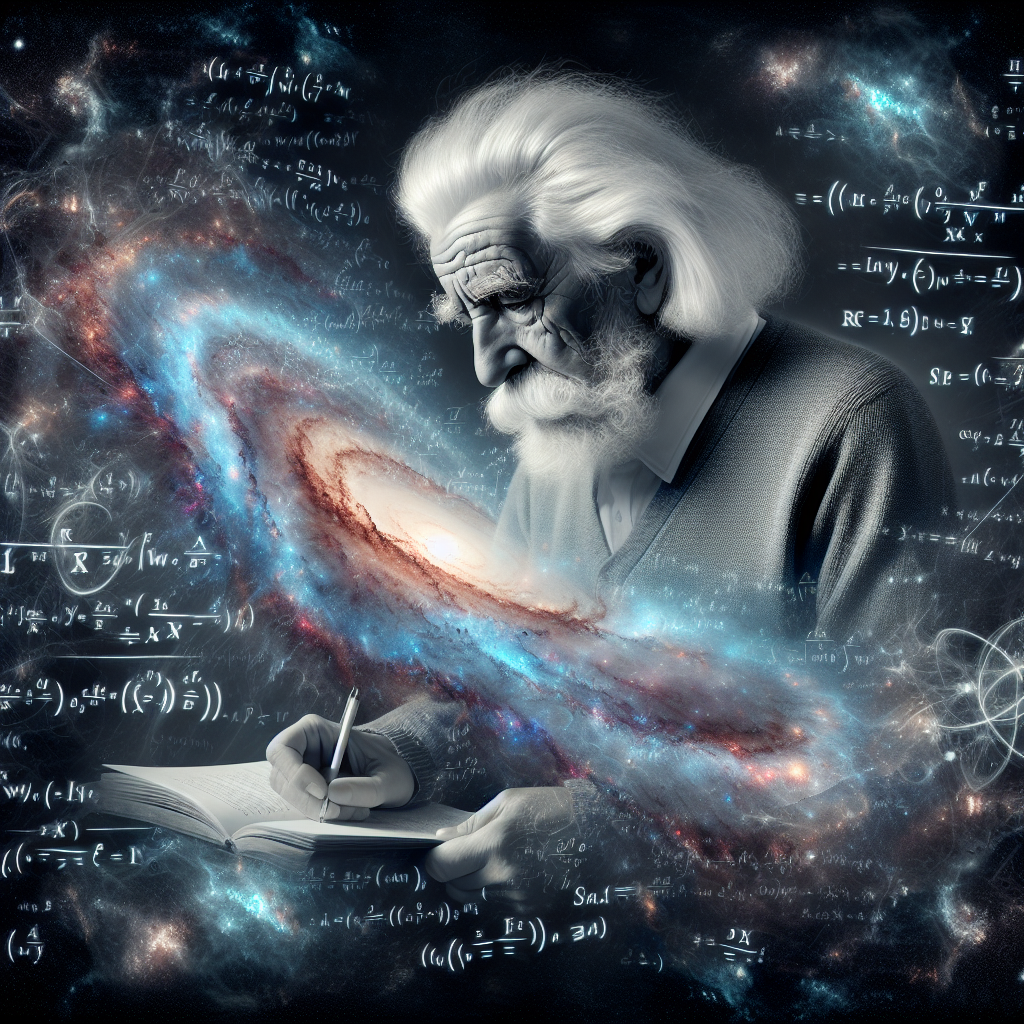
Albert Einstein is a name synonymous with genius and groundbreaking scientific discovery. His theories of relativity revolutionized the way we understand the universe, fundamentally altering our concepts of space, time, and gravity. In this article, we’ll delve into Einstein’s life, his pivotal theories, and the lasting impact of his work on modern science.
Early Life and Education
Albert Einstein was born on March 14, 1879, in Ulm, Germany. His early years were marked by a curiosity about the natural world and a rebellious streak against traditional education methods. Despite struggling in a rigid school system, Einstein excelled in mathematics and physics, developing a passion that would shape his future.
Einstein’s family moved to Munich, where he attended the Luitpold Gymnasium. Later, he enrolled at the Swiss Federal Polytechnic School in Zurich, where he met several friends and mentors who recognized his potential. Despite not being the most diligent student, his brilliance in theoretical physics began to shine through.
The Miracle Year
1905 is often referred to as Einstein’s “Annus Mirabilis” or “Miracle Year.” During this time, while working as a patent examiner in Bern, Switzerland, he published four groundbreaking papers that would change the course of physics:
- Photoelectric Effect: Einstein proposed that light could be described as quanta of energy, or photons. This idea laid the foundation for quantum theory and earned him the Nobel Prize in Physics in 1921.
- Brownian Motion: He explained the random movement of particles suspended in a fluid, providing empirical evidence for the existence of atoms.
- Special Theory of Relativity: This theory introduced the concept that time and space are relative and not absolute, fundamentally altering our understanding of the universe.
- Mass-Energy Equivalence: Perhaps the most famous equation in physics, E=mc2E = mc^2E=mc2, established that mass and energy are interchangeable.
Special Theory of Relativity
The special theory of relativity, introduced in Einstein’s 1905 paper “On the Electrodynamics of Moving Bodies,” challenged the traditional Newtonian mechanics. The key postulates of this theory are:
- The laws of physics are the same in all inertial frames of reference.
- The speed of light in a vacuum is constant and independent of the motion of the light source or observer.
These postulates led to the conclusion that time and space are not absolute entities but are interwoven into a single continuum known as spacetime. One of the most astonishing implications of this theory is time dilation: the idea that time slows down for objects moving at high speeds relative to a stationary observer.
General Theory of Relativity
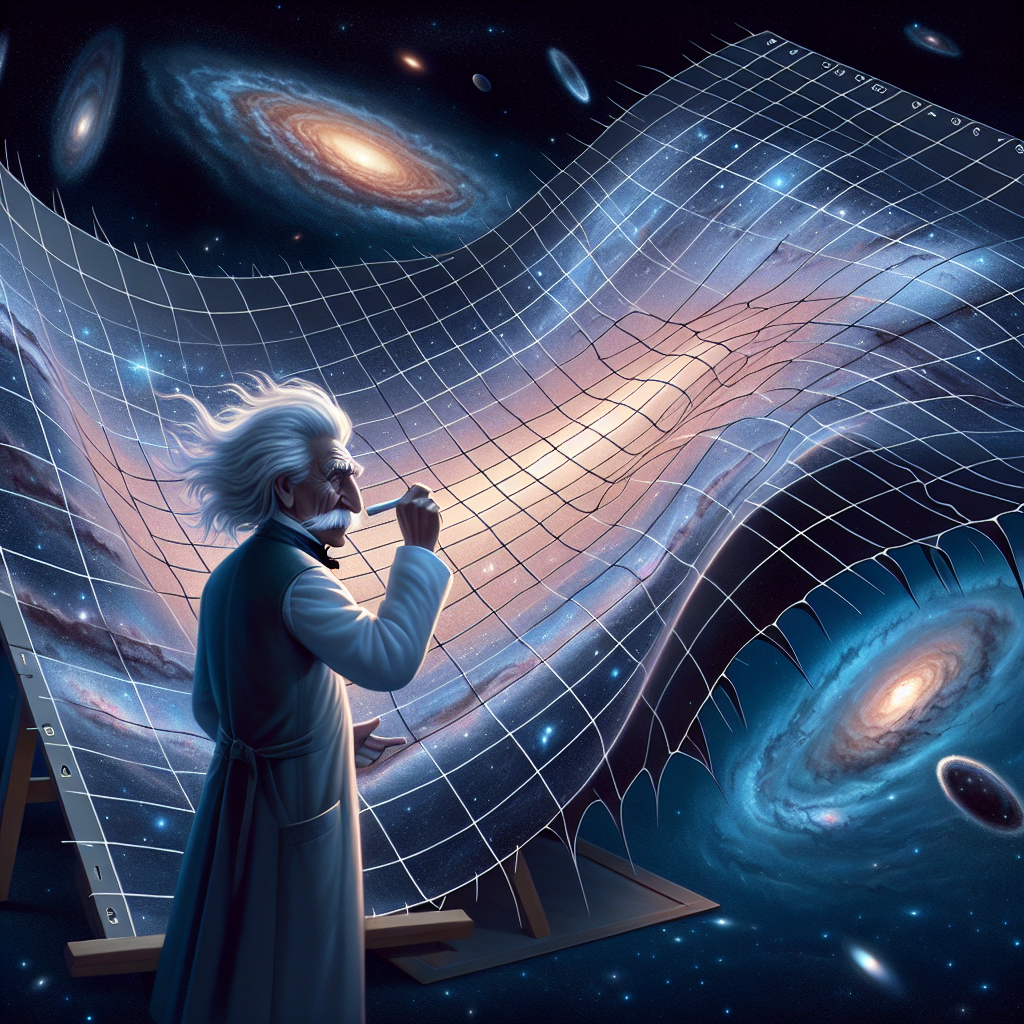
In 1915, Einstein presented his general theory of relativity, extending his ideas to include gravity. This theory posits that massive objects cause a curvature in spacetime, which is perceived as gravity. In simpler terms, the presence of mass warps the fabric of the universe, affecting the motion of objects within it.
One of the first confirmations of general relativity came in 1919, during a solar eclipse. British astronomer Sir Arthur Eddington observed the bending of starlight around the sun, as predicted by Einstein’s theory. This observation provided strong evidence for the validity of general relativity and catapulted Einstein to international fame.
Impact on Modern Physics
Einstein’s theories have had a profound and lasting impact on modern physics. They have influenced various fields, including cosmology, quantum mechanics, and particle physics. His work on general relativity laid the groundwork for understanding black holes, the Big Bang, and the expansion of the universe.
In addition to his theoretical contributions, Einstein’s insights have practical applications. The Global Positioning System (GPS), for example, relies on adjustments based on both special and general relativity to provide accurate location data.
Later Life and Legacy
Einstein spent his later years in the United States, where he accepted a position at the Institute for Advanced Study in Princeton, New Jersey. During this time, he continued to work on theoretical physics, though he never fully embraced the emerging field of quantum mechanics, famously stating, “God does not play dice with the universe.”
Einstein was also a prominent public figure, advocating for civil rights, Zionism, and international peace. His outspoken opposition to nuclear weapons, particularly after the bombings of Hiroshima and Nagasaki, highlighted his commitment to humanitarian causes.
Albert Einstein passed away on April 18, 1955, but his legacy endures. He is remembered not only for his monumental contributions to science but also for his philosophical insights and moral courage. Einstein’s name has become synonymous with intelligence and creativity, and his work continues to inspire scientists and thinkers around the world.
Einstein’s Influence on Popular Culture
Einstein’s influence extends beyond the realm of science. His iconic image, characterized by his unruly hair and thoughtful expression, has become a symbol of intellectual curiosity and creative genius. He has been portrayed in countless films, books, and television shows, often depicted as the quintessential mad scientist or wise sage.
Quotes attributed to Einstein, such as “Imagination is more important than knowledge” and “The important thing is not to stop questioning,” reflect his deep appreciation for creativity and critical thinking. These aphorisms continue to resonate with people from all walks of life, encouraging a spirit of inquiry and innovation.
The Human Side of Einstein
Despite his towering intellect, Einstein was known for his humility and sense of humor. He often downplayed his achievements, attributing his success to curiosity and persistence rather than innate talent. His personal letters reveal a man who grappled with the same fears, doubts, and hopes as anyone else.
Einstein’s personal relationships were complex. He married twice, first to Mileva Marić, with whom he had three children, and later to his cousin Elsa Löwenthal. His correspondence with friends and family shows a deep affection for his loved ones, despite the challenges posed by his demanding career and public life.
Einstein’s Enduring Mystique
Albert Einstein’s mystique endures, not just because of his scientific accomplishments but also because of his enigmatic personality. He was a man who sought to understand the universe’s deepest mysteries while remaining grounded in the human experience. His blend of scientific rigor and philosophical reflection continues to captivate the imagination of people worldwide.
Einstein’s theories have stood the test of time, with new discoveries often reinforcing his ideas rather than contradicting them. The detection of gravitational waves in 2015, a phenomenon predicted by general relativity, serves as a testament to the enduring power of Einstein’s vision. These ripples in spacetime, caused by colliding black holes, provide yet another confirmation of the profound insights that Einstein shared with the world.
Albert Einstein’s contributions to science are immeasurable. His theories of relativity have reshaped our understanding of the universe, introducing concepts that challenge our perception of reality. Beyond his scientific achievements, Einstein’s life and philosophy continue to inspire generations of thinkers, scientists, and dreamers.
As we reflect on Einstein’s legacy, we are reminded of the importance of curiosity, creativity, and the relentless pursuit of knowledge. His work serves as a beacon, guiding us toward deeper understanding and greater discoveries in the ever-expanding frontier of science.
Einstein’s Pursuit of a Unified Field Theory
In the later years of his life, Albert Einstein dedicated considerable effort to developing a unified field theory. This theory aimed to merge the fundamental forces of nature—gravity and electromagnetism—into a single framework. While he never succeeded in fully realizing this theory, his efforts laid the groundwork for future physicists who continue to seek a unified understanding of the forces governing the universe.
Einstein’s quest for a unified field theory demonstrated his relentless curiosity and unwavering commitment to solving the deepest mysteries of physics. Even as he faced criticism and skepticism from his peers, Einstein remained steadfast in his belief that a unifying theory was within reach. His persistence in this endeavor continues to inspire contemporary scientists working on theories like string theory and quantum gravity.
Contributions to Quantum Mechanics
Although Einstein is best known for his theories of relativity, he also made significant contributions to the development of quantum mechanics. His work on the photoelectric effect was instrumental in the early development of quantum theory. However, Einstein famously had reservations about some of the more abstract implications of quantum mechanics, particularly the idea of indeterminacy and the role of the observer in shaping reality.
Einstein’s debates with Niels Bohr, another giant of early 20th-century physics, are legendary. These debates centered on the interpretation of quantum mechanics, with Einstein famously declaring, “I, at any rate, am convinced that He [God] does not play dice.” Despite his objections, Einstein’s critical perspective pushed the boundaries of quantum theory and sparked discussions that have shaped the field to this day.
The Personal Impact of World Events
Einstein’s life was profoundly affected by the major events of his time, particularly the rise of Nazi Germany and World War II. As a prominent Jewish scientist, Einstein fled Germany in 1933 and settled in the United States. He took up a position at the Institute for Advanced Study in Princeton, where he would spend the remainder of his career.
The horrors of the war and the development of nuclear weapons had a deep impact on Einstein. Although he initially urged President Franklin D. Roosevelt to develop atomic weapons in response to the threat posed by Nazi Germany, he later became a vocal advocate for nuclear disarmament and international peace. His involvement with the Emergency Committee of Atomic Scientists and his advocacy for global cooperation reflected his commitment to using science for the betterment of humanity.
Einstein’s Cultural and Social Legacy
Einstein’s influence extended far beyond the realm of science. He was an outspoken advocate for civil rights, speaking out against racial segregation and supporting the American civil rights movement. His friendship with African American civil rights leader W.E.B. Du Bois and his support for the NAACP highlighted his commitment to social justice.
In addition to his activism, Einstein was a passionate advocate for education. He believed in the power of education to foster critical thinking and creativity. His speeches and writings often emphasized the importance of intellectual freedom and the pursuit of knowledge for its own sake.
Einstein’s Influence on Future Generations
Albert Einstein’s legacy continues to inspire future generations of scientists and thinkers. His ability to see beyond the conventional wisdom of his time and to ask profound questions about the nature of reality serves as a model for innovative thinking. Modern physicists, such as those working on the Large Hadron Collider or exploring the mysteries of dark matter and dark energy, build on the foundation that Einstein helped to establish.
The continued relevance of Einstein’s work is evident in the numerous experiments and observations that confirm his theories. From the bending of light by gravity observed during solar eclipses to the precise measurements of time dilation in high-speed particles, the principles of relativity remain cornerstones of modern physics.
Einstein’s Enduring Philosophical Insights
Einstein’s philosophical insights have also had a lasting impact. His reflections on the nature of reality, the limits of human knowledge, and the interplay between science and religion continue to provoke thought and debate. Einstein saw science and religion as complementary pursuits, each offering valuable perspectives on the mysteries of existence. His famous quote, “Science without religion is lame, religion without science is blind,” encapsulates his belief in the harmonious coexistence of these two domains.
Einstein’s humility and sense of wonder about the universe serve as a reminder of the importance of maintaining a sense of curiosity and awe in the face of the unknown. His willingness to challenge established ideas and to explore new frontiers exemplifies the spirit of scientific inquiry.
Conclusion
Albert Einstein’s contributions to science and his broader influence on culture and society make him one of the most significant figures in history. His theories of relativity revolutionized our understanding of the universe, challenging conventional notions of space, time, and gravity. Beyond his scientific achievements, Einstein’s commitment to social justice, education, and intellectual freedom has left an indelible mark on the world.
As we continue to explore the mysteries of the universe, Einstein’s legacy serves as a guiding light. His life and work remind us of the power of curiosity, the importance of questioning assumptions, and the potential for science to contribute to the betterment of humanity. Albert Einstein’s impact on our understanding of the fabric of the universe is profound and enduring, ensuring that his name will be remembered for generations to come.