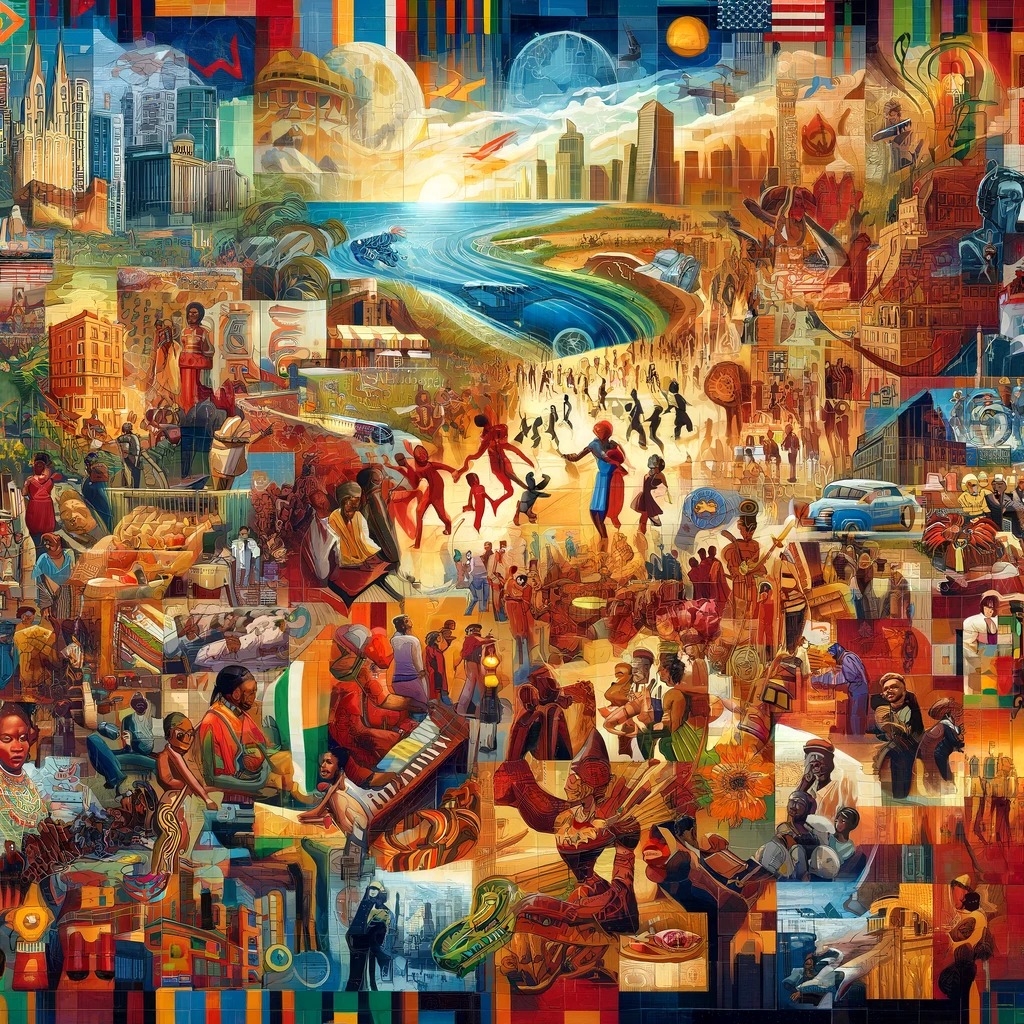
The story of the African diaspora is a powerful narrative of movement, resilience, and influence. Stretching over centuries, the movement of Africans across the world, often under dire circumstances, has had a profound impact on global culture. From the music that moves our souls to the foods that delight our palates, the fingerprints of African descendants can be seen in various aspects of daily life worldwide. This article explores how these migrations have shaped and enriched global cultures, focusing on three major aspects: music, cuisine, and language.
The Musical Influence
Music is perhaps the most recognizable cultural contribution of the African diaspora. African rhythms and sounds have been foundational to several music genres worldwide, often serving as a voice for social change and identity formation. In the Americas, African music blended with European and indigenous sounds to create entirely new genres. Jazz, blues, and rock ‘n’ roll have their roots in the African-American communities of the United States. These genres, characterized by their use of blue notes, improvisation, and strong rhythms, trace back to African musical traditions brought over by enslaved individuals.
In Latin America, African musical influences are profound. In Brazil, genres like samba and bossa nova have African rhythms at their core. Similarly, Afro-Cuban music combines West African drumming patterns with Spanish décima poetry, creating a vibrant, dance-inducing blend that has influenced salsa music globally.
Culinary Contributions
The impact of the African diaspora is also savored in cuisines worldwide. African culinary practices, ingredients, and flavors have significantly influenced the dishes of the Americas and beyond. In the southern United States, “soul food” is a hearty testament to African-American resilience and creativity. Dishes such as jambalaya, gumbo, and fried chicken all have their origins in the African culinary tradition, adapted to the ingredients available in the New World.
In the Caribbean, African influences meld with Indigenous and European elements to create unique flavors. For instance, the Jamaican ackee and saltfish dish utilizes ackee, an African-imported fruit, and salted fish—a preservation technique mastered by Africans. Similarly, Brazilian cuisine features acarajé, a dish made from peeled beans formed into a ball and then deep-fried in palm oil, directly descended from African cooking methods.
Linguistic Impact
Languages spoken by the African diaspora are a rich tapestry, showing the complexity of African influence. Pidgin languages, creoles, and the retention of African vocabulary within various languages highlight this impact. In the United States, African American Vernacular English (AAVE) features a syntax, phonology, and lexicon that scholars suggest are influenced by African languages. This language serves as a cultural identifier and a means of resistance against mainstream norms.
In the Caribbean, creole languages like Haitian Creole and Papiamento incorporate African, French, Dutch, and Spanish elements, demonstrating the complex linguistic exchanges of these regions. These languages are not just communication tools but are integral to the cultural identity and heritage of their speakers.
Social and Political Influences
The African diaspora has also been a critical player in the social and political arenas of their new homes. Throughout history, African-descended populations have led resistance movements that have reshaped societies. The civil rights movement in the United States, led significantly by African Americans, not only fought for the rights of Black people in America but also inspired similar struggles and solidarities across the globe.
In Brazil, the formation of quilombos—settlements of escaped enslaved people—represents a history of resistance against oppression and a fight for the right to live as free people. The legacy of these movements can still be seen today in ongoing struggles for equality and justice.
The influence of the African diaspora on world cultures is deep and enduring. It is a testament to the resilience and creativity of African peoples under the most challenging circumstances. From the music we listen to and the food we eat to the words we speak, the impact of the African diaspora continues to resonate across continents, contributing to a richer, more diverse global culture. Their legacy is not just in how they have shaped specific cultural elements but in how they continue to influence broader social and political landscapes worldwide.
By embracing and studying the cultural contributions of the African diaspora, we gain a more comprehensive understanding of our interconnected world. Their history is a critical chapter in the human story, a narrative of overcoming adversity and making indelible marks on the world.

Cultural Celebrations and Festivals
Cultural celebrations and festivals are vivid manifestations of the African diaspora’s enduring heritage. These events are not only social gatherings but also serve as living museums of African-descended cultural history and expression. For instance, Carnival in Brazil, Trinidad, and other parts of the Caribbean is deeply infused with African rhythms, dance forms, and traditions. These festivals feature elaborate costumes, vibrant music, and dance styles like the samba in Brazil, which has its origins in African religious ceremonies.
Another significant celebration is the Gullah Festival in South Carolina, USA, which honors the culture of the Gullah people, descendants of enslaved Africans who have managed to preserve much of their African heritage. This festival is a poignant reminder of the resilience of African culture, showcasing traditional crafts, foods, music, and storytelling that trace back to African roots.
Artistic Expressions
The artistic expressions of the African diaspora are another area where their cultural influence is prominently displayed. Visual arts, literature, and performance arts have been significantly shaped by African traditions and experiences in the diaspora. African-American artists like Jacob Lawrence and Kara Walker have used their art to tell stories of the diaspora, exploring themes of migration, identity, and resistance.
In literature, authors of African descent have penned powerful narratives that have become critical to understanding the complexities of identity, race, and history. Writers like Toni Morrison and Chimamanda Ngozi Adichie draw on their backgrounds to explore the African diaspora’s impact on personal and collective identities.
Sporting Influence
Sports also reflect the cultural impact of the African diaspora. Athletes of African descent have not only excelled in various sports but have also used their platforms to fight for justice and equality, influencing sports culture and beyond. In soccer, players like Pelé and Samuel Eto’o have become global ambassadors for the sport, using their influence to address issues such as racism and poverty, which are prevalent within and beyond the diaspora communities.
In the United States, basketball and American football have been significantly shaped by African-American athletes. Their contributions go beyond their athletic achievements; figures like Muhammad Ali and LeBron James are known for their activism and efforts to leverage their sports fame for greater social impact.
Educational Contributions
The educational impact of the African diaspora is profound, with scholars and educators of African descent playing pivotal roles in shaping academic discourse and policies. Their contributions to discussions on multicultural education, social justice, and history are crucial in creating more inclusive and representative educational content. Universities and colleges often host African and African diaspora studies programs, which not only explore the historical movements of Africans and their descendants but also examine their cultural, social, and political impacts worldwide.
Conclusion
The African diaspora’s cultural influence is a testament to the strength and resilience of African-descended people. Despite the adversities faced, the diaspora has profoundly impacted music, cuisine, language, social movements, art, sports, and education globally. Their cultural contributions continue to enrich and shape societies around the world, promoting a deeper understanding of diversity and the interconnectedness of human experiences.
As the world becomes increasingly globalized, the importance of recognizing and appreciating the influence of the African diaspora will only grow, highlighting the need for continued exploration and celebration of this vibrant and resilient culture. The legacy of the diaspora is not just a relic of the past but a living, evolving influence that continues to shape the future of global culture.
References
- Collins, J. D. (2015). The sounds of history: African music in the Americas.
- López, A. M. (2018). Culinary roots: The impact of the African diaspora on global cuisines.
- Williams, P. J. (2017). Language and resistance: Linguistic legacy of the African diaspora.
- Davis, R. H. (2016). Social movements and political impact of the African diaspora.
- Anderson, L. G. (2019). Festival traditions of the African diaspora.
- Thomas, K. J. (2020). African influences in modern art and literature.
- Green, M. L. (2021). Sports and society: The impact of African-descended athletes.
- Carter, B. R. (2022). Contributions of African scholars to global education.