Italian cuisine is renowned worldwide, often synonymous with pizza and pasta. However, Italy’s culinary landscape offers a far richer tapestry of tastes and traditions, each region boasting its own unique flavors and history. This article delves into the diverse world of Italian cooking, exploring traditional dishes that go beyond the well-known staples.
The Culinary Diversity of Italy’s Regions
Northern Italy: A Blend of Rich Flavors and Creamy Textures
Northern Italy, characterized by a cooler climate, presents a cuisine that relies heavily on creams, butter, and cheeses. The region’s staples include risotto and polenta, diverging significantly from the tomato-based dishes of the south. Piedmont and Lombardy, famous for their truffles and risottos, offer a luxurious culinary experience. The lakes and mountains provide an abundance of fresh fish and game, adding unique flavors to the northern Italian palate.
Central Italy: A Harmony of Land and Sea
Central Italy, encompassing Tuscany, Lazio, and Umbria, offers a balance between land and sea. Tuscany is known for its simple yet flavorful dishes like ‘ribollita’ and ‘panzanella,’ showcasing the region’s love for fresh vegetables and legumes. Lazio, home to Rome, offers a variety of pastas, but it’s also renowned for its ‘saltimbocca’ and ‘coda alla vaccinara’ – dishes that highlight the region’s expertise in meat preparation.
Southern Italy and the Islands: A Celebration of the Sun and Sea
The cuisine of Southern Italy and the islands, including Sicily and Sardinia, is vibrant and diverse, reflecting the Mediterranean climate. Dishes here are often based on seafood, with a strong presence of olives, citrus fruits, and aubergines. Sicily’s ‘caponata’ and Sardinia’s ‘porceddu’ exemplify the region’s use of fresh, local ingredients to create flavors that are both bold and delicate.
Unveiling the Secrets of Italian Cooking
The Importance of Fresh Ingredients
The cornerstone of Italian cooking is the use of fresh, high-quality ingredients. Italians take pride in their local produce, often preferring seasonal and locally sourced ingredients. This emphasis on quality is evident in the taste and presentation of their dishes, where simplicity in preparation allows the natural flavors to shine.
Traditional Cooking Techniques
Italian cooking is as much about technique as it is about ingredients. Slow cooking, grilling, and roasting are common, with each method carefully chosen to enhance the natural flavors of the ingredients. The art of making pasta, a skill passed down through generations, is a testament to the importance Italians place on tradition and craftsmanship in their cooking.
The Role of Herbs and Spices
Herbs and spices play a crucial role in Italian cuisine. Basil, oregano, rosemary, and thyme are staples, each adding a distinct layer of flavor to dishes. The use of spices is typically subtle, ensuring that the primary ingredients remain at the forefront of the taste experience.
Beyond the Mainstream: Lesser-Known Italian Dishes
Antipasti: The Art of Italian Starters
Antipasti, the Italian starter, is an array of cold dishes designed to stimulate the appetite. It can range from simple offerings like bruschetta and olives to more elaborate preparations like ‘bresaola’ with arugula and Parmigiano-Reggiano.
Secondi: The Heart of Italian Cuisine
Secondi, or main courses, in Italy are diverse. In the north, ‘osso buco,’ a slow-cooked veal shank, and ‘bollito misto,’ a mixed boiled meat dish, are popular. In the south, grilled seafood and ‘melanzane alla parmigiana’ (eggplant parmesan) showcase the region’s affinity for fresh produce from the land and sea.
Dolci: A Sweet Conclusion
Italian desserts are as varied as the regions themselves. From the creamy ‘tiramisu’ to the light and airy ‘cannoli,’ Italian desserts are a perfect balance of sweetness and subtlety. ‘Panna cotta,’ a simple yet elegant dessert, embodies the essence of Italian sweets – understated and refined.
Regional Beverages: Complementing the Flavors
Wine: Italy’s Liquid Treasure
Italian wine is an integral part of the dining experience, with each region producing varietals that perfectly complement their culinary offerings. From the robust reds of Tuscany to the sparkling Proseccos of Veneto, Italian wines are diverse and flavorful, reflecting the terroir from which they originate.
Coffee: An Italian Ritual
No discussion of Italian cuisine would be complete without mentioning coffee. Espresso, cappuccino, and latte are not just drinks but integral parts of Italian culture. The Italian coffee ritual, from the morning ‘caffè’ to the post-meal ‘espresso,’ is a cherished part of daily life.
The Global Influence of Italian Cuisine
Italian cuisine has had a profound influence on global culinary traditions. The simplicity, emphasis on fresh ingredients, and regional diversity have inspired chefs and home cooks worldwide. The global popularity of dishes like pizza and pasta is a testament to the universal appeal of Italian flavors and cooking techniques.
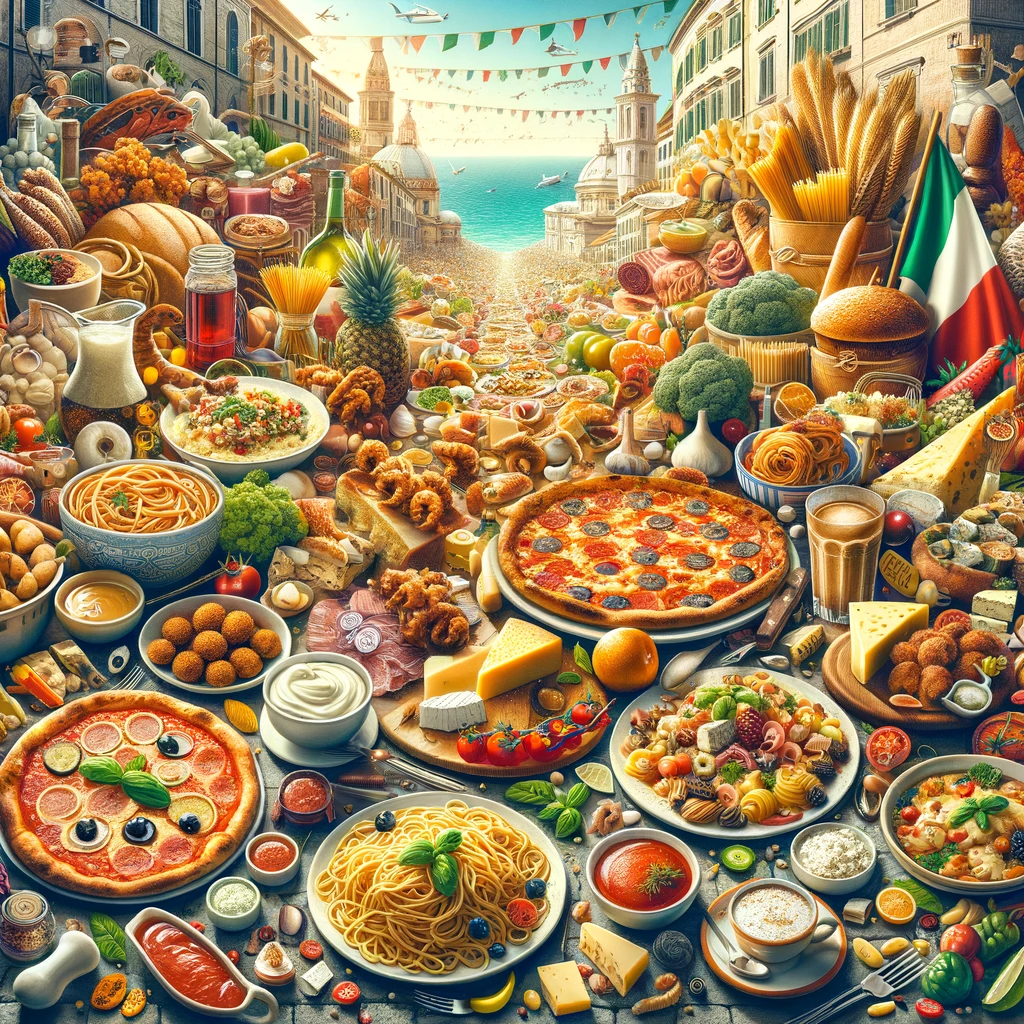
Delving Deeper into Regional Specialties
Exploring Liguria: The Home of Pesto
Liguria, a coastal region in northwest Italy, is famed for its pesto genovese – a sauce made from basil, pine nuts, Parmesan, garlic, and olive oil. This sauce, often served with pasta, epitomizes the fresh, herbal flavors of the region. Liguria is also known for its focaccia, a testament to the Italian skill in bread making.
Emilia-Romagna: The Heartland of Italian Gastronomy
Emilia-Romagna is often considered the culinary heart of Italy. It is the birthplace of many Italian specialties, including Parmigiano-Reggiano cheese, balsamic vinegar, and prosciutto di Parma. The region’s capital, Bologna, is famous for its rich ragù, commonly known abroad as Bolognese sauce, traditionally served with tagliatelle.
The Unique Flavors of Campania
Campania, home to Naples, is famous for its pizza, particularly the classic pizza Margherita, which embodies the colors of the Italian flag with its combination of tomatoes, mozzarella, and basil. Beyond pizza, Campania is renowned for its fresh seafood dishes, such as ‘spaghetti alle vongole’ (spaghetti with clams).
Italian Culinary Festivals: A Celebration of Local Cuisine
Sagra del Carciofo, Roman Artichoke Festival
The Sagra del Carciofo in Rome celebrates the artichoke, a staple of Roman cuisine. This festival features various preparations of artichokes, including the famous ‘carciofi alla romana’ (Roman-style artichokes) and ‘carciofi alla giudia’ (Jewish-style artichokes).
Alba White Truffle Festival
In Piedmont, the Alba White Truffle Festival draws gourmands worldwide. This event showcases the prized white truffle in various dishes, allowing visitors to experience this rare and luxurious ingredient’s unique aroma and flavor.
The Battle of the Oranges, Ivrea
While not strictly a food festival, the Battle of the Oranges in Ivrea is a quirky celebration with a historical context. This event involves a massive, playful “battle” where participants throw oranges at each other, commemorating a medieval rebellion against tyranny.
The International Influence of Italian Cooking
Adaptation and Fusion
Italian cuisine has been readily adapted and fused into various cultures worldwide. For example, the American adaptation of Italian dishes has led to unique creations like Chicago-style deep dish pizza and spaghetti with meatballs, which are more American than Italian in their origins and popularity.
Italian Techniques in Global Kitchens
Italian cooking techniques, particularly the emphasis on simplicity and the use of fresh ingredients, have significantly influenced global culinary practices. Many chefs worldwide employ Italian techniques in their cooking, whether it’s perfecting the art of pasta making or mastering the balance of flavors in a sauce.
The Spread of Italian Coffee Culture
Italian coffee culture has also made its mark globally. The espresso machine, an Italian invention, has become a staple in coffee shops around the world. The Italian ritual of enjoying a quick espresso at the bar has transformed into a global phenomenon, with variations like the latte and cappuccino becoming everyday beverages in many countries.
Conclusion: A Rich Tapestry of Flavors and Traditions
Italian cuisine is a mosaic of flavors, techniques, and traditions. From the rich, creamy dishes of the north to the vibrant, fresh flavors of the south and islands, Italy offers a culinary journey like no other. The influence of Italian cooking on global cuisine is a testament to its universal appeal and enduring charm. Whether it’s through a simple plate of pasta or a sophisticated truffle dish, the essence of Italian cooking is about celebrating the quality of ingredients, the joy of cooking, and the pleasure of sharing good food with others. “A Taste of Italy” is thus not just a journey through a nation’s cuisine but an exploration of a culture that has made food an art form and a way of life.