
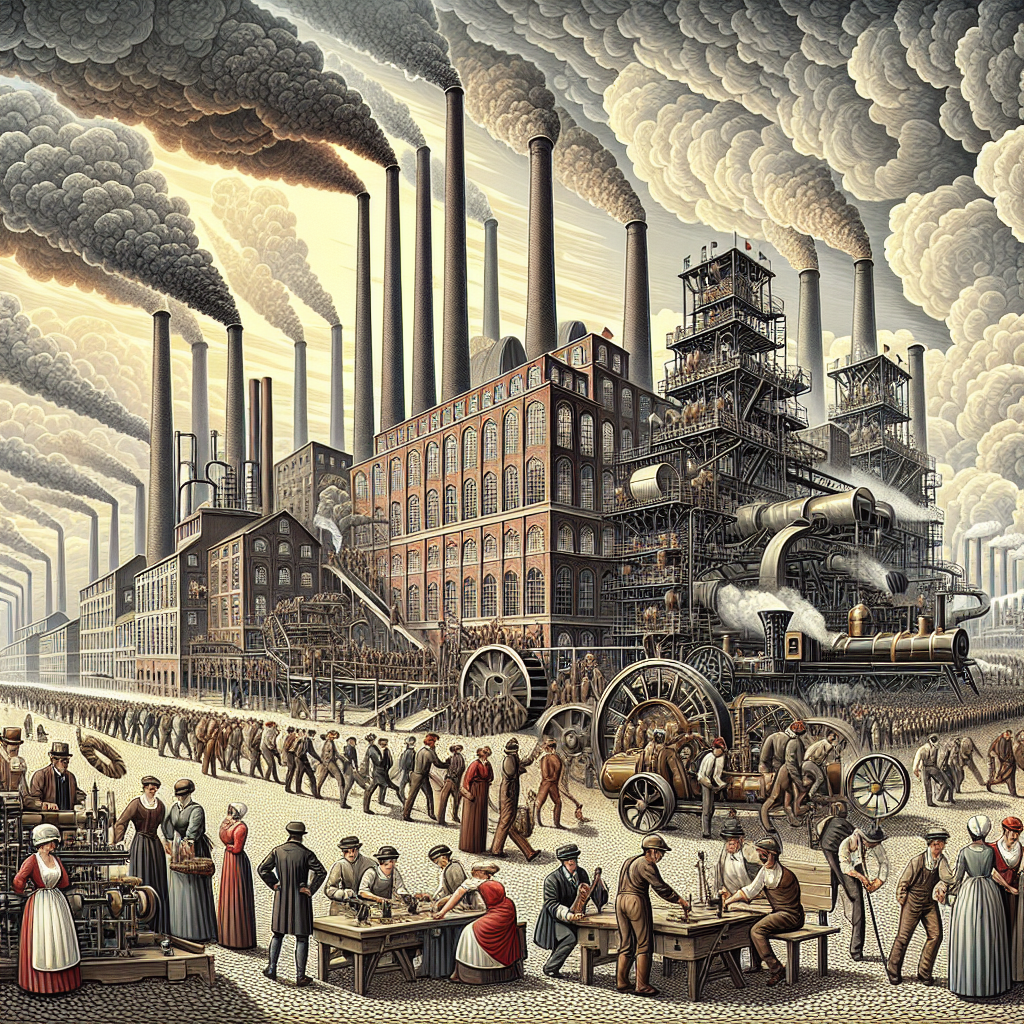
The Industrial Revolution stands as a monumental period in human history, transforming economies and societies in profound and lasting ways. Spanning from the late 18th century to the early 19th century, this era witnessed the emergence of machinery, factories, and the mass production of goods which replaced the labor-intensive handcrafting methods that had dominated for centuries. This article aims to delve into the intricate tapestry of changes brought about by the Industrial Revolution, focusing on the economic aspects and the subsequent social transformations.
Prior to the advent of the Industrial Revolution, economies across Europe and North America were predominantly agrarian, with most people living in rural areas engaging in small-scale farming and traditional crafts. The agricultural society was characterized by limited production and a slow rate of economic growth. However, the seeds of change were sown with the Scientific Revolution and were further spurred by individual inventors and thinkers who pushed the boundaries of innovation, setting the stage for an economic upheaval.
The initial push for industrialization can be traced back to Britain, where natural resources like coal and iron ore were abundant and provided the necessary ingredients for the burgeoning industries. Inventions such as the spinning jenny, power loom, and the steam engine revolutionized textile production and significantly increased output while reducing labor costs. The crystallization of manufacturing hubs in urban areas led to the acceleration of urbanization as people sought employment in factories. This burgeoning factory system became the beating heart of the Industrial Revolution, embodying both its promise and its pitfalls.
The Economic Transformation
The transition from an agrarian to an industrial economy is one of the most significant outcomes of the Industrial Revolution. It catapulted nations into higher economic status, fundamentally altering the structure and drivers of economies. A marked increase in production efficiency not only lowered the cost of goods but also made them more accessible to a wider consumer base.
Central to this economic transformation was the concept of economies of scale. Factories could now produce goods in large quantities at a fraction of the previous cost, leading to surplus production and, ultimately, the rise of a consumer-based economy. Furthermore, the industrial revolution initiated the development of new markets and trade routes, facilitating a global exchange of goods that was unprecedented in history.
The newly industrialized economies experienced a surge in financial growth and increasing national wealth, which laid the groundwork for modern capitalism. Industries no longer depended solely on natural manpower but leveraged mechanical power to enhance productivity, which in turn led to increased profits and reinvestment in technology and innovation. This created a fertile ground for the growth of industries like steel, coal, textile, and eventually railways and automobiles.
The Birth of New Economic Classes
The rise of industrialization heralded not just economic change but also the birth of new social structures. A new class of industrialists and capitalists emerged, amassing wealth and power through factory ownership and resource control. This burgeoning class significantly shifted the socio-economic power dynamics that had existed for centuries, changing the delineation between the working and upper classes.
Conversely, the growth of industries also gave rise to a larger working class that toiled in factories under challenging conditions. This class was distinct from the traditional agrarian laborers, as they were typically urban dwellers who lived in proximity to their workplaces. The laboring conditions often involved long hours in environments that were hazardous to health, with minimal regard for workers’ well-being at the outset.
This new working class was pivotal in driving economic growth but also became central to the social questions and tensions of the time. The dire conditions they faced brought about new societal concerns and a burgeoning sense of solidarity, which in turn sowed the seeds for labor movements and the quest for improved labor rights and better working conditions.

Urbanization and Its Social Impacts
The industrial revolution brought about a significant demographic shift as industrial towns and cities sprang up across Europe and North America. This era of urbanization was characterized by large-scale migration from rural to urban areas, with individuals seeking employment opportunities in the growing number of factories. The influx of populations into urban centers transformed cities both physically and socially.
Urbanization led to the creation of new social dynamics and challenges. Towns and cities expanded rapidly, sometimes without adequate planning, leading to overcrowded living conditions, insufficient infrastructure, and public health challenges. Neighborhoods grew haphazardly, and working-class families often resided in cramped, unsanitary housing known as tenements.
Despite the grim realities of urban life, cities also became hubs of culture, commerce, and innovation. Public transport systems, sanitation improvements, and new forms of entertainment and leisure arose to accommodate the changing lifestyles. Moreover, the congregation of diverse people in urban areas fostered intellectual exchange and cultural vibrancy, which played a role in the social reform movements that emerged during this period.
Technological Innovations and Their Impact
Technology was at the heart of the Industrial Revolution, driving not just economic transformation but also shaping social dynamics. Inventions in steam power, iron production, and the mechanization of textiles were among the earliest developments that spurred economic activity and growth.
The advent of the steam engine by James Watt can be pointed to as one of the pivotal innovations that bolstered transport and manufacturing. The ability to power locomotives and factories catalyzed the speed and scope of industrial activity. Railways transformed the movement of goods and people, bridating both economic and geographical divides, and making travel more accessible and affordable.
Other technological advancements such as the telegraph revolutionized communication, laying the groundwork for the information age. Mechanized steel and iron production enabled the construction of infrastructure like bridges, rail networks, and eventually skyscrapers, permanently transforming the urban landscape and the way people lived.
The cumulative effect of these inventions not only promoted economic efficiencies and growth but also sparked societal changes by reshaping the environment, work processes, and facilitating social mobility for some, while creating economic disparities for others.
The Role of Government and Policy Reforms
As industrialization progressed, it soon became evident that new policies and regulations were necessary to address the manifold issues emerging from this rapid transformation. Initially, governments were slow to respond, allowing industrialists significant freedom. However, the stark realities of urban living, along with the growing labor discontent, eventually pressured policymakers to intervene.
The 19th century saw the introduction of legislation aimed at curtailing the worst excesses of industrialization. This included laws regulating factory conditions, labor hours, and child labor practices. Gradual awareness and increased pressure from labor movements led to significant reforms over time. Acts like the Factory Act of 1833 in Britain and subsequent legislation aimed to improve labor conditions and set precedents for modern employment law.
The Industrial Revolution also highlighted the need for new economic ideologies and practices. Economic theories by thinkers like Adam Smith, David Ricardo, and Karl Marx emerged during this time, addressing the nuances and consequences of capitalism and industrialization. These theories have since been foundational to economic policies and debates, shaping modern economic discourse and practice.
Conclusion
The Industrial Revolution was a keystone in the creation of the modern world, reshaping economic realities and societal structures on an unprecedented scale. It set the foundation for the transition from traditional agrarian economies to modern industrial societies, instigating widespread economic growth and transforming social classes and urban landscapes.
Despite the transformative economic benefits, the Industrial Revolution also brought challenges, such as worker exploitation, urban poverty, and environmental degradation. These issues highlighted the need for social reforms and regulations and set the stage for future innovations and developments in industrial processes and technology.
The legacy of the Industrial Revolution is etched into the very fabric of contemporary society, making it a pivotal period to study and understand. It presents invaluable lessons on the impacts of rapid technological change, the importance of worker rights, urban planning, and the critical role of policy in shaping just and equitable societies.


