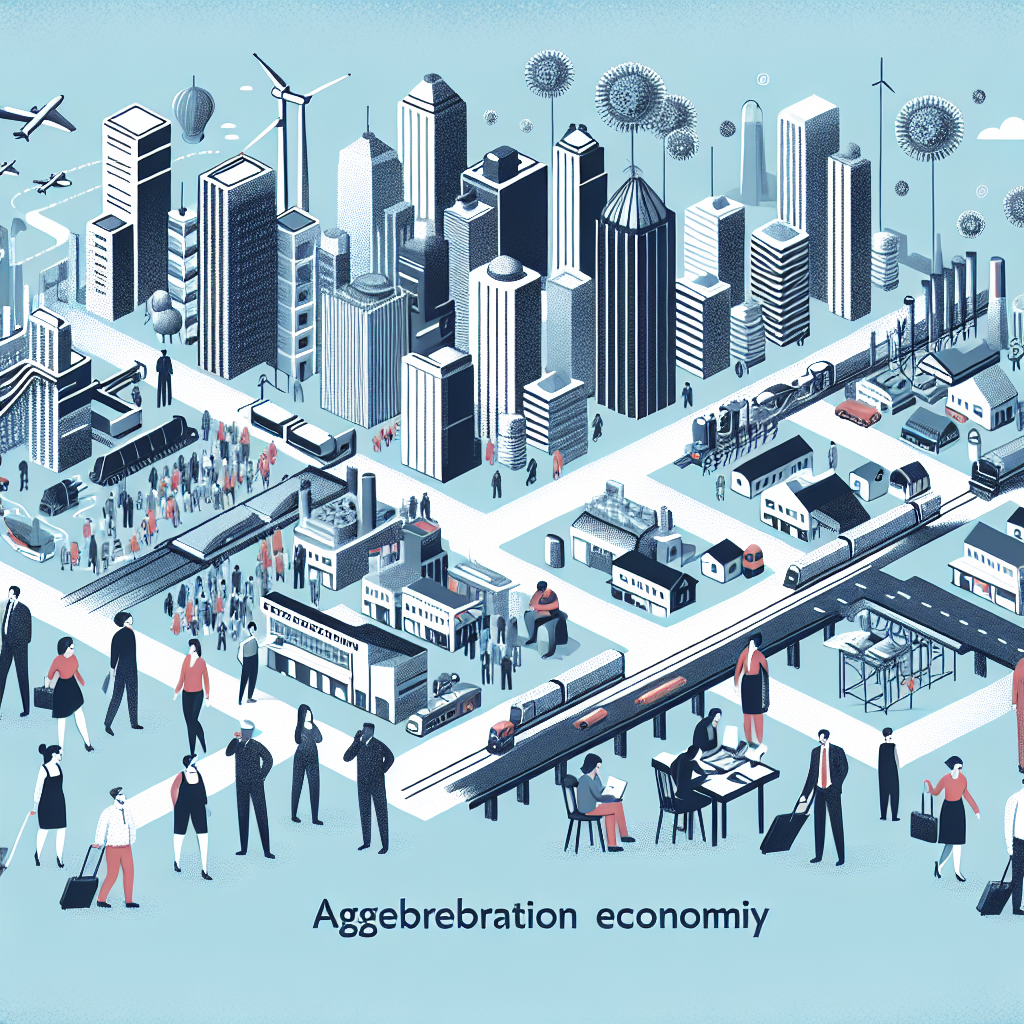
Have you ever pondered why cities like New York, Tokyo, and London are bustling hubs of economic activity? Why do companies, services, and talent gravitate towards these urban areas? The answer lies in a fascinating economic principle known as agglomeration economies, which refers to the benefits that firms and individuals reap when locating near each other. This notion is fundamental to economic geography—a field that examines the spatial distribution of economic activities. It lubricates the wheels of urbanization and enhances productivity, shaping the way cities evolve and economies expand.
Agglomeration economies stem from the clustering of businesses and industries in specific geographical areas, leading to a synergy that significantly boosts efficiency, innovation, and growth. The term “agglomeration” itself indicates a dense network of interconnected entities, like a well-knit fabric of trade, knowledge, and human capital.
This concentration achieves a kind of economic alchemy where the whole becomes greater than the sum of its parts. From cutting down transportation costs to facilitating better communication and collaboration, agglomeration economies create an ecosystem where businesses can thrive. In this article, we will delve into the different types of agglomeration economies, explore their role in urbanization, and understand their impact on productivity. By the end, you’ll have a comprehensive grasp of why and how these economic dynamics make cities the powerhouses of modern economies.
Types of Agglomeration Economies
Agglomeration economies can be categorized into two main types: localization economies and urbanization economies. Each plays a unique role in shaping economic landscapes.
Localization Economies: This type emerges when firms within the same industry cluster together. The proximity to similar firms allows for the easy exchange of industry-specific knowledge and skills, reduces transportation costs for intermediate goods, and fosters a competitive yet collaborative environment. Silicon Valley, with its multitude of tech companies, is a prime example of localization economies in action.
Urbanization Economies: These economies occur when firms from different industries co-locate in an urban area. The diverse urban environment creates a melting pot of ideas, resources, and opportunities, which promotes cross-industry innovation and economic resilience. Cities like New York and London benefit significantly from urbanization economies as they host a rich tapestry of industries ranging from finance to fashion.
The synergy between localization and urbanization economies forms the backbone of urban centers, enabling them to attract talent, investment, and innovation. Understanding these different types helps us appreciate why cities remain economic powerhouses despite the high costs associated with urban living.
The Role of Transportation and Infrastructure
A critical aspect of agglomeration economies is the infrastructure that supports it. Efficient transportation networks—be it roads, railways, or public transit systems—are essential for facilitating the movement of people, goods, and ideas across the urban landscape.
Transportation Networks: The availability of well-developed transportation links reduces travel time and costs, making it easier for workers to commute and for goods to be transported. This makes cities more attractive for businesses that rely on quick turnaround times and minimal logistics costs. For example, the extensive subway systems in cities like Tokyo and New York enable millions of people to move seamlessly through urban spaces every day.
Digital Infrastructure: In today’s digital age, communication networks are just as important. High-speed internet and mobile connectivity enable real-time communication and data exchange, which is vital for businesses that require constant coordination and collaboration. Cities that invest in digital infrastructure are better positioned to attract tech-savvy firms and workers.
Ultimately, robust infrastructure acts as the lifeblood of agglomeration economies, ensuring that the various components of the urban ecosystem function efficiently and harmoniously.

Human Capital and Innovation
Another critical piece of the agglomeration economies puzzle is human capital—essentially the skills, knowledge, and experience possessed by individuals. Cities are magnets for educated individuals seeking better job opportunities, which creates a pool of high-quality talent that businesses can tap into.
Talent Attraction: The concentration of prestigious educational institutions and dynamic job markets makes cities attractive to skilled professionals. This influx of talent fuels innovation and productivity, making urban areas breeding grounds for groundbreaking ideas and technologies.
Knowledge Spillovers: The close physical proximity of firms and workers fosters an environment where knowledge and ideas can be exchanged freely. Face-to-face interactions, networking events, and collaborative projects enable the rapid dissemination of information, enhancing the overall innovative capacity of the city. Cities like Boston, with its cluster of universities and research institutions, exemplify this dynamic.
The synergy between human capital and innovation not only drives productivity but also ensures the continuous evolution and growth of urban economies.
Economic Diversification and Resilience
One of the lesser-known but equally important benefits of agglomeration economies is economic diversification. A diversified economic base makes cities more resilient to economic downturns and shocks.
Industry Mix: Cities that host a wide range of industries—such as finance, healthcare, technology, and manufacturing—are less vulnerable to sector-specific downturns. If one industry experiences a slump, others can cushion the impact, ensuring a more stable economic environment. This diversity fosters resilience and long-term economic sustainability.
Business Ecosystems: The varied industry mix also creates fertile ground for new business ecosystems to emerge. Startups can thrive by providing niche products and services that cater to the diverse urban population, leading to a dynamic and vibrant marketplace. Cities like Berlin have seen a surge in startup activity due to their diversified economic base.
The ability to host a wide range of industries enhances a city’s economic stability, making it an attractive destination for businesses and individuals alike.
Challenges and Criticisms
While agglomeration economies significantly contribute to urban prosperity, they are not without their challenges and criticisms.
High Costs of Living: One of the primary drawbacks is the high cost of living in urban areas. As cities grow and attract more people, demand for housing and services outpaces supply, driving up costs. This can make cities less affordable for lower-income residents and can exacerbate socio-economic inequalities.
Congestion and Pollution: The concentration of economic activities in urban areas often leads to traffic congestion and environmental pollution. These issues can hamper the quality of life and negate some of the productivity gains from agglomeration economies.
Gentrification: As cities become more attractive to businesses and high-income individuals, there is a risk of gentrification. This process displaces long-term, lower-income residents and can erode the social fabric of urban communities.
Addressing these challenges requires thoughtful urban planning and policy interventions to ensure that the benefits of agglomeration economies are equitably distributed and sustainable in the long run.
Conclusion: The Future of Agglomeration Economies
In conclusion, agglomeration economies play a pivotal role in shaping the economic landscapes of urban areas. They drive productivity through the clustering of businesses and industries, robust infrastructure, a high concentration of human capital, and economic diversification. However, the benefits come with challenges such as high living costs, congestion, and gentrification that need to be managed.
As we look towards the future, the principles of agglomeration economies will continue to guide the development of cities. Smart urban planning, investment in infrastructure, and policies that promote inclusivity and sustainability will be essential to harnessing the full potential of these economic dynamics. By understanding and leveraging agglomeration economies, cities can remain vibrant centers of innovation, growth, and prosperity.
The dynamics of agglomeration economies will not only shape the future of urbanization but also determine the economic trajectory of nations. Whether through the rise of new tech hubs or the revitalization of old industrial centers, the principles of agglomeration will continue to be at the heart of economic geography.