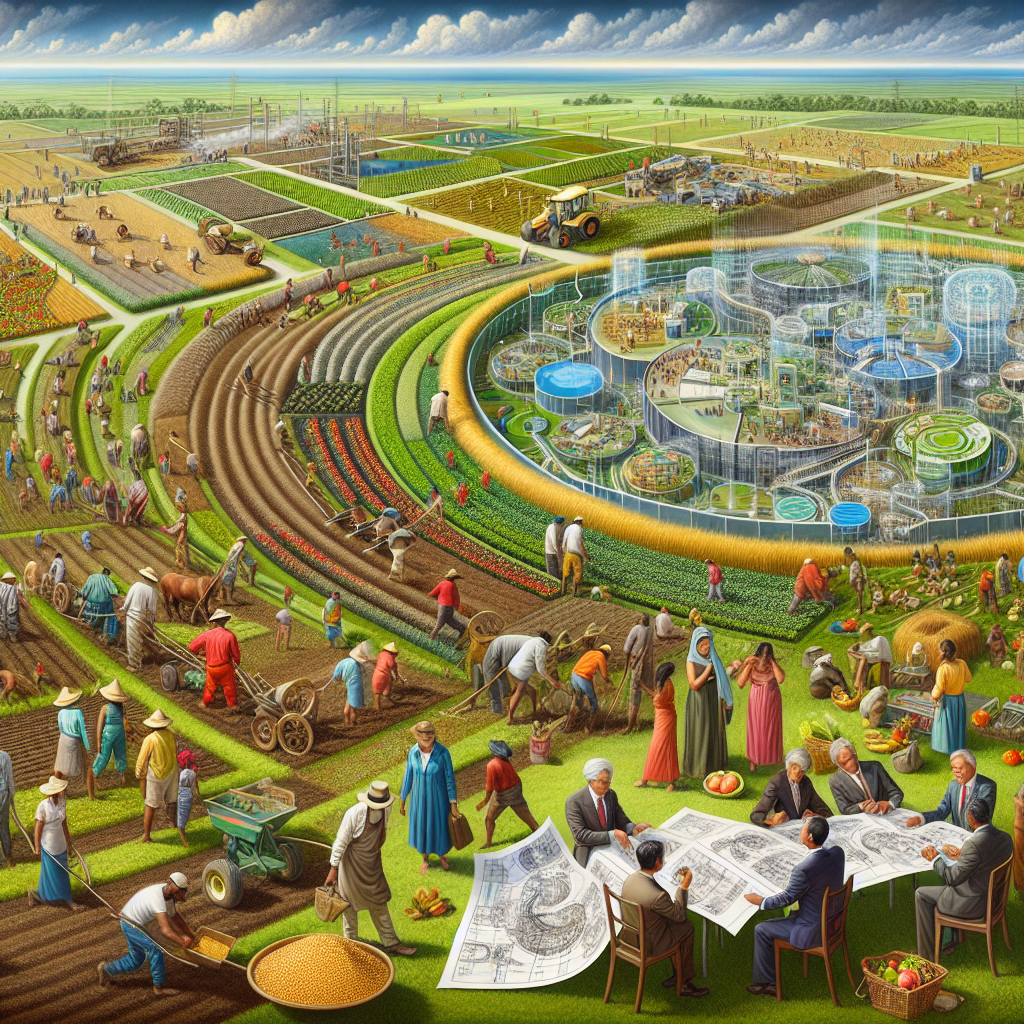
Economic development is a multi-faceted and diverse concept encompassing various elements, of which agricultural development plays a pivotal role. For many developing countries, agriculture forms the backbone of the economy, providing employment for a significant portion of the population while also contributing substantially to GDP. The importance of agriculture extends beyond the economic sphere, addressing crucial issues such as food security, poverty reduction, and sustainable development. As the global population continues to rise, ensuring food security through effective agricultural strategies becomes increasingly critical. In this comprehensive article, we’ll delve into the significance of agricultural development, explore various strategies to enhance it, and discuss how these strategies contribute to overall economic progress and food security.
Agricultural development is not just about increasing crop yields. It encompasses modernizing practices, improving rural infrastructure, empowering farmers with knowledge, and ensuring sustainable resource management. Moreover, it involves integrating various economic, social, and environmental policies that together help build resilient agricultural systems. Given the right attention and strategic investment, agriculture can be a powerful catalyst for economic growth and stability.
Understanding the Role of Agriculture in Economic Development
The role of agriculture in economic development cannot be overstated. Historically, agriculture has served as the primary source of both sustenance and economic value for societies around the world. Even today, in an era dominated by advanced technology and industrialization, agriculture remains a cornerstone for many economies, particularly in the developing world.
In many developing countries, agriculture employs a large proportion of the workforce. This employment not only generates income for millions of households but also supports local economies through the creation of various off-farm jobs in processing, marketing, and distribution. Additionally, agriculture provides raw materials needed for further processing industries, contributing to more extensive industrial and economic activities. It has a multiplier effect on economic growth – as agricultural productivity increases, so do the incomes of those involved, which spurs increased spending and investment in other sectors.
Agriculture also plays a vital role in securing food availability, ensuring populations have access to the necessary nutrition to maintain healthy, productive lives. Food security is intrinsically linked to national security, with countries benefitting from less dependency on food imports and greater stability. As such, focusing on agricultural development is key to achieving broader economic stability and growth.
Enhancing Agricultural Productivity
One of the primary strategies for agricultural development is enhancing productivity. This involves both improving crop yields and maximizing the use of available resources. Technological advancements play a crucial role in this area.
For instance, the use of high-yield variety (HYV) seeds, genetically modified organisms (GMOs), and advanced farming techniques can significantly increase the output per hectare of farming land. The adoption of modern irrigation techniques, such as drip and sprinkler systems, can also help maximize water use efficiency, which is particularly important in arid regions. Moreover, precision agriculture, which utilizes GPS technology and data analytics to optimize field-level management, can result in better resource management and increased productivity.
In addition to technological advancements, enhancing agricultural productivity also involves proper training and capacity building for farmers. This includes educating farmers on best practices in farming, pest control, crop rotation, and soil management. Extension services, which bring knowledge and new technologies to the farming community, can significantly improve the outcomes of agricultural activities.

Investing in Rural Infrastructure
Developing rural infrastructure is another crucial aspect of agricultural development. This includes building roads, storage facilities, irrigation systems, and market access points that connect farmers to local and global markets.
Improved infrastructure can reduce the cost and time associated with transporting goods, thereby increasing the efficiency and profitability of farming. For instance, better roads and transport systems allow for faster and more reliable delivery of fresh produce, reducing post-harvest losses and ensuring that farmers get fair prices for their products. Additionally, reliable storage facilities help in preserving crops for longer periods, allowing farmers to sell their produce during off-seasons when prices are likely higher.
Electricity and telecommunications infrastructure also play significant roles. Reliable electricity is necessary for operating irrigation pumps, processing equipment, and storage facilities. Furthermore, access to modern communication tools enables farmers to stay informed about market prices, weather forecasts, and new farming techniques, which can significantly enhance their productivity and profitability.
Promoting Sustainable Agricultural Practices
Sustainability is a crucial factor in modern agricultural development strategies. Unsustainable farming practices can lead to soil degradation, loss of biodiversity, and water scarcity, which threaten long-term agricultural productivity and food security.
To promote sustainability, it is essential to adopt practices that minimize environmental impact while maintaining high levels of productivity. These practices include crop diversification, agroforestry, conservation tillage, and organic farming. Crop diversification helps in maintaining soil health and reducing the risks associated with monocropping. Agroforestry, which integrates trees and shrubs into farming systems, can improve soil fertility, provide additional sources of income, and increase biodiversity.
Conservation tillage reduces soil erosion and enhances soil water retention, while organic farming avoids the use of synthetic chemicals, promoting healthier ecosystems. Additionally, integrated pest management (IPM) can help reduce the reliance on chemical pesticides by using biological control methods, crop rotation, and other environmentally friendly practices.
Empowering Farmers through Education and Access to Finance
Empowering farmers is critical for sustainable agricultural development. Education and access to finance are two key aspects that can significantly enhance the capacity of farmers to adopt better practices and technologies.
Education initiatives should focus on providing farmers with the knowledge and skills they need to improve their farming practices. This involves both formal education and informal training programs, such as workshops, field demonstrations, and farmer-to-farmer learning. Educational programs should also address literacy and numeracy skills, as these are fundamental for understanding and implementing new technologies and practices.
Access to finance is equally essential for empowering farmers. Financial services, including credit, savings, insurance, and payment systems, can help farmers invest in new technologies, inputs, and infrastructure, manage risks, and smooth consumption throughout the year. Microfinance institutions, cooperative banks, and digital financial services can play significant roles in providing these financial services to smallholder farmers, who often lack access to traditional banking systems.
Integrating Agricultural Policies with Broader Economic Strategies
For agricultural development to be effective, it must be integrated with broader economic policies and strategies. This involves creating an enabling policy environment that supports agricultural growth and links it to other sectors of the economy.
Government policies should focus on providing incentives for investment in agriculture, ensuring fair trade practices, and protecting the rights and interests of farmers. Additionally, policies should promote research and development in agricultural sciences, support infrastructure development, and facilitate access to markets.
Linking agricultural development to other economic sectors, such as industry and services, can create synergies that enhance overall economic growth. For example, the agro-processing industry can add value to agricultural products, create jobs, and stimulate further economic activities. Similarly, the services sector, including transportation, logistics, and retail, can benefit from and contribute to agricultural growth.
Conclusion
Agricultural development is a cornerstone of economic development, particularly in developing countries where it provides livelihoods for a significant portion of the population and contributes to food security and overall economic stability. By enhancing agricultural productivity, investing in rural infrastructure, promoting sustainable practices, empowering farmers through education and access to finance, and integrating agricultural policies with broader economic strategies, countries can achieve significant progress in their agricultural sectors.
The importance of agricultural development extends beyond the economic benefits. It directly impacts food security, poverty reduction, and sustainable development. As global challenges such as climate change, population growth, and resource scarcity continue to pose threats, adopting comprehensive and integrated strategies for agricultural development becomes increasingly crucial.
In conclusion, achieving food security and economic development requires a multi-faceted approach that addresses the various dimensions of agricultural development. By recognizing the critical role of agriculture and implementing effective strategies, countries can pave the way for a more secure, prosperous, and sustainable future.