
Charles Dickens, one of the most recognized names in English literature, left an indelible mark on the world with his insightful chronicles of Victorian England. His distinctive literary style, sharp wit, and biting social commentary earned him a place as one of the most influential writers of the 19th century. Born on February 7, 1812, in Portsmouth, England, Dickens’ rise to literary prominence was fueled by his keen observations of the society around him, a society characterized by profound inequality and rapid industrial expansion.
Growing up, Dickens experienced both comfort and hardship, providing him a unique perspective on both ends of the socioeconomic spectrum. His father’s imprisonment for debt when Dickens was just twelve years old forced him to leave school and work in a blacking factory—an experience that left a lasting impression on him and informed much of his later work. His early exposure to the gritty realities of life for the poor became a recurrent theme in his novels, where he depicted the struggles and injustices of Victorian society with great empathy and realism.
Dickens’ writing career began with “The Pickwick Papers,” published in serialized form in 1836. The success of this work catapulted him into celebrity status, and he continued to write prolifically until his death in 1870. His novels, including “Oliver Twist,” “David Copperfield,” “Bleak House,” and “Great Expectations,” not only remain literary classics but also serve as important historical documents that provide insight into the lives of people during the Victorian era. Dickens’ ability to blend comedy, pathos, and social criticism has ensured his lasting legacy and continued relevance in both literary and popular culture.
Early Life and Influences
Charles Dickens’ early life was marked by experiences that would shape his character and inform his future writings. Born into a middle-class family, Dickens was the second of eight children. His father’s financial mismanagement and subsequent imprisonment deeply affected young Charles and his family, forcing them to live in Camden Town, a poor neighborhood in London. Here, Dickens witnessed firsthand the stark realities of poverty and class disparity.
At just twelve years old, Dickens was pulled out of school and sent to work at Warren’s Blacking Factory, a boot-blacking factory, to help support his family. The factory labor was monotonous and grueling, and the conditions were harsh. This period of his life introduced him to the world of child labor and the working poor, themes that would later become prominent in his writings. The factory experience profoundly impacted Dickens, imbuing him with a sense of social justice and empathy for the downtrodden.
After his father was released from prison, Dickens returned to school and later worked as a law clerk and a court reporter, jobs that gave him a keen understanding of the legal system and further fueled his desire to address social issues through his work. His experiences in these roles allowed him to witness the bureaucratic inefficiencies and injustices within the legal system, which he later satirized in novels like “Bleak House.”
Throughout his life, Dickens was also influenced by the literature of his time, including the works of William Shakespeare and Tobias Smollett. The vivid storytelling and complex characters he encountered in these works inspired him to create his own intricate narratives, filled with memorable characters and vivid descriptions of life in Victorian England. Dickens’ early experiences and literary influences combined to form the foundation of his distinctive style, characterized by a blend of humor, realism, and social critique.
Major Works and Themes
Charles Dickens was a prolific writer, producing a staggering amount of work over his lifetime, including 15 novels, several novellas, and countless short stories and articles. His major works, many of which remain widely read and studied today, provide keen insights into 19th-century England and explore themes of social justice, poverty, and the human condition.
One of his earliest and most famous novels, “Oliver Twist” (1837-1839), tells the story of an orphan boy who navigates the harsh realities of London’s underworld. Through Oliver’s journey, Dickens exposes the grim conditions of workhouses, the criminal justice system, and the mistreatment of orphans and the poor. The novel’s memorable villains, such as Fagin and Bill Sikes, highlight the pervasive corruption and moral decay Dickens saw in society.
In “David Copperfield” (1849-1850), Dickens drew heavily from his own experiences to craft a semi-autobiographical novel. The story follows the life of David, detailing his journey from a troubled childhood to successful adulthood. This novel is particularly notable for its deep psychological insight and its rich array of characters, ranging from the kind-hearted Mr. Micawber to the conniving Uriah Heep. “David Copperfield” also explores themes of identity, personal growth, and the importance of resilience.
“Bleak House” (1852-1853) is often considered Dickens’ masterpiece, combining his sharp social commentary with a detective story. The novel critiques the convoluted and ineffectual legal system through the case of Jarndyce and Jarndyce, a seemingly endless legal dispute. Dickens exposes the human costs of legal inefficiency, as individuals become entangled in the bureaucratic mess. The novel’s intricate plot and memorable characters, such as the kind-hearted Esther Summerson and the tragic figure of Lady Dedlock, exemplify Dickens’ skill as a storyteller and social critic.
In “Great Expectations” (1860-1861), Dickens explores themes of ambition, social class, and personal growth through the story of Pip, an orphan who rises from humble beginnings to wealth. Through Pip’s relationships and experiences, Dickens critiques the rigid class distinctions of Victorian society and examines the often-painful process of self-discovery. The novel’s complex characters, such as the reclusive Miss Havisham and the kind-hearted Joe Gargery, add depth and nuance to the story, making it one of Dickens’ most beloved works.
Social Impact and Reforms
Charles Dickens was not just an author but also a passionate social reformer. His works raised awareness of the significant social issues of his time and helped to inspire changes in public policy and societal attitudes. Through his vivid storytelling and compelling characters, Dickens brought attention to the struggles of the poor and marginalized, urging his readers to confront the injustices of their society.
One of the major issues Dickens tackled in his writing was child labor. In novels like “Oliver Twist” and “David Copperfield,” he highlighted the plight of children forced into labor and the harsh conditions they endured. His portrayal of child laborers’ suffering brought public attention to the issue and contributed to the growing movement against child labor in Victorian England. The Factory Acts, which regulated child labor and improved working conditions, were influenced, in part, by the awareness that Dickens and other reformers brought to the issue.
Dickens also addressed the dire conditions of workhouses and the Poor Law system. In “Oliver Twist,” he exposed the brutal realities of workhouses, where the poor were often treated with cruelty and neglect. His depiction of these institutions helped to generate public outcry and spurred calls for reform. The Poor Law Amendment Act of 1834, though enacted before Dickens’ novel, perpetuated inhumane conditions that he brought to light, eventually leading to reforms aimed at improving the treatment of the poor.
Housing conditions for the urban poor were another critical issue Dickens illuminated through his writing. In novels such as “Bleak House” and “Little Dorrit,” he depicted the squalid living conditions in overcrowded slums and the spread of disease, like the infamous fog in “Bleak House” that symbolizes the pervasive unhealthy environment. His work drew attention to the need for better public health measures and sanitary reforms, contributing to the sanitary movement and the eventual passage of public health legislation.
Through his journalism and public speeches, Dickens continued to advocate for social changes. He utilized his platform to support educational reforms, believing that education was a crucial tool for improving individuals’ lives and addressing societal inequalities. His influence extended beyond his literary works, as he actively engaged in social causes and worked towards a more just and equitable society. Dickens’ legacy as a reformer is as significant as his contributions to literature, reflecting his lifelong commitment to social justice.
Style and Techniques
Charles Dickens’ literary style and techniques have made his works enduring classics and have influenced countless writers who followed him. His ability to blend vivid storytelling with sharp social critique has ensured his lasting impact on literature.
One of Dickens’ most notable techniques is his use of serialized publishing. Many of his novels were initially published in monthly or weekly installments, creating a sense of anticipation and allowing readers to engage with the story over time. This method also made his work accessible to a broader audience, as serialized versions were cheaper than complete books. The cliffhangers and suspenseful endings of serial installments kept readers eagerly awaiting the next release, contributing to his widespread popularity.
Dickens was a master of characterization, creating some of the most memorable and vividly drawn characters in literature. Figures like Ebenezer Scrooge, Miss Havisham, and Uriah Heep are etched into the collective imagination, each embodying distinct traits that make them larger-than-life yet relatable. Dickens’ characters often served as archetypes, representing broader social issues or moral lessons. His ability to create complex, multi-dimensional characters allowed readers to connect with them on an emotional level, resulting in a lasting impact.
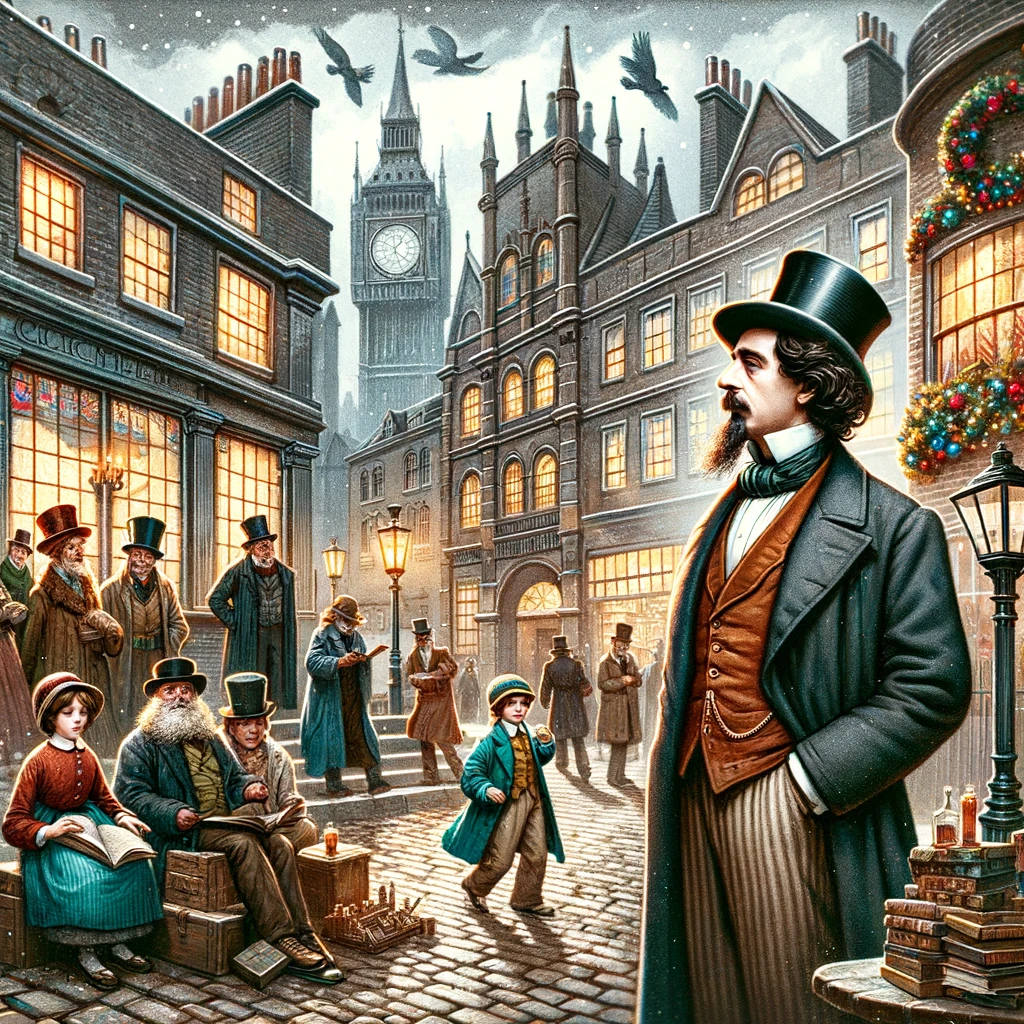
His descriptive prowess is another hallmark of his style. Dickens had an extraordinary talent for depicting scenes and settings with such detail and vividness that they come alive on the page. The foggy streets of London, the oppressive atmosphere of poorhouses, and the grandeur of upper-class estates are all rendered with meticulous care. His descriptions often serve a dual purpose, not only painting a picture for the reader but also highlighting social disparities and injustices.
Satire and humor are integral components of Dickens’ style. His novels are peppered with wit and irony, often used to criticize societal norms and institutions. In “Little Dorrit,” for example, Dickens satirizes the bureaucratic inefficiencies of the Circumlocution Office, a fictional government department. His humor adds depth and complexity to his social commentary, making his critiques both entertaining and thought-provoking.
Finally, Dickens’ narrative technique is characterized by a mix of realism and idealism. While his portrayal of societal problems is often starkly realistic, his stories usually contain a moral underpinning and a sense of hope. Characters often undergo personal transformation and redemption, reflecting Dickens’ belief in the possibility of positive change. This balance between exposing harsh realities and offering hope for improvement is a key element of his work’s enduring appeal.
Legacy and Influence
Charles Dickens’ legacy extends far beyond the literary world. His works have been translated into multiple languages, adapted into countless films, television series, and stage productions, and continue to captivate audiences around the globe. His influence on literature, culture, and society is profound, and his themes remain relevant even in the modern era.
In the literary realm, Dickens’ influence can be seen in the works of countless authors who followed him. Writers such as George Orwell, John Irving, and Salman Rushdie have cited Dickens as an inspiration. His ability to blend social critique with compelling storytelling set a standard for narrative fiction, and his emphasis on character development and social issues has had a lasting impact on how novels are written and perceived.
Dickens’ influence extends to popular culture as well. Iconic characters like Ebenezer Scrooge from “A Christmas Carol” have become cultural touchstones, with Scrooge’s redemption story retold in various forms each holiday season. The themes and characters from Dickens’ novels have permeated beyond the page, becoming integral parts of the cultural lexicon. His works have been adapted into numerous films, television series, and stage productions, each bringing his stories to new audiences and ensuring their continued relevancy.
Beyond his literary and cultural impact, Dickens’ contributions to social reform and human rights are significant. His writings brought attention to critical societal issues, such as poverty, child labor, and the need for legal and housing reforms. By humanizing the struggles of the marginalized, Dickens played a crucial role in generating empathy and awareness, which, in turn, led to positive changes in public policy and societal attitudes. His advocacy for educational reform also underscores his belief in the power of education to address social inequalities.
Today, Dickens’ legacy is celebrated worldwide. His works are included in school curriculums, studied in universities, and cherished by readers of all ages. Literary societies and festivals dedicated to Dickens’ life and works continue to thrive, reflecting the enduring appeal of his storytelling and the relevance of his social critiques. His novels, far from being mere historical artifacts, resonate with modern readers, offering insights into human nature and societal structures that are as pertinent today as they were in the 19th century.
Conclusion
Charles Dickens’ profound impact as a chronicler of Victorian England, an advocate for social reform, and a master storyteller underscores his enduring legacy. His ability to blend vivid storytelling with sharp social critique has cemented his place as one of the greatest writers in English literature. Through his works, Dickens exposed the harsh realities of 19th-century life, bringing attention to issues such as poverty, child labor, and the inefficiencies of the legal system.
By humanizing the struggles of the poor and marginalized, Dickens fostered empathy and spurred social change. His influence extended beyond literature and into the realm of social reform, inspiring public awareness and legislative efforts to address the injustices he so vividly depicted. Dickens’ characters, themes, and narrative techniques continue to resonate with readers, writers, and scholars, ensuring his works remain relevant and influential.
Today, Dickens’ novels are celebrated for their rich characterizations, vivid descriptions, and moral complexity. His unique style, characterized by humor, realism, and idealism, has influenced generations of writers and continues to captivate audiences worldwide. The universality of his themes and the timeless nature of his storytelling ensure that his works remain a fixture in the literary canon.
In the modern era, Dickens’ portrayal of social issues, his advocacy for the underprivileged, and his belief in the potential for human redemption offer valuable insights and lessons. As societies continue to grapple with issues of inequality and justice, Dickens’ works serve as both a reminder of past struggles and a call to action for future progress. His legacy, both literary and social, endures as a testament to the power of storytelling and the enduring relevance of his vision.