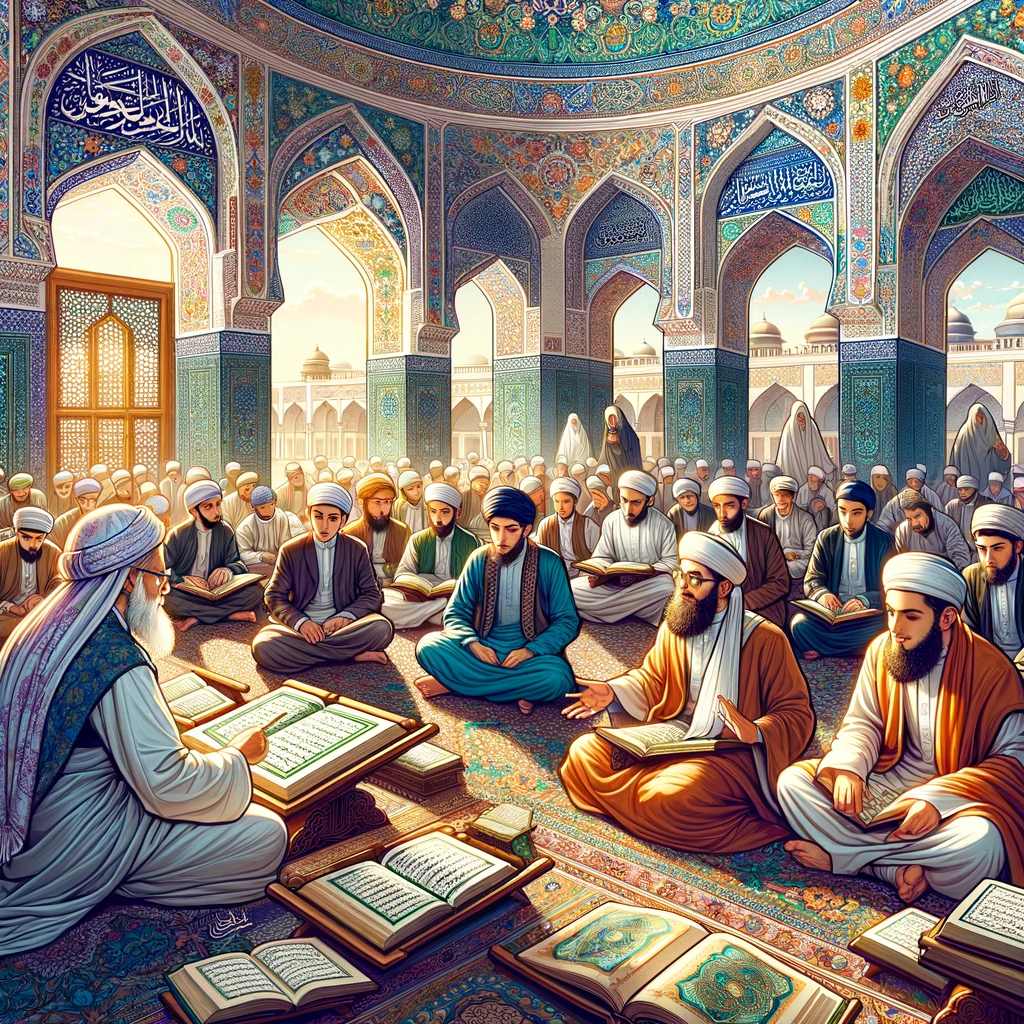
Education within Islamic cultures is not just a process of academic instruction but is deeply intertwined with spiritual and moral development. This holistic approach is reflective of the cultural and religious imperatives that have shaped Islamic societies for centuries. This article explores the distinctive features of educational traditions in these cultures, emphasizing how these traditions continue to influence contemporary educational practices.
Historical Overview
Islamic education has historically emphasized the importance of seeking knowledge. This pursuit is considered a religious obligation; the Prophet Muhammad is quoted as saying, “Seeking knowledge is an obligation upon every Muslim.” Traditionally, education in Islamic societies began at a young age, primarily focusing on learning the Quran and Hadith (the sayings and actions of the Prophet Muhammad). These religious texts were not only taught for their spiritual guidance but also for their linguistic richness, providing a foundation in Arabic grammar and vocabulary.
The Madrasah, an educational institution that originated in the 10th century, is one of the most enduring symbols of Islamic education. These institutions offered more than religious knowledge; they taught mathematics, science, philosophy, and medicine, underlining the Islamic tradition of holistic education. This broad curriculum helped cultivate scholars who were well-versed in various intellectual realms.
Role of Religion in Education
In Islamic cultures, education serves as a means to deepen one’s faith and act morally within the community. The integration of secular and religious education is a distinctive feature, with both being considered equally important. Educational content encourages students to contemplate ethically and spiritually, blending religious precepts with secular knowledge.
Islamic educational philosophy holds that knowledge should lead to beneficial action. It is not enough to simply know; one must act on this knowledge in a way that benefits society. This principle is evident in how students are taught to apply their learning to real-world contexts, emphasizing community service and moral responsibility.
Contemporary Islamic Education
In modern times, Islamic education has adapted to include contemporary subjects such as technology and business, yet the foundational teachings remain tethered to traditional values. Schools in Islamic countries often incorporate religious studies as a significant part of the curriculum, which includes studying the Quran, Hadith, and Sharia (Islamic law). These studies are not only about religious compliance but also aim to instill a sense of identity and community values.
Countries like Saudi Arabia and Pakistan have educational systems where Islamic education plays a central role. In Saudi Arabia, for instance, the education system is overseen by the Islamic Affairs Ministry, ensuring that the teachings align with Islamic principles. In contrast, countries with diverse religious populations like Malaysia and Indonesia offer Islamic education through specific schooling systems that operate alongside secular ones. These systems cater to the Muslim population, providing religious education in conjunction with national curriculum standards.
Challenges and Innovations
One of the challenges facing Islamic education is the need to balance traditional teachings with the demands of a globalized world. There is an ongoing debate within these communities about how best to integrate modern scientific and technological advancements without compromising religious values.
In response to these challenges, there have been significant innovations in Islamic educational practices. For example, the use of digital technology in teaching the Quran and Hadith allows for a more interactive and engaging learning experience. Online platforms and apps have made Islamic education more accessible, especially for those in non-Muslim-majority countries.
Furthermore, there is a growing emphasis on comparative education, which studies different educational systems and practices around the world. This approach has led to a more nuanced understanding of how Islamic principles can be integrated with modern educational methodologies to provide a robust educational experience that prepares students for the challenges of the modern world.
The traditions of education in Islamic cultures are characterized by a deep-seated reverence for knowledge, both sacred and secular. As these societies continue to interact with global trends and technologies, their educational systems evolve while still retaining their unique cultural and religious identity. The ongoing challenge for these educational traditions is to navigate modernity while preserving the values that have sustained them for centuries.
This rich tapestry of history, religion, and modernity makes the study of Islamic educational traditions not only fascinating but also crucial in understanding how these cultures will shape future educational trends globally.

Integration of Values in Curriculum
A key aspect of Islamic educational tradition is the integration of Islamic values into the curriculum. This integration manifests in various subjects, not only in religious studies but also in literature, social studies, and even science. For example, in discussing historical events or scientific discoveries, teachers may incorporate discussions about ethical issues based on Islamic perspectives, encouraging students to consider moral implications alongside factual content.
The character development of students is given significant importance, with virtues such as honesty, respect, and community service being emphasized across the curriculum. This approach is aimed at developing well-rounded individuals who contribute positively to society, reinforcing the idea that education should cultivate both intellect and character.
Gender and Education
The role of gender in Islamic education has evolved significantly over the years. Historically, educational opportunities were more limited for women. However, contemporary Islamic societies increasingly recognize the importance of education for both genders. This shift is supported by religious texts that advocate for the education of all individuals, regardless of gender. Today, in many Islamic countries, women participate actively in all levels of education and contribute significantly to the academic and professional sectors.
Educational institutions, from primary schools to universities, now offer coeducational and gender-specific options, catering to the diverse preferences and cultural norms of their communities. This flexibility helps maximize educational opportunities while respecting cultural and religious practices.
Innovations in Teaching Methods
Innovative teaching methods are being increasingly adopted within Islamic education systems to enhance learning outcomes and engage students more effectively. These include interactive teaching styles, the use of multimedia resources, and problem-based learning approaches that encourage critical thinking and practical application of knowledge.
For instance, some madrasahs have begun incorporating project-based learning, where students work on collaborative projects that require applying their knowledge in practical scenarios. This method not only helps in understanding theoretical concepts but also develops teamwork and communication skills among students.
Islamic Education and Globalization
As globalization influences all sectors of society, Islamic education also faces the challenge of preparing students to thrive in a globalized world. This preparation involves teaching English and other foreign languages, offering international exchange programs, and integrating global cultural awareness into the curriculum. These initiatives help students from Islamic cultures to not only preserve their identity but also to participate confidently on the international stage.
Educators in Islamic contexts are increasingly aware of the need to foster global competencies while maintaining religious and cultural values. This balancing act is crucial in ensuring that students are well-equipped to contribute to both their local communities and the global community.
Future Directions
Looking ahead, the future of Islamic education appears poised for further transformation. Continuous debates and discussions among educators, religious scholars, and policymakers aim to refine and adapt educational practices to better meet the needs of students in rapidly changing societies.
The potential for further integrating technology, enhancing pedagogical methods, and expanding the scope of curriculum to include more global perspectives are areas of active development. Additionally, there is an increasing emphasis on inclusivity and accessibility, ensuring that all students, regardless of their socio-economic background or physical abilities, have access to quality education.
Conclusion
Educational traditions in Islamic cultures offer a rich, multifaceted approach to learning that is deeply rooted in religious and moral principles. As these traditions evolve, they continue to influence not only the educational landscape within Islamic societies but also contribute to global educational practices. The resilience and adaptability of these traditions underscore their enduring relevance and their potential to meet the challenges of the future.
This comprehensive exploration of educational traditions in Islamic cultures highlights their historical depth, contemporary relevance, and future potential, offering valuable insights into how these systems can continue to evolve and contribute to global education.