
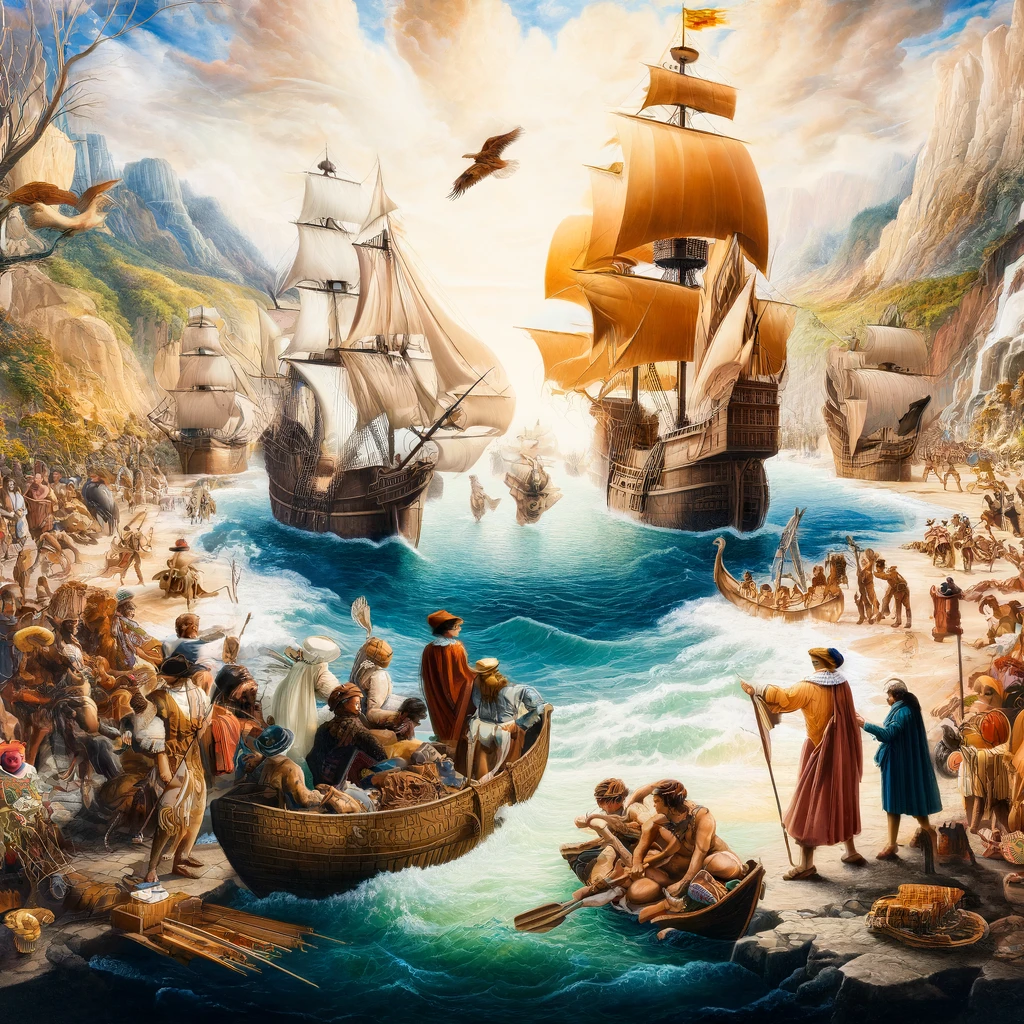
The history of the Americas is deeply intertwined with waves of migrations that have not only shaped the demographic makeup of the continent but have also left an indelible mark on its cultural landscape. These movements of people, often referred to as the Great Atlantic Migration, involve the travels from the Old World to the New World, spanning several centuries. This article explores these migrations, focusing on their cultural impacts and the way they have molded societies across North and South America.
The Early Waves: Conquest and Colonization
The initial phase of the Atlantic migration began in the late 15th century with the arrival of European explorers. Led by figures such as Christopher Columbus, these early explorers paved the way for subsequent waves of settlers. The Spanish and Portuguese were the first to establish colonies, followed by the British, French, and Dutch. Each group brought with them their own customs, languages, and religions, which began to blend with the indigenous cultures.
This period was marked by both cooperation and conflict. The European settlers introduced new technologies and agricultural practices, which were often adopted by the native populations. However, this era also saw the forced assimilation of native peoples and the tragic reduction of indigenous populations due to disease and conflict.
The African Influence: Slavery and Beyond
A pivotal and somber chapter in the Atlantic migration was the transatlantic slave trade, which forcibly brought millions of Africans to the Americas from the 16th to the 19th centuries. African slaves were primarily brought to work on the sugar, tobacco, and cotton plantations, profoundly influencing the economic and social structures of the Americas, especially in the Caribbean and the southern United States.
The cultural impact of African migration is profound. African traditions in music, dance, religion, and cuisine have become integral parts of the cultural fabric in many parts of the Americas. Genres like jazz, samba, and blues, for instance, have roots in African musical traditions and have influenced global music significantly.
The Age of Opportunity: 19th and Early 20th Century
The 19th and early 20th centuries saw another significant wave of migration from Europe to the Americas, driven by economic opportunities and sometimes by the need to escape political turmoil. This era, sometimes referred to as the Age of Mass Migration, saw millions of Italians, Irish, Germans, Poles, and Jews cross the Atlantic in search of a better life.
These migrants brought with them diverse cultural practices, reshaping the American cultural landscape once again. Cities like New York, Boston, and Buenos Aires became melting pots of cultures, contributing to a dynamic and diverse societal fabric. These communities established neighborhoods that reflected their cultural heritage, celebrated their unique festivals, and maintained their traditional cuisines and languages.
Recent Trends and Modern Implications
In more recent decades, migration trends have shifted, with increased movements from Asia and Latin America to the Americas. These migrations continue to impact the cultural landscapes of the continent, introducing new languages, religions, and traditions. This ongoing cultural exchange has helped to foster a sense of global interconnectedness in the Americas.
The Great Atlantic Migration is a testament to the enduring nature of cultural exchange and adaptation. From the early days of conquest and colonization through the profound influences of African traditions and the reshaping of societies by 19th-century European migrants, to the modern influx from Asia and Latin America, these migrations have played a pivotal role in shaping what the Americas are today. They remind us of the dynamic, ever-evolving nature of culture and its ability to bridge disparate peoples through shared experiences and mutual influences.

The Legacy of Migration: Blending Cultures and Shaping Identities
Migration has played a pivotal role in the cultural synthesis seen throughout the Americas. This blending of cultures, while sometimes contentious, has led to a rich tapestry of hybrid identities that define the continent today. The mingling of European settlers with indigenous communities, the integration of African traditions through the slave trade, and the later contributions of various immigrant groups from around the world have all contributed to this complex cultural landscape.
The Indigenous Influence Revisited
Despite the heavy influences from Europe and Africa, the indigenous cultures have not merely been recipients in this cultural exchange. They have also profoundly influenced European and African settlers in various aspects such as agricultural practices, language, and governance. The resilience of indigenous languages and traditions, despite the historical pressures of colonization and assimilation, speaks volumes about the strength of these cultures.
For example, many words in American English, such as “chocolate,” “hurricane,” and “canoe,” are derived from Native American languages. Additionally, political ideas from the Iroquois Confederacy are believed to have influenced the United States Constitution.
The Role of Religion in Cultural Integration
Religion has been another significant arena where the impacts of migration are evident. The introduction of Christianity by European settlers transformed the religious landscape of the Americas. Over time, however, these Christian traditions blended with indigenous and African religious practices, leading to unique syncretic religions such as Vodou in Haiti, Candomblé in Brazil, and Santería in Cuba.
These religions are not mere remnants of the past; they continue to be vibrant and integral aspects of cultural identity in various communities, showing how migration and cultural exchange can give rise to entirely new cultural expressions.
Economic Contributions and Cultural Change
Migrants have also made significant economic contributions to the Americas, which in turn have facilitated further cultural transformations. The cities that sprung up as centers of trade and industry due to migration have become hubs of cultural innovation. For instance, New York City, with its significant immigrant population, is known as a global center for arts, music, and fashion.
Moreover, the culinary landscape of the Americas has been deeply enriched by migration. Dishes such as pizza in the United States, originally Italian, or the Japanese influence on Peruvian cuisine, are examples of how migrant culinary traditions have been embraced and adapted.
Contemporary Migration: Challenges and Opportunities
While historical migrations have largely shaped the positive aspects of cultural diversity in the Americas, contemporary migrations also bring challenges such as xenophobia, economic disparity, and cultural dislocation. Addressing these challenges while harnessing the potential of cultural diversity is crucial for the continued development of the continent.
Programs that promote cultural appreciation and integration can help mitigate these challenges. For example, multicultural festivals and educational programs that teach the history and contributions of various immigrant groups can foster a more inclusive society.
Final Thoughts
The story of migration in the Americas is a profound narrative of human resilience, adaptability, and creativity. As people from different backgrounds and cultures have come together, they have not only shaped their new homelands but have also been transformed themselves. The Great Atlantic Migration is not just a historical phenomenon; it is an ongoing process that continues to influence the cultural, social, and economic fabric of the Americas.
Understanding this history is essential for appreciating the complexity and richness of American cultures and for addressing the contemporary challenges associated with new waves of migration.


