Skip to content

SOCIALSTUDIESHELP.COM

Learn Social Studies and American History

  • American History Lessons
  • American History Topics
  • AP Government and Politics
  • Economics
  • Resources
    • Blog
    • Practice Exams
    • AP Psychology
    • World History
    • Geography and Human Geography
    • Comparative Government & International Relations
    • Most Popular Searches
  • Toggle search form

Exploring Native American Cultures: A Journey Through Time

Posted on By admin

The tapestry of Native American cultures is as vast and varied as the landscapes they have inhabited for millennia. From the frozen tundras of Alaska to the sunbaked deserts of the Southwest, these cultures have not only survived but have thrived, preserving a legacy that continues to enrich the world. This article delves into the past and present of Native American cultures, exploring their history, traditions, challenges, and the resilience that marks their ongoing journey.

The Dawn of Native American Cultures

Early Settlement and Diverse Tribes

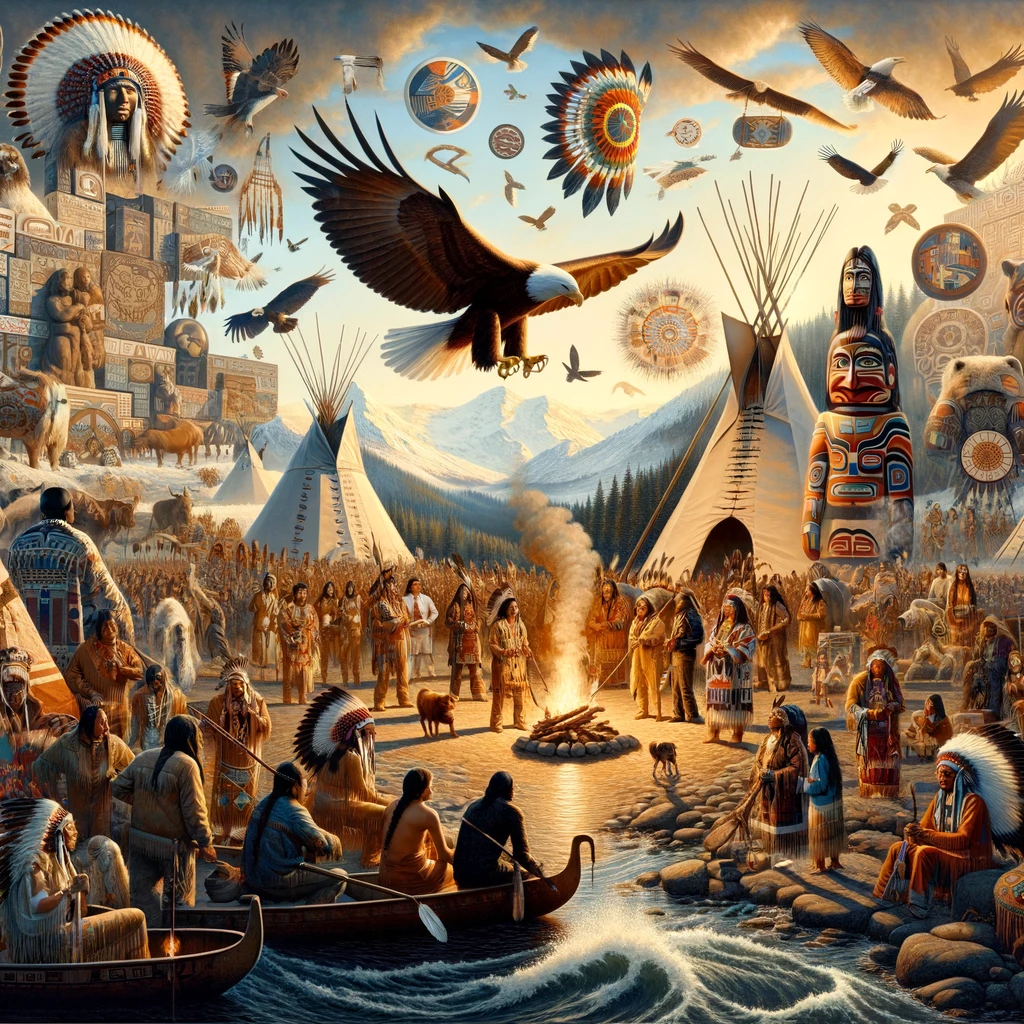
The story of Native American cultures begins with the first settlers crossing the Bering land bridge from Asia to North America, around 15,000 years ago. Over centuries, these early inhabitants spread across the continent, giving rise to a multitude of tribes, each with its unique language, traditions, and way of life. From the Inuit of the Arctic to the Navajo of the Southwest, the diversity of these cultures is a testament to human adaptability and creativity.

Societal Structures and Lifestyles

Native American societies were as diverse as their environments. In the Northeast, the Iroquois Confederacy formed a sophisticated political system. The Plains Indians, like the Sioux and Cheyenne, were known for their nomadic lifestyle and buffalo hunting. The Pueblo peoples of the Southwest built complex adobe dwellings and excelled in agriculture. Each tribe adapted to its environment with ingenuity and a deep respect for nature.
Spiritual Beliefs and Practices

Connection with Nature

Spirituality was and remains a cornerstone of Native American life. Most tribes view the natural world as a sacred, interconnected web of life, with a deep reverence for the earth and its creatures. Ceremonies and rituals, often guided by shamans or spiritual leaders, are central in expressing this connection, with practices varying widely among different tribes.

Mythology and Symbolism

Native American mythology is rich with stories that explain the origins of the earth, the stars, and the elements. These tales often feature animals and natural phenomena as characters, symbolizing various virtues or aspects of life. Totems, or symbolic representations of animals, plants, and ancestors, are also a significant part of many Native American cultures, embodying the tribe’s identity and history.

Artistic Expressions

Traditional Crafts and Art

Art is a vital expression of Native American heritage. Traditional crafts like beadwork, pottery, basketry, and textile weaving are not only beautiful but also hold cultural significance. For instance, Navajo rugs are renowned for their intricate patterns and symbolism, while Northwest Coast totem poles tell stories and mark important events.

Music and Dance

Music and dance are integral to Native American cultural ceremonies and social gatherings. Songs often accompany rituals, tell stories, or are part of healing practices. Traditional dances, like the Plains Indians’ powwows or the Pueblo’s Corn Dance, are both spiritual and communal events, bringing together generations to celebrate and remember.

The Impact of European Colonization

Displacement and Cultural Erosion

The arrival of Europeans in the Americas marked the beginning of a dark period for Native American cultures. Colonization led to displacement, warfare, and the spread of diseases to which Native Americans had no immunity. The introduction of European goods and systems disrupted traditional ways of life, leading to significant cultural erosion.

Resistance and Resilience

Despite these challenges, Native American tribes resisted assimilation and fought to preserve their cultures. Leaders like Sitting Bull and Geronimo became symbols of this resistance. The Ghost Dance movement of the late 19th century, aiming to restore traditional ways of life, is a poignant example of the resilience and hope that sustained these cultures through dark times.

The 20th Century: A Time of Change

Government Policies and Activism

The 20th century brought significant shifts in the relationship between Native American tribes and the U.S. government. Early on, policies aimed at assimilation, such as the Indian Boarding School system, sought to eradicate Native cultures. However, the latter half of the century saw a shift towards tribal sovereignty and self-determination. Activism played a crucial role, with movements like the American Indian Movement (AIM) in the 1960s and 1970s advocating for Native rights and bringing attention to issues such as treaty rights and police brutality.

Cultural Revival

This period also witnessed a cultural revival among Native American communities. Efforts to preserve and revitalize languages, traditions, and arts gained momentum. The establishment of cultural centers, museums, and educational programs helped in keeping the heritage alive for younger generations. Festivals like the Gathering of Nations Powwow became platforms for cultural expression and celebration.

Contemporary Native American Cultures

Current Challenges

Today, Native American communities face a complex array of challenges. These include ongoing struggles for land rights, environmental concerns, health disparities, and the need for economic development. Issues like the Dakota Access Pipeline protests highlight the ongoing conflict between indigenous rights and modern economic interests.

Achievements and Contributions

Despite these challenges, Native American communities continue to make significant contributions to the broader American tapestry. In politics, figures like Deb Haaland, the first Native American U.S. Cabinet secretary, represent groundbreaking achievements. In arts and literature, Native American authors, artists, and filmmakers are gaining recognition, telling their stories and providing diverse perspectives.

Preserving Identity in a Modern World

One of the most significant aspects of contemporary Native American life is the balancing act between preserving traditional ways and adapting to the modern world. Efforts to teach native languages in schools, practice traditional crafts, and participate in ceremonies are ways in which these communities maintain their distinct cultural identities. Simultaneously, they are actively engaged in contemporary society, using technology and modern platforms to advocate for their rights and share their rich heritage.

Conclusion: A Legacy of Resilience and Hope

The journey of Native American cultures is a testament to resilience, adaptability, and the enduring strength of human spirit. From their ancient roots to their present-day manifestations, these cultures have faced unimaginable hardships yet have managed to preserve an incredibly rich and diverse heritage. As we look to the future, it is essential to recognize the contributions of Native American communities to our shared history and ensure that their voices are heard and respected. The story of Native American cultures is not just a chapter in history books; it is a living, evolving narrative that continues to shape the world.


This exploration into the past and present of Native American cultures reveals a story of diversity, resilience, and enduring spirit. It’s a narrative that reminds us of the importance of preserving cultural heritage and learning from the wisdom of those who have a deep connection with the land and its history.

North American Cultures, World Cultures

Post navigation

Previous Post: North America’s Mosaic: A Diverse Cultural Landscape
Next Post: The Canadian Mosaic: Exploring Cultural Diversity in Canada

Related Posts

The Diverse Cultures of Africa: An Overview African Cultures
North African Cultural Mosaic: Exploring Morocco, Algeria, Tunisia African Cultures
Exploring the Sami: Scandinavia’s Indigenous Culture Indigenous Cultures
South Korea’s Intense Education System Explored Asian Cultures
The Renaissance – Cultural Movement That Shaped Europe European Cultures
Exploring Ubuntu: Africa’s Philosophy of Interconnectedness African Cultures
  • World History
  • Timeline of US History: Major Events from 1492 to Present
  • Glossary of Government Terms: 50 AP Gov Concepts Explained in Plain English
  • Top 10 Most Common Social Studies Exam Terms (and What They Mean)
  • Research Paper Outline Example (Template for High School & AP Research)

Navigation

  • Economics
    • Agricultural Price Supports
    • Agriculture in the United States
    • Bank Deregulation and the S&L Crisis
    • Banking and the Federal Reserve System
    • Basic Economic Concepts
    • Budgeting
    • Business Cycle
    • Business Organizations
    • Perspectives on Business Structures
    • Circular Flow Model
    • Collective Bargaining
    • Comparative Economic Systems
    • Different Types of Banks
    • Economic Growth
    • Economic Indicators
    • Economics Final Exam Review
    • Economics Links
    • Elasticity
    • Federal and State Budgeting
    • Federal Spending and National Debt
    • Free Enterprise
    • Governments Role in the Economy
    • History of Labor Unions
    • Government Protection of the Consumer
    • Income Inequality
    • Inflation
  • History Topics
    • “Robber Barons” or “Captains of Industry”
    • The 18th & 19th Amendments: Prohibition & Women’s Suffrage Explored
    • 19th Amendment – Womens Suffrrage
    • African American Reformers
    • African American Reform in the Progressive Era
    • America – Divided at Birth
    • America’s Role in WWII: Decisive Influence in War’s Outcome
    • Spanish American War: How it Forged America’s Global Dominance
    • Andrew Carnegie – Gospel of Wealth
    • Effectiveness of U.S. Antitrust Laws in Protecting Competition
    • Articles of Confederation
    • Justifications & Impacts: Policies Toward Native Americans
    • Understanding the Bill of Rights’ Protections
    • US Campaigns and Elections: Democracy’s Backbone
    • Causes of the Great Depression
    • Opposition & Responses to the New Deal: Roosevelt’s Strategy
    • Checks and Balances
    • Effectiveness of the Civil Rights Movement in U.S. Social Change
    • What Caused the Beginning of the Civil War?
    • Colonization and Mercantilism
    • Constitutional Convention
    • Constitutional Flexibility
    • Containment Policy: America’s Tactics Against Communism
    • Cooling the Cold War: From Peaceful Coexistence to Detente
    • Cooling Off: Peaceful Coexistence to Detente
    • Declaration of Independence
    • Democracy in the colonies
    • Dropping of the Atomic Bomb
    • Early Domestic Policies
    • Washington & Jefferson’s Impactful Foreign Policies
    • Reconstruction’s Impact on Freedmen’s Lives
    • Effect of Lincoln’ Death on Reconstruction
    • Effects of the Great Depression
    • Electoral College
    • Enlightenment Thinkers
    • Events Leading Up To The Revolution
    • French and Indian War
    • Government Relationship with Unions
    • How a bill becomes a law.
    • Immigration – Why they came
    • Improvement in the cities – Progressive Era
    • American Influence in Asia during the 1800s
    • John Quincy Adams and Andrew Jackson
  • History Lessons
    • Cold War Genesis: A Detailed Analysis
    • The End of the Cold War
    • FDR’s New Deal
    • Foundation of Democracy
    • The Presidency of Andrew Jackson
    • JFK versus LBJ
    • The Presidency of John Adams
    • Judicial Branch
    • Immigration in the U.S
    • Legislative Branch
    • Madison – War of 1812
    • Monopolies & Trusts: Exploring American Businesses’ Quest to Curb Competition
    • The Presidency of James Monroe
    • Judicial Review and Supreme Court Cases
    • Justification for Imperialism
    • Korematsu V. United States
    • Origins of Legalized Segregation in the South
    • Management vs Unions: Responses to Unionization in the Industrial Revolution
    • Westward Expansion: Manifest Destiny’s Impact
    • McCarthyism Explained: Politics, Fear, and Cold War Context
    • The New Deal’s Impact on Minorities in 1930s America
    • Monopolies
    • Monroe Presidency
    • New Technologies – Industrialization
    • WWI and Civil Liberties: Striking the Balance in Wartime
  • Gov & Politics
    • Elections and Campaigns – Week 9 Notes
    • Interest Groups in American Politics: A Historical Review
    • Interest Groups – Text Notes – Week Seven
    • Lecture Notes – American Political System
    • Lecture Notes – Congress – Week 11
    • Lecture Notes – Economic Policy
    • Lecture Notes – Federalism
    • Lecture Notes – The Judiciary – Week 13
    • Notes – The Bureaucracy
    • Lecture Notes – Political Culture in America
    • Political Participation
    • Political Participation – Text Notes – Week Six
    • Political Parties – Week 8 – Text Notes
  • World Cultures
    • Asian Cultures
    • African Cultures
    • European Cultures
    • Middle Eastern Cultures
    • North American Cultures
    • Oceania and Pacific Cultures
    • South American Cultures
  • Global Trends
  • Important Events
  • Social Studies Weekly
  • Cultural Celebrations
    • Ancient Civilizations
    • Architectural Wonders
    • Celebrating Hispanic Heritage
    • Celebrating Women
    • Celebrating World Heritage Sites
    • Clothing and Fashion
    • Culinary Traditions
    • Cultural Impact of Language
    • Environmental Practices
    • Festivals
    • Global Art and Artists
    • Global Music and Dance
  • Economics
    • Behavioral Economics
    • Development Economics
    • Econometrics and Quantitative Methods
    • Economic Development
    • Economic Geography
    • Economic History
    • Economic Policy
    • Economic Sociology
    • Economics of Education
    • Environmental Economics
    • Financial Economics
    • Health Economics
    • History of Economic Thought
    • International Economics
    • Labor Economics
    • Macroeconomics
    • Microeconomics
  • Important Figures in History
    • Artists and Writers
    • Cultural Icons
    • Groundbreaking Scientists
    • Human Rights Champions
    • Intellectual Giants
    • Leaders in Social Change
    • Mythology and Legends
    • Political and Military Strategists
    • Political Pioneers
    • Revolutionary Leaders
    • Scientific Trailblazers
    • Explorers and Innovators
  • Global Events and Trends
  • Regional and National Events
  • World Cultures
    • Asian Cultures
    • African Cultures
    • European Cultures
    • Middle Eastern Cultures
    • North American Cultures
    • Oceania and Pacific Cultures
    • South American Cultures
  • Privacy Policy

Copyright © 2025 SOCIALSTUDIESHELP.COM. Powered by AI Writer DIYSEO.AI. Download on WordPress.

Powered by PressBook Grid Blogs theme