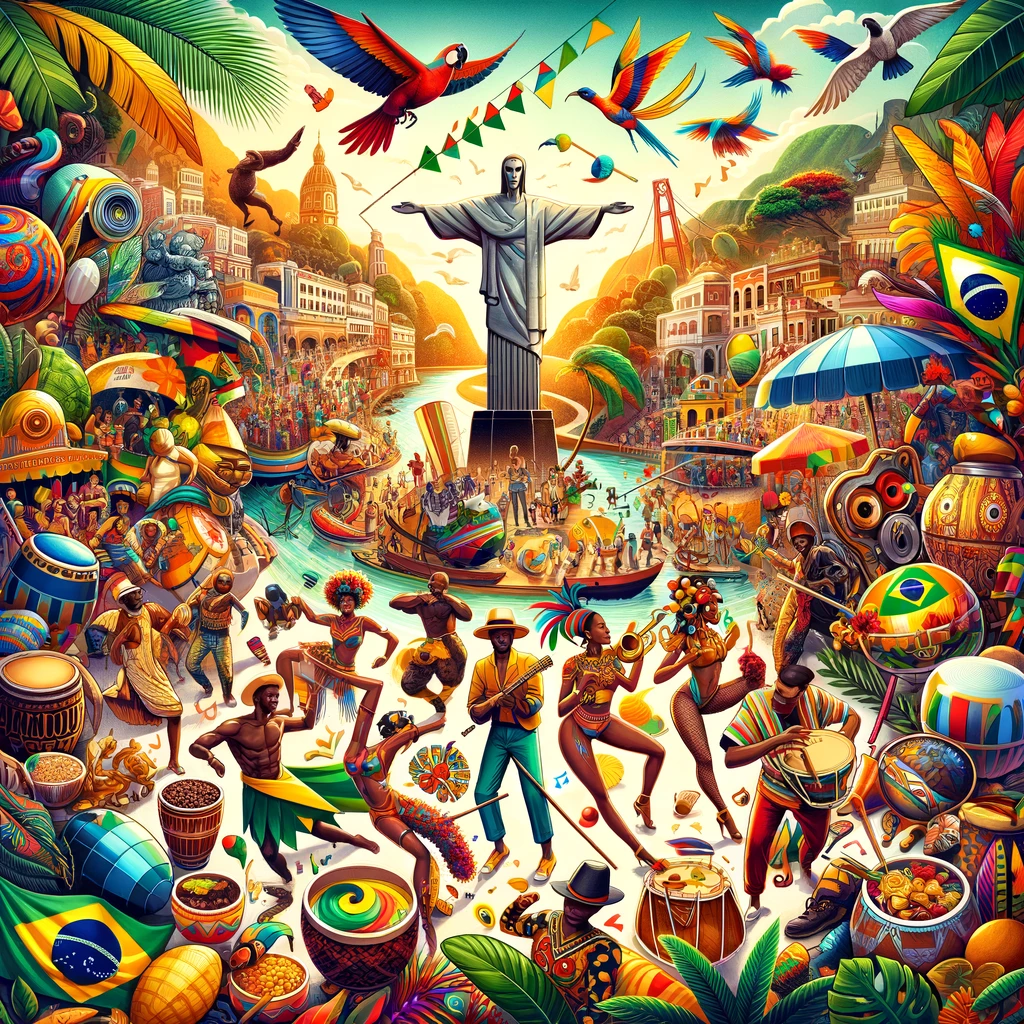
Brazil, the largest country in South America, is renowned for its vibrant culture, which is as diverse and colorful as its landscape. Known for its passion for football, the pulsating rhythms of samba, and the grandeur of Carnival, Brazilian culture is a unique blend of indigenous, African, European, and Asian influences. This article delves into the various aspects of Brazilian culture, exploring how historical events and global interactions have shaped its current identity.
Historical Roots and Indigenous Influence
The cultural fabric of Brazil is deeply rooted in its history. Before the arrival of the Portuguese in 1500, numerous indigenous tribes inhabited the land, each with their own distinct languages, customs, and traditions. These indigenous groups significantly influenced Brazilian culture, particularly in terms of language, cuisine, and folk art.
The Portuguese Era and African Contributions
With the arrival of the Portuguese, Brazil’s cultural landscape began to transform. The Portuguese not only introduced their language, which became the national language of Brazil, but also their customs, religion, and architectural styles. This European influence is particularly evident in cities like Salvador and Rio de Janeiro, where colonial architecture still stands.
The transatlantic slave trade brought a significant African population to Brazil, who played a crucial role in shaping the country’s cultural identity. African influences are particularly prominent in Brazilian music, dance, and religion. The Afro-Brazilian religion of Candomblé, which combines African deities with Catholicism, and the martial art dance of Capoeira are notable examples.
The Melting Pot: A Blend of Diverse Cultures
Brazil’s cultural diversity is also enriched by the contributions of other European, Asian, and Middle Eastern immigrants. Each group brought with it its own customs, traditions, and cuisine, further diversifying Brazil’s cultural tapestry.
The Carnival: A Symbol of Cultural Diversity
The Brazilian Carnival, a yearly festival held before Lent, is perhaps the most vivid representation of the country’s cultural diversity. It’s a time when the entire nation comes together to celebrate with parades, music, and dance, showcasing the various cultural influences that have shaped Brazil.
Samba: The Rhythm of Brazil
Samba, the most famous Brazilian musical genre, embodies the fusion of African rhythms and European melodies. It is not just a dance or a musical style but a symbol of Brazilian identity, celebrated across the country and especially during Carnival.
Brazilian Cuisine: A Flavorful Fusion
Brazilian cuisine is as varied as its culture, reflecting the country’s diverse ethnic makeup. Traditional dishes like feijoada, a hearty stew of beans with beef and pork, and moqueca, a flavorful fish stew with African roots, are staples of Brazilian cuisine. The influence of Portuguese cuisine is also evident in the widespread use of cod and the popularity of pastries like pastel de nata.
The Role of Coffee and Agriculture
Brazil’s role as a leading coffee producer has also influenced its culture. Coffee plantations have played a significant role in shaping the country’s social and economic fabric. Agricultural practices, including the cultivation of sugarcane, soy, and tropical fruits, have influenced Brazilian cuisine and lifestyle.
The Impact of Modernization and Globalization
In recent decades, Brazil has undergone significant modernization and urbanization, impacting its cultural landscape. Cities like São Paulo and Rio de Janeiro are melting pots in their own right, offering a blend of traditional and modern influences. This modernization, coupled with globalization, has introduced new cultural elements, while also posing challenges to preserving traditional practices and customs.
The Role of Media and Technology
The proliferation of media and technology in Brazil has played a pivotal role in both preserving and evolving its culture. Brazilian telenovelas, for instance, have a massive following and significantly influence popular culture, not only in Brazil but across the Latin American region.
The Influence of Sports
Sports, particularly football, are an integral part of Brazilian culture. The country’s success in football, with its national team winning multiple World Cup championships, has made the sport a point of national pride. Football icons like Pelé and Ronaldo are not just sports figures but cultural heroes.
Challenges and Preservation
While Brazil’s cultural diversity is a source of pride, it also presents challenges. The struggle to preserve indigenous cultures and languages, the fight against racial inequality and discrimination, and the need to balance modernization with cultural preservation are ongoing issues.
The Role of Education and Cultural Initiatives
Efforts to preserve and promote Brazilian culture are evident in various educational and cultural initiatives. Museums, cultural centers, and festivals play a crucial role in celebrating and maintaining the country’s rich cultural heritage.
The Global Influence of Brazilian Culture
Brazil’s cultural influence extends far beyond its borders. Brazilian music, dance, cuisine, and art have a global following, contributing to the country’s soft power and international image.
Brazilian culture is a vivid tapestry woven from a multitude of threads, each representing different influences and histories. This rich cultural mosaic is not static but constantly evolving, as Brazil continues to embrace new influences while cherishing its unique heritage. The result is a dynamic, vibrant culture that is distinctly Brazilian, yet universally appealing.
The Linguistic Landscape of Brazil
While Portuguese is the official language of Brazil, the linguistic landscape of the country is much more diverse. This diversity includes a variety of indigenous languages and dialects influenced by African languages and European languages other than Portuguese. This linguistic mosaic not only reflects the country’s history but also its commitment to preserving cultural heritage.
The Influence of Indigenous and African Languages
Indigenous languages, though increasingly endangered, have significantly influenced Brazilian Portuguese, particularly in terms of vocabulary related to flora, fauna, and local geography. Similarly, African languages, brought to Brazil through the slave trade, have left their mark, especially in terms of musical and culinary vocabulary.
Music and Dance: The Soul of Brazil
Brazil’s music and dance scene is a vibrant celebration of its cultural diversity. Apart from Samba, genres like Bossa Nova, Forró, and Funk Carioca have gained popularity both nationally and internationally.
Bossa Nova and Beyond
Bossa Nova, a style that originated in the 1950s, blends samba rhythms with jazz influences. Artists like João Gilberto and Antônio Carlos Jobim have brought this genre to a global audience. Forró, originating from the Northeast of Brazil, is another popular genre, especially during the São João Festival.
Festivals: Celebrating Diversity and Tradition
Brazilian festivals go beyond Carnival, each offering a glimpse into the country’s rich traditions and history.
São João Festival and Others
The São João Festival, celebrated mainly in the Northeast, is a tribute to rural life, with traditional music, dance, and costumes. Other festivals, such as the Parintins Folklore Festival in the Amazon, showcase the country’s indigenous heritage.
Visual Arts and Literature: Windows to the Brazilian Soul
Brazilian visual arts and literature reflect the country’s journey through colonialism, independence, and modernization.
The Legacy of Brazilian Literature
Brazilian literature has a rich tradition, with authors like Jorge Amado, who depicted the life and culture of Bahia, and Paulo Coelho, whose works have gained worldwide fame. Contemporary Brazilian literature continues to explore themes of identity, social inequality, and history.
The Vibrant World of Brazilian Art
Brazilian art, from the baroque architecture of Ouro Preto to the modernist designs of Oscar Niemeyer, reflects a wide range of influences. The street art in cities like São Paulo, often used as a form of social and political expression, adds to the dynamic art scene.
The Brazilian Way of Life
The Brazilian lifestyle, characterized by a love for social gatherings, family, and celebrations, plays a crucial role in its culture.
The Importance of Family and Community
In Brazilian culture, family and community hold paramount importance. This emphasis on close-knit family structures influences social dynamics, celebrations, and daily life.
Current Cultural Challenges and the Future
Despite its rich cultural heritage, Brazil faces challenges in terms of cultural preservation and social issues.
Addressing Social Inequalities and Cultural Preservation
The gap between rich and poor, racial inequality, and the struggle to preserve indigenous cultures are ongoing challenges. However, there is a growing awareness and effort to address these issues, ensuring that the cultural fabric of Brazil remains vibrant and inclusive.
Conclusion
Brazilian culture, with its incredible diversity and dynamic nature, offers a fascinating study of how history, geography, and the blend of various influences shape a nation’s identity. It is a culture that celebrates life with enthusiasm, embraces diversity, and continually evolves while respecting its roots. The story of Brazilian culture is a testament to the resilience and vibrancy of its people, making it not only a crucial part of Latin American identity but also a significant contributor to the global cultural landscape.