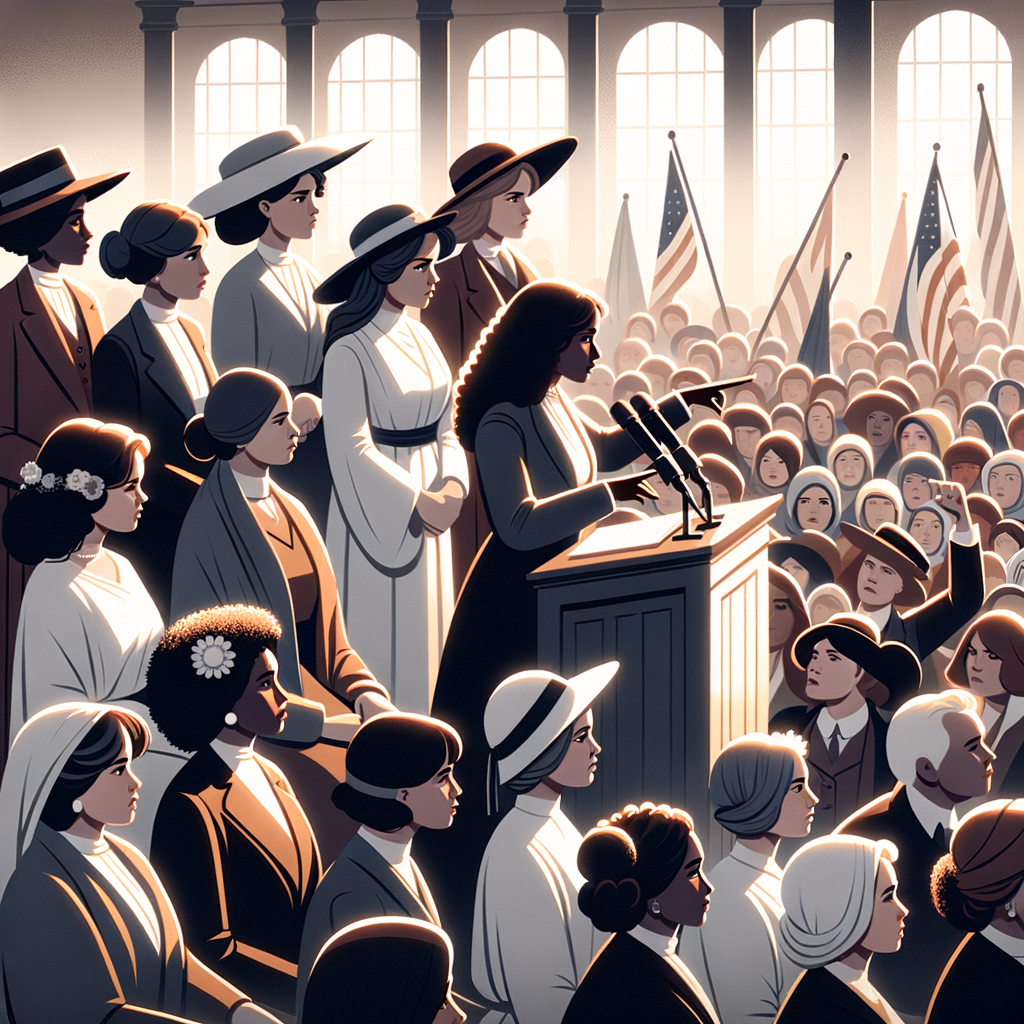
The Women’s Suffrage Movement was a monumental campaign that spanned over several decades and fundamentally changed the sociopolitical landscape of the United States. This movement was primarily aimed at securing the right to vote for women, an endeavor that culminated in the ratification of the 19th Amendment in 1920. Beyond the act of voting, however, the suffrage movement represented a broader fight for gender equality, challenging the entrenched societal norms that had long relegated women to the domestic sphere. The journey to suffrage was fraught with challenges, opposition, and setbacks, but it was also marked by collaboration, perseverance, and resilience. By understanding the intricacies of this historic campaign, we can gain insights into not only the strategies employed by those who championed the cause but also the profound impact their efforts had on subsequent generations. Women’s suffrage was not just a demand for ballots; it was a declaration of autonomy and agency, underpinning the larger narrative of women’s rights and empowerment. This struggle highlighted the power of collective activism and set the stage for future advancements in the ongoing quest for gender equality.
Early Roots of the Suffrage Movement
The early roots of the Women’s Suffrage Movement can be traced back to the mid-19th century, during a period characterized by significant social and political upheavals. As the abolitionist movement gained momentum in the United States, many women began to draw parallels between the fight against slavery and their own yearning for equal rights. These reformist sentiments found a prominent platform at the Seneca Falls Convention in 1848, where activists like Elizabeth Cady Stanton and Lucretia Mott articulated what would become the cornerstone demands of the suffrage campaign. The convention produced the Declaration of Sentiments, a document that echoed the language of the Declaration of Independence, asserting women’s unalienable rights, including the right to vote. Initially, the call for suffrage faced skepticism, even from within progressive circles. Nonetheless, it set the foundation for a more organized and sustained movement that would persist for decades.
Development of a National Movement
In the post-Civil War era, the suffrage movement began to gain a more cohesive national structure. This was marked by the formation of key organizations dedicated to the cause. The National Woman Suffrage Association (NWSA), headed by luminaries like Susan B. Anthony and Elizabeth Cady Stanton, focused on securing amendments to the U.S. Constitution to guarantee voting rights. The American Woman Suffrage Association (AWSA), led by Lucy Stone and Henry Blackwell, pursued a more incremental strategy, supporting state-by-state campaigns for voting rights. While these two groups initially operated separately, their divergent strategies eventually converged in 1890 to form the National American Woman Suffrage Association (NAWSA), which became the leading voice in advocating for women’s voting rights. This unification marked a strategic turn in the movement, as unified efforts began to bear fruit in local and state legislatures, setting the stage for a broader, national victory.
Key Strategies and Challenges
The suffrage movement employed a variety of strategies to advance its cause, which included lobbying, peaceful protests, and legal challenges. However, shifting public perceptions required more than mere determination; it demanded innovation in activism. Throughout the earlier phases, suffrage advocates capitalized on traditional gender roles, arguing that women would bring moral integrity to politics. As the movement evolved, activists increasingly embraced direct action methods such as picketing and hunger strikes, particularly highlighted by militant British suffragettes who influenced their American counterparts. One notable instance of such direct action was the “Silent Sentinels,” organized by Alice Paul and the National Woman’s Party, who picketed the White House in 1917. Despite arrests and harsh treatment, their efforts drew national attention to the suffrage cause. These strategies required significant personal sacrifices from its advocates and, at times, faced fierce opposition from anti-suffrage groups who claimed to uphold traditional values. These opponents worried about perceived social disruptions, accentuating the challenges suffragists faced in their campaign.
The Influence of World War I
World War I significantly influenced the trajectory of the women’s suffrage movement in the United States. As the nation plunged into wartime efforts, many women took on roles traditionally held by men, who had gone off to fight. Women worked in factories, served as nurses, and took on voluntary roles, demonstrating their crucial contribution to the national economy and war effort. This shift played a pivotal role in shifting public opinion about women’s capabilities beyond the confines of home life and strengthening the argument for women’s suffrage. Suffragists capitalized on this change in perception by emphasizing the themes of democracy and freedom, aligning their cause with the very principles for which the Allies claimed to be fighting: equality and democratic representation. This strategic alignment was instrumental in garnering broader support and pressing the U.S. government to reconsider its stance on women’s suffrage during and immediately after the war.
The Final Push and the Passage of the 19th Amendment
By the end of World War I, the political and social landscape had evolved considerably, laying fertile ground for the final push towards the passage of the 19th Amendment. President Woodrow Wilson’s eventual endorsement of women’s suffrage in 1918 was a critical factor, influenced by both strategic lobbying by suffragists and the broader context of global democratization movements. The amendment was initially passed by the U.S. House of Representatives in 1918, but it faced a protracted battle in the Senate, exacerbated by political conservatism and regional opposition. After considerable debate and advocacy, the 19th Amendment was finally ratified on August 18, 1920, following Tennessee’s pivotal vote that secured the necessary state approvals. This historic milestone granted women the legal right to vote across the United States, marking the culmination of a protracted and arduous campaign that had spanned over seventy years.
Impact and Legacy of the Suffrage Movement
The ratification of the 19th Amendment represented a watershed moment in American history, embodying both a closure and a new beginning. The enfranchisement of women significantly expanded the electorate, infusing fresh perspectives and priorities into American politics. However, the struggle for suffrage was not the end of the fight for gender equality. The movement paved the way for subsequent legal and societal reforms, serving as a precursor to later campaigns for gender parity in areas such as employment, education, and reproductive rights. Additionally, it inspired activism worldwide, as women in other nations drew encouragement from the U.S. movement to advocate for their own voting rights. Despite this progress, it is important to acknowledge that the benefits of the amendment were not uniformly distributed; systemic racism and discriminatory practices continued to disenfranchise women of color, an issue that would only be addressed in part by later civil rights legislation. The suffrage movement laid the foundation for a more inclusive and equitable society, underlining the ongoing necessity of advocating for the rights of all individuals.
Conclusion
The Women’s Suffrage Movement was one of the most important and transformative social movements in U.S. history. The journey to the 19th Amendment is a testament to the relentless pursuit of justice and equality, driven by the unwavering spirit of pioneers who challenged the status quo. As we reflect on this monumental achievement, it is crucial to recognize both the successes and limitations of the movement. While it secured an essential right for women, it also highlighted the intersectionality of struggles faced by different groups. The movement’s legacy continues to influence contemporary discussions on gender rights and democracy, serving as a constant reminder of the power of determined collective action. The fight for women’s suffrage transformed the role of women in society, demonstrating that the voices of the marginalized can be a formidable force for change. Today, as issues of equality remain pertinent, the lessons from the suffrage movement echo the enduring importance of activism and advocacy in the ongoing quest for an equitable society.
Frequently Asked Questions
1. What was the primary goal of the Women’s Suffrage Movement?
The central aim of the Women’s Suffrage Movement was to secure the right to vote for women in the United States. This objective was driven by the belief that women should have an equal say in the democratic process, which was fundamentally intertwined with the broader fight for gender equality. The movement underscored the notion that women, too, are capable and deserving of participating in decisions that affect their lives, families, and communities. It wasn’t just about casting a ballot; it was about dismantling the pervasive notion that women were inferior to men in matters of intelligence, virtue, or responsibility. The campaign was a pivotal step towards redressing the discriminatory laws that had long sidelined women’s voices in the public sphere, culminating in the monumental achievement of the 19th Amendment in 1920.
2. Who were some of the key figures in the Women’s Suffrage Movement?
The Women’s Suffrage Movement was spearheaded by a host of remarkable leaders, each contributing their unique strengths and perspectives to the cause. Among the most prominent were Susan B. Anthony and Elizabeth Cady Stanton, who co-founded the National Woman Suffrage Association (NWSA) in 1869. Together, they formed a dynamic duo that blended dynamic advocacy with steadfast organizational leadership. Another pivotal figure was Alice Paul, a fierce and unyielding activist who adopted more assertive tactics. Her establishment of the National Woman’s Party (NWP) and implementation of strategies like picketing the White House were pivotal in galvanizing national attention. Then there’s Sojourner Truth, whose fearless and impassioned speeches, including the famous “Ain’t I a Woman?” provided an everlasting imprint on the movement by intertwining issues of race and gender. Each of these figures played a critical role in advancing the goals of the Women’s Suffrage Movement, bringing their diverse strategies to the table.
3. Why did it take so long for women to gain the right to vote?
The journey towards women’s suffrage was long and arduous, shaped by a multitude of political, social, and cultural obstacles. At the core of this struggle was deeply entrenched societal norms that relegated women to subservient roles within the confines of the home. These stereotypes were perpetuated by both legal and religious institutions that vehemently upheld a patriarchal status quo. Furthermore, there was a strong resistance from powerful political and economic entities that feared the implications of women voting—fearing that it would disrupt the balance of power and threaten their dominance. Additionally, the movement itself faced internal divisions, as women’s suffrage was often linked with other progressive causes such as abolition and temperance, which sometimes splintered support and created rifts in the movement’s strategies. Despite all these challenges, the unyielding determination and courage of the suffragists ultimately triumphed, albeit after decades of tireless advocacy.
4. How did the 19th Amendment change American society?
The passage of the 19th Amendment marked a seismic shift in American society, granting women the long-overdue right to vote and thereby amplifying their voices in the political narrative. This change empowered women to take on greater roles in shaping public policy, advocating for reforms, and addressing issues impacting their lives. The newly enfranchised electorate began to influence legislation on health care, education, labor conditions, and social services, aligning with the broader goals of the suffrage movement for gender equality. Moreover, the amendment laid the groundwork for further advances in women’s rights, sparking subsequent waves of feminist activism that demanded more equitable treatment under law and society. The ratification also inspired necessary discourse on issues of racial and economic inequality, as women of color and lower socio-economic standings continued to fight for full parity. Thus, while the 19th Amendment was a milestone in voting rights, its ripple effects fueled further progress towards equity across the board.
5. What were some of the strategies used by suffragists to fight for the 19th Amendment?
Suffragists employed a myriad of strategies that ranged from moderate advocacy to radical activism, adapting over time to meet the demands of the movement. Early strategies focused on petitioning and lobbying state legislatures, with events such as the Seneca Falls Convention laying a foundational argument for women’s rights. As the movement progressed, suffragists organized marches, demonstrations, and public speaking tours to garner broader public and media attention. Some, like Alice Paul and the National Woman’s Party, employed more confrontational tactics such as hunger strikes, picketing, and peaceful protests. Not forgetting quieter, yet equally significant, forms of activism, such as holding educational forums and writing influential publications that sought to shift public perception. In addition to these organized efforts, leveraging alliances with other social movements proved crucial in building a coalition strong enough to enact change. Each of these strategies played a pivotal role in the eventual ratification of the 19th Amendment, demonstrating the suffragists’ relentless adaptability and dedication to their cause.