
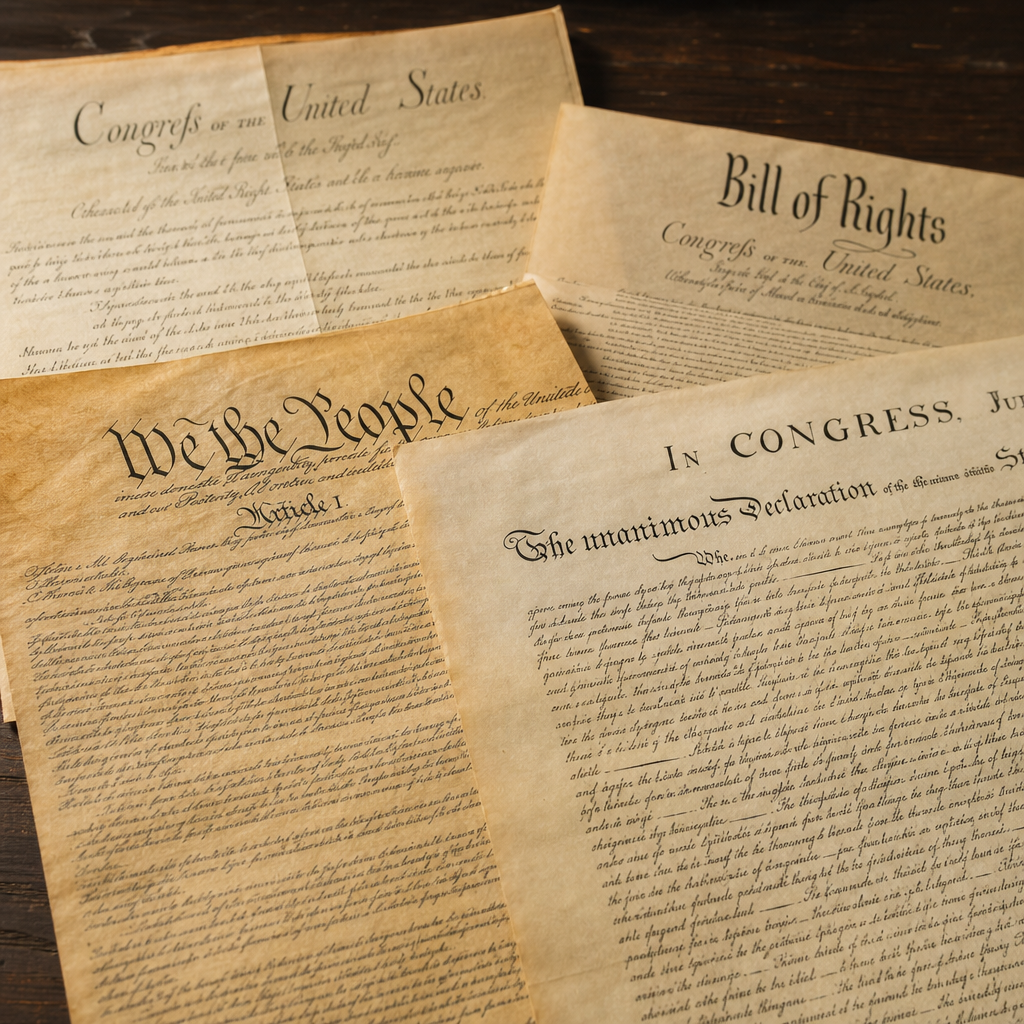
Foundational documents are the backbone of a strong AP Government argument essay because they give you credible evidence, constitutional language, and political reasoning that directly support claims about power, rights, institutions, and public policy. In AP United States Government and Politics, “foundational documents” usually refers to the core texts named in the course framework, including the Declaration of Independence, the Articles of Confederation, the Constitution, Federalist No. 10, Federalist No. 51, Federalist No. 70, Federalist No. 78, Brutus No. 1, and the Letter from Birmingham Jail. I have coached students through this exam and read many essays that knew the documents existed but did not know how to use them. That gap matters. The highest-scoring essays do not drop a title and move on. They connect a document’s principle to the prompt, explain the logic in plain terms, and show how the evidence supports an argument. If you want a reliable strategy for AP Government and Politics writing, learning to use foundational documents well is one of the highest-value skills you can build.
An argument essay on the AP Government exam asks you to make a defensible claim and support it with evidence and reasoning. Foundational documents help because they carry both historical authority and conceptual precision. They let you explain majority rule, minority rights, checks and balances, federalism, limited government, judicial review, or civil disobedience using language the course recognizes as central. They also work across the broader AP Government and Politics curriculum, which is why this article serves as a hub for the miscellaneous skills students often need: selecting evidence, linking concepts, avoiding summary, and adapting documents to different prompts. Whether the question is about Congress, the presidency, the courts, the bureaucracy, political participation, or debates over liberty and order, these texts can often provide a usable framework if you understand the underlying idea rather than memorizing a single quote.
What Foundational Documents Actually Do in an AP Government Argument Essay
Foundational documents are not decoration. They perform three specific jobs in an AP Government argument essay. First, they supply authoritative evidence. If a prompt asks whether the structure of government protects liberty, citing Federalist No. 51 gives you direct support for the idea that ambition can counteract ambition through separated institutions. Second, they provide a reasoning model. If a prompt asks about factions, polarization, or interest groups, Federalist No. 10 does more than define faction; it explains why eliminating the causes of faction is impossible in a free society and why controlling its effects is the more practical constitutional response. Third, they help establish line of reasoning. A student who uses Brutus No. 1 and Federalist No. 78 together can compare Anti-Federalist concerns about centralized power with the Federalist defense of judicial independence, showing complexity instead of reciting isolated facts.
In practice, the document should answer a question the reader would naturally ask: why should this claim be accepted? For example, if your thesis argues that checks and balances slow policymaking but protect against concentrated authority, the Constitution’s separation of powers and Federalist No. 51 justify that claim. If your thesis argues that the Supreme Court has become influential because judicial review allows interpretation beyond immediate electoral pressure, Federalist No. 78 gives you the intellectual basis for that role. Good AP Government argument essay writing uses the document to make the claim feel inevitable, not merely possible.
How to Choose the Right Foundational Document for the Prompt
The best way to choose a foundational document is to match the prompt to a governing concept. Students often panic and search their memory for any famous text. That wastes time. Instead, identify the core issue in the prompt and then connect it to the document built around that issue. If the topic is inequality, natural rights, or the purpose of government, start with the Declaration of Independence. If the topic is weak national power or the need for a stronger central government, think about the Articles of Confederation and the Constitution. If the issue is faction, pluralism, or majority tyranny, use Federalist No. 10. If it is institutional design, checks and balances, or separation of powers, use Federalist No. 51. If the question concerns executive energy, decisive leadership, or the presidency’s capacity, Federalist No. 70 is often the cleanest fit. If it concerns courts, life tenure, or the judicial role, Federalist No. 78 belongs in the discussion. If the prompt raises concerns about centralized authority, distance from the people, or threats to liberty, Brutus No. 1 gives you the Anti-Federalist side. If the issue is direct action, civil rights, protest, or justice under unjust laws, the Letter from Birmingham Jail is a powerful source.
| Prompt theme | Best document | Usable principle |
|---|---|---|
| Natural rights, legitimacy, equality | Declaration of Independence | Government derives power from consent and exists to secure rights |
| Weak national government | Articles of Confederation | Decentralized systems struggle with coordinated national action |
| Factions, pluralism, majority power | Federalist No. 10 | Control effects of faction through representation and scale |
| Checks and balances | Federalist No. 51 | Separate powers so ambition limits ambition |
| Presidential leadership | Federalist No. 70 | An energetic executive promotes accountability and action |
| Judicial power | Federalist No. 78 | Independent courts protect the Constitution and individual rights |
| Centralized power concerns | Brutus No. 1 | Large republics may endanger liberty and local control |
| Civil disobedience, protest | Letter from Birmingham Jail | Citizens may challenge unjust laws through nonviolent direct action |
When I help students build planning sheets, I tell them to write the prompt in one column and the governing concept in the next. That simple move makes document selection faster and more accurate. You are not trying to impress the reader with a long list. You are trying to choose the one piece of evidence that naturally advances your claim.
How to Integrate Documents Without Summarizing Them
One of the most common AP Government essay mistakes is summary without application. A student writes, “Federalist No. 10 talks about factions,” then stops. That does not show argumentation. To use foundational documents effectively, move through four steps: name the document, state the principle, connect it to the prompt, and explain the consequence. For instance: “Federalist No. 10 argues that factions are unavoidable in a free society, so the constitutional system should control their effects rather than try to remove their causes. That reasoning supports the claim that a large representative republic can reduce the danger of majority tyranny by filtering public opinion through elected institutions.” The second sentence is where the score grows. It shows relevance, not recall.
Quotation is usually less effective than paraphrase on a timed exam. Exact wording matters less than accurate interpretation. If you do quote, keep it brief and immediately explain it. The AP reader is rewarding understanding. A short, clear paraphrase often works best because it saves time and reduces the risk of misquoting. I have seen students earn stronger essays by accurately restating Madison’s idea about faction than by inserting a half-remembered line from memory.
Another strong technique is pairing the document with a modern or institutional example. Suppose the prompt asks whether interest groups strengthen or weaken democracy. You might use Federalist No. 10 to explain that group conflict is a normal feature of liberty, then connect that principle to contemporary lobbying, issue advocacy, or pluralist competition. That move shows command of both the founding principle and current government practice. It also helps your reasoning feel concrete rather than abstract.
Document-by-Document Guidance for Common AP Government Topics
The Declaration of Independence is most useful when a prompt centers on legitimacy, equality, natural rights, or the social contract tradition. It is not a governing blueprint in the same way as the Constitution, so treat it as a statement of political principles. If you argue that public officials should be constrained when government threatens liberty, the Declaration supports the idea that government exists to secure rights, not merely exercise power. The Articles of Confederation are effective when you need to illustrate the limits of a weak national government. Use them to explain why the framers valued stronger national capacity in taxation, commerce, defense, and coordination among states.
Federalist No. 10 is the most flexible of the foundational documents. It applies to interest groups, party conflict, representation, majority rule, minority rights, and pluralism. Its central point is not that factions disappear in a republic, but that structure can reduce their worst effects. Federalist No. 51 is essential for prompts about institutional conflict. Congress, the presidency, and the courts are designed to share power, and that friction is intentional. Federalist No. 70 helps when evaluating whether the modern presidency should act quickly in crises or whether executive unity improves accountability. Federalist No. 78 is the standard choice for judicial independence, especially when explaining life tenure, insulation from elections, and the court’s responsibility to interpret the Constitution.
Brutus No. 1 is especially valuable because many student essays ignore Anti-Federalist reasoning. That is a missed opportunity. If a prompt asks whether the federal government has grown too powerful, Brutus gives you historically grounded skepticism about scale and distance from the people. The Letter from Birmingham Jail works across civil rights, social movements, and political participation. It is especially effective when a prompt raises the limits of lawful channels or the democratic role of protest. King’s argument distinguishes just and unjust laws and defends nonviolent direct action when institutions fail to correct injustice. Used carefully, that document adds moral and constitutional depth to an essay.
Common Mistakes and the Fastest Ways to Improve
The first mistake is name-dropping without explanation. Simply writing “According to Federalist No. 51” does nothing unless you explain the principle and relate it to your claim. The second mistake is forcing a document into a prompt where it does not fit. Students sometimes use the Declaration of Independence for every liberty question even when Federalist No. 78 or the First Amendment would be more precise. The third mistake is confusing documents with court cases, constitutional clauses, or amendments. All of these can be excellent evidence, but they do different jobs. A foundational document usually supplies broad political reasoning; a court case supplies a judicial precedent; an amendment supplies constitutional text.
The fastest way to improve is to build a one-sentence usable claim for each document. For example: “Federalist No. 51 shows that separation of powers protects liberty by making each branch defend its own authority.” “Brutus No. 1 warns that a large republic can weaken local control and threaten individual liberty.” “Letter from Birmingham Jail justifies civil disobedience when ordinary legal mechanisms preserve injustice.” If you can produce those sentences from memory, you can adapt them to most prompts under timed conditions.
Another improvement strategy is to practice writing evidence-to-reasoning bridges. After every document reference, ask, “So what?” Your next sentence should answer that question directly. This habit transforms a factual mention into an argument. It also prepares you for related AP Government and Politics writing tasks across this subtopic hub, including evidence selection, concept application, and analytical paragraph structure.
How to Build a High-Scoring Essay Using Foundational Documents
A dependable structure starts with a direct thesis that answers the prompt and signals your reasoning. In the first body paragraph, introduce your strongest document-based evidence and explain the principle clearly. In the next sentence, connect that principle to the specific government institution, behavior, or controversy named in the prompt. Then add a concrete example, such as divided government, Supreme Court review, presidential emergency action, or civil rights protest. If possible, use a second paragraph to extend or qualify the claim with another document or contemporary evidence. That is often where sophistication emerges. A student might argue that checks and balances protect liberty, then acknowledge that the same design can produce gridlock during urgent policy debates.
The best AP Government argument essay is not the one with the most references. It is the one where every piece of evidence does visible work. Foundational documents are powerful because they help you explain why American government operates as it does and why political conflict persists even inside a constitutional system designed to channel it. Learn the governing idea behind each text, practice applying those ideas to multiple prompt types, and treat every document as a tool for reasoning rather than a fact to memorize. If you are building your AP Government and Politics skills across this miscellaneous hub, start here: create a document-to-concept chart, practice one paragraph at a time, and make explanation your priority on every essay.
Frequently Asked Questions
What are foundational documents in AP Government, and why do they matter in an argument essay?
In AP United States Government and Politics, foundational documents are the major texts that establish the principles, structures, and debates of the American political system. These usually include the Declaration of Independence, the Articles of Confederation, the Constitution, Federalist No. 10, Federalist No. 51, Brutus No. 1, and key Supreme Court cases or other required course materials depending on your teacher’s framework. They matter in an argument essay because they give you authoritative evidence straight from the political ideas that shaped the United States. Instead of making a broad claim like “the government was designed to prevent tyranny,” you can ground that claim in the Constitution’s separation of powers, Federalist No. 51’s discussion of checks and balances, or Federalist No. 10’s reasoning about factions.
Using foundational documents also shows the reader that you understand the course at a deeper level. AP Government argument essays reward students who can connect abstract ideas such as liberty, equality, limited government, federalism, and popular sovereignty to actual texts. These documents provide language you can use to explain how power is distributed, why institutions were designed a certain way, and how political debates have evolved over time. In short, foundational documents strengthen your credibility, sharpen your analysis, and help turn a general response into a precise, evidence-based argument.
How do I choose the right foundational document for my AP Government essay prompt?
The best foundational document is the one that directly supports the specific claim you are making, not simply the one you remember most easily. Start by identifying the core concept in the prompt. If the prompt is about controlling majority power or the dangers of interest groups, Federalist No. 10 is often a strong fit because it explains factions and the role of a large republic. If the prompt is about the structure of government and how branches restrain one another, Federalist No. 51 and the Constitution are usually better choices. If the prompt focuses on individual rights or the legitimacy of government, the Declaration of Independence or constitutional amendments may be more useful. If the prompt addresses weaknesses in the early national government, the Articles of Confederation can help you explain why the Constitution was necessary.
A smart approach is to ask yourself three questions before choosing evidence: What is my claim? Which document directly addresses that idea? What specific principle from the document can I explain clearly? You do not need to force a famous document into every essay. What matters most is relevance and explanation. A brief but accurate reference to a well-matched foundational text is stronger than a vague mention of several documents. Strong writers choose one or two documents they can connect tightly to the prompt and then explain exactly how those texts support their reasoning.
How should I actually use a foundational document in my essay instead of just mentioning it?
The key is to do more than name-drop the document. Many students write something like “According to Federalist No. 10, factions are dangerous,” and then move on. That is only partial evidence. To use the document effectively, you should identify the document, explain its main idea, and connect that idea to your argument. For example, if your claim is that the constitutional system helps limit the harmful effects of political conflict, you could explain that Federalist No. 10 argues factions are inevitable because people have different interests, but a large republic and representative government make it harder for any one faction to dominate. That explanation shows you understand both the document and its relevance.
A useful formula is claim, evidence, explanation. First, state your point clearly. Second, introduce the foundational document as evidence. Third, explain how the document supports your reasoning in the context of the prompt. You can paraphrase rather than quote, which is often better under timed conditions. For instance, you might write that James Madison argued in Federalist No. 51 that because people are not angels, government must be structured so that each branch can check the others. Then explain how that reasoning supports your claim about why separation of powers protects liberty. That final explanation is what turns evidence into argument and earns stronger essay credit.
Which foundational documents are most useful for common AP Government essay topics?
Several foundational documents appear again and again because they connect so well to major AP Government themes. The Declaration of Independence is especially useful for prompts about natural rights, popular sovereignty, and the idea that government derives its legitimacy from the consent of the governed. The Articles of Confederation are helpful when discussing weak national power, the failures of early governance, and the reasons for creating a stronger federal system. The Constitution is central to almost everything in the course, including federalism, separation of powers, checks and balances, republicanism, and the formal powers of institutions.
Federalist No. 10 is one of the best documents for essays about pluralism, factions, interest groups, and majority-minority tensions. Federalist No. 51 is ideal for prompts about institutional design, separation of powers, and preventing tyranny through internal checks. Brutus No. 1 is valuable when discussing Anti-Federalist concerns, especially fears that a strong national government could overwhelm state authority and threaten liberty. If your course includes landmark Supreme Court decisions in the same discussion of foundational materials, cases such as McCulloch v. Maryland, Marbury v. Madison, and United States v. Lopez can support arguments about implied powers, judicial review, and limits on federal authority. The most useful document depends on the prompt, but the strongest students know the main idea of each major text and can quickly match it to themes involving power, rights, institutions, and public policy.
What are the biggest mistakes students make when using foundational documents in an AP Government argument essay?
One common mistake is being too vague. Students often refer to “the founding fathers” or “the Constitution” without identifying the exact principle that supports their claim. AP readers are looking for specific and accurate use of evidence, so broad references usually weaken the argument. Another major mistake is summarizing the document without tying it back to the prompt. For example, a student might explain what Federalist No. 10 says about factions but never show how that idea proves the essay’s main claim. Evidence only becomes effective when you clearly connect it to your reasoning.
Students also sometimes misuse documents by forcing in a text that does not really fit the question. If the prompt is about checks on executive power, discussing the Declaration of Independence may be much less effective than using the Constitution or Federalist No. 51. Another issue is inaccuracy, such as confusing Federalist No. 10 with Federalist No. 51, or claiming the Articles of Confederation created a strong central government when the opposite is true. Finally, some essays rely too much on quotation. In most AP Government essays, concise paraphrasing is better because it allows you to focus on analysis rather than copying language. The strongest responses are accurate, prompt-specific, and analytical: they use a foundational document as proof, explain its meaning, and show exactly why it supports the argument being made.