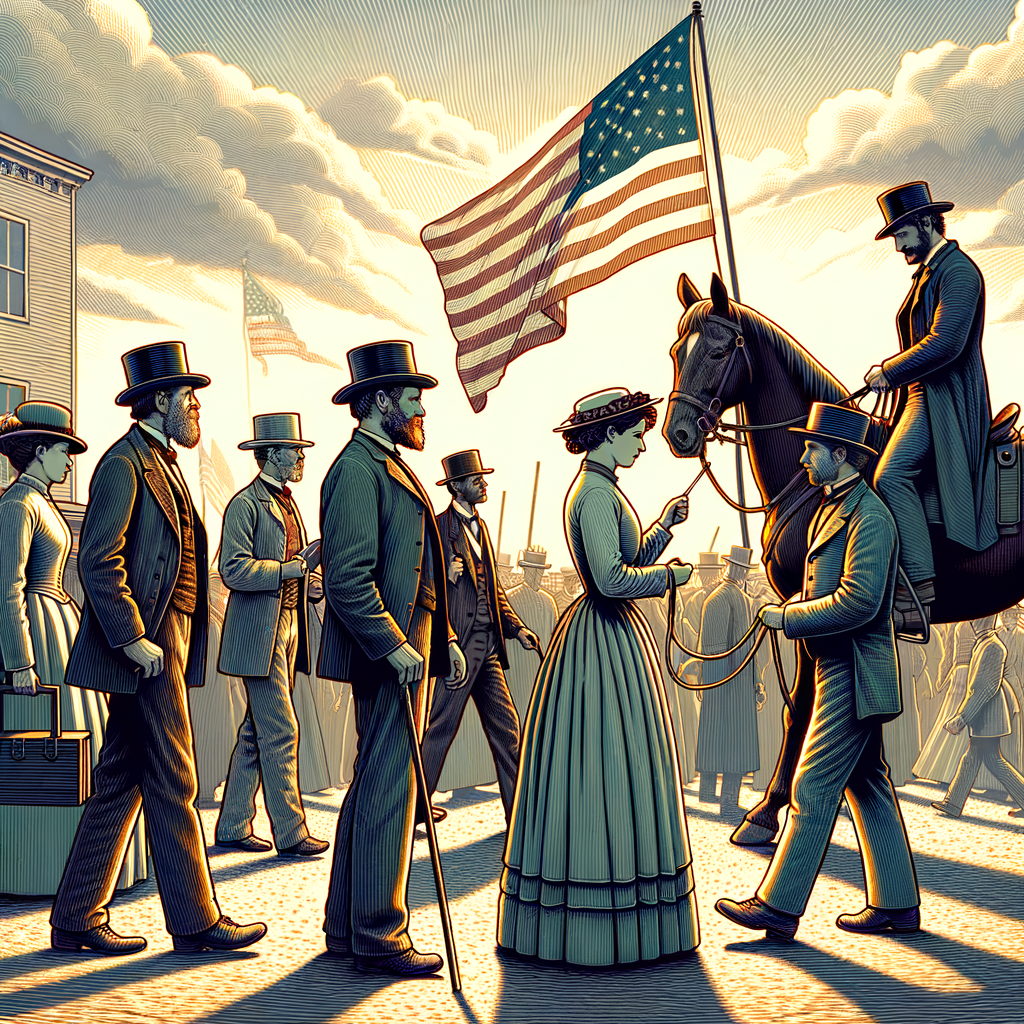
Reform Movements in America’s “Era of Good Feeling”
Introduction
The “Era of Good Feelings” in America is widely acknowledged as a period of national pride and purpose, but underneath this optimistic façade were significant social ills. Various movements emerged to address these issues, driven by reformers who firmly believed in America’s ability to bring about positive change. These individuals viewed America as a beacon of hope and opportunity—the “Israel of our time”—with boundless potential to rectify its inherent social problems.
Reformers during this era focused on a range of issues, including women’s rights, temperance, education, and mental health. Through dedicated advocacy and unwavering commitment, they sought to create a more just and inclusive society, paving the way for the modern America we know today. The following sections will explore these pivotal movements in more detail, shedding light on the significant contributions of the era’s leading reformers.
Women’s Rights Movement
The Women’s Rights Movement was a monumental step forward in the fight for equality and justice. It was championed by fearless leaders, notably Elizabeth Cady Stanton and Lucretia Mott, who dedicated their lives to the pursuit of equal rights for women in all spheres of life.
Leadership
Elizabeth Cady Stanton and Lucretia Mott were at the forefront of the women’s rights movement, using their voices and influence to advocate for women’s suffrage and other fundamental rights. Stanton was an articulate writer and speaker, using her talents to articulate the aspirations and demands of women in a society that relegated them to second-class status. Mott, a Quaker, brought a deep moral and ethical conviction to the movement, inspiring others with her commitment to equality and justice for all.
Seneca Fall Convention
The Seneca Falls Convention, held in 1848, was a watershed moment for the Women’s Rights Movement. Organized by Stanton, Mott, and others, it was the first convention of its kind—exclusively dedicated to addressing the rights of women. During this historic gathering, attendees drafted and approved the Declaration of Women’s Rights, a groundbreaking document that outlined the main grievances and demands of women in America.
The Declaration of Women’s Rights drew inspiration from the United States Declaration of Independence, boldly asserting that “all men and women are created equal.” It highlighted the various ways society had oppressed women, from denying them the right to vote to excluding them from higher education. This seminal document provided a clear framework and agenda for the women’s rights movement, galvanizing activists across the country to join the fight for equality.
Temperance Movement
The Temperance Movement was another significant reform initiative of the era, primarily focused on addressing the widespread problems associated with alcohol consumption. Advocates of temperance saw alcohol as a root cause of various social ills and sought to eliminate or at least mitigate its consumption to create a more morally upright and safe society.
Objectives
At its core, the Temperance Movement aimed to reduce and eventually eradicate the consumption of alcohol. Advocates believed that alcohol was the cause of many societal problems, including domestic violence and poverty. By eliminating alcohol, they hoped to create stronger, more stable families and communities. This movement was not solely about promoting moderation but fundamentally altering society’s view and relationship with alcohol.
Key Players and Organizations
The American Christian Temperance Union (ACTU) was a leading organization in this movement. The ACTU, along with other similar groups, believed that temperance was a moral imperative and saw the fight against alcohol as a battle for the soul of the nation. Many women, some of whom were also involved in the women’s rights movement, played pivotal roles in the Temperance Movement. Their involvement was often deeply personal, as they witnessed first-hand the destructive effects of alcohol on their families and communities.
Achievements
The Temperance Movement achieved notable successes, influencing many states to pass laws restricting or banning the sale and consumption of alcohol. The pinnacle of these efforts was the passage of the 18th Amendment in 1920, which ushered in the era of Prohibition in the United States. Prohibition represented a significant victory for the Temperance Movement, as it marked the nationwide ban on the production, sale, and transportation of alcoholic beverages. While Prohibition was eventually repealed, the Temperance Movement left a lasting impact on American society and its relationship with alcohol.
Educational Reform
The era was also marked by significant strides in educational reform, with prominent figures like Horace Mann leading initiatives to establish mandatory public education and improve the quality and accessibility of education for all. The efforts of educational reformers during this period laid the foundation for the contemporary American education system.
Leadership and Advocacy
Horace Mann, often referred to as the ‘Father of American Public Education’, was instrumental in advancing educational reform during this period. Recognizing the transformative power of education, Mann advocated for a public education system that was accessible to all, irrespective of socio-economic status. He worked tirelessly to promote the importance of education as a public good and a fundamental right, not a privilege reserved for the wealthy few.
Mann’s advocacy extended to improving the quality of education, as well. He championed well-trained teachers, a more diverse and enriching curriculum, and adequate funding and resources for schools to ensure a conducive learning environment for all students.
Initiatives and Successes
The tireless work of Mann and his contemporaries bore fruit, with mandatory public education becoming a reality in many states. This shift represented a monumental change in how society viewed and valued education. For the first time, children from various socio-economic backgrounds had access to education, providing them with opportunities to improve their life prospects and contribute positively to society.
The initiatives led by educational reformers during the “Era of Good Feeling” had a lasting impact, shaping the American education system’s philosophy and structure for years to come. Their vision and efforts ensured that education would be recognized and upheld as a fundamental right for all, establishing the groundwork for the universal access to education seen in the United States today.
Mental Health Reform
Amid the various reform movements of the era, the push for mental health reform stood out as a pivotal and compassionate endeavor. Led primarily by reformers like Dorothea Dix, the movement aimed to improve the conditions and treatment for the mentally ill, who were often neglected and marginalized by society.

Pioneers
Dorothea Dix was a tireless advocate for the mentally ill, dedicating her life to improving their living conditions and the public’s understanding of mental health. Through relentless advocacy and raising awareness, Dix brought attention to the inhumane conditions that the mentally ill often endured in jails and almshouses. She fervently believed in the possibility of recovery and the importance of providing adequate care and support to those suffering from mental health issues.
Advocacy and Achievements
Dix’s advocacy led to the establishment of the first generation of American mental asylums designed to provide care and treatment for the mentally ill rather than merely confining them. The state of Massachusetts witnessed the construction of its first mental hospital as a direct result of Dix’s work, signifying a crucial shift in the public perception and treatment of mental health.
These reforms marked a transition towards a more enlightened and humane approach to mental health. The groundwork laid by Dix and her contemporaries contributed significantly to destigmatizing mental illness and establishing institutions specifically dedicated to mental health care. Although the understanding and treatment of mental health would continue to evolve in the following decades, the mental health reform movement of the “Era of Good Feeling” was instrumental in initiating this critical change.
Analysis of Reformers’ Writings
The writings of the era’s reformers provide invaluable insights into their goals, methodologies, and the societal issues they aimed to address. Through a careful analysis of their writings, we can better understand their vision, effectiveness, and the extent to which their goals have been realized in contemporary society.
Dorothea Dix
Dorothea Dix was a powerhouse of advocacy, particularly for prison and mental health reform. In 1843, she presented a compelling report to the Massachusetts legislature, painting a harrowing picture of the conditions endured by the mentally ill and prisoners. Through vivid and emotive language, Dix sought not only to inform but also to elicit empathy and action from the legislators and the public. Her work substantially contributed to policy changes and improved treatment for the mentally ill and incarcerated individuals.
Women’s Rights Advocates
Lucretia Mott and Elizabeth Cady Stanton were pivotal in the women’s rights movement, organizing the Seneca Falls Convention and drafting the Declaration of Women’s Rights. Their writings reflected a deep commitment to equality and justice, addressing the systematic oppression women faced. Mott and Stanton’s advocacy, highlighted in their eloquent and persuasive writings, played a crucial role in initiating discussions and actions towards women’s suffrage and equal rights.
Horace Mann
As an educational reformer, Horace Mann contributed significantly to improving the American education system. In his reports to the Massachusetts Board of Education, Mann articulated a vision of education as the great equalizer, emphasizing its role in promoting social mobility and civic responsibility. His writings, characterized by persuasive arguments and a forward-thinking perspective, laid the groundwork for future educational policies and reforms, many of which are still relevant and influential today.
In examining the writings of these reformers, we gain a deeper understanding of their aspirations, strategies, and the societal context in which they operated. Their words not only reflect the struggles and victories of their respective movements but also continue to inspire and guide current generations in the ongoing fight for justice, equality, and reform.
Conclusion
The “Era of Good Feeling” was a critical period in American history characterized by a surge in nationalist sentiment and perceived unity. Beneath the surface, however, the era was rife with social ills and injustices that prompted a wave of reform movements aimed at addressing these pressing issues. From women’s rights and temperance to educational and mental health reforms, these movements reflected the society’s growing consciousness and commitment to creating a more inclusive and just society.
The reformers of this era, with their vision, dedication, and relentless advocacy, played a pivotal role in shaping the nation’s trajectory. Leaders like Elizabeth Cady Stanton, Lucretia Mott, Dorothea Dix, and Horace Mann not only raised awareness about critical issues but also laid the groundwork for substantial policy and societal changes. Their writings and actions have left an indelible mark on American history, providing inspiration and guidance for future generations of reformers and activists.
In retrospect, the goals set by these reform movements have seen varying degrees of realization. While significant progress has been made in areas like women’s rights and education, the journey is far from complete. The struggle for equality, justice, and reform continues to this day, echoing the aspirations and endeavors of the reformers during the “Era of Good Feeling”.
Understanding and reflecting on the contributions of these reform movements and their leaders is crucial in appreciating the strides made in building a more equitable society. It also serves as a reminder and a call to action for contemporary society to continue working towards the ideals championed by these historical figures, fostering an environment of inclusion, respect, and justice for all.
Frequently Asked Questions
1. What were the key issues that reformers in the 1800s sought to address?
During the 1800s, reformers tackled a wide array of social issues that were simmering under the surface of America's "Era of Good Feelings." Among the most pressing were the abolition of slavery, women's rights, temperance, public education, and mental health reform. These reformers recognized that while the nation projected an image of progress and prosperity, numerous societal flaws needed urgent attention. For instance, the abolition movement sought to end the morally abhorrent practice of slavery, seeing it as fundamentally incompatible with the values of freedom and liberty. Meanwhile, women's suffrage advocates pushed for equal rights for women, challenging the belief that women should remain subordinated in society. Temperance reformers rallied against the widespread alcohol consumption that they saw as the root of social ills such as domestic violence and poverty. Education reformers like Horace Mann championed the idea of universal public education, believing it would combat ignorance and poverty. Finally, mental health reformers like Dorothea Dix worked tirelessly to improve conditions and treatment for the mentally ill. Their collective efforts marked a significant push towards improving living conditions and societal norms for all Americans.
2. Who were some of the most influential reformers in the 1800s, and what did they accomplish?
The 1800s were marked by the efforts of numerous influential reformers who left indelible marks on American society. Notable among them was Harriet Tubman, an escaped slave who became a leading abolitionist, famously conducting the Underground Railroad to help others gain their freedom. Frederick Douglass, another former slave, became a powerful voice for abolition through his speeches and writings. Women's suffrage got a significant boost from figures like Elizabeth Cady Stanton and Susan B. Anthony, who relentlessly campaigned for women's right to vote, organize, and influence public policy. In the realm of education, Horace Mann promoted public schooling and teacher training programs that laid the foundation for the American public education system. Dorothea Dix's advocacy reshaped mental health care, meticulously documenting the inhumane conditions in asylums and pressing for reform, leading to the creation of the first generation of American mental asylums. Each of these individuals played a crucial role in their respective arenas, showing that the courage and dedication of a few can ignite widespread societal change.
3. How did the reform movements of the 1800s intersect and influence each other?
The reform movements of the 1800s were deeply interconnected, often influencing and bolstering one another in pursuit of a more just society. For example, the abolitionist movement intertwined with the women's rights movement as many female activists initially joined abolitionist causes and found their own voices and advocacy skills there. Notably, the Seneca Falls Convention of 1848, which marked a pivotal moment for women's rights, was organized by women who were also active in the abolitionist movement and used its moral and organizational frameworks to structure their campaigns. Temperance reform often shared members with abolition and suffrage efforts, with proponents advocating for personal responsibility and societal morality that they believed would improve public and family life. Ideas about egalitarian education promoted by reformers like Horace Mann were in many respects foundational ideologies that supported other reform initiatives, as literacy and education were seen as key to informed and active citizenship. Overall, the synergy between these movements helped foster a broader cultural shift grounded in equality and human rights.
4. What resistance did reformers face during this period, and how did they overcome it?
Reformers in the 1800s faced significant resistance stemming primarily from both entrenched societal norms and economic interests. Proponents of slavery, for example, vehemently opposed abolitionism, arguing that slavery was essential to the Southern economy. Similarly, women's rights activists confronted deeply ingrained gender stereotypes that depicted them as incapable of handling the rights and responsibilities conferred by suffrage. Temperance advocates often clashed with a liquor industry unwilling to relinquish profit, and those who supported public education faced pushback from those who either did not see its value or wished to keep education exclusive to certain classes. Despite these challenges, reformers utilized strategic approaches such as grassroots organizing, public speaking, press coverage, and collaboration with allies across different social movements. Abolitionists like Frederick Douglass and William Lloyd Garrison used newspapers and public forums to sway popular opinion, while women’s rights activists organized conventions to galvanize support. Persistent advocacy, building alliances, and persistent public campaigns slowly nudged public consciousness toward acceptance of their causes.
5. How did these reform movements of the 1800s pave the way for later social changes in America?
The impact of the 1800s reform movements was profound and far-reaching, setting the stage for 20th-century civil rights advances and beyond. The abolitionist movement laid the groundwork for the Civil War and the eventual abolition of slavery with the 13th Amendment, drastically reshaping American society and law. Women activists not only made significant inroads toward voting rights—ultimately achieved with the 19th Amendment in 1920—but also laid the ideological groundwork for later feminist movements. The spirit and mechanisms of activism forged in the 1800s served as blueprints for subsequent social justice movements, showcasing the power of organized grassroots campaigns. Education reforms instituted by figures like Horace Mann transformed American education into a universal system, leading to increased literacy and educational attainment. Temperance efforts prefigured the 20th-century Prohibition era, indicating the significant cultural shifts initiated during this time. Overall, the reformers of the 1800s established essential progressive principles and pioneered strategies and goals that later generations built upon, magnifying their impact well into the future.