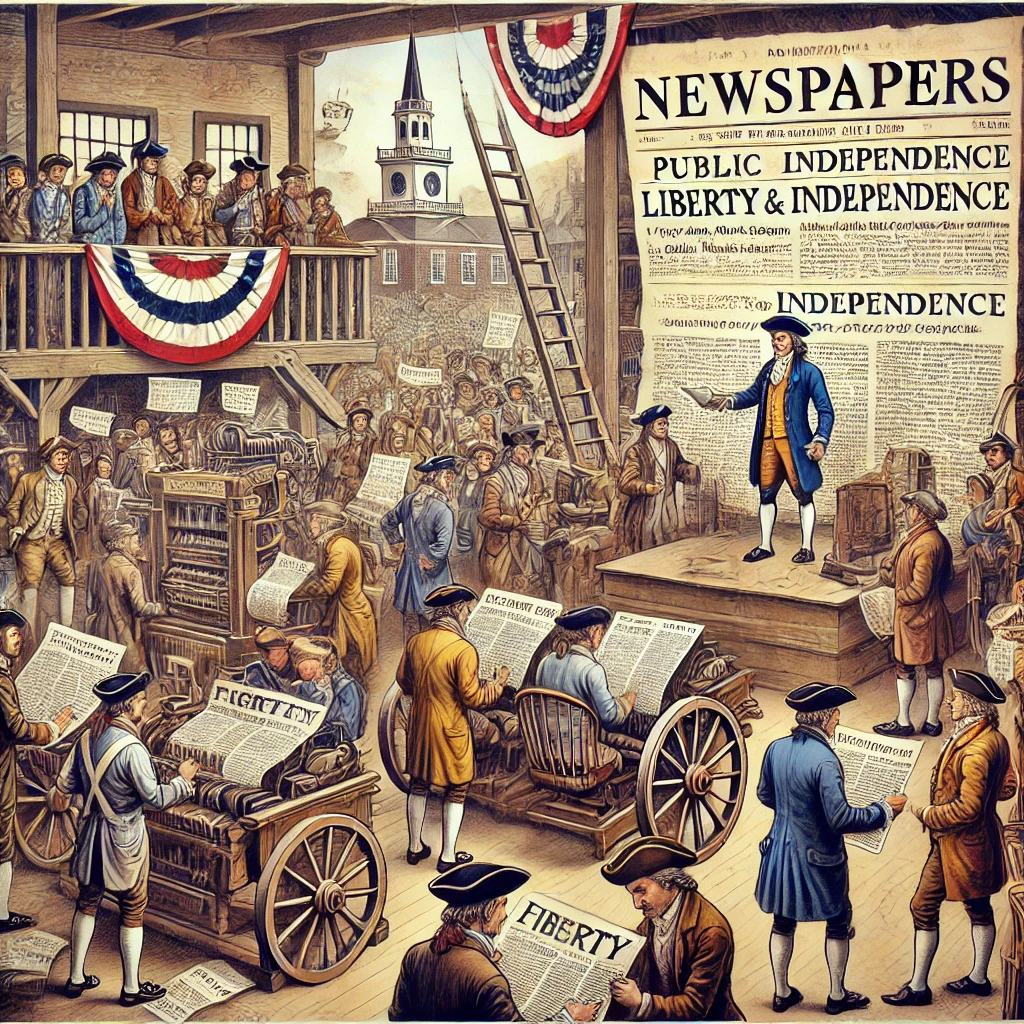
The American Revolution wasn’t just a series of battles fought between armies; it was also a war of ideas waged in the hearts and minds of the colonists. Central to this ideological struggle were colonial newspapers, which played a pivotal role in shaping public opinion. They spread revolutionary ideas, united disparate colonies, and mobilized support against British rule.
The Birth of Colonial Press
In the early 18th century, the American colonies saw a surge in the establishment of newspapers. Titles like The Boston Gazette, The Pennsylvania Journal, and The Virginia Gazette became staples in colonial households. These papers were more than mere sources of news; they were forums for public discourse, allowing colonists to discuss and debate the pressing issues of the day.
Spreading Revolutionary Ideas
Colonial newspapers were instrumental in disseminating revolutionary ideas. They published essays, editorials, and pamphlets that criticized British policies and advocated for colonial rights. Notable among these were the writings of Samuel Adams, John Dickinson, and Thomas Paine.
- Samuel Adams used his writings to denounce British taxation without representation.
- John Dickinson’s “Letters from a Farmer in Pennsylvania” argued against the Townshend Acts and called for colonial unity.
- Thomas Paine’s pamphlet “Common Sense” was serialized in newspapers, making its radical ideas accessible to a broad audience.
Fostering Colonial Unity
Before the widespread distribution of newspapers, colonies often acted independently. Newspapers helped bridge this gap by sharing news and opinions across colonial borders. Reports of events like the Boston Massacre and the Intolerable Acts were reprinted in multiple colonies, creating a shared narrative of British oppression.
Mobilizing Public Action
Editors didn’t just report events; they encouraged action. Newspapers published calls to boycott British goods and participate in protests. They provided details on meetings of the Sons of Liberty and other revolutionary groups, allowing colonists to coordinate their efforts.
Counteracting Loyalist Influence
While many newspapers supported the Patriot cause, others were loyal to the Crown. This ideological battle played out in print, forcing Patriot papers to strengthen their arguments and more effectively persuade undecided colonists. The presence of Loyalist papers like Rivington’s New York Gazetteer highlighted the importance of controlling the narrative.
Overcoming British Censorship
The British government recognized the power of the press and attempted to suppress it. The Stamp Act of 1765 imposed taxes on printed materials, aiming to curtail the spread of revolutionary ideas. Instead, it ignited further outrage. Printers like Benjamin Edes and John Gill of The Boston Gazette defied such measures, risking imprisonment to continue publishing.
The Role of Printers and Editors
Printers and editors were often key figures in the revolutionary movement. Benjamin Franklin, before becoming a founding father, was a successful printer whose works reached a wide audience. These individuals not only reported on events but shaped them through their influential positions.
Personal Stories and Local Impact
Newspapers localized the impact of British policies. They reported on how taxes affected local businesses or how British soldiers’ presence disrupted daily life. By highlighting personal stories, newspapers made the abstract fight for rights and representation tangible for everyday colonists.
Encouraging Debate and Political Engagement
Letters to the editor and opinion pieces allowed readers to voice their thoughts. This public forum encouraged political engagement and helped develop a politically informed populace. Debates on governance, rights, and representation unfolded in the pages of newspapers, laying the groundwork for democratic participation.
Spreading News of Revolutionary Events
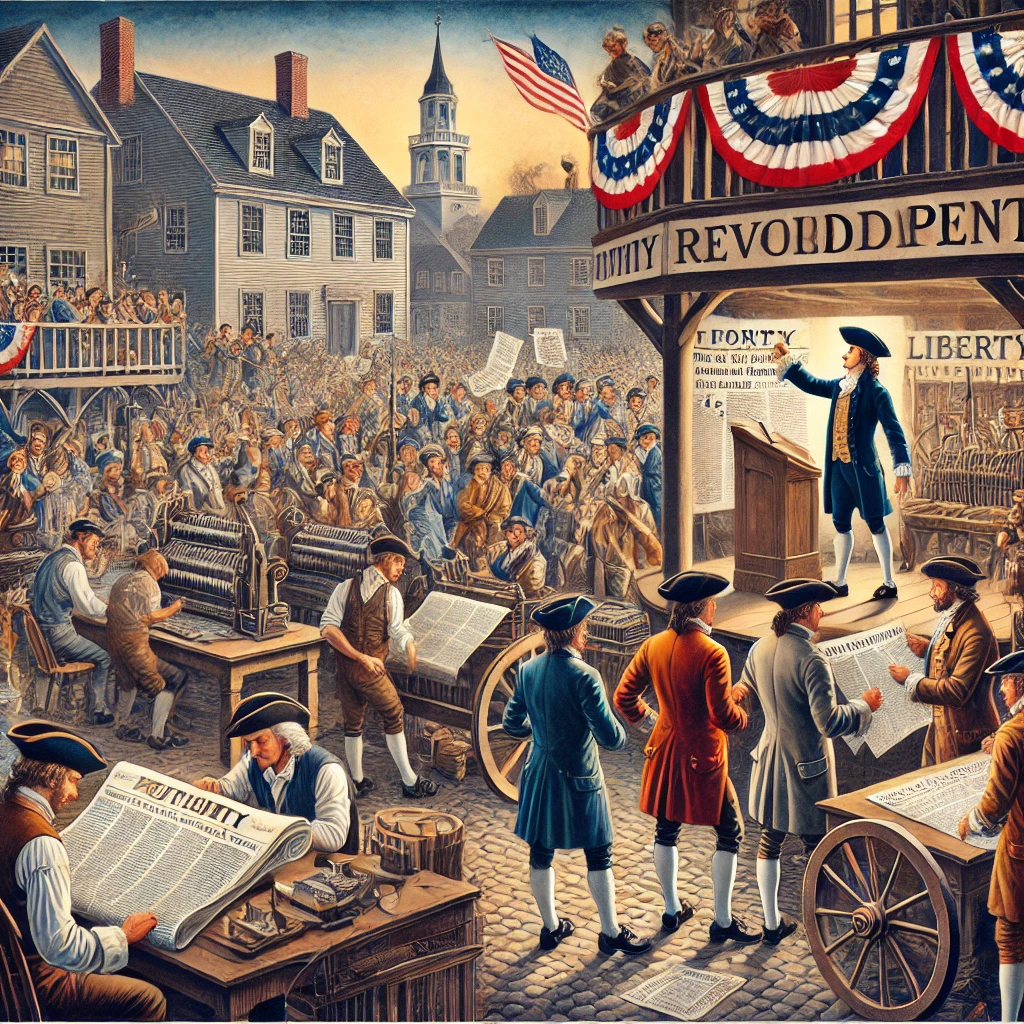
Timely reporting on events was crucial. News of battles, declarations, and treaties was disseminated through newspapers. The publication of the Declaration of Independence in July 1776 was a landmark moment, with newspapers ensuring its words reached all corners of the colonies.
The Power of Imagery and Symbolism
Newspapers utilized imagery to great effect. Political cartoons and illustrations conveyed messages that words alone could not. Paul Revere’s engraving of the Boston Massacre, published in newspapers, was a powerful piece of propaganda that fueled anti-British sentiment.
Building a Revolutionary Narrative
By consistently framing events in a manner that highlighted British injustices and colonial resistance, newspapers built a compelling narrative. This storytelling approach helped justify the revolution and maintain support even during challenging times.
Impact on Rural and Frontier Areas
While cities were hubs of revolutionary activity, newspapers also reached rural and frontier areas. Traveling printers and shared copies meant that even those far from urban centers were kept informed, expanding the revolution’s reach.
Establishing the Importance of a Free Press
The struggles faced by colonial newspapers underscored the need for a free press. Post-revolution, this culminated in the inclusion of press freedom in the First Amendment of the U.S. Constitution, cementing the press’s role as a pillar of democracy.
Legacy of Colonial Newspapers
The influence of colonial newspapers extended beyond the revolution. They set precedents for journalistic standards, political advocacy, and the role of media in society. The traditions established during this period continue to shape American journalism today.
Conclusion
Colonial newspapers were more than mere chroniclers of events; they were active participants in the American Revolution. By shaping public opinion, fostering unity, and encouraging action, they played an indispensable role in the colonies’ fight for independence. Their legacy reminds us of the profound impact that informed and engaged media can have on society’s direction.
Frequently Asked Questions
1. What role did colonial newspapers play in the American Revolution?
Colonial newspapers were crucial in the American Revolution, providing a vital platform for spreading revolutionary ideas and shaping public opinion. Unlike today, where information dissemination is instantaneous, in the 18th century, newspapers were one of the few vehicles for communication across vast distances. They helped articulate the growing discontent with British rule, disseminating pamphlets like Thomas Paine’s “Common Sense” that made the case for independence compelling and accessible. Newspapers bridged the geographic divide between colonies, creating a shared narrative and collective identity that united colonists from New England to the Carolinas in their pursuit of liberty. They helped to mobilize support for the revolutionary cause, persuading the undecided and bolstering the spirits of those already committed to the fight for independence.
2. How did colonial newspapers manage to distribute their content across the colonies?
In the colonial period, the distribution of newspapers was a complex endeavor. Printing presses were scarce and often operated under tight governmental restrictions. Despite these challenges, many newspapers reached audiences through intricate systems of riders, post roads, and networks of taverns and meeting houses where newspapers were shared. Subscription lists grew as printing technology improved, and printers became more adventurous in their distribution methods. Newspapers were exchanged among colonists through subscription services and personal networks, including the sharing of copies over dinner tables and in coffeehouses. Some printers even employed small boats to navigate waterways and deliver papers across vast distances. This distribution network was instrumental in ensuring that revolutionary ideas spread swiftly and retained cultural cohesion among the colonies.
3. What kind of content did colonial newspapers publish, and how did it influence political thought?
Colonial newspapers were eclectic in their content but often focused on the political climate of the time, delivering news, editorials, pamphlets, essays, and letters. Much of their space was devoted to political discourse, including debates on rights, governance, and reports on British injustices. Satirical articles and cartoons were common, offering critique and commentary that mocked British policies and officials. Editor-established editorial stances shaped the interpretation of news, often invoking classical references to republicanism and democracy. The expression of dissent through the printed word appealed to the ideals of Enlightenment thought, inspiring colonists to challenge the status quo. They became forums for political debate, and colonies found common cause against perceived tyranny through the printed discourse, effectively planting the seeds for a new nation.
4. Were there any major controversies or challenges faced by colonial newspapers?
Colonial newspapers regularly faced significant challenges, chief among them being censorship and libel. The British government and colonial authorities maintained strict control over the press. Printers risked fines, imprisonment, or the shutdown of their operations if they published material deemed seditious or libelous. The Zenger Trial of 1735 was a landmark case that challenged the prevailing British assumptions about free speech and the right of the public to criticize their governors. John Peter Zenger’s acquittal on charges of libel against the colonial governor helped establish the principle of press freedom in America. Economic constraints also affected newspapers, as paper was often scarce and expensive. Despite these hurdles, printers and writers showed ingenuity and perseverance, using pseudonyms to evade detection and forming alliances with sympathetic subscribers and patrons.
5. How did the influence of colonial newspapers persist in shaping the identity of the young American nation after the Revolution?
After the Revolution, the influence of colonial newspapers did not wane; rather, it evolved to shape the burgeoning American identity. They became a means of nation-building, facilitating discourse on the structure of the new government, economic policy, and social issues. The Federalist Papers, originally newspaper articles advocating for the ratification of the Constitution, were seminal in outlining the theoretical framework and practical reasons for the government structure. Newspapers continued to promote public awareness and provide a platform for debate over the Bill of Rights and future policies governing expansion and commerce. As the United States expanded, newspapers remained critical in articulating the values and principles that bound a diverse population across a vast continent. In essence, they continued to act as a barometer and battleground for ideas, shaping public consensus and guiding America’s evolution as a republic.