
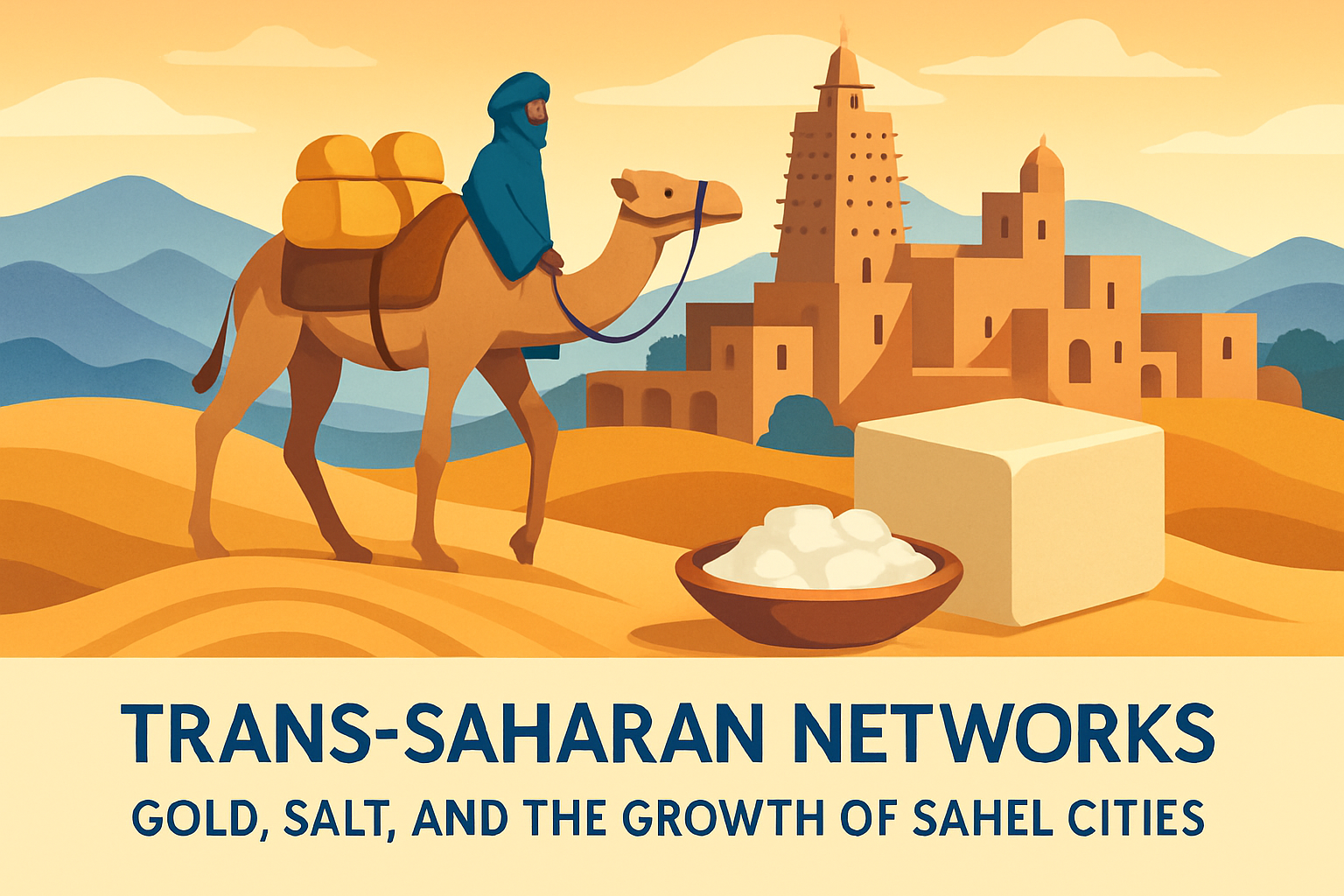
Introduction to Trans-Saharan Networks and Their Importance
Trans-Saharan networks have played a pivotal role in the shaping of Africa’s historical, economic, and cultural landscapes. These networks comprised various trade routes that traversed the formidable Sahara Desert, connecting sub-Saharan Africa with North Africa, the Mediterranean, and beyond. The trans-Saharan trade commenced as early as the 8th century and reached its zenith between the 11th and 15th centuries. The key commodities exchanged along these routes were gold and salt, two resources that were as valuable as they were necessary for the societal development of the time. Understanding the dynamics of these trade networks is crucial because they laid the foundation for economic prosperity and cultural development in the Sahel region. Key cities in this area, namely Timbuktu, Gao, and Djenne, flourished as a result of this trade, becoming centers not just of commerce but of learning and culture as well. Today, as we look back, these trade networks provide insights into how commerce can influence urban development, economic growth, and cultural exchanges, offering lessons applicable even in modern times.
The Mechanics of Trans-Saharan Trade: The Role of Gold and Salt
The trans-Saharan trade was primarily driven by the demand for gold in Europe and the Islamic world and the need for salt in sub-Saharan Africa. Gold was abundant in the regions south of the Sahel, notably in present-day Ghana and Mali, making it a highly sought-after commodity internationally. Conversely, the arid regions of the Sahel had a high need for salt, vital for human health and food preservation.
Salt was mined predominantly from the mines of Taghaza, located in the middle of the desert. Caravans, often consisting of hundreds of camels, would transport blocks of salt north to the bustling marketplaces beyond the Sahara. In return, these caravans carried gold as a payment back south. The impact of this trade was monumental, leading not only to the accumulation of wealth but also to the development of expansive social networks. For example, the Almoravid dynasty, which in the 11th century controlled vast stretches of North Africa and the Iberian Peninsula, heavily relied on the wealth generated by this trade.
The Urbanization of Sahel Cities
One of the most profound effects of trans-Saharan trade was the urbanization of Sahel cities. The influx of wealth from trading activities led to the rise of several impressive urban centers. Timbuktu, for instance, emerged as a major hub of trade and Islamic scholarship. By the 14th century, it hosted one of the world’s renowned universities, the University of Sankore, attracting scholars and merchants from across Africa and the Middle East.
Similarly, the city of Gao gained prominence due to its strategic location along the trade routes. It became a center for Islamic culture and learning, with its markets bustling with traders exchanging not only goods but ideas. Djenne, recognized for its architectural marvels such as the Great Mosque, also thrived as a trading city. These cities were not only economic centers but melting pots of culture and intellect. They demonstrate how trade can spur urban development and cultural integration.
The Impact of Trans-Saharan Trade on Cultural Exchange and Knowledge Transfer
The influence of trans-Saharan trade extended beyond economics into cultural and intellectual exchanges. As caravans traveled these extensive routes, they carried with them not only material goods but stories, ideas, and beliefs. Islamic scholarship flourished in Sahel cities due to the exchange of manuscripts and the establishment of madrasas. With the movement of people, there was a transmission of architectural styles, technological skills, and religious beliefs which transformed the cultural landscapes of these urban centers.
The trade routes facilitated the spread of Islam in West Africa, which in turn influenced the local cultures and governance. Islamic law and customs were integrated into the local societies, shaping community structures and educational systems. Additionally, these exchanges contributed to the rich tapestry of languages, art, and philosophies shared across civilizations.
Challenges and Decline of Trans-Saharan Trade Networks
Despite the prosperity generated by the trans-Saharan trade routes, they also faced considerable challenges. The harsh and unforgiving desert environment posed significant logistical challenges to the caravans. Sandstorms, the scarcity of water, and the potential threat from bandits made each journey an arduous endeavor.
Moreover, the eventual rise of maritime trade routes, pioneered by European explorations around the African continent during the 15th century, ushered in a gradual decline of these overland trade routes. The concentration of trade along the Atlantic coast diminished the prominence of Sahel cities as trade hubs. This decline significantly altered the economic dynamics of the region, leading to shifts in power and influence.
Legacy and Lessons for Contemporary Trade and Urban Development
The legacy of trans-Saharan networks provides valuable lessons for contemporary trade and urban development. It highlights the role trade plays in fostering not only economic prosperity but also cultural and intellectual growth. These ancient networks underscore the importance of connectivity and cooperation between different regions and cultures.
For modern urban planners and policymakers, the story of Sahel cities presents a case study in leveraging commerce for city development. Connecting urban centers through trade promotes not only economic vitality but also cultural richness and diversification. As regions today strive to enhance their global competitiveness, the trans-Saharan experience emphasizes the critical need for infrastructure that supports trade connectivity and cultural exchange.
Summary and Call to Action
The trans-Saharan trade networks, fueled by the exchange of gold and salt, catalyzed the growth of vibrant cities and facilitated a rich cultural exchange across the continent. They powerfully illustrate how trade can be a driver of wealth, learning, and cultural integration. As we consider the modern implications of these historical networks, the importance of fostering trade connections to spur economic and urban development becomes evident. Just as Timbuktu and its counterparts benefitted from being centers of innovation and culture, today’s cities can embrace similar roles on a global stage.
For anyone involved in commerce, urban planning, or policy-making, the lessons from trans-Saharan trade offer insights into creating sustainable, thriving urban ecosystems. Reflecting on historical precedents can inspire strategies that promote inclusivity, connectivity, and cultural fusion in our increasingly globalized world. To take the next step, consider engaging with local and international trade initiatives or partnerships that foster similar growth and exchange. By doing so, we can pave the way for prosperous urban development that echoes the successes of the Sahelian cities of old.
- Gold: Highly sought-after, wealth-generating commodity
- Salt: Essential for health and food preservation
- Caravans: Key transportation mode across the Sahara
- Timbuktu: Center of trade and Islamic scholarship
- Islam: Major influence on culture and law due to trade
Call to Action: Reflect on the trans-Saharan trade network’s influence and explore ways to leverage historical insights into modern development paradigms.
Frequently Asked Questions
1. What were the primary commodities traded on the Trans-Saharan networks?
The Trans-Saharan trade networks were renowned for facilitating the exchange of a diverse array of goods across the Sahara Desert. Among these commodities, gold and salt were the most prominent. Gold from the regions south of the Sahara, primarily from the Ghana, Mali, and Songhai empires, was highly prized and in great demand in North Africa and Europe. On the other side, salt, which was abundant in the Saharan regions, particularly in places like Taghaza, was essential for preserving food and was a valuable commodity in its own right in sub-Saharan Africa. These goods were exchanged along with other items such as ivory, textiles, slaves, and even luxury goods like books and beads, making the trans-Saharan trade network a bustling avenue of cultural and material exchange.
2. How did the trans-Saharan trade networks impact the growth of cities in the Sahel region?
The flourishing of trans-Saharan trade networks significantly contributed to the rise and growth of cities in the Sahel region. These cities became crucial hubs of commerce and interaction, serving as vital points of trade, cultural exchange, and innovation. For instance, cities like Timbuktu, Gao, and Djenne blossomed into prosperous centers, drawing merchants, scholars, and travelers from across Africa and beyond. The wealth generated from trade allowed for the construction of monumental architecture, advanced educational institutions, and vibrant cultural life. Such urban centers became not only economic but also cultural and intellectual beacons, fostering a golden era of trade-induced prosperity that influenced the social and political structures in the region. As merchants and goods passed through these cities, they facilitated the exchange of ideas, technologies, and religious beliefs, further enriching the tapestry of Sahelian society.
3. Why were gold and salt so significant in the trans-Saharan trade?
Gold and salt emerged as pivotal commodities in the trans-Saharan trade due to their intrinsic and economic values. Gold, long esteemed as a precious metal, was in high demand across Europe and the Islamic world, valuable not just for currency but also for crafting jewelry and other ornaments. The African empires south of the Sahara, rich in gold resources, capitalized on this demand, positioning gold as a cornerstone of their economic influence. On the flip side, due to the climatic conditions in sub-Saharan Africa, salt was essential particularly for the preservation of food, making it an equally valuable resource. Entire communities and trade routes were developed around the extraction and distribution of salt. This symbiotic relationship between the demand for gold in the north and salt in the south established a lasting economic interdependence, tremendously enhancing the wealth and influence of the Sahel cities that facilitated their exchange.
4. How did the trans-Saharan networks influence cultural and intellectual exchange?
The trans-Saharan networks were not just conduits for the exchange of goods but were equally influential in the diffusion of cultural and intellectual ideas. As traders traversed the vast desert, they brought with them diverse languages, religious beliefs, and knowledge, creating a multicultural melting pot in urban centers. Notably, Islam spread widely across the Sahara through these trade networks, as Muslim traders and scholars introduced Islamic teachings, scholarship, and practices in the regions they traded. Learning centers and universities flourished, with Timbuktu becoming the epicenter of Islamic learning, harboring scholars from various parts of the continent who would gather to debate, teach, and learn. This blending of cultures fostered new art forms, architectural styles, and intellectual advancements that reflected the rich tapestry of cultures intersecting along the trade routes.
5. What challenges did traders face while traversing the Sahara Desert?
Traversing the Sahara Desert was fraught with formidable challenges that tested the resilience and ingenuity of traders. The Sahara, stretching over 9 million square kilometers, presented an unforgiving environment characterized by extreme temperatures, sparse water sources, and unpredictable sand dunes. Caravans, often comprising thousands of camels, were organized to brave the immense distances and harsh conditions, relying on knowledgeable guides to navigate the vast, featureless landscape. The threat of bandits and sandstorms were additional hazards that traders had to mitigate. Caravan leaders meticulously planned routes and rest stops, often timing the journeys to coincide with optimal weather conditions to minimize risk. Success in overcoming these adversities underscored not only the tenacity of tradespeople but also the high value and necessity of the goods they transported across the desert, including the valued commodities of gold and salt.