
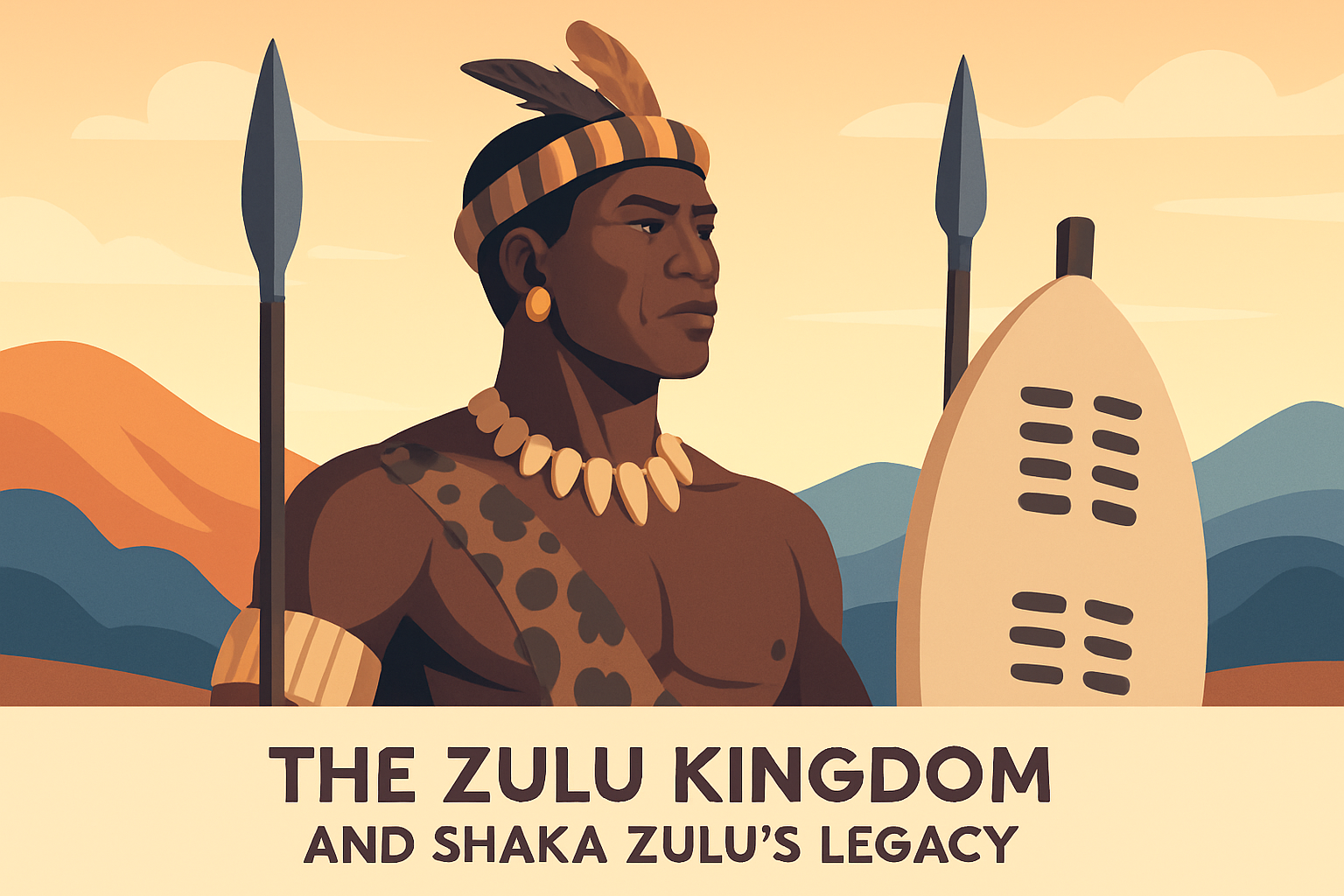
Introduction to the Zulu Kingdom and Shaka Zulu’s Legacy
The Zulu Kingdom, an influential pre-colonial African state, has an enduring legacy that continues to capture the imagination of historians, anthropologists, and enthusiasts alike. Central to the story of this kingdom is Shaka, arguably one of the most famous leaders in African history. The rise of the Zulu Kingdom and Shaka’s revolutionary military tactics are subjects of immense importance, providing insight into Africa’s pre-colonial era and broader historical narratives. Understanding Shaka Zulu’s legacy not only sheds light on the unique social structures and cultures of the Zulu people but also enhances our knowledge of military innovation and governance in historical contexts.
Key terms such as “Zulu” refer to the ethnic group native to Southern Africa, predominantly found in what is today known as KwaZulu-Natal in South Africa. “Shaka Zulu” refers to the iconic leader whose military acumen transformed the Zulu nation from a relatively small clan into a formidable and expansive empire during the early 19th century. The significance of the Zulu Kingdom and Shaka’s leadership lies not only in military conquest but also in their contributions to cultural development and social cohesion within the kingdom. Shaka’s advancements influenced later African resistance movements and continue to be a source of pride and identity for Zulu people today.
Shaka Zulu: Revolutionary Military Strategies
Shaka Zulu’s genius lay in his radical transformation of traditional warfare in Southern Africa. Before his reign, warfare among the Zulu and neighboring tribes was relatively low-intensity, heavily reliant on throwing spears from a distance. Shaka introduced the “iklwa,” a short stabbing spear, and implemented rigorous training regimens, turning his warriors into an elite fighting force. His tactics focused on close-combat engagements, enabling swift and decisive victory over adversaries.
A key innovation was the “bull horn” formation, designed to encircle enemy forces. This formation consisted of three main components: the “chest,” which engaged the enemy head-on; the “horns,” which flanked and encircled; and the “loins,” a reserve contingent. An example of this tactic’s effectiveness can be seen in the numerous victories over rival tribes, such as the Ndwandwe and Mthethwa. Shaka’s military engineering did not only redefine warfare within his era but also served as a precursor to modern military strategies that emphasize speed, mobility, and psychological warfare.
Political and Social Structures of the Zulu Kingdom
Under Shaka’s leadership, the Zulu Kingdom developed a robust political and social structure that centralized power and instilled a sense of Zulu identity. The kingdom was characterized by a highly organized and hierarchical system, with authority emanating from the king. Shaka appointed loyal leaders and consolidated smaller tribes under the Zulu hegemony, allowing for effective governance and cultural unity.
The establishment of a centralized kingdom had significant social implications, including the unification of diverse clans into a singular national identity, promoting cultural practices such as the Zulu dance and the communal “umcimbi” ceremony, which reinforced the bonds within the community. Shaka’s emphasis on discipline and loyalty shaped the sociopolitical fabric of the kingdom, ensuring stability and cohesion. For instance, the reforms in social practices, like the customary age-grade system, structured community roles and responsibilities, facilitating efficient socio-political governance.
Impact on Regional Dynamics and Legacy
The Zulu Kingdom’s rise precipitated substantial changes in regional dynamics across Southern Africa. Shaka’s campaigns expanded Zulu influence over large territories, playing a pivotal role in the Mfecane, a period of widespread chaos and migration among indigenous groups. This era reordered the sociopolitical landscape, forcing numerous tribes to flee and resettle, leading to the formation of new societies, such as the Basotho under King Moshoeshoe I.
The aftermath of Shaka’s reign saw the Zulu Kingdom become a central power broker and a significant entity in South African history. It influenced neighboring territories and established economic and cultural ties that spanned vast regions. The impact of Shaka’s leadership persists, as evidenced by the ongoing cultural pride and heritage that Zulu people continue to celebrate. His legacy is not only reflected in historical narratives but also in cultural festivals and the resurgence of interest in African leadership models that emphasize unity and resilience.
Preservation of Zulu Culture and Historical Significance
Today, the legacy of Shaka and the Zulu Kingdom is preserved through various cultural practices and historical commemorations. The Zulu language and traditions continue to thrive, serving as a testament to the enduring influence of Shaka’s policies on culture and identity. Educational programs and cultural festivals keep traditional music, dance, and folklore alive, fostering a profound connection to past glories and instilling pride in younger generations.
Moreover, the historical significance of the Zulu Kingdom under Shaka has been recognized in academia and popular culture worldwide. Museums, historical sites, and monuments provide a glimpse into the rich tapestry of the Zulu’s past, drawing both local and international tourists. These platforms play a crucial role in recounting the story of the Zulu from an African perspective, emphasizing the resilience and ingenuity of African societies in the face of external challenges.
| Aspect | Shaka Zulu’s Influence |
|---|---|
| Military Strategy | Introduced the iklwa and bull horn formation |
| Political Structure | Centralized leadership and tribal consolidation |
| Cultural Impact | Unified tribal identity and cultural practices |
Conclusion and Next Steps
In reviewing the legacy of the Zulu Kingdom and Shaka Zulu’s contributions, several key takeaways become evident. Shaka’s innovative military strategies and centralized governance were instrumental in creating a powerful and enduring African kingdom. His influence extended beyond the battlefield, fostering a unified Zulu identity that persists in contemporary society. The cultural practices established under his reign have contributed to a robust sense of heritage and belonging among the Zulu people.
Understanding Shaka’s impact provides a critical perspective on the resilience and resourcefulness of indigenous African societies. As we examine this legacy, it is essential to acknowledge the importance of preserving these cultural narratives and insights for future generations. For those interested in further exploration, visiting historical Zulu sites or engaging with cultural exhibitions can offer a deeper appreciation of Shaka’s indelible mark on history. These steps not only honor the past but also educate and inspire future generations to celebrate and maintain the rich tapestry of their heritage.
Engaging with educational materials, participating in cultural events, and supporting local Zulu communities are practical ways to continue honoring this influential period in African history. By leaning into these opportunities, we enrich our collective understanding of a vibrant and pivotal era in the continent’s past.
Frequently Asked Questions
1. Who was Shaka Zulu and why is he significant in African history?
Shaka Zulu, born around 1787, was a monumental leader of the Zulu Kingdom in southern Africa. He is credited with establishing the kingdom in the early 19th century and transforming it into a formidable force. Shaka’s significance lies mainly in his revolutionary military tactics and state organization. He reformed traditional battle techniques, introducing new strategies such as the “bull horn” formation, allowing his forces to encircle and overwhelm enemies more effectively. His changes in weaponry, notably the adaptation of the assegai spear, allowed warriors to engage in close combat more efficiently. Despite his often controversial and ruthless rule, Shaka’s influence is undeniable, laying the foundations for a powerful Zulu state that would hold sway over a vast region for years to come. His legacy persists, both in the historical narratives of southern Africa and in the cultural identity of the modern Zulu people.
2. What were some of Shaka Zulu’s revolutionary military tactics?
Shaka Zulu’s military innovations were groundbreaking and are often credited with forging one of the most powerful militaries in Africa during his time. One of his most notable contributions was the reformation of military organization and combat techniques. The “bull horn” formation became one of his trademarks, comprising three divisions: the chest, which engaged the enemy head-on; the horns, which would flank and encircle the adversary; and the loins, which served as reserves to exploit gaps or reinforce other divisions. Shaka also implemented strict training regimens, ensuring peak physical condition and discipline among his warriors. Another significant change was the introduction of the short stabbing spear, the iklwa, which proved highly effective in battles compared to the longer throwing spears previously used. These tactical revolutions not only increased the combat effectiveness of the Zulu army but also struck fear into neighboring tribes, enabling the Zulu Kingdom to expand its dominions rapidly.
3. How did the Zulu Kingdom rise to prominence under Shaka’s leadership?
The rise of the Zulu Kingdom under Shaka’s leadership is a remarkable story of strategic brilliance and visionary leadership. Before Shaka’s ascendancy, the Zulu were a relatively small clan among many in the regional mosaic of Nguni-speaking peoples. Shaka, through a combination of military innovation and strategic alliances, transformed this small entity into a dominant power. He consolidated power by forging alliances with neighboring tribes and absorbing conquered peoples into his military forces, thus continuously expanding the kingdom’s manpower and resources. His keen understanding of statecraft and diplomacy helped maintain loyalty and order among diverse groups under Zulu control. Shaka’s ability to instill discipline and utilize innovative tactics ensured that the Zulu military was not merely a show of numbers but a force capable of defeating larger and less organized armies. Through these methods, Shaka swiftly increased the size and power of the Zulu Kingdom, marking a significant and enduring place for his people in African history.
4. What is the enduring legacy of Shaka Zulu in modern times?
Shaka Zulu’s legacy endures in modern times in several profound ways. Culturally, he is revered as a unifying figure who played a crucial role in the identity and pride of the Zulu people. His life and history are celebrated in songs, dance, and oral traditions, ensuring that his impact on the Zulu culture remains vibrantly alive. Politically, Shaka’s influence extends to broader Southern African history, as his leadership and conquests significantly reshaped the demographics and sociopolitical landscape of the region. His military innovations continue to be studied as examples of pre-colonial African ingenuity and strategic prowess. Furthermore, Shaka Zulu’s life has inspired various interpretations in arts and media, from books to television series, further cementing his narrative in global consciousness. His legacy invites ongoing reflection on leadership, innovation, and the complexities of power, making Shaka a fascinating and enduring figure in historical discourse.
5. What role did the Zulu Kingdom play in the broader context of African pre-colonial history?
The Zulu Kingdom, under Shaka’s rule and beyond, played a pivotal role in the broader context of African pre-colonial history as a major regional power. Its establishment heralded a period of significant socio-political transformation known as the Mfecane or Difaqane, characterized by widespread migration, warfare, and restructuring of societies across southern Africa. This era reshaped various ethnic groups, disrupted traditional power structures, and led to the creation of new kingdoms and states, such as the Sotho and Swazi kingdoms. The Zulu Kingdom’s rise challenges the often oversimplified narratives of African history as it demonstrates the capacity for complex state formation, military sophistication, and dynamic leadership in the continent’s pre-colonial past. This period serves as a testament to African agency and innovation before European colonization profoundly altered the political landscape. As such, the story of the Zulu Kingdom and its considerable influence continues to provide valuable insights into the complexities and richness of African historical tradition.