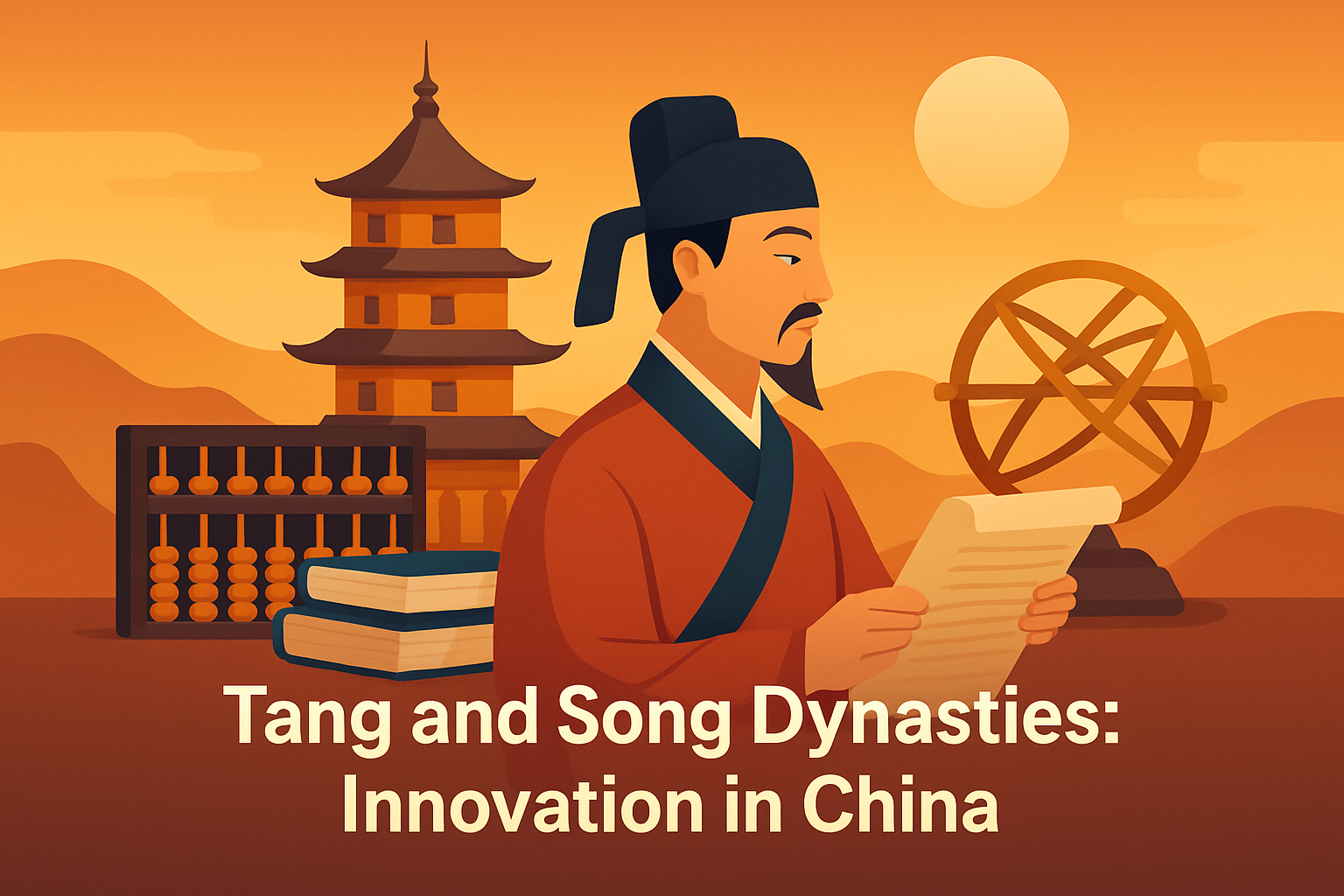
In the vast tapestry of Chinese history, the Tang (618–907 AD) and Song (960–1279 AD) dynasties stand out as periods of remarkable innovation and cultural flourishing. These eras witnessed unprecedented advancements across various domains, including technology, commerce, governance, and culture. Understanding these dynastic periods is vital not only for appreciating the richness of Chinese civilization but also for recognizing their impact on global history. The importance of these dynasties lies in their groundbreaking contributions that laid the foundation for modern society. This article will explore the significance of the Tang and Song dynasties in depth, highlighting key innovations and their lasting effects.
The Technological Marvels of the Tang Dynasty
The Tang Dynasty is often heralded for its technological inventions and contributions. Among its most notable advancements was the development of woodblock printing. This innovation revolutionized the way information was disseminated, allowing for the reproduction of texts on a mass scale. Prior to this, manuscripts had to be painstakingly hand-copied, limiting access to information. The advent of woodblock printing democratized learning, paving the way for greater literacy and education.
An exemplary real-world application of this technology can be seen in the printing of Buddhist texts. The Tripitaka, an important Buddhist scripture, was produced and distributed throughout China and other parts of East Asia. This not only facilitated the spread of Buddhism but also had a profound impact on culture, art, and philosophy across the region.
Beyond printing, the Tang Dynasty also saw significant advancements in the fields of astronomy and medicine. The Tang court sponsored various projects to better understand celestial phenomena, leading to more accurate calendars and timekeeping methods. Additionally, Tang physicians compiled comprehensive medical encyclopedias, laying the groundwork for future developments in traditional Chinese medicine.
The Economic Expansion Under the Song Dynasty
The Song Dynasty is renowned for its economic dynamism. A major contributor to this economic expansion was the widespread use of paper money, which was first introduced during the Tang and refined during the Song era. The use of paper currency facilitated trade and commerce, making transactions quicker and more efficient. It also enabled the Song government to stabilize and control the economy more effectively.
To illustrate, the city of Kaifeng, a major Song capital, became a thriving commercial hub. Due to the accessibility of paper money and an effective bureaucratic system, Kaifeng attracted traders from around the world, spurring a diverse marketplace. This influx of goods and ideas promoted a rich cultural exchange, fueling the continued prosperity and technological innovation of the dynasty.
In summary, the Song Dynasty’s advancements in economic strategies, such as the introduction of paper money, significantly influenced global commerce practices. This monetary system eventually spread to other countries, showcasing the lasting impact of Song economic policies.
Societal and Cultural Flourishments
The Tang and Song dynasties presided over flourishing societies characterized by cultural richness and diversity. Under Tang rule, literature and poetry reached new heights, with poets like Li Bai and Du Fu producing works that are still celebrated today. These pieces explored themes of nature, human emotion, and impermanence, resonating with readers across generations.
Moreover, the Song Dynasty saw a golden age of arts and culture, particularly in the realms of painting and pottery. The Song emperors were great patrons of the arts, leading to masterpieces of landscape painting and celadon ceramics that have come to define Chinese artistic heritage. These cultural achievements not only enriched the lives of contemporaries but have also continued to be revered and studied worldwide.
During these periods, Confucianism experienced a revival, reinforcing societal norms and values. This revival was marked by the emergence of Neo-Confucianism, which integrated Buddhist and Taoist concepts, offering a more metaphysical perspective. Together, these cultural developments fostered a cohesive identity and societal structure that endured well beyond the dynastic periods.
Table of Innovations
| Innovation | Dynasty | Impact |
|---|---|---|
| Woodblock Printing | Tang | Facilitated mass production of texts and spread of literacy |
| Paper Money | Song | Streamlined trade and commerce |
| Advancements in Astronomy | Tang | Improved calendars and celestial understanding |
| Landscape Painting | Song | Defined Chinese artistic heritage |
Engineering and Infrastructure Developments
In the realm of engineering and infrastructure, both the Tang and Song dynasties made remarkable contributions. The Tang Dynasty focused on developing a sophisticated network of roads and canals to improve transportation and communication across its expansive empire. The Grand Canal, one of its most famous engineering feats, connected the Yellow and Yangtze Rivers, facilitating the movement of goods and military resources. This integration bolstered both economic activity and administrative efficiency.
The Song Dynasty, however, took a different approach to infrastructure. Emphasizing urban planning, the Song constructed and organized cities to accommodate growing populations and burgeoning trade. The use of civil engineering techniques in city planning ensured efficient management of resources, sanitation, and public safety. In cities like Hangzhou, innovative designs included market streets, entertainment districts, and public parks, which contributed to a vibrant urban life.
Such advancements laid the groundwork for future urban development not only within China but also across the globe. The emphasis on engineering and infrastructure during the Tang and Song eras becomes evident in their lasting influence on city planning and transport systems.
Scientific and Mathematical Contributions
Both the Tang and Song dynasties contributed significantly to scientific and mathematical knowledge. Tang dynasty scholars made strides in the sciences, particularly in areas such as pharmacology and agriculture. Notable works include “Bencao Gangmu,” a compendium on medicinal herbs that served as an essential reference for centuries.
The Song Dynasty, known for its emphasis on observation and experimentation, made important mathematical contributions. One of its key figures, Shen Kuo, wrote the “Dream Pool Essays,” which covered topics ranging from astronomy to geology, and is famed for his insight into the concept of true north using a magnetic compass. His work laid the groundwork for later advancements in these fields.
Additionally, the application of scientific discoveries extended to agricultural innovations, such as advanced irrigation techniques that increased crop yields. These developments contributed to the food security and prosperity of the population, further demonstrating the importance of scientific inquiry during these periods.
Conclusion and Call to Action
The Tang and Song dynasties represent pinnacle periods of innovation and cultural achievement, impacting China and the world significantly. From technological breakthroughs, economic strategies, and scientific advancements to cultural flourishing, the contributions from these eras have long-lasting effects that resonate even today. Understanding and appreciating these dynasties allow us to recognize the roots of modern innovation and the value of embracing a spirit of curiosity and creativity.
For readers keen on exploring further or applying these lessons to the present day, consider delving into the rich literature, art, and technological history that originated from these dynasties. By studying and appreciating innovations of the past, both scholars and the public can foster a greater understanding of the complexities of historical progress and the potential for future advancements.
The legacies of the Tang and Song dynasties are testaments to the ingenuity and progressive spirit of humanity. As we continue to face contemporary challenges, drawing inspiration from these historical periods can offer valuable insights and solutions.
Frequently Asked Questions
1. What technological innovations occurred during the Tang and Song Dynasties?
The Tang and Song Dynasties were times of incredible technological progress in China, which had lasting impacts on both Chinese society and the world at large. During the Tang Dynasty, one of the most notable inventions was woodblock printing. This innovation allowed for the mass production of texts, leading to greater dissemination of knowledge and literacy. The Song Dynasty followed with the development of movable type printing, further revolutionizing the accessibility of information.
Agriculture saw significant advancements as well. The Song Dynasty witnessed the widespread adoption of rice varieties from Southeast Asia, which ripened quicker and allowed for multiple harvests a year, thus improving food security. This agricultural boost supported population growth and urbanization.
The Song period also saw remarkable advancements in medicine, with the compilation of critical medical texts like “Bencao Tujing,” an illustrated materia medica. Additionally, military technology advanced with the creation of gunpowder and its use in fireworks and rudimentary firearms, which had profound implications in warfare.
These technological developments were not isolated; they elevated trade, supported population growth, and laid groundwork for future scientific explorations.
2. How did commerce and trade evolve during these dynastic periods?
Commerce and trade flourished under the Tang and Song Dynasties, creating a backbone for China’s economy and expanding its influence. During the Tang Dynasty, the Silk Road became a bustling trade route, facilitating the exchange of goods, cultures, and ideas between East and West. The government played a critical role by investing in infrastructure such as the Grand Canal, which improved domestic trade by connecting the northern and southern parts of China for easier transport of goods like silk and porcelain.
Under the Song Dynasty, maritime trade saw a significant boost. The development of the junk ship, equipped with watertight compartments and advanced navigational tools like the magnetic compass, propelled Chinese merchants beyond the coastal waters to the far reaches of Asia, Africa, and the Middle East. This period marked an era of a globally integrated economy, well before European expeditions took to the seas.
Domestic trade also saw changes, with the introduction of paper money replacing cumbersome metal coins, facilitating larger transactions and stimulating economic growth. These innovations laid the groundwork for China’s continued prominence as a powerful trading nation.
3. In what ways did governance change during the Tang and Song Dynasties?
The governance systems during the Tang and Song Dynasties underwent transformative changes, setting precedents for later administrations. The Tang Dynasty is notable for its development of a comprehensive legal code, which served as a model for subsequent dynasties in China and influenced legal practices in neighboring countries like Japan and Korea.
The civil service examination system, thoroughly developed during the Tang and expanded during the Song, is another significant innovation. This system allowed individuals to earn government positions based on merit rather than aristocratic birth, promoting a fair and efficient bureaucratic process. This meritocratic approach helped ensure that the most capable individuals were involved in governance, contributing to the stability and wellbeing of the state.
The Song Dynasty further refined local governance by delegating more responsibilities to local officials, which allowed around-the-clock administrative adjustments to meet the populace’s immediate needs. Such changes helped manage the pressures of an increasingly urbanized society.
These governance innovations contributed to a flourishing intellectual and cultural atmosphere, encouraging more people to join the civil service and participate in the sophisticated workings of state apparatus.
4. How did culture and arts thrive in the Tang and Song Dynasties?
The Tang and Song Dynasties are revered as golden ages of culture and arts in Chinese history. They were periods when literature, painting, and music reached unprecedented heights. During the Tang Dynasty, poetry became a highly esteemed art form. Famous poets like Li Bai and Du Fu wrote verses that are still celebrated today, capturing the spirit and complexities of life during that period.
In terms of visual arts, the Tang period was characterized by vibrant and dynamic paintings that often depicted Buddhist themes due to the spread and patronage of Buddhism. The Song Dynasty, however, saw a shift towards more realistic and expressive art. Landscape painting became a dominant and influential aesthetic, reflecting the Daoist ideals of harmony with nature, with painters like Fan Kuan and Guo Xi leading the way.
The Song Dynasty was also a critical period for ceramics, as artisans developed techniques to create fine porcelain, marking the pinnacle of Chinese ceramic artistry. Porcelain from the Song period was highly sought after and traded extensively across the continent.
These cultural achievements signify not only a high point in artistic development but also indicate a vibrant society that valued and nurtured intellectual and artistic endeavors.
5. What was the global impact of the Tang and Song Dynasties’ innovations?
The innovations from the Tang and Song Dynasties had far-reaching impacts that transcended the borders of China, influencing global history significantly. Technological advancements such as printing spread to other regions, initially reaching Korea and Japan, where these methods were adopted and adapted. Eventually, this technology made its way to Europe, where it contributed to the advent of the print revolution and the Renaissance.
The widespread use of the magnetic compass had a profound effect on maritime navigation, aiding explorers in charting unfamiliar territories and leading to a growth in international sea trade. Such navigation skills were instrumental in European explorations of the world during the Age of Discovery.
In terms of commerce, the economic practices developed during these dynasties, such as the use of paper money, influenced trading systems and economic theories worldwide. It spurred changes in how value and trade were conceptualized and practiced internationally.
Through their innovative approach to governance, law, culture, and technology, the Tang and Song Dynasties left an enduring legacy that not only enriched China but also contributed to shaping the course of global history. These eras remind us of the interconnectedness of cultures and the long-standing exchanges of ideas and innovations across civilizations.