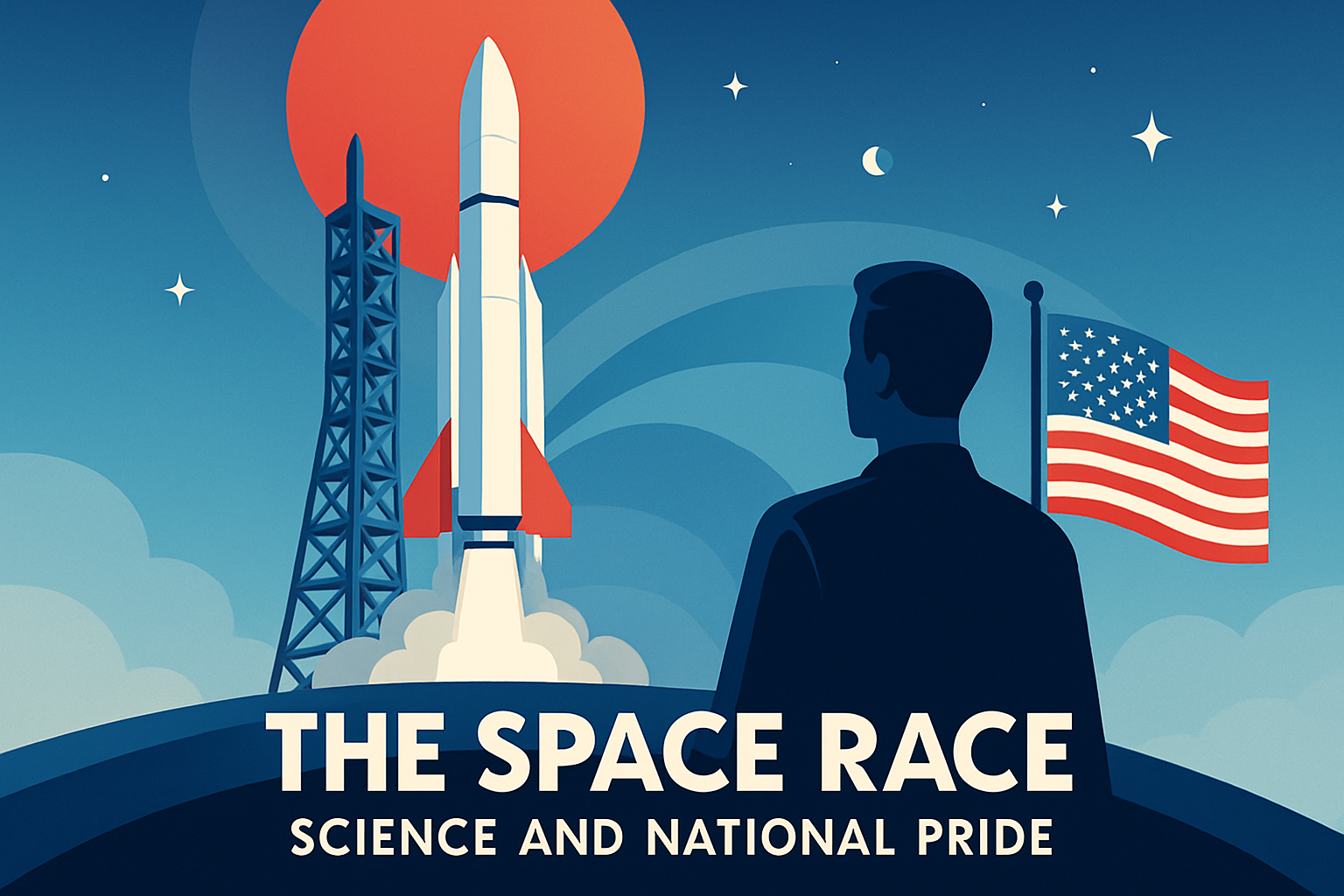
Why the Space Race Matters
The Space Race, a Cold War-era competition between the United States and the Soviet Union, was pivotal in shaping modern technology, geopolitics, and scientific discoveries. Emerging in the mid-20th century, it was not merely a battle for space supremacy but also a quest for national pride, scientific advancement, and international prestige. The term “Space Race” refers to the intense rivalry that drove advances in space exploration during the 1950s and 60s, leading to unprecedented achievements such as the moon landing. Understanding its historical context is crucial as it underscores the collaborative yet competitive spirit that continues to drive innovations today. This article delves into the intricate tapestry of events, the technological leaps it spurred, and the lasting legacies it imprinted on science and society.
The Origins of the Space Race
The dawn of the Space Race was marked by the geopolitical tensions post-World War II. As two superpowers emerged, the United States and the Soviet Union, both sought dominance across various fronts, including military prowess, ideological influence, and technological superiority. The launch of the Soviet satellite Sputnik 1 on October 4, 1957, served as the immediate catalyst. Weighing approximately 184 pounds, this simple orbiter was the first human-made object to orbit Earth, capturing worldwide attention and prompting a response from the Western world. The significance of Sputnik was less in its technological feat and more in its psychological impact—signaling the Soviet Union’s advanced capabilities and igniting widespread concerns over national security and scientific capability in the West.
United States’ Response and NASA’s Formation
The United States responded promptly to the Soviet challenge. Amidst public outcry and governmental pressure, President Dwight D. Eisenhower established the National Aeronautics and Space Administration (NASA) in 1958. NASA was mandated to ensure American leadership in space exploration and to coordinate aerospace endeavors. An example of NASA’s rapid advancement was Project Mercury, which aimed to put an American astronaut in space. Mercury laid the groundwork for future milestones, and in May 1961, Alan Shepard became the first American in space aboard the Mercury-Redstone 3.
Lunar Exploration: The Moon Landing
Perhaps the most iconic achievement of the Space Race was the Apollo 11 mission. On July 20, 1969, astronauts Neil Armstrong and Buzz Aldrin landed on the moon, with Armstrong uttering the famous words: “That’s one small step for man, one giant leap for mankind.” This event symbolized not only a technological triumph but also a key geopolitical victory for the United States. The Apollo missions demonstrated advanced engineering and planning capabilities, eventually leading to six manned moon landings, with extensive scientific studies conducted on lunar soil and geology.
Scientific and Technological Advancements
The Space Race brought forth numerous technological innovations that benefited civilian industries worldwide. These advancements included satellite technology, which revolutionized global communications and weather forecasting. Moreover, the miniaturization of electronics and the development of new materials, such as heat shields and composite structures, had far-reaching implications. For instance, the space suit technology evolved significantly, which later found applications in firefighting and hazardous material handling. An example of innovation is the integrated circuit, pioneered for the Apollo missions, which laid the groundwork for modern computing chips.
Cultural Impact on Society
Beyond science, the Space Race had a profound cultural influence. It ignited imaginations, inspiring generations of scientists, engineers, and explorers. Popular culture embraced space exploration themes in literature, films, and art, reflecting society’s fascination and the aspirational nature of space exploration. For example, iconic science fiction works like “2001: A Space Odyssey” and television series such as “Star Trek” became cultural milestones, portraying a future where humanity reached beyond Earth. The educational sector also experienced a surge, with increased funding and interest in STEM (Science, Technology, Engineering, and Mathematics) fields, fueled by the desire to support space exploration endeavors.
The Collaborative Legacy
Although characterized by rivalry, the Space Race paved the way for collaboration in space exploration. The eventual détente in superpower relations led to the Apollo-Soyuz Test Project in 1975, where American and Soviet spacecraft docked in space and crews shared meals and scientific tasks. This collaboration laid the foundation for future international partnerships, culminating in the establishment of the International Space Station (ISS) in 1998, involving multiple countries. The ISS remains a symbol of peaceful international cooperation, allowing scientists from different nations to pursue research for the benefit of all humanity.
Enduring Impact on Modern Space Exploration
Today, the legacy of the Space Race endures as nations and private companies usher in a new era of space exploration. Government agencies like NASA and ESA (European Space Agency) collaborate with private enterprises such as SpaceX and Blue Origin to advance space technologies and explore Mars and beyond. This public-private partnership model exemplifies how the competitive impulse of the Space Race has transformed into cooperative ventures, driving innovation and expanding the frontier of human knowledge. The burgeoning interest in Mars colonization and the return to lunar exploration reflect the enduring spirit and influence of the original Space Race.
| Key Milestones | Date | Achievement |
|---|---|---|
| Sputnik 1 Launch | October 4, 1957 | First artificial Earth satellite |
| NASA Formation | July 29, 1958 | Establishment of U.S. space agency |
| First Human in Space | April 12, 1961 | Yuri Gagarin orbits Earth |
| Moon Landing | July 20, 1969 | Apollo 11 lands on the moon |
| Apollo-Soyuz Mission | July 15, 1975 | First U.S.-Soviet space joint mission |
Conclusion: Embracing the Legacy
The Space Race was more than a historical contest of the Cold War; it was a transformative period that fostered technological progress and international collaboration, leaving a lasting impact on science and society. Today, by reflecting on the milestones and lessons of the Space Race, we can recognize the immense potential of space exploration for fostering unity and fueling scientific inquiry. As humanity stands on the cusp of exploring new frontiers, from Mars missions to asteroid mining, embracing the collaborative spirit of this legacy is pivotal. The next step is for individuals, governments, and organizations to support global initiatives to ensure that space exploration continues to thrive, benefiting humankind collectively while maintaining the motivation to push the boundaries of what is possible.
By understanding the historical significance and current implications of the Space Race, readers gain a deeper appreciation for the power of competition and collaboration in advancing human knowledge and capabilities.
Frequently Asked Questions
What was the Space Race, and why did it take place?
The Space Race was a significant period spanning the mid-20th century when two superpowers, the United States and the Soviet Union, were embroiled in fierce competition to achieve space exploration milestones. This race was not merely about who could reach the moon first but was deeply intertwined with the geopolitical tensions of the Cold War. The Space Race symbolized the technological and ideological superiority of the two dominating world powers. During this era, advancements in space exploration were seen as a proxy for military power and national prowess. The race took place as both nations aimed to demonstrate their scientific capabilities and secure international prestige, while showcasing the benefits of their respective political systems—capitalism versus communism.
How did the Space Race influence technological advancements of the era?
The Space Race catalyzed an extraordinary leap in technology and innovation. The necessity to explore space and compete head-to-head pushed both nations to expand the boundaries of their scientific and engineering capabilities. This period saw the development of new technologies like intercontinental ballistic missiles (ICBMs), which were originally designed for space exploration but had significant military implications. Moreover, the satellites that were launched to orbit Earth opened up possibilities for global communication, weather forecasting, and scientific observation. The Space Race was instrumental in the development of computer technology, as NASA required powerful, precise computers for navigation and data processing in missions like the lunar landings. Consumer products and technologies such as freeze-dried foods, cordless power tools, and improved computing and electronics also have roots in the innovations spurred by the Space Race.
What were some of the key milestones during the Space Race?
The Space Race included several monumental achievements that marked its historic timeline. The Soviet Union took a significant lead with the launch of Sputnik 1 on October 4, 1957, the first artificial satellite to orbit Earth, which sent shockwaves throughout the United States. They further advanced with Yuri Gagarin’s pioneering flight on April 12, 1961, making him the first human to journey into space. The United States, despite its slow start, turned the tide with the success of the Apollo program, culminating in the first manned moon landing on July 20, 1969, when Neil Armstrong and Buzz Aldrin set foot on the moon while Michael Collins piloted the Apollo 11 spacecraft. These highlights are just a fraction of the numerous missions and feats that characterized this era of intense competition and scientific achievement.
How did the Space Race affect national pride in the United States and the Soviet Union?
For both nations involved, the Space Race was as much about technological and scientific excellence as it was about national pride and the global ideological confrontation. Each triumph in the Space Race was heralded back home as a sign of national superiority. In the Soviet Union, early successes like Sputnik 1 and Yuri Gagarin’s flight were portrayed as proof of the strength and efficiency of the communist system, fueling a sense of pride among its citizens and serving as powerful propaganda tools. In the United States, the successful moon landing represented a pivotal moment of triumph, not only asserting dominance in space over its geopolitical rival but also serving as a testament to the innovation and resilience inherent to the American spirit. The imagery of astronauts on the moon was broadcast worldwide, reinforcing the nation’s reputation as a leader in science and technology and inspiring generations of future scientists and engineers.
Why is the legacy of the Space Race still significant today?
The impact of the Space Race extends far beyond its historical context, leaving an enduring legacy that shapes the present and future. Technological advancements made during this period laid the groundwork for future space exploration, leading to international collaborations on programs like the International Space Station. Many of the scientific discoveries and technologies developed have also found applications in everyday life, influencing fields such as telecommunications, medicine, and various industries. On a cultural level, the Space Race inspired countless individuals to pursue careers in science and technology, fostering a collective appreciation for scientific inquiry. Moreover, the experiences learned from the race highlighted the possibilities—and risks—of collaboration and competition in space, guiding ongoing discussions about space exploration policy, international cooperation, and even the role of private companies in the new space age.