
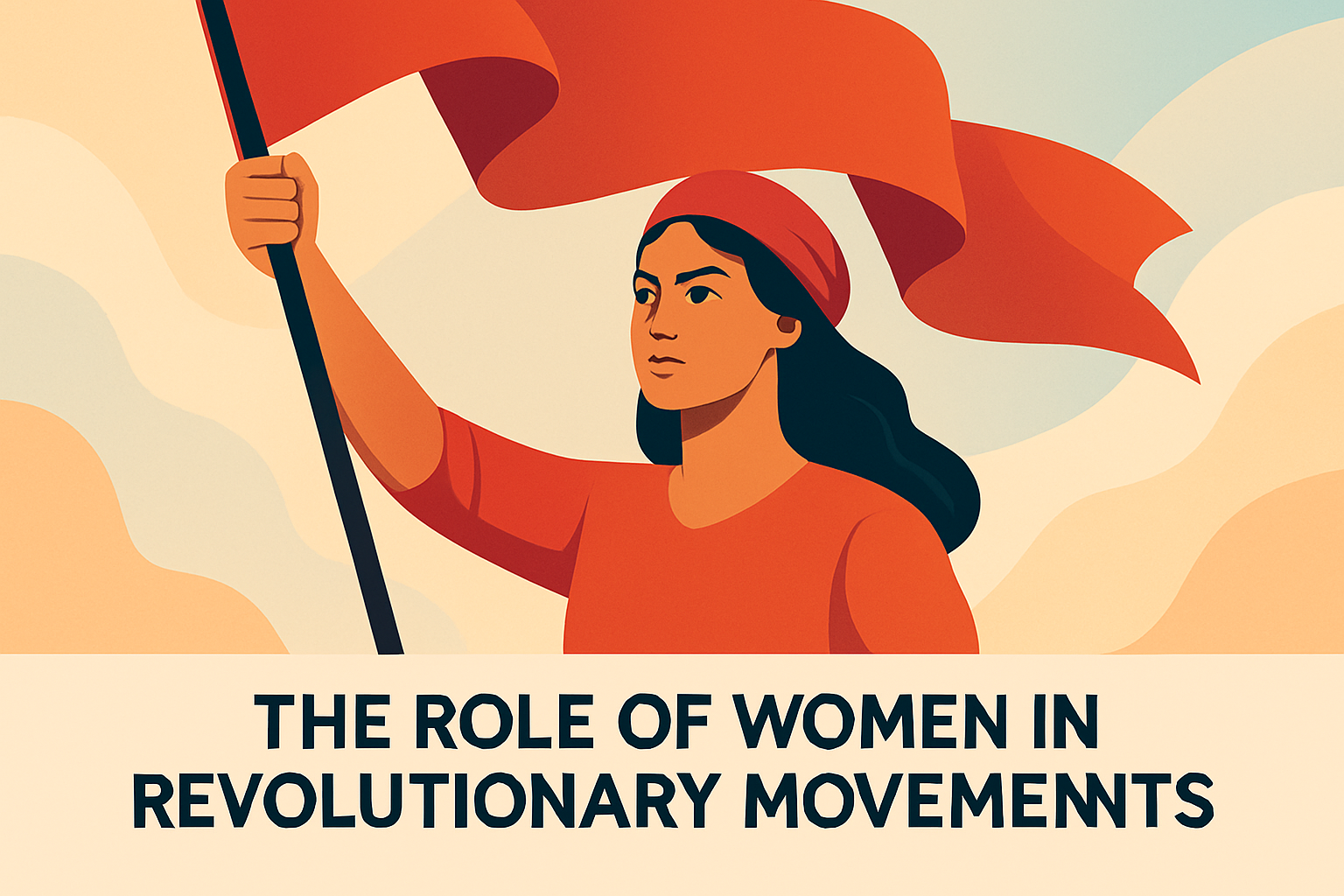
Throughout history, revolutionary movements have often been dominated by male voices and figures, yet women have played significant and impactful roles that are frequently overlooked. These roles range from leadership positions to grassroots organizing, and from combat to strategizing. Understanding the role of women in revolutionary movements is important not only for an accurate historical account but also for recognizing the dynamics of social change today. Gender roles in revolutions often shift from traditional expectations, providing unprecedented opportunities for women to influence society profoundly.
Revolutionary movements are defined as significant efforts to change a social, political, or cultural system. They can be violent or non-violent, national or global, and often involve a shift in power that challenges the status quo. Women have historically been involved in these movements, contributing both on the front lines and behind the scenes. Their involvement demonstrates resilience and determination, fighting for their rights and the rights of others. Understanding these contributions is crucial because they offer insights into the ways women have shaped modern societies, even when their achievements are not immediately visible.
The Pivotal Role of Women in Early Revolutionary Movements
Women have been central to revolutionary movements from as early as the American Revolution in the 18th century. While less visible in history books, women like Deborah Sampson disguised themselves as men to fight, and figures such as Abigail Adams advocated for women’s rights, famously reminding her husband, John Adams, to “remember the ladies” in the formation of new laws. These examples show how women worked under constrained circumstances to influence the course of history, even as the public recognition remained largely absent.
In the French Revolution, women demanded political reforms and equality. The Women’s March on Versailles in 1789 exemplified their significant participation. Driven by economic strife and hunger riots, thousands of women marched to confront King Louis XVI. This event was not merely about food shortages; it also underscored women’s determination to influence political decisions and challenge royal authority.
Women in Modern Revolutionary Contexts
In modern times, women continue to play roles in revolutionary contexts, often pivotal ones. For instance, the Arab Spring, a series of anti-government protests across the Arab world, saw significant female participation. Women like Tawakkol Karman, a journalist and activist from Yemen, became a central figure in the movement and later received the Nobel Peace Prize for her efforts in advocating for peace in Yemen. This highlighted how women can achieve recognition and influence significant political reform.
Despite facing traditionally restrictive societal norms, women in the Arab Spring utilized social media and other tools to organize protests and spread information, highlighting a shift from traditional gender roles. They engaged in street protests, organized grassroots campaigns, and used technological platforms to consolidate their efforts.
Combat and Strategy in Revolutionary Movements
Women have participated directly in combat and strategic planning in revolutionary contexts, often breaking gender norms in the process. The Vietnam War showcased the significant role women played in the Viet Cong. Women combatants, known as the “Long-Haired Army,” were instrumental not just in fighting but also in intelligence operations. Their participation demonstrated strategic prowess and resilience, which were crucial to the outcomes of many battles during the war.
The Kurdish Women’s Protection Units (YPJ) are another example of women actively engaging in combat. Established in 2013, these all-female units played a significant role in fighting ISIS in Syria. The presence of women on the front lines challenges traditional gender roles and underscores the importance of women’s agency in the fight for freedom and self-determination.
Grassroots Organizing and Leadership
Beyond combat, women’s roles in grassroots organizing have been critical to the success of revolutionary movements. In South Africa, women were central to the anti-apartheid movement. Activists like Winnie Mandela and Albertina Sisulu led numerous efforts, including protests and political activism that shaped the dismantling of apartheid policies. Women’s leadership and organizational skills were crucial in mobilizing communities and sustaining long-term resistance efforts.
These grassroots endeavors provided platforms for women to voice their concerns and challenge existing power dynamics. Equally important was their ability to network and strategize, ensuring the movement’s persistence and impact over time. Women’s participation demonstrated that revolutionary change often requires broader community engagement and persistent advocacy often led by women.
The Importance of Women’s Contributions
Understanding women’s contributions in revolutionary movements highlights the broader implications for gender equality today. Women’s participation in revolutions today can inspire future generations to advocate for inclusive and equitable societies. While historically their contributions have been understated, they have been instrumental in influencing revolutionary outcomes across the globe.
| Revolution | Key Female Figure | Contribution |
|---|---|---|
| American Revolution | Abigail Adams | Advocated for women’s rights in early American laws |
| French Revolution | Olympe de Gouges | Authored the Declaration of the Rights of Woman |
| Arab Spring | Tawakkol Karman | Promoted nonviolent activism in Yemen |
| Vietnam War | Nguyen Thi Dinh | Led the Southern Liberation Women’s Association |
| Kurdish Struggle | Nesrin Abdullah | Commander of the Women’s Protection Units |
The Path Forward: Bridging Past and Future Initiatives
Current discussions about gender equality benefit from the historical context of women’s roles in revolutionary movements. Recognizing these efforts provides a platform to advocate for contemporary gender issues. Programs promoting gender parity in leadership positions, equitable laws, and inclusive political processes draw upon the courage and leadership demonstrated by past female revolutionaries.
Today’s activists can learn from historical contexts to advocate for change effectively, pushing boundaries in traditionally male-dominated spaces. By acknowledging and amplifying women’s contributions, society can pave the way for more egalitarian movements and encourage future female leaders.
Conclusion: Honoring the Legacy of Women in Revolution
As we reflect on the significant roles women have played in revolutionary movements, it is imperative to honor and learn from their legacy. Their contributions not only shaped historical outcomes but continue to inspire ongoing and future social changes. Acknowledging their impact is crucial to understanding the complexity of revolutions and building an inclusive narrative that reflects the diverse efforts involved.
The next steps involve consistently highlighting female contributions and integrating their stories into the broader historical narrative. Encouraging women to take leadership roles in current movements for social change and empowering them through education and policy-making can lead to more just and equitable societies. As society progresses, the acknowledgment and support of women revolutionaries will serve as a testament to their indispensable role in shaping human history.
Frequently Asked Questions
1. Why have women’s contributions to revolutionary movements often been overlooked in historical accounts?
Women’s contributions to revolutionary movements have frequently been overlooked due to several factors. Traditionally, historical narratives have focused on the actions and impacts of male leaders and figures, often marginalizing the roles women played. This bias is rooted in gender norms and societal expectations that have historically minimized women’s roles in both public life and revolutionary activities. Additionally, archival practices have sometimes neglected to preserve records of women’s contributions, contributing to their erasure. Moreover, the way history is taught and recorded has often favored a hero-centric approach that prioritizes battles and leadership roles typically occupied by men, overlooking the essential grassroots and supportive roles women often took on. Understanding these dynamics is crucial for a fuller appreciation of the complexities involved in revolutionary movements and the significant impact women have made.
2. What roles did women typically play in revolutionary movements?
Women have taken on a wide array of roles in revolutionary movements that go beyond the conventional image of warfare and frontline combat. Many served in critical leadership roles, often behind the scenes, where they influenced strategies and decisions. For instance, women often excelled in logistics and communications, organizing meetings, and facilitating communications clandestinely. Women were also central figures in grassroots organizing, where they rallied communities and garnered local support for the revolutionary cause. Some women did take part in combat roles, participating directly in skirmishes and battles, sometimes out of necessity or driven by a desire for direct action. Their involvement in intelligence gathering, providing medical care, and even in diplomatic efforts can’t be understated either. They have provided moral and logistical support – offering shelter, food, and encouragement to male fighters. Their strategic thinking was often utilized in planning and executing revolutionary activities. This broad range of involvement signifies the indispensable role women have held in revolutionary movements around the world.
3. Can you provide examples of prominent women in revolutionary movements?
Indeed, there are many prominent women who played pivotal roles in revolutionary movements. For instance, in the French Revolution, women like Olympe de Gouges and Théroigne de Méricourt emerged as political activists and challenged societal norms. In Latin America, figures such as Manuela Sáenz were influential, with Sáenz earning her place in history as a key supporter and strategist in South America’s struggle for independence from Spanish rule. In the Russian Revolution, women like Alexandra Kollontai were pioneering figures who not only participated in the movement but also advocated for women’s rights, emphasizing women’s liberation as part of the broader revolutionary agenda. Asia too has seen its share of influential women; Trung Trac and Trung Nhi are often celebrated as heroines in Vietnam for leading an uprising against Chinese rule in the first century. These examples highlight the diverse contributions women have made across different contexts and timelines in revolutionary movements.
4. Has the perception of women’s roles in revolutionary movements changed over time?
The perception of women’s roles in revolutionary movements has indeed evolved, especially as gender studies and feminist scholarship have gained prominence. In recent decades, there has been an increasing recognition of how gender impacts historical narratives and an active effort to reassess historical accounts to include women’s voices and experiences. This shift extends to the recognition of the diverse roles women have played in revolutions, moving away from limiting characterizations of women as passive participants. Educational curriculums and media representations are increasingly emphasizing women’s contributions, which helps to create a more balanced historical narrative. However, despite these improvements, there is still work to be done to ensure that women’s roles are recognized on equal footing as men’s in both historical and contemporary contexts. Embedding women’s stories more visibly into the broader historical discourse not only honors the individuals involved but provides a more complex and accurate understanding of revolutionary dynamics.
5. How does understanding women’s roles in past revolutionary movements inform contemporary social change efforts?
Understanding women’s roles in past revolutionary movements is invaluable for contemporary social change efforts because it provides critical insights into effective organizing strategies and the power of inclusive movements. Recognizing the diverse roles women have historically played – from strategists to grassroots organizers – underscores the importance of varied perspectives and contributions in achieving common goals. For current social movements, incorporating lessons learned from past revolutions can provide guidance on structuring more equitable and inclusive organizations that leverage the strengths of all participants, regardless of gender. Furthermore, revisiting women’s past contributions challenges lingering stereotypes and empowers current and future generations of women to envision diverse ways of engaging in social change. Additionally, it calls attention to systemic inequalities that persist today, motivating activists and scholars to address these injustices as part of ongoing efforts for societal transformation. Overall, this understanding helps build a more nuanced approach to collective action, ensuring that all voices are heard and valued.