
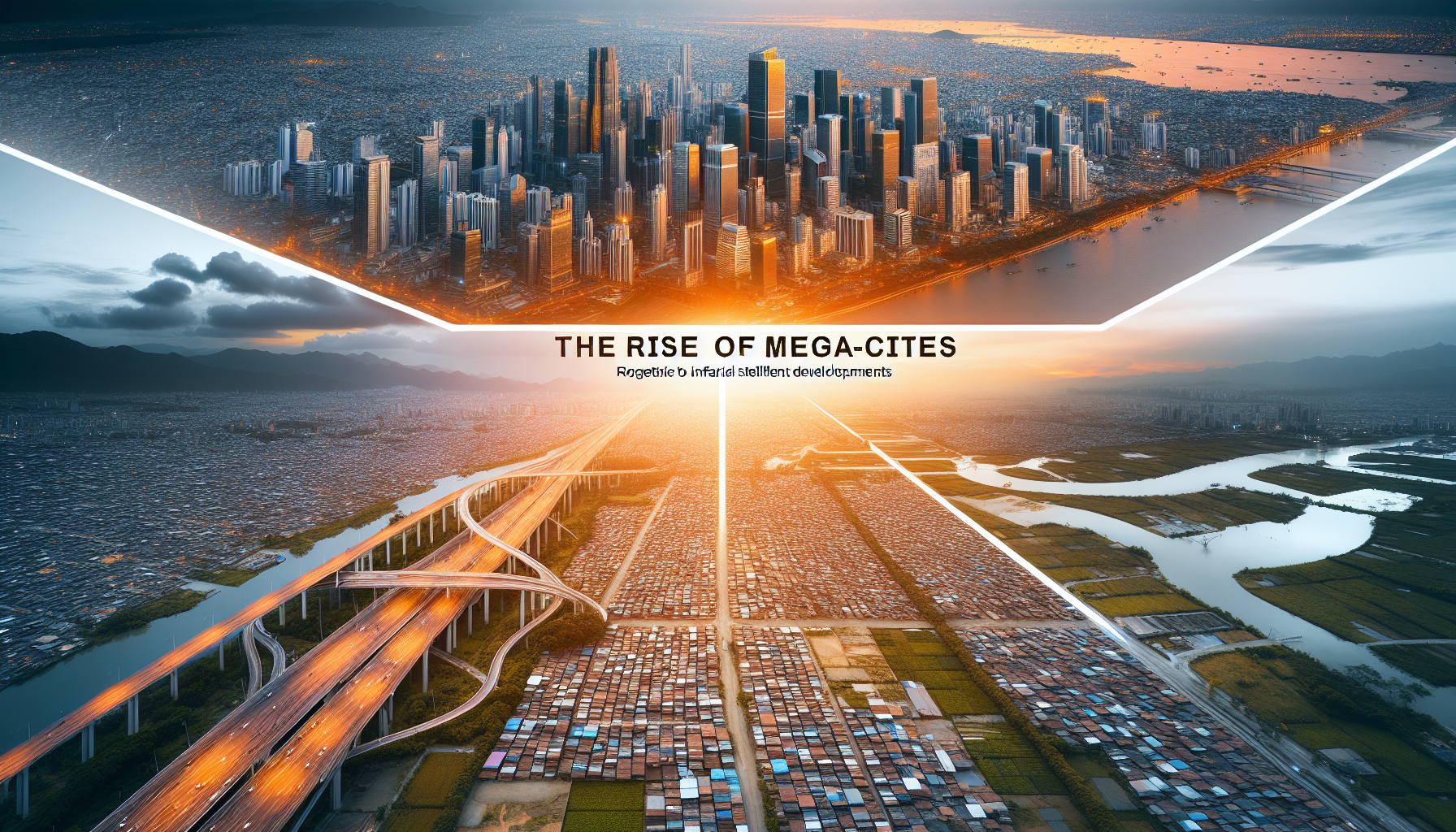
Mega-cities now shape the global development agenda because they concentrate population, capital, risk, and opportunity at a scale no previous urban form has carried. A mega-city is generally defined as an urban agglomeration with more than ten million residents, but the term means more than size. In practice, it describes a dense regional system where housing markets, transport corridors, labor flows, utilities, and governance institutions are stretched by rapid growth. I have worked on urban policy briefs that compared Lagos, Mumbai, São Paulo, and Jakarta, and the same pattern appeared repeatedly: when city growth outruns planning capacity, infrastructure gaps widen, informal settlements expand, and social inequality becomes physically embedded in the urban landscape. That is why the rise of mega-cities matters within globalization and development. These cities are engines of productivity, trade, innovation, and cultural exchange, yet they also expose failures in land management, public finance, climate resilience, and basic service delivery. Understanding how infrastructure, informal settlements, and planning interact is essential for anyone studying contemporary development, because the future of global growth will be negotiated street by street in the world’s largest urban regions.
Why Mega-Cities Matter in Globalization and Development
Mega-cities sit at the center of globalization because they connect national economies to global markets through ports, airports, industrial zones, finance, digital networks, and migration systems. Tokyo, Delhi, Shanghai, Mexico City, Cairo, and Dhaka are not only large settlements; they are command points where multinational investment, domestic consumption, logistics, and labor markets intersect. The economic logic is clear. Firms cluster in large metropolitan areas to access suppliers, workers, universities, and customers. Economists describe these benefits as agglomeration economies. When infrastructure works well, productivity rises because transport times fall, supply chains become more reliable, and knowledge moves quickly between firms and institutions.
But development in mega-cities is never only about economic concentration. It is also about who gains access to urban benefits. A city can post strong GDP figures while millions of residents still lack piped water, sewer connections, secure tenure, or affordable transit. This contradiction is visible across much of the Global South. In Manila, Nairobi, and Karachi, growth has created valuable urban land and new jobs, but it has also pushed lower income households to peripheral or hazardous land where flood risk, commuting costs, and service deficits are highest. Development scholars therefore treat mega-cities as places where globalization produces both integration and exclusion at the same time.
International frameworks reinforce this view. The UN Sustainable Development Goal 11 calls for inclusive, safe, resilient, and sustainable cities. UN-Habitat has repeatedly argued that unmanaged urbanization is not inherently a crisis; the crisis emerges when public institutions fail to convert population growth into serviced, connected neighborhoods. In other words, city size does not determine outcomes. Governance quality, infrastructure sequencing, land policy, and fiscal capacity do.
Infrastructure Pressure: Transport, Water, Energy, and Waste
Infrastructure is the backbone of a mega-city, and the first symptom of stress is usually visible in daily movement. When transport networks lag behind urban expansion, congestion becomes a tax on workers and firms. I have seen commuter data from several metropolitan studies showing that lower income households often endure the longest travel times because affordable housing is far from jobs. In Lagos and Jakarta, road dependence has produced severe congestion, while in Mumbai and São Paulo, overloaded rail and bus systems reveal the cost of underinvestment relative to population growth. Good mega-city planning treats transport not as a stand-alone engineering problem but as a land use question. High-capacity transit works best when employment centers, housing density, and street design are planned together.
Water and sanitation create an equally important challenge. Large urban populations require reliable bulk water sources, treatment capacity, leak reduction, sewer networks, and drainage systems. Many fast-growing metropolitan regions do not have this full chain. As a result, residents rely on informal vendors, tanker trucks, boreholes, shared toilets, or open drains. Those alternatives are usually more expensive per unit and far less safe. Cape Town’s drought crisis illustrated how quickly a modern metropolitan area can approach water insecurity when climate pressure and demand growth collide. In cities with major informal settlements, drainage failure can turn seasonal rain into repeated health emergencies.
Energy systems are under similar pressure. Mega-cities need stable electricity for homes, hospitals, data centers, transit, refrigeration, and industry. Yet rapid growth can outpace generation, transmission, and distribution. Power outages raise business costs and push households toward diesel generators, which worsen air pollution. Waste management is another critical fault line. Without collection systems, transfer stations, recycling capacity, engineered landfills, and wastewater treatment, population density amplifies environmental harm. The urban development lesson is straightforward: infrastructure deficits are not secondary issues. They determine public health, labor productivity, investment confidence, and climate resilience.
| Infrastructure area | Common mega-city pressure | Development consequence | Planning response |
|---|---|---|---|
| Transport | Congestion, long commutes, overloaded transit | Lost productivity, unequal job access | Mass transit, transit-oriented development, integrated fares |
| Water and sanitation | Intermittent supply, leakage, poor drainage | Disease risk, higher household costs, flood losses | Network expansion, utility reform, watershed protection |
| Energy | Grid instability, unreliable service | Business disruption, pollution from backup power | Grid upgrades, distributed energy, demand management |
| Waste | Uncollected solid waste, unsafe disposal | Contamination, blocked drains, methane emissions | Collection coverage, recycling systems, sanitary landfills |
Informal Settlements: Causes, Functions, and Misconceptions
Informal settlements are often described only in terms of deprivation, but that framing is incomplete. They are better understood as housing solutions produced by exclusion from formal land and housing markets. When urban land prices rise faster than wages, when rental supply is insufficient, when mortgage systems serve only formal income earners, and when planning rules make legal housing too expensive, low income households create alternatives. These neighborhoods may be called slums, shantytowns, favelas, kampungs, or bastis, but the underlying dynamics are similar: residents build incrementally, rely on social networks, and secure access to location before full legality or services.
From direct field accounts and settlement mapping projects, one consistent reality stands out. Informal settlements are not empty spaces of disorder. They are intensely organized communities with rental markets, transport links, small businesses, savings groups, religious institutions, and political brokers. Dharavi in Mumbai, often reduced to a stereotype, has long supported extensive leather, pottery, recycling, and small manufacturing activity. Kibera in Nairobi includes complex internal economies and tenancy arrangements. Rocinha in Rio de Janeiro developed dense commercial and social infrastructures over time. These places are disadvantaged, but they are also productive urban districts.
The misconception that informal settlements are temporary or marginal leads to poor policy. Forced evictions rarely solve the housing problem; they usually relocate poverty, destroy livelihoods, and increase vulnerability. The more effective approach is to recognize why these settlements emerge and to differentiate among them. Some are on hazardous land where relocation is necessary. Others are well located and can be upgraded through drainage, paved pathways, electricity, sanitation, schools, clinics, and tenure regularization. The policy question is not whether informality exists. It is whether institutions respond with criminalization or with realistic pathways to inclusion.
Planning for Inclusion: Land, Governance, and Upgrading
Planning in mega-cities succeeds when it addresses land markets, institutional coordination, and neighborhood scale implementation at the same time. Traditional master plans often fail because they map ideal futures without solving the mechanics of land assembly, financing, regulation, and service delivery. In my experience reviewing metropolitan strategies, the strongest plans are those that connect vision to enforceable zoning, capital budgets, utility investment plans, and clear responsibilities across city, regional, and national agencies.
Land policy is central. If serviced land is scarce and expensive, informal expansion becomes rational. Cities need land value capture tools, simplified permitting, inclusionary housing policies, and public investment that opens new areas for development before speculative prices lock out lower income households. Transit-oriented development can help, but only if affordable housing is protected near stations. Otherwise, rail investment can intensify displacement. Bogotá’s transport reforms and Curitiba’s corridor-based planning are often cited because they linked mobility and land use, even if both still face affordability and peripheral growth pressures.
Upgrading informal settlements is one of the most practical planning strategies available. Successful programs usually start with detailed enumeration, community participation, and tenure assessment. They then sequence investments: drainage and flood control first, then roads or pathways, water points, sewers, lighting, schools, and health facilities. Secure tenure does not always require immediate freehold title; occupancy certificates, collective rights, or long leases can reduce eviction risk and support household investment. Thailand’s Baan Mankong program demonstrated how community-led upgrading backed by state finance can improve housing while keeping residents in place. Brazil’s earlier favela urbanization programs also showed that integrating settlements into the city fabric is often cheaper and more humane than mass relocation.
Governance matters just as much as design. Mega-cities typically spill across municipal boundaries, yet transport, watershed management, housing demand, and labor markets are metropolitan in scale. Fragmented governance produces duplicated systems and policy gaps. Effective metropolitan authorities, shared data platforms, and predictable intergovernmental transfers can improve coordination. Planning cannot be reduced to drawing maps. It is an administrative and political process that determines whose neighborhoods become visible to the state.
Climate Risk, Finance, and the Future of Mega-City Development
The next phase of mega-city growth will be shaped by climate change as much as by migration or industrialization. Many of the world’s largest urban regions sit on coasts, deltas, floodplains, or heat-stressed inland basins. Jakarta has faced severe land subsidence alongside sea level risk. Dhaka is exposed to flooding and drainage stress. Lagos combines coastal vulnerability with rapid population growth. Informal settlements often occupy the most dangerous land because it is the only land available. That means climate adaptation is inseparable from housing and infrastructure policy.
Resilient planning requires better stormwater systems, flood retention, wetland protection, heat mitigation through trees and reflective materials, stronger building standards, and emergency response systems that reach informal neighborhoods. It also requires finance. Mega-city infrastructure is expensive, and many local governments lack creditworthiness or robust tax bases. Property taxation, land value capture, municipal bonds, development finance, and public-private partnerships can all contribute, but each has limits. Public-private partnerships work only when contracts allocate risk sensibly and regulatory capacity is strong. Municipal borrowing can accelerate investment, yet debt without revenue reform creates future instability.
Digital tools are improving the picture. Satellite imagery, GIS mapping, mobile payment systems, and utility data can identify underserved areas, track expansion, and support more accurate budgeting. Still, technology is not a substitute for political choice. The future of mega-cities depends on whether governments treat low income residents as legitimate urban citizens. If they do, infrastructure investment, settlement upgrading, and metropolitan planning can turn rapid urbanization into shared development. If they do not, the result will be deeper inequality, greater environmental stress, and more fragile growth.
The rise of mega-cities is ultimately the story of globalization made concrete in roads, pipes, land markets, and neighborhoods. These urban regions drive national economies, attract investment, and concentrate talent, but they also reveal how uneven development works in practice. Infrastructure determines whether growth is connected or chaotic. Informal settlements show what happens when formal systems exclude the majority from serviced land and affordable housing. Planning, when grounded in finance, governance, and community realities, can reduce that exclusion and make expansion more inclusive. The central lesson is simple: mega-city growth is not the problem by itself; unmanaged growth is. Cities that coordinate transport with housing, expand water and sanitation, upgrade informal areas, and build climate resilience are far better positioned to convert urban scale into broad social gains. For anyone exploring globalization and development, this is the essential hub topic because nearly every related issue—migration, inequality, sustainability, labor, public health, and state capacity—passes through the mega-city. Use this article as a foundation, then examine specific cases, policies, and regions to see how contemporary urban development succeeds or fails in the real world.
Frequently Asked Questions
What makes a mega-city different from a very large city?
A mega-city is usually defined as an urban agglomeration with more than 10 million residents, but the real distinction goes far beyond population size. Mega-cities function as vast, interconnected regional systems where transport, housing, labor markets, water networks, energy supply, waste systems, and governance structures all operate under extraordinary pressure. In a very large city, growth may still be manageable within existing institutional boundaries. In a mega-city, growth often spills across municipal borders, creating fragmented governance and uneven service delivery. This means one part of the urban region may have world-class business districts and formal infrastructure, while another depends on informal housing, informal transport, and irregular access to utilities. Mega-cities also matter globally because they concentrate capital, innovation, migration, political influence, and climate risk in one place. Their scale magnifies both opportunity and vulnerability, which is why they occupy such a central place in debates about development, resilience, and long-term urban planning.
Why do informal settlements play such a major role in the growth of mega-cities?
Informal settlements are often a direct response to the mismatch between rapid population growth and the limited supply of affordable, well-located formal housing. As people move to mega-cities in search of work, education, safety, or opportunity, formal land and housing markets frequently cannot keep pace. High land prices, restrictive zoning, weak public housing systems, speculative development, and slow permitting processes push lower-income households toward informal solutions. These settlements are not simply signs of urban failure; they are also evidence of how residents actively solve housing needs when formal systems exclude them. In many mega-cities, informal neighborhoods provide access to jobs, social networks, and strategic locations near transport corridors or commercial centers. At the same time, they often face serious deficits in sanitation, drainage, secure tenure, electricity, and healthcare access. The key planning lesson is that informal settlements should not be treated as temporary anomalies that can be erased without consequence. They are deeply embedded in the urban economy and often house essential workers who keep the city functioning. Effective policy typically focuses on upgrading, tenure security, infrastructure extension, and inclusion rather than displacement alone.
What are the biggest infrastructure challenges facing mega-cities?
The biggest infrastructure challenges in mega-cities stem from scale, speed, inequality, and institutional fragmentation. Transport systems are frequently overwhelmed by expanding travel demand, leading to congestion, long commute times, unreliable public transit, and rising air pollution. Water and sanitation networks may struggle to reach peripheral or informal areas, especially where settlement has outpaced planned service expansion. Energy grids face increasing demand while also needing to become more resilient and lower-carbon. Drainage and flood-control systems are often inadequate in the face of land conversion, impermeable surfaces, and more intense rainfall linked to climate change. Waste management becomes especially difficult as consumption rises and disposal sites move farther from urban cores. Another major problem is that infrastructure planning often remains siloed. Roads, housing, transit, drainage, and land use are planned separately, even though they directly shape one another. Financing also complicates implementation, since mega-cities require long-term, capital-intensive investments while many local governments operate with limited revenue authority or weak administrative capacity. The most successful responses usually combine integrated metropolitan planning, phased investment, data-driven prioritization, and a focus on equitable service delivery rather than prestige projects alone.
How should urban planners approach informal settlements in mega-city planning?
Urban planners should approach informal settlements as permanent and important parts of the metropolitan fabric, not as marginal spaces outside the planning system. That starts with recognizing the residents of these areas as legitimate urban citizens with claims to land, services, mobility, safety, and political representation. In practice, this means shifting from demolition-led approaches toward in-situ upgrading wherever feasible. Upgrading can include paved pathways, drainage, sanitation, water connections, electricity, solid waste collection, schools, clinics, and safer public spaces. Secure or more predictable tenure is also critical because residents are far more likely to invest in housing improvements when they are not under constant threat of eviction. Good planning also depends on community participation. Residents usually possess detailed knowledge about local risks, circulation patterns, flooding points, and service gaps, and that knowledge can significantly improve project design. Importantly, planners must connect settlement upgrading to larger metropolitan systems such as transport networks, labor markets, and environmental management. If an upgraded neighborhood remains isolated from jobs and services, the intervention will be incomplete. The strongest planning strategies therefore combine spatial inclusion, infrastructure investment, social policy, and governance reform.
Why is governance so important to the future of mega-cities?
Governance is central because mega-cities rarely function within a single, unified administrative structure. Instead, they typically spread across multiple municipalities, districts, agencies, and sometimes even regional or national jurisdictions. This creates coordination problems at exactly the moment when integrated action is most needed. Housing policy may sit in one institution, transport in another, water in a third, and land regulation in yet another, with little incentive or capacity to align decisions. The result is often fragmented growth, duplicated investments, weak accountability, and deep spatial inequality. Strong governance does not necessarily mean extreme centralization, but it does require mechanisms for metropolitan coordination, fiscal capacity, transparent decision-making, and meaningful public participation. It also requires the ability to plan for long-term risk, including climate adaptation, public health emergencies, and infrastructure maintenance, rather than focusing only on short-term expansion. In the context of mega-cities, governance determines whether growth becomes more inclusive and resilient or more divided and precarious. Cities that build effective regional institutions, share data across agencies, and align land use with infrastructure investment are generally better positioned to manage rapid urbanization in a way that supports both economic dynamism and social stability.