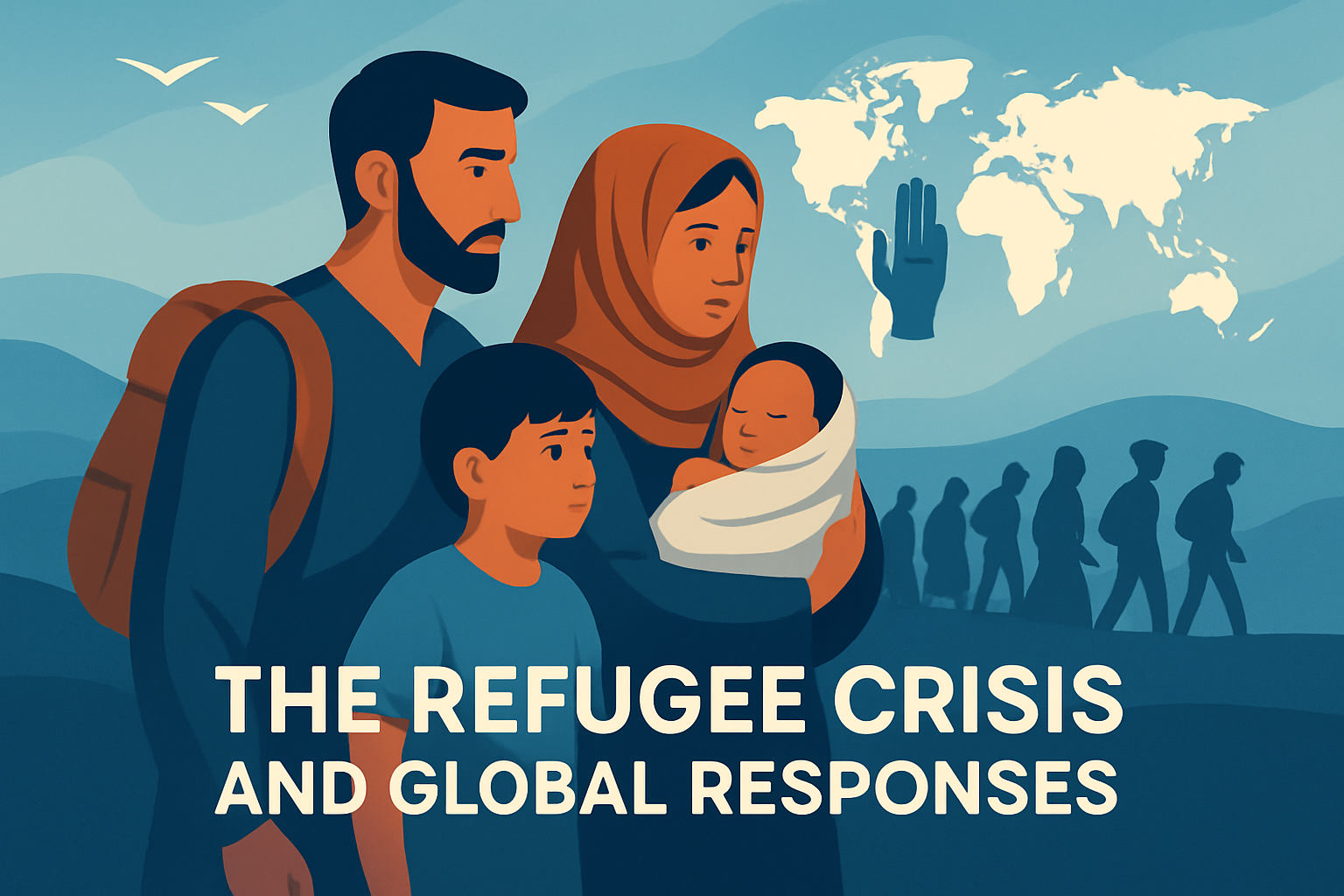
In recent years, the refugee crisis has become one of the most pressing humanitarian issues on the global stage. With conflicts, persecution, and natural disasters displacing millions of people worldwide, understanding the scope and implications of this crisis is essential. Refugees are individuals who have been forced to leave their country to escape war, persecution, or natural disaster. This involuntary movement not only affects the individuals who have been displaced but also has significant repercussions on host countries and the international community. Addressing the refugee crisis requires a unified global response because it touches on fundamental human rights, international law, and humanitarian aid. The ways in which countries and organizations respond can have profound impacts on the lives of refugees and on global stability.
The Scale of the Refugee Crisis
The current scale of the refugee crisis is unprecedented. According to the United Nations High Commissioner for Refugees (UNHCR), as of mid-2023, there are over 100 million forcibly displaced people worldwide, including refugees, asylum seekers, and internally displaced persons (IDPs). This number reflects a concerning upward trend, with conflicts in regions like Syria, Afghanistan, and South Sudan contributing significantly to this increase. Additionally, recent events, such as the Russian invasion of Ukraine, have resulted in a massive outflow of refugees seeking safety in neighboring countries. The sheer number of people on the move presents logistical, political, and economic challenges that cannot be ignored.
Understanding International Refugee Law
International refugee law provides the legal framework for the protection of refugees worldwide. The cornerstone of this law is the 1951 Refugee Convention and its 1967 Protocol, which define who is considered a refugee and outline the rights of individuals granted asylum and the responsibilities of nations that provide sanctuary. Despite the existence of these legal instruments, their implementation varies widely across different countries. Some nations are more willing than others to uphold these commitments, leading to disparities in protection and support for refugees. For example, while countries like Germany have been lauded for their welcoming policies, others have been criticized for erecting barriers to entry or for mistreating asylum seekers.
Challenges Faced by Host Countries
Host countries face numerous challenges in accommodating large numbers of refugees. These challenges include economic strain, social integration, and ensuring adequate support services. While wealthier nations may have the resources to manage these pressures, less-developed countries often struggle. Lebanon, for example, hosts over a million Syrian refugees despite possessing limited resources. The influx has put immense pressure on the country’s infrastructure, economy, and social services, exacerbating existing socioeconomic challenges. These conditions highlight the need for an equitable distribution of responsibility and support from the international community.
Responses from the International Community
The international community has a crucial role in addressing the refugee crisis. Collaborative efforts and partnerships are essential. Institutions like the UNHCR and International Organization for Migration (IOM) work tirelessly to provide aid, support, and protection to those displaced. Additionally, various non-governmental organizations (NGOs) contribute to on-the-ground support through housing, medical aid, education, and livelihood opportunities. However, comprehensive solutions require coordinated action among countries and organizations to foster sustainable responses. The Global Compact on Refugees, adopted in 2018, is an example of such an effort to create a framework for more predictable and equitable responsibility-sharing.
Individual Countries’ Policies on Refugees
Individual countries implement a range of policies regarding refugees, often shaped by political, economic, and social considerations. Some nations adopt open-door policies, offering asylum and support, while others opt for more restrictive measures. For instance, Canada is renowned for its private sponsorship program that has enabled thousands of refugees to settle successfully within its borders. In contrast, some European countries have tightened their asylum processes, citing security concerns and economic pressures. Finding a balance between national interests and humanitarian commitments is a complex and ongoing challenge for policymakers worldwide.
Innovative Solutions to Aid Refugees
Innovation plays a pivotal role in improving the lives of refugees. Technological advancements and innovative programs have the potential to substantially enhance living conditions and opportunities for displaced populations. One notable example is the use of digital identity systems that allow refugees to maintain documents and access services even without official papers. Moreover, initiatives such as refugee inclusion in local economies through vocational training and employment programs can foster long-term integration and self-reliance. These innovative solutions require cooperation between governments, the private sector, and NGOs to adequately support refugees.
| Country | Number of Refugees Hosted (2023) | Policies/Pledges |
|---|---|---|
| Germany | 1.2 million+ | Comprehensive integration programs and refugee-specific services |
| Lebanon | 1.5 million+ | Open border policy but struggling with economic strain |
| Canada | 300,000+ | Private sponsorship and humanitarian resettlement programs |
Impact of Refugees on Host Communities
The impact of refugees on host communities is multifaceted. Economically, refugees may contribute to local economies by filling labor shortages, especially in sectors such as agriculture, manufacturing, and services. Socially, they contribute to cultural diversity and enrich communities with new perspectives and talents. However, there can also be tensions, often arising from competition for resources or differences in cultural norms. Successful integration policies can help mitigate these issues and foster harmonious coexistence. Community engagement, education initiatives, and dialogue are key elements in promoting mutual understanding and cooperation between refugees and host populations.
Addressing the Root Causes of Displacement
To effectively resolve the refugee crisis, addressing the root causes of displacement is critical. These causes often include conflict, persecution, and disasters linked to climate change. International efforts that focus on conflict prevention, resolution, and sustainable development can mitigate these factors. For instance, peacebuilding initiatives in war-torn regions can create conditions conducive to the safe return of displaced individuals. Additionally, investments in climate adaptation and disaster risk reduction can prevent displacement due to environmental factors. Holistic approaches that tackle these underlying causes are vital for reducing the need for people to flee their homes in the first place.
Path Forward: Moving Toward Comprehensive Solutions
Moving forward, comprehensive solutions are necessary for managing the refugee crisis effectively. Strengthening international collaborations to create and implement shared strategies is pivotal. Policies should be inclusory and visionary, ensuring that refugees are not only safely settled but also integrated into host societies. The global community must commit to providing equitable support to host countries that bear the brunt of the crisis. Furthermore, addressing emerging challenges such as the environmental displacement due to climate change and increasing political instability is essential. The moral and humanitarian duty to assist those most vulnerable is clear, and moving toward solutions will require collective energy and resources.
The Call to Action: How You Can Help
The refugee crisis is a collective challenge that requires individual and community action in addition to government initiatives. As global citizens, there are several ways to make a meaningful impact. You can support reputable organizations that provide aid to refugees, advocate for policy changes to your government representatives, and volunteer your time or skills to help refugees in your community. Raising awareness about refugee issues and educating others about the crisis’s reality can contribute to a more informed and compassionate public discourse. Every action counts, and collective efforts can make a significant difference in the lives of millions of displaced people worldwide.
In conclusion, the refugee crisis is a profound global issue with deep humanitarian implications. Understanding its complexities, including the scale, legal framework, host country challenges, and international responses, enables us to grasp its full scope. Taking steps to address root causes, innovate in refugee assistance, and enhance collaboration is essential for creating a world where refugees can find safety, dignity, and opportunity. By taking action, whether as individuals or collectively, we have the power to influence positive change and support those who have endured unimaginable hardships.
Frequently Asked Questions
1. What exactly is the refugee crisis, and how did it escalate to become a global issue?
The refugee crisis refers to the large-scale and often sudden displacement of people who are forced to leave their home countries due to war, violent conflict, persecution, or natural disasters. It’s not something that happened overnight; rather, it’s been brewing and escalating over many years due to a myriad of factors. Conflicts in regions such as the Middle East, Africa, and parts of Asia have uprooted millions of people. For instance, the Syrian civil war alone resulted in over 6 million displaced refugees. Additionally, situations like persecution based on religion, ethnicity, or political opinions in various nations also contribute to these numbers. Natural disasters such as floods, hurricanes, and droughts, exacerbated by climate change, have further aggravated the situation. The scale of this crisis is such that it affects countries across the globe, not only the ones where these conflicts or disasters originate but also those where refugees seek asylum, putting immense pressure on international and local aid systems.
2. Who qualifies as a refugee, and how is this different from other forms of migration?
A refugee is defined as someone who has fled their own country and cannot return due to a well-founded fear of persecution based on race, religion, nationality, membership of a particular social group, or political opinion. This is in stark contrast to economic migrants who may move to another country primarily to improve their livelihood for reasons related to employment or economic opportunities. For refugees, the element of choice is almost entirely absent; their displacement is a means of survival. The classification of an individual as a refugee accords them certain rights under international law, primarily driven by instruments like the 1951 Refugee Convention and its 1967 Protocol. This includes protection from being returned to a country where they face serious threats, access to emergency assistance and services in host countries, and the possibility of being integrated into a new nation-state.
3. How do global organizations and governments respond to the refugee crisis?
Global responses to the refugee crisis involve a multitude of actors, including international organizations, governments, and non-governmental organizations (NGOs), each playing pivotal roles in relief and resettlement operations. The United Nations High Commissioner for Refugees (UNHCR) leads these efforts, coordinating humanitarian aid, legal help, and shelter, and ensuring that refugee rights are protected. Countries who sign on to the 1951 Refugee Convention have obligations to process asylum claims and protect those seeking refuge. However, political considerations often affect how countries fulfill these obligations, with some countries more welcoming than others.
Funding is another crucial element of the response mechanism, with countries and private entities being urged to contribute to humanitarian efforts. However, the global response is often hampered by inadequate funding and resources to meet the immense needs of displaced populations. Furthermore, policies regarding resettlement or asylum are highly political and vary widely. The European Union, for instance, has struggled to find common ground among member states over how to handle the influx, which has affected collective action effectiveness. In contrast, countries like Canada and Germany have been notable for their proactive refugee policies, resettling a significant number of refugees.
4. What are the main challenges faced by refugees once they arrive in a host country?
Refugees face numerous challenges upon arrival in host countries, ranging from bureaucratic hurdles to cultural and social barriers. Initially, proving their status as refugees can be an onerous process, involving interviews and verification of their claims, which can take months or even years. During this time, refugees have limited access to employment and can face very restrictive living conditions within camps. Those who manage to settle in urban areas may face challenges related to housing, language barriers, and finding employment, which can be incredibly stressful and affect mental health.
Education for children is a critical issue, as many refugee children spend years outside of school, hindering their academic and social development. Additionally, there’s the challenge of integration into societies that may be unfamiliar, and at times, unwelcoming. Refugees must navigate a host of cultural norms and sometimes xenophobic attitudes or policy restraints in the host countries. Despite these challenges, refugees often show tremendous resilience and contribute significantly to their new communities, economically and culturally, once they overcome these initial barriers.
5. What can individuals do to help address the refugee crisis?
Individuals play a crucial role in addressing the refugee crisis, even if they are not involved in large-scale policy-making or global relief operations. Advocacy is a powerful tool—speaking out for refugees’ rights locally and globally, and challenging misinformation and xenophobia can influence public opinion and, eventually, policy. Educating oneself and others about the real issues and stories behind the statistics can also make a huge impact.
Volunteering time or resources to NGOs that work on the ground is another tangible way to help. These organizations often have volunteer opportunities that range from language teaching to legal assistance, or even simple companionship for refugees adapting to new societies. Additionally, donations, whether monetary or in-kind, to certified and reputable organizations can immensely support relief efforts, providing much-needed resources for everything from food and clothes to educational materials for refugee children.
Moreover, supporting local and national policies that promote refugee-friendly environments is crucial. Encouraging inclusivity and understanding within local communities, supporting businesses that hire refugees, and lobbying for fair asylum policies all contribute to positive change. Each act, no matter how small, helps in building a more supportive environment for those displaced, demonstrating global citizenship and solidarity with those in need.