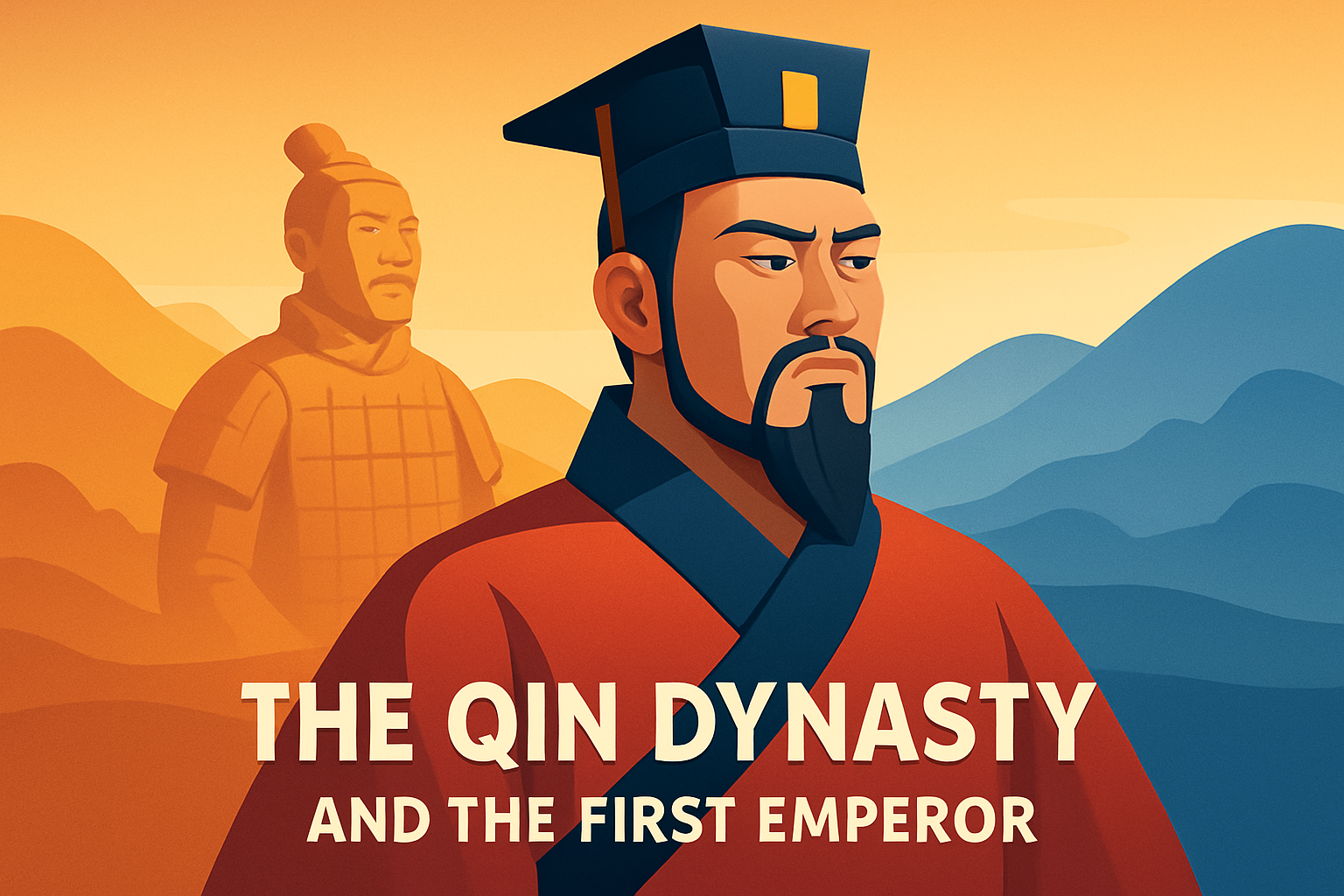
The Qin Dynasty was a pivotal period in Chinese history that marked the unification of China and the emergence of centralized imperial rule, setting the foundation for future generations. The name “Qin” is the etymological origin of the modern word “China,” highlighting the dynasty’s profound impact. At the heart of the Qin Dynasty was its first emperor, Qin Shi Huang, whose ambitious vision and radical reforms transformed a fractured region into a cohesive empire. Understanding the Qin Dynasty and the legacy of its first emperor underscores their significance, offering valuable insights into China’s historical trajectory and its global influence. The story of the Qin Dynasty illuminates the concepts of governance, innovation, cultural assimilation, and the timeless struggle between power and people. This historical narrative not only enriches our understanding of ancient civilizations but also emphasizes the enduring relevance of leadership and unity in contemporary societies.
The Rise of the Qin State
The state of Qin was originally one of the many smaller, warring states during the Eastern Zhou Dynasty’s era. Unlike other states embroiled in turmoil, Qin, located in the northwestern part of China, gradually emerged as a dominant force due to its advantageous geographical location and competent leadership. By capitalizing on its ample resources and strategic military reforms, the Qin state built a powerful and disciplined army, giving it an edge over other states. Through strategic alliances and assimilation of neighboring states, Qin expanded its territory, eventually becoming the driving force behind the unification of China.
One real-world example of Qin’s militaristic prowess is their innovative crossbow technology and the effective use of cavalry, which redefined traditional warfare tactics. These advancements not only allowed the Qin to win numerous battles but also set the stage for the eventual unification of China under one centralized rule. By adopting and shedding regional identities, the state of Qin epitomized adaptability, making impressive strides in establishing a new political order.
Qin Shi Huang: The First Emperor
At the center of the Qin Dynasty’s rise was Ying Zheng, who would later proclaim himself Qin Shi Huang, or the First Emperor. Ascending to the throne at a young age, his leadership was marked by a relentless pursuit of power consolidation and administrative efficiency. Qin Shi Huang’s vision extended beyond mere conquest — he sought to unify China, both administratively and culturally, forging a strong, centralized government.
One of Qin Shi Huang’s most significant undertakings was the standardization of weights, measurements, currency, and even the writing system across his empire. This standardization not only facilitated trade and economic integration but also ensured coherent communication throughout the vast empire. Qin Shi Huang enacted several legal reforms, establishing a uniform legal code that reduced the complex web of regional customs that once fragmented the Chinese states. These reforms underscored his desire for unity, creating a cohesive national identity that transcended regional divisions.
The Great Wall and Infrastructure Developments
While Qin Shi Huang’s governance was characterized by stringent rule, his contributions to China’s infrastructure were monumental. Under his reign, he commissioned the construction of the Great Wall of China, a massive project aimed at defending the northern frontiers against nomadic invasions. Although subsequent dynasties would continue to expand and reinforce the wall, Qin Shi Huang’s initiative laid the groundwork for one of history’s most iconic structures.
Additionally, the emperor’s ambitious infrastructure projects weren’t limited to defense. Qin Shi Huang ordered the construction of an extensive network of roads and canals, linking various parts of his empire and improving transportation and communication. These developments boosted economic growth and facilitated the movement of troops, ensuring the emperor’s firm control over his expanded domain.
The Terracotta Army: A Glimpse into Immortality
The grandeur of Qin Shi Huang’s vision extended into his afterlife, as evidenced by the remarkable Terracotta Army, which was discovered in 1974 near the emperor’s mausoleum in present-day Xi’an. This vast assembly of life-sized soldier sculptures, horses, and chariots was intended to accompany and protect the emperor in the afterlife, reflecting his belief in immortality and eternal sovereignty. Each soldier in the Terracotta Army was uniquely crafted, highlighting the advanced artistic skill and resources dedicated to the project.
The Terracotta Army is more than an archaeological wonder—it provides a window into the sociopolitical dynamics and cultural ethos of the Qin Era. It exemplifies the emperor’s craving for eternal power and his determination to maintain order and protection, even beyond death. A real-world example of such an elaborate funerary arrangement reveals the profound connection between authority, artistry, and spiritual beliefs prevalent during the Qin Dynasty.
Qin Dynasty’s Legalism and its Consequences
The Qin Dynasty’s governance model was heavily influenced by Legalism, a stringent philosophy advocating for strict laws and centralized power to maintain order and stability. Legalism provided the ideological foundation for Qin Shi Huang’s rule, emphasizing the emperor’s absolute authority and the importance of a disciplined, obedient populace.
Under Legalism, harsh punishments were imposed to enforce compliance, reflecting Qin Shi Huang’s intolerance for dissent and chaos. However, while Legalism enabled the creation of a strong, centralized state, its oppressive nature sparked significant discontent among the populace. The heavy-handed policies, exemplified by the infamous burning of books and persecution of scholars, alienated intellectuals and sowed seeds of deep resentment, ultimately contributing to the dynasty’s downfall.
| Qin Policy | Impact |
|---|---|
| Legalism | Strengthened centralized authority but led to public discontent |
| Standardization | Facilitated economic integration and coherence across the empire |
| Infrastructure | Improved defense and connectivity but at high human cost |
| Repression of dissent | Alienated scholars and eventually led to the dynasty’s fall |
Despite Legalism’s draconian aspects, its implementation during the Qin Dynasty highlighted the enduring tension between authority and liberty, a theme that resonates through history. This narrative serves as a cautionary tale about governance’s delicate balance, reminding leaders of the potential pitfalls of prioritizing control over the well-being of citizens.
The Fall of the Qin Dynasty
The Qin Dynasty’s meteoric rise was matched by its swift fall, giving way to the succeeding Han Dynasty. The factors behind its collapse were multifaceted, rooted in its rigid political structure and ruthless policies. Upon Qin Shi Huang’s death, the absence of a stable succession plan precipitated a crisis, and his aggressive tactics led to widespread rebellion and civil unrest.
The mass mobilization and unyielding demand for labor, as evident in massive infrastructure projects like the Great Wall, resulted in public fatigue and dissatisfaction. The emperor’s oppressive rule, devoid of mechanisms for constructive feedback and dissent, brewed a climate of rebellion among the people. A real-world example of this is the Dazexiang Uprising, a rebellion that began as a localized revolt but quickly gained momentum, leading to the eventual fall of the Qin Dynasty.
This transition moment in history illustrates the impermanence of power and the inherent vulnerabilities within autocratic governance systems. It underscores the importance of flexible and participatory governance models that are better equipped to adapt to changing societal needs and aspirations.
Legacy of the Qin Dynasty
The Qin Dynasty’s legacy, despite its short-lived reign, is undeniably profound. The unification under Qin Shi Huang paved the way for enduring systems of governance, military strategy, and cultural practices. More importantly, the dynasty’s visionary reforms laid the structural foundations that facilitated the advancements seen in subsequent dynasties, notably the Han Dynasty.
The dynasty’s contributions also extended to the imperial ideology, which became a staple of Chinese governance for centuries. Its emphasis on centralized authority and standardized practices provided a blueprint that future emperors would build upon, ensuring imperial China’s cohesion amidst vast diversity. Through its exploration of architectural and artistic achievements, such as the Terracotta Army and the Great Wall, the Qin Dynasty fueled a spirit of innovation and cultural richness, inspiring generations to come.
Conclusion and Reflections
The story of the Qin Dynasty, spearheaded by the transformative reign of Qin Shi Huang, offers timeless lessons in leadership, innovation, and the intricacies of governance. This historical journey highlights the power of visionary leadership in achieving unity, as well as the risks of excessive control and rigidity. For modern leaders, the Qin Dynasty serves as a reminder of the importance of balancing authority with compassion and inclusively meeting societal needs.
As we reflect on this era’s contributions to civilization, we are reminded of China’s historical resilience and its ability to shape the modern world. Readers intrigued by the dynastic legacies can delve deeper into topics surrounding Chinese history, exploring the nuanced interplay of cultural, political, and philosophical influences that have shaped humanity over millennia. We invite you to continue exploring the vast tapestry of history, enriching your understanding of the forces that have both divided and united civilizations throughout time.
Frequently Asked Questions
1. What was the significance of the Qin Dynasty in Chinese history?
The Qin Dynasty played a crucial role in shaping the trajectory of Chinese history. It was during this time that China was unified under a centralized bureaucratic state for the first time. Before the Qin, the region was a patchwork of warring states, each with its own rulers and varying cultures. The victorious Qin state, led by its first emperor, Qin Shi Huang, brought these states together into a single empire, fundamentally transforming the political landscape. This unification set the stage for a unified Chinese identity and influenced the governance model in China for centuries to come. The Qin Dynasty’s political and cultural accomplishments, such as standardizing weights, measures, and even script, were foundational in creating cohesion among diverse groups within China, ultimately leading to its long-lasting impact on the country’s development.
2. Who was Qin Shi Huang and how did he rise to power?
Qin Shi Huang, born as Ying Zheng, became the King of Qin at the mere age of 13 following his father’s death. His mother’s manipulations and the regency of his advisors marked his early reign, but as he matured, he asserted complete control over the affairs of the state. His ambition to unify China was evident very early on. By the time he declared himself the “First Emperor” (Shi Huangdi) of a unified China in 221 BCE, he had already used a combination of military conquest, political maneuvering, and legal reforms to consolidate the diverse regions into a single empire. His ascension was marked by a blend of personal ambition, intelligent strategic planning, and sheer perseverance, which allowed him to control vast territories, effectively changing the course of Chinese history.
3. What were some of Qin Shi Huang’s most notable reforms and projects?
Qin Shi Huang was known for his sweeping reforms and grand projects that had a significant impact on his empire. His reforms touched virtually every aspect of life, starting with the standardization of the Chinese script, which facilitated communication and administration across his newly unified territories. He also standardized weights, measures, and even the width of roads, ensuring consistency and aiding trade throughout the empire. He is perhaps most famously associated with the initiation of the Great Wall of China. Though segments existed previously, under Qin Shi Huang, walls were connected and fortified to fend off northern nomadic invaders. Furthermore, his emphasis on a centralized bureaucracy saw the division of the empire into commanderies, where governors were appointed directly by the emperor. These changes were complemented by a strict legalist philosophy that emphasized harsh punishments and strict laws, leading to a more controlled, albeit oppressive, society.
4. What challenges did the Qin Dynasty face during its rule?
Despite its initial success, the Qin Dynasty faced numerous challenges both internally and externally. One major issue was the widespread dissatisfaction among the peasantry and nobility alike, largely due to the harshness of Qin Shi Huang’s legalist policies. The heavy taxation and labor demands for massive projects like the Great Wall and the emperor’s tomb burdened the common people, leading to widespread unrest. Moreover, Qin Shi Huang’s rule was characterized by relentless efforts to suppress dissent, including the infamous burning of books and execution of scholars to control ideological opposition. On an external front, maintaining such a vast frontier proved difficult, with constant threats from nomadic tribes. These factors, combined with the emperor’s sudden death and weak successors, led to the dynasty’s rapid decline and the onset of chaos shortly after.
5. How did the Qin Dynasty’s legacy influence subsequent Chinese history and culture?
Though the Qin Dynasty was short-lived, its legacy endured far beyond its 15-year span. The unification of China under one central authority set a precedent for future dynasties, shaping the notion of an enduring Chinese empire. The administrative structures and reforms established by Qin Shi Huang became foundations that future dynasties, including the Han, built upon. Moreover, the system of centralized bureaucratic governance adopted during the Qin became a hallmark of Chinese rule, ensuring the integration of disparate regions into a coherent whole. Culturally, the unification of Chinese script facilitated a shared cultural identity, promoting a sense of unity across vast distances. The awe-inspiring construction projects like the Great Wall and the Terracotta Army left an indelible mark on Chinese culture and history, symbolizing both the reach of Chinese civilization and the complex legacy of authoritarian rule. As such, the Qin Dynasty’s influence is visible in China’s ongoing emphasis on unity and cultural continuity.